The bedroom rug is most useful in the half-awake moment when feet meet the floor. Start there, not with a generic size chart.
Mark the landing strips
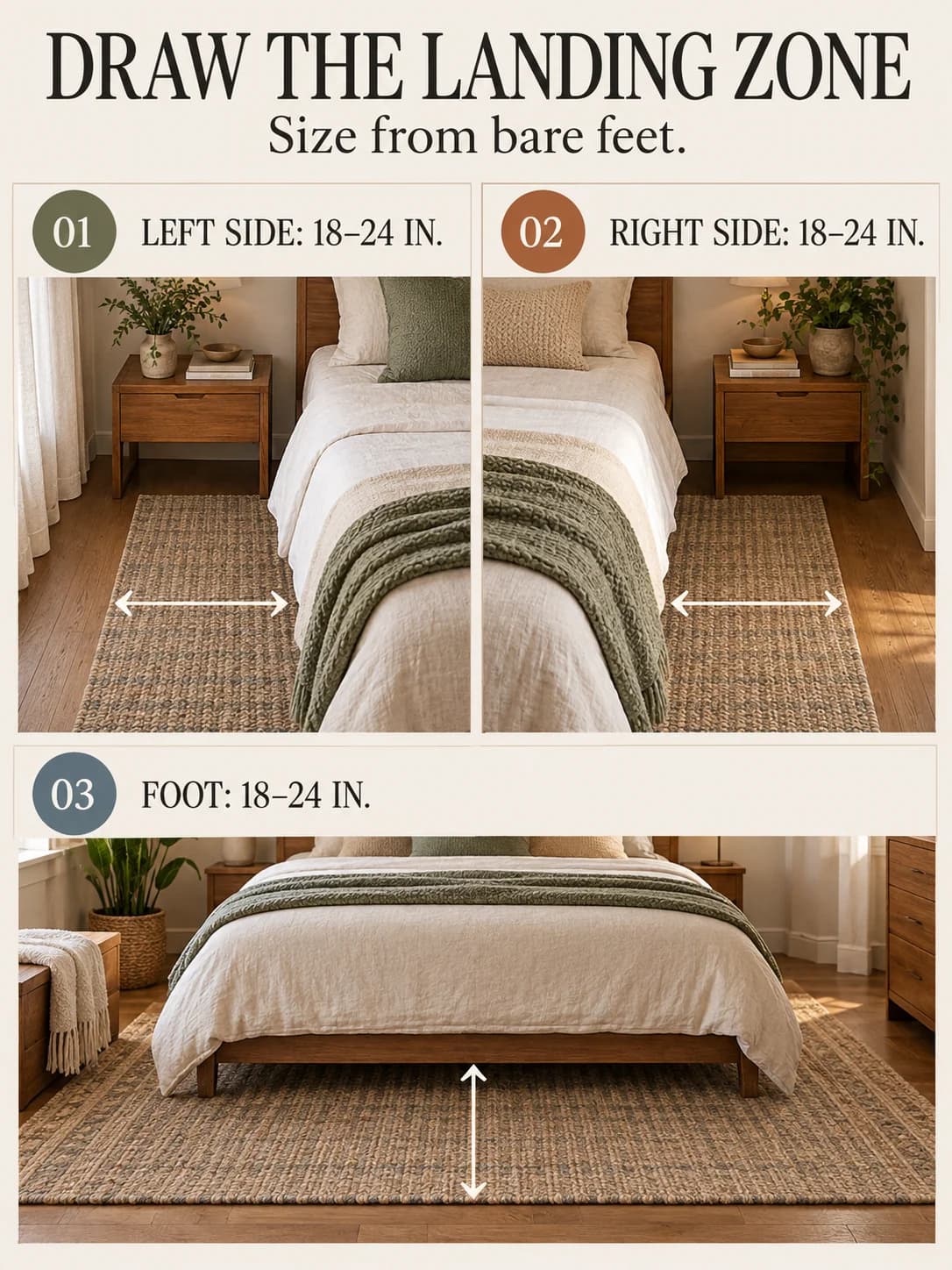
Stand beside the bed where each sleeper gets up. Mark a comfortable soft zone with tape, often about 18 to 24 inches beyond the mattress on accessible sides. Repeat at the foot if that is a walking path. The bed size supplies a starting rectangle; the room decides whether the rectangle can actually fit.
| Layout | Starts | Best for |
|---|---|---|
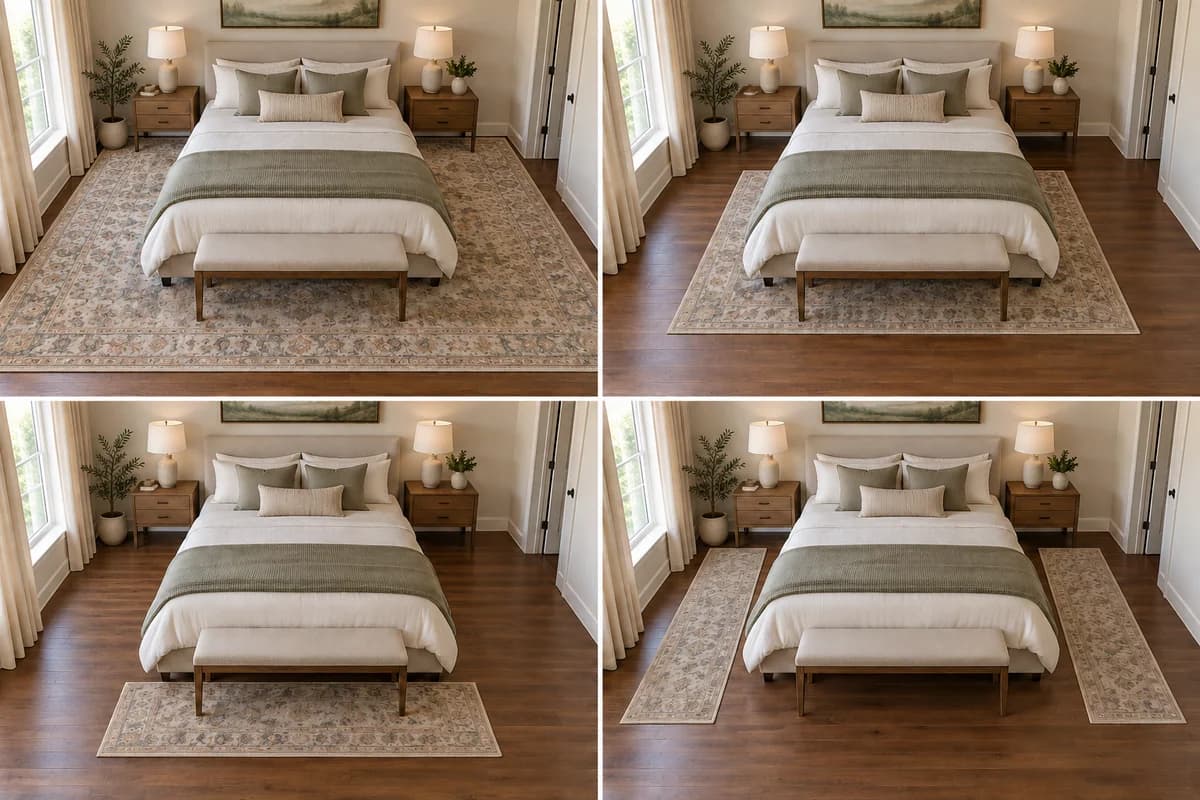
| Full | Behind nightstands | Large room |
| Two-thirds | Ahead of nightstands | Most bedrooms |
| Foot only | Lower bed third | Visible pattern |
| Side runners | Beside bed | Tight rooms |
Choose full or two-thirds placement
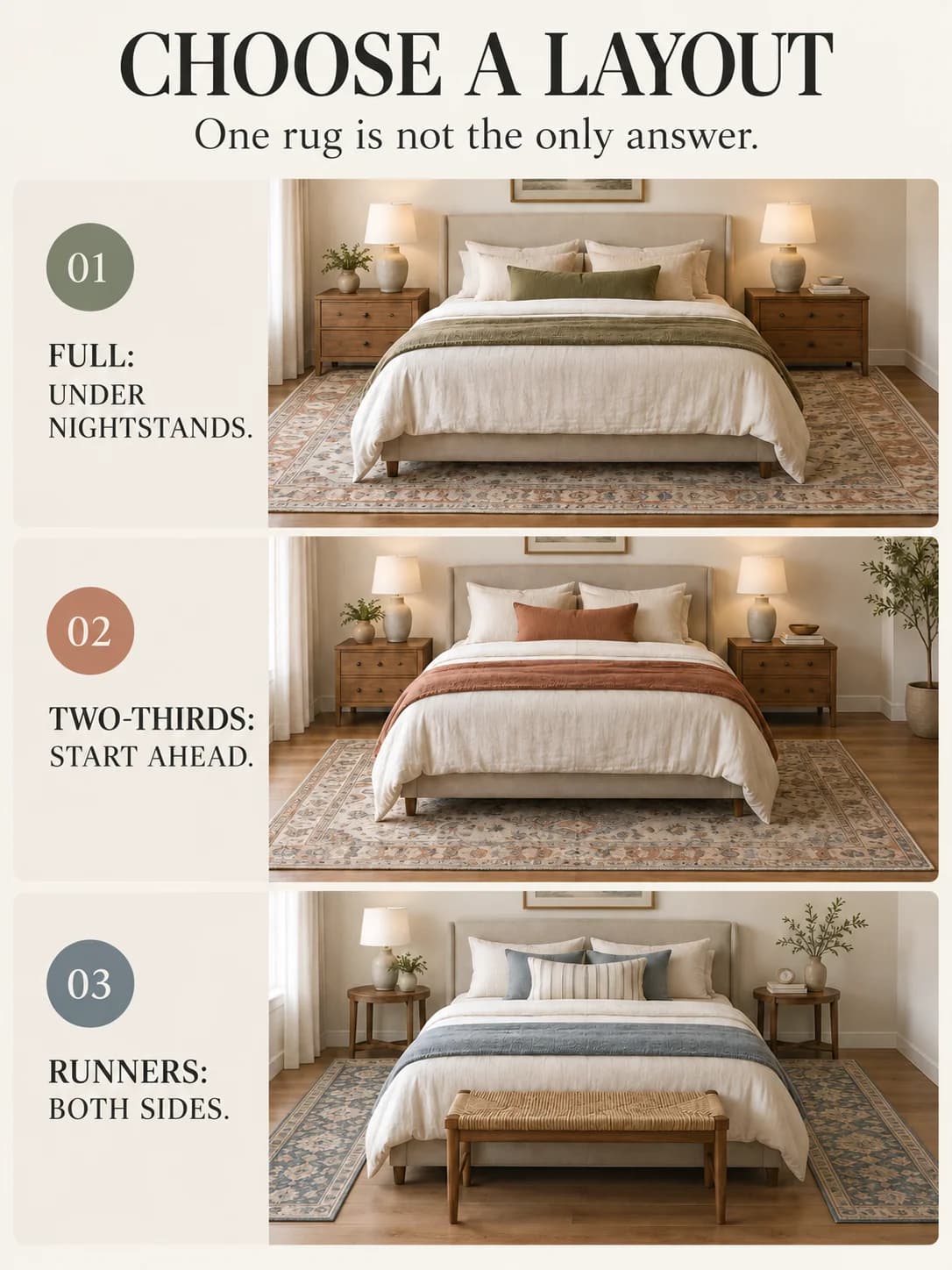
A full placement runs beneath the nightstands and bed, creating one large anchor. It needs enough rug beyond the outer nightstand edges to look intentional. A two-thirds placement begins in front of the nightstands and extends beyond the foot, using less rug while still serving the landing zones.
Treat runners as a real plan
In a tight bedroom, one runner on each accessible side may work better than a too-small central rug. Keep their exposed lengths aligned and secure them with appropriate pads. A single runner can serve a bed against a wall when only one side is used.
Preserve doors, vents and furniture stability
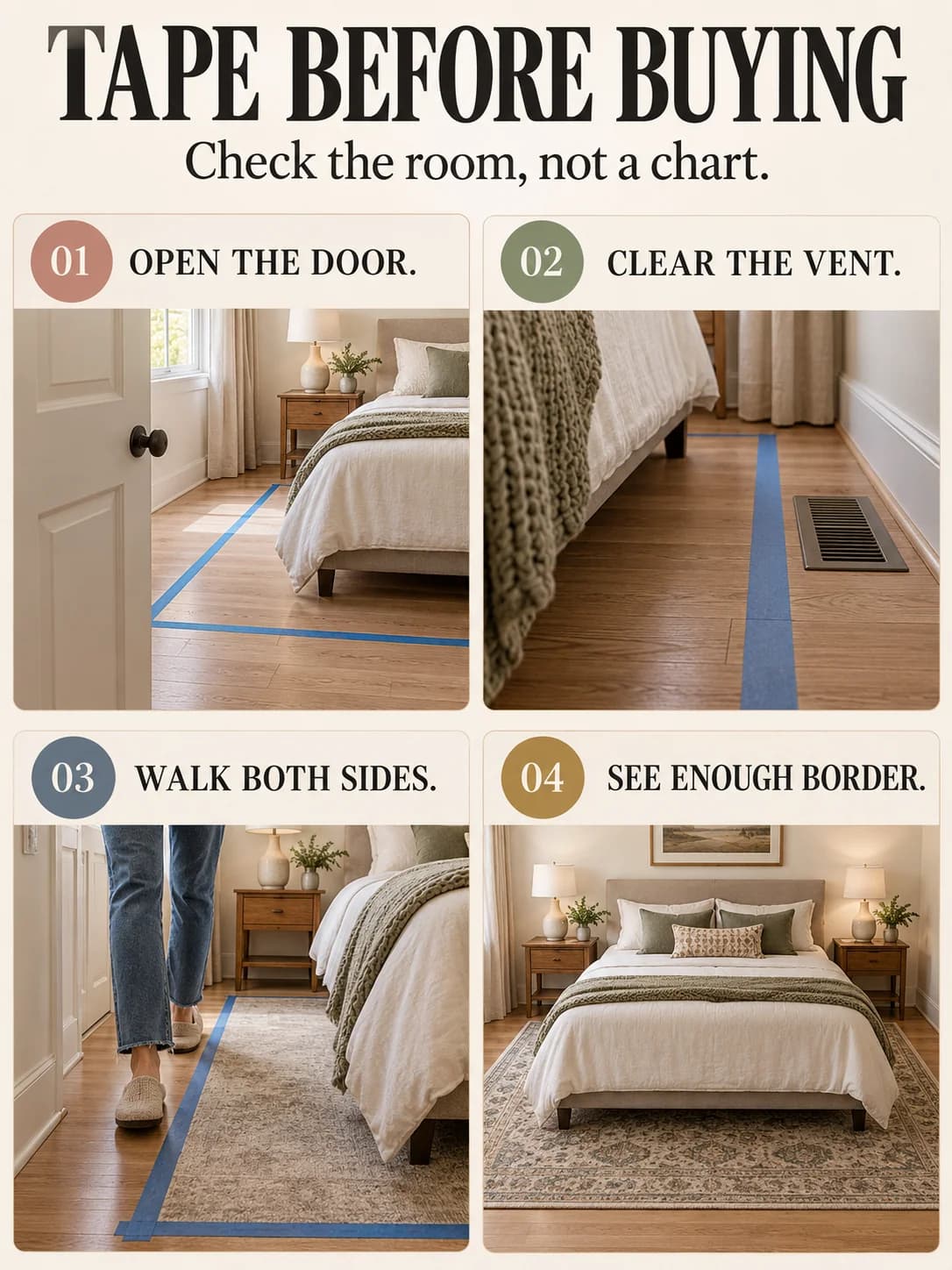
Open every nearby door over the taped outline. Check floor vents and low drawers. A thick pile may stop a door that cleared the tape. Decide whether all nightstand legs will sit on the rug or all will remain off; a half-supported table can wobble. The nightstand-height guide handles the vertical relationship once the floor is settled.
Compare the visible floor border
The rug should belong to the bed without nearly touching every wall. Step into the doorway and inspect the remaining floor on both sides. If the room is asymmetrical, center the rug on the bed, then verify that the main walking path still has a useful strip.
Dining and living rooms use different furniture rules. The dining-rug guide allows for moving chairs, while the sectional-rug guide anchors a conversation zone.
Before ordering, subtract baseboards and radiators from the usable room width, then compare that number with the taped rug. Check delivery access too: a large rolled rug still has to turn through the hall and doorway. For thick rugs, confirm that the bed frame will remain stable and that the new height does not interfere with under-bed drawers.
In a bedroom, the successful rug quietly catches feet, frames the bed and leaves the doors alone.
Frequently asked questions
How far should a rug extend beyond a bed?
Roughly 18 to 24 inches on the landing sides and foot is a useful target when the room allows.
Should nightstands sit on the rug?
They can in a full placement. In a two-thirds placement, the rug usually starts in front of the nightstands.
Can you use runners beside a bed?
Yes. Matching or coordinated runners create soft landing zones without placing one large rug beneath heavy furniture.