The useful question is not just whether the table fits on the rug. It is whether the chairs still fit when someone is using them, and whether the room still works around that arrangement.
Treat a rug-size chart as a first sketch. Your table dimensions, chair shape and everyday route through the room make the final decision.
Calculate a starting footprint
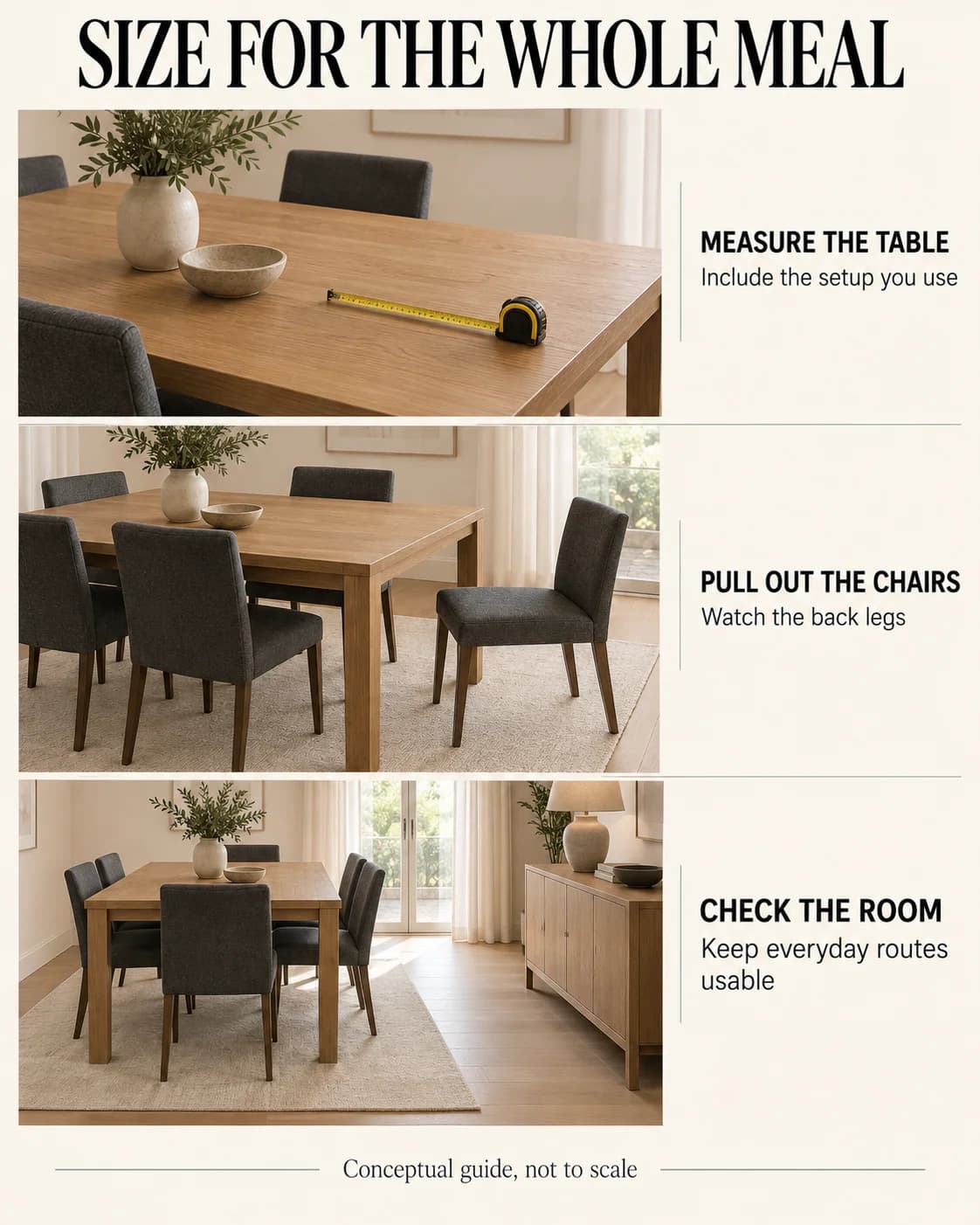
Measure the table's actual top, not the number of seats advertised for it. For a rectangular table, write down length and width. For a round one, record diameter.
A common starting guideline is roughly 24 inches of rug beyond each table edge. Both Rugs Direct and The Spruce use that convention. Adding it on both sides means adding 48 inches to each overall dimension.
This is an allowance measured from the table edge. Do not add another 24 inches beyond an already measured pulled-out chair footprint and call it the same calculation.
| Table dimensions | Calculation in inches | Starting rug footprint |
|---|---|---|
| 36 × 60 inches | (36 + 48) × (60 + 48) | 84 × 108 inches = 7 × 9 feet |
| 40 × 72 inches | (40 + 48) × (72 + 48) | 88 × 120 inches = 7 ft 4 in × 10 ft |
| 42 × 96 inches | (42 + 48) × (96 + 48) | 90 × 144 inches = 7 ft 6 in × 12 ft |
| 48-inch round | 48 + 48 | 96-inch diameter = 8 feet |
| 60-inch round | 60 + 48 | 108-inch diameter = 9 feet |
These are calculated footprints, not promises that each size is sold as a standard rug. If comparing an available size, use its stated actual dimensions and check both directions. A rug can be long enough and still too narrow.
Check the arithmetic behind a size label
An 8-by-10-foot rug measures 96 by 120 inches. Center a 40-by-72-inch table on it and the allowances are 28 inches along the table's width and 24 inches at its ends. That meets the starting calculation, before the chair test.
Now consider a 60-inch round table on an 8-foot round rug. The rug diameter is 96 inches. Subtract the table's 60 inches, then divide the remaining 36 inches between two sides: only 18 inches remain at each edge.
A 9-foot round rug starts at 108 inches, so the same calculation gives 24 inches per edge. This is why a broad “four to six seats” label is less useful than the actual table measurement.
Let the chairs challenge the calculation
Mark a proposed rug footprint on the floor using a surface-safe method. Test any tape on an inconspicuous area first, or use measured reference points that will not damage the finish.
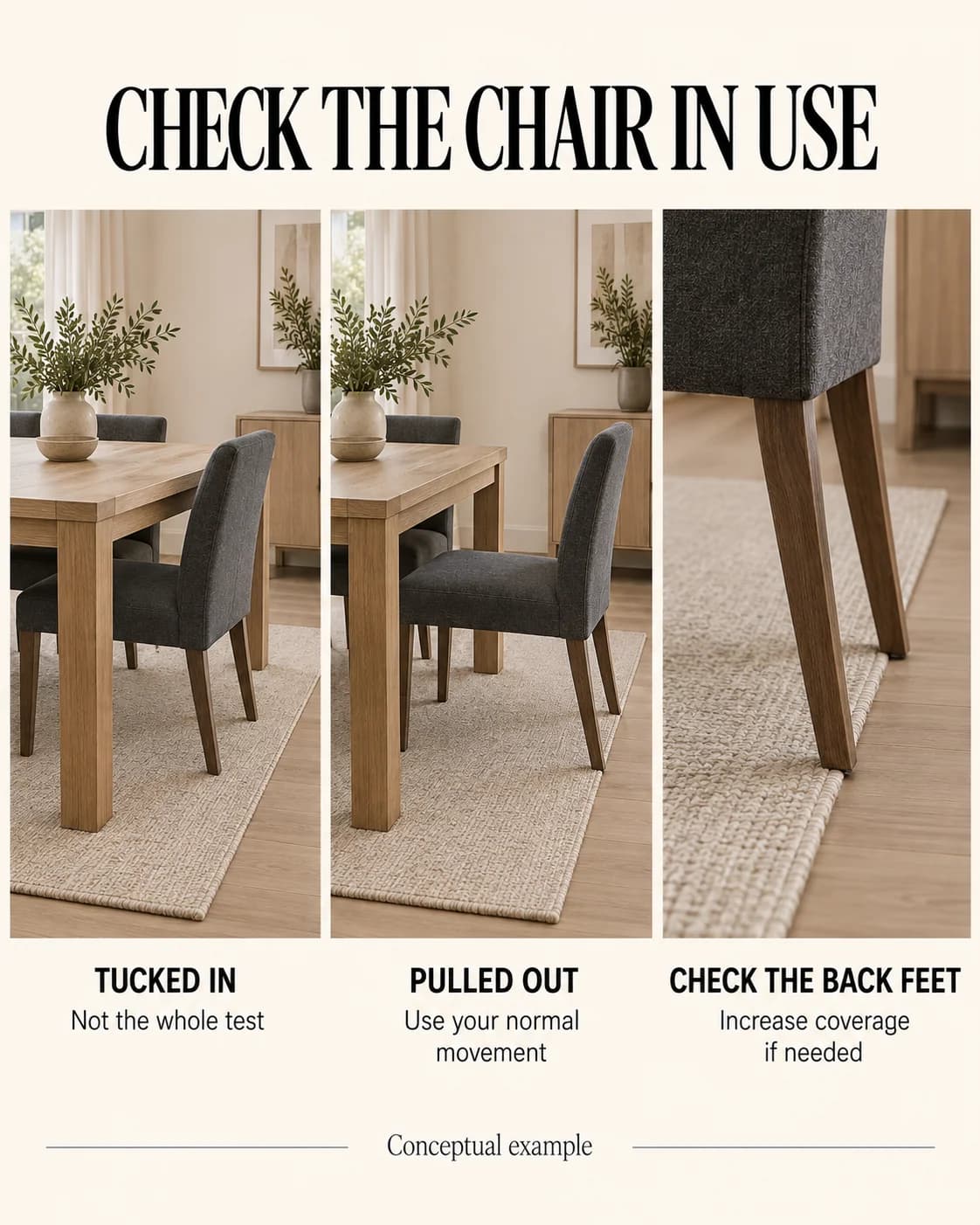
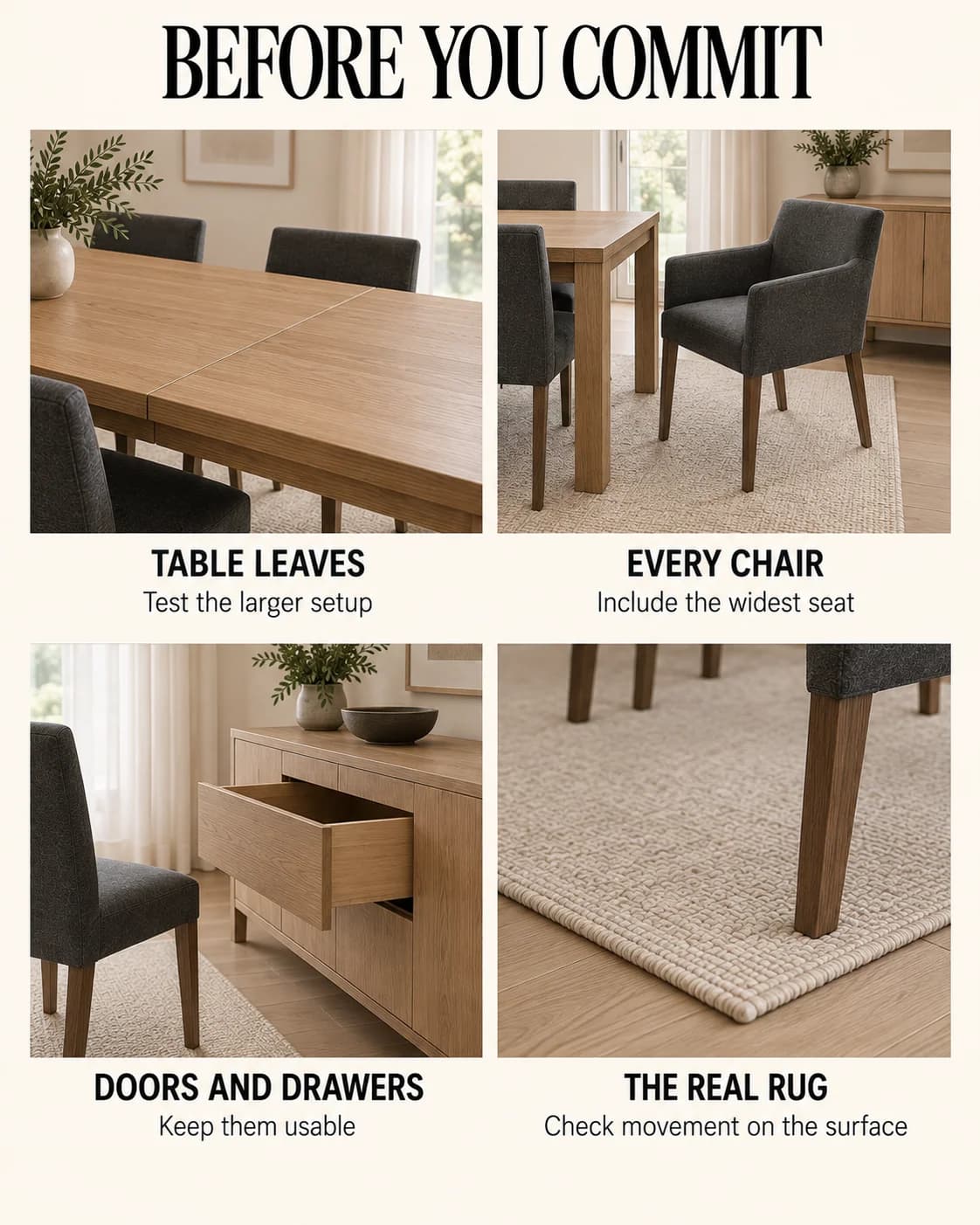
Pull out every chair as you normally would to sit and stand. Include the end chairs, a wider armchair and any seat close to a wall. Check the rear legs at the furthest ordinary position, not only when the chair is tucked neatly under the table.
If a leg crosses the proposed rug edge, expand that side of the footprint and test again. Once an actual rug is in place, check how the chairs move over its surface and edge; a floor outline cannot tell you that.
Test the room separately from the rug
Chair coverage is one test. Being able to move through the room is another.
With chairs in use, walk the routes to the kitchen, door and storage furniture. Open nearby cabinet doors and drawers. Check that the proposed arrangement does not force you to squeeze through a route you need daily.
There is no single clearance number here that can account for every household, mobility need or door swing. If the room cannot accommodate a useful rug footprint and a comfortable route, reconsider the furniture layout or skip the rug. A smaller decorative rug is not automatically a functional compromise.
For an adjacent seating area, use the separate sectional rug guide; dining chairs and sofa legs ask different things of a rug.
Include leaves, unusual shapes and occasional guests
Set up the table with the leaves you actually use, then repeat the outline and chair test. If the larger configuration only appears on holidays, decide in advance how that setup will work rather than discovering the mismatch during dinner.
A rectangular rug under a round table can work. Its shorter dimension may be the limiting one, so test chairs all around the table, not only on the long axis. With an oval table, measure the maximum length and width and still test each seat.
For a crowded hosting setup, setting a small Thanksgiving table addresses the tabletop separately.
Confirm with the rug in place
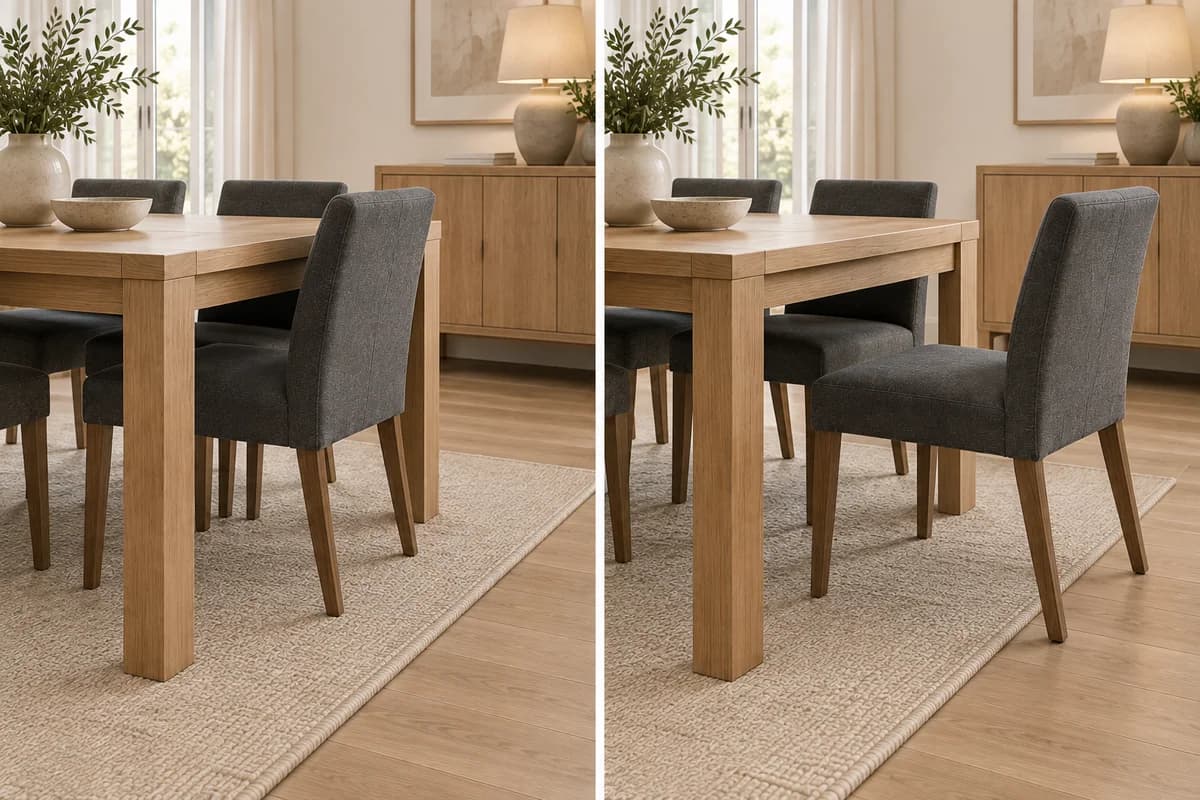
The final check is ordinary use: pull a chair out, sit, stand and move past it. Keep the table centered on the intended footprint, then inspect the actual rug edges.
A photograph can show why a tucked-in chair is an incomplete test. It cannot certify dimensions, circulation or safe use in your room.
Frequently asked questions
Is an 8-foot round rug large enough for a 60-inch round table?
It leaves 18 inches beyond the table edge: (96 minus 60) divided by 2. That is below the 24-inch starting allowance used here. A 9-foot round rug gives 24 inches, but still needs an actual chair test.
Should I measure with the dining-table leaf in?
Use the configurations you intend to use on the rug. If guests will sit at the extended table, include that setup before settling on the rug footprint.
Can a round dining table go on a rectangular rug?
Yes. Check chair movement in every direction, especially where the rug's shorter dimension limits coverage. Matching shapes is an aesthetic choice, not the only workable layout.