A nightstand can be the advertised “standard height” and still feel wrong beside your bed. A thick mattress, an added topper or a wide bed frame changes the relationship before you put a lamp on it.
Start with the sleeping surface, then check the reach. That order is more useful than starting with a furniture category.
Use the mattress as your reference
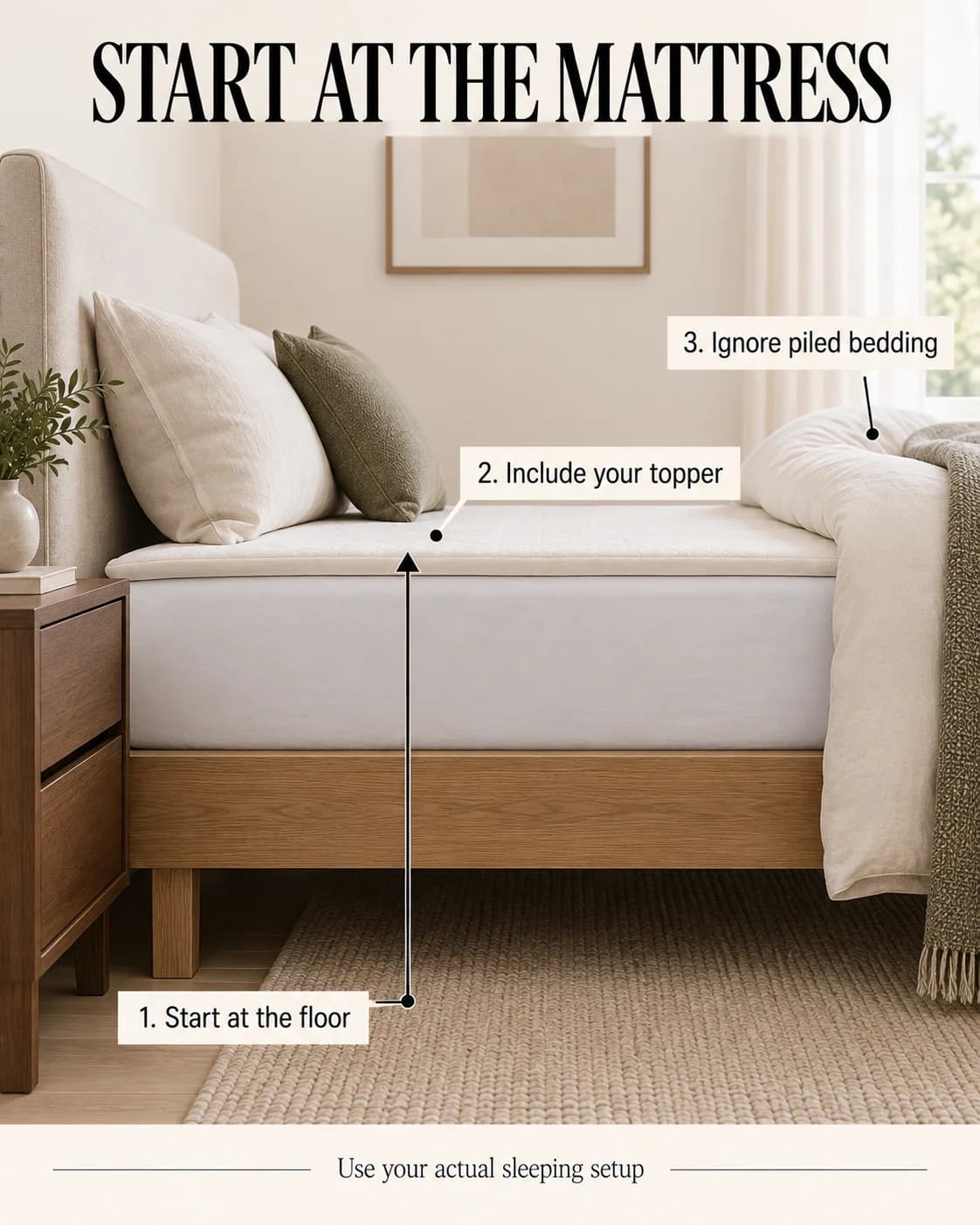
Measure vertically from the floor to the top of the mattress. Include the topper you normally sleep on. Move aside a bulky duvet so you are not measuring a temporary pile of bedding.
Write down the number rather than estimating it from the headboard or frame. Those parts of the bed can be much higher or lower than the surface you actually use.
A tabletop close to that height is a sensible starting point, not a guaranteed answer. Froy's guide favors roughly mattress height before offering alternatives; Chris Loves Julia prefers a surface a little above it. The difference is a reason to test your own arrangement, not to average the two into a new rule. Froy, Chris Loves Julia.
Measure the surface you would actually use
For an existing nightstand, measure from the floor to its usable top. If the top has a raised edge, distinguish that rim from the surface where a book or phone rests.
Consider this illustrative example: the mattress top is 26 inches from the floor and the nightstand top is 29 inches. The nightstand is 3 inches higher. That calculation describes the arrangement; it does not establish whether it is comfortable.
If you are comparing dimensions before furniture is in the room, mark the proposed height on the wall with a removable method suitable for the finish. A mark helps you visualize height but is not a load-bearing test surface.
Do not balance a lamp or a drink on a temporary stack to simulate furniture.
Test your normal position, not a staged reach
Use a stable existing surface when possible. Sit or lie in the position from which you normally reach for bedside items. Try reaching for an empty, unbreakable object before using anything spillable.
Notice whether you have to stretch, lift yourself awkwardly or reach around the bed frame. Also notice where you naturally put the object down. The best-looking rear corner of the table may be the least convenient place for something you use repeatedly.
The mattress can settle under you, so a standing measurement and a real-use check serve different purposes. Keep both; do not let the tape measure overrule a clearly awkward experience.
Check sideways distance before changing height
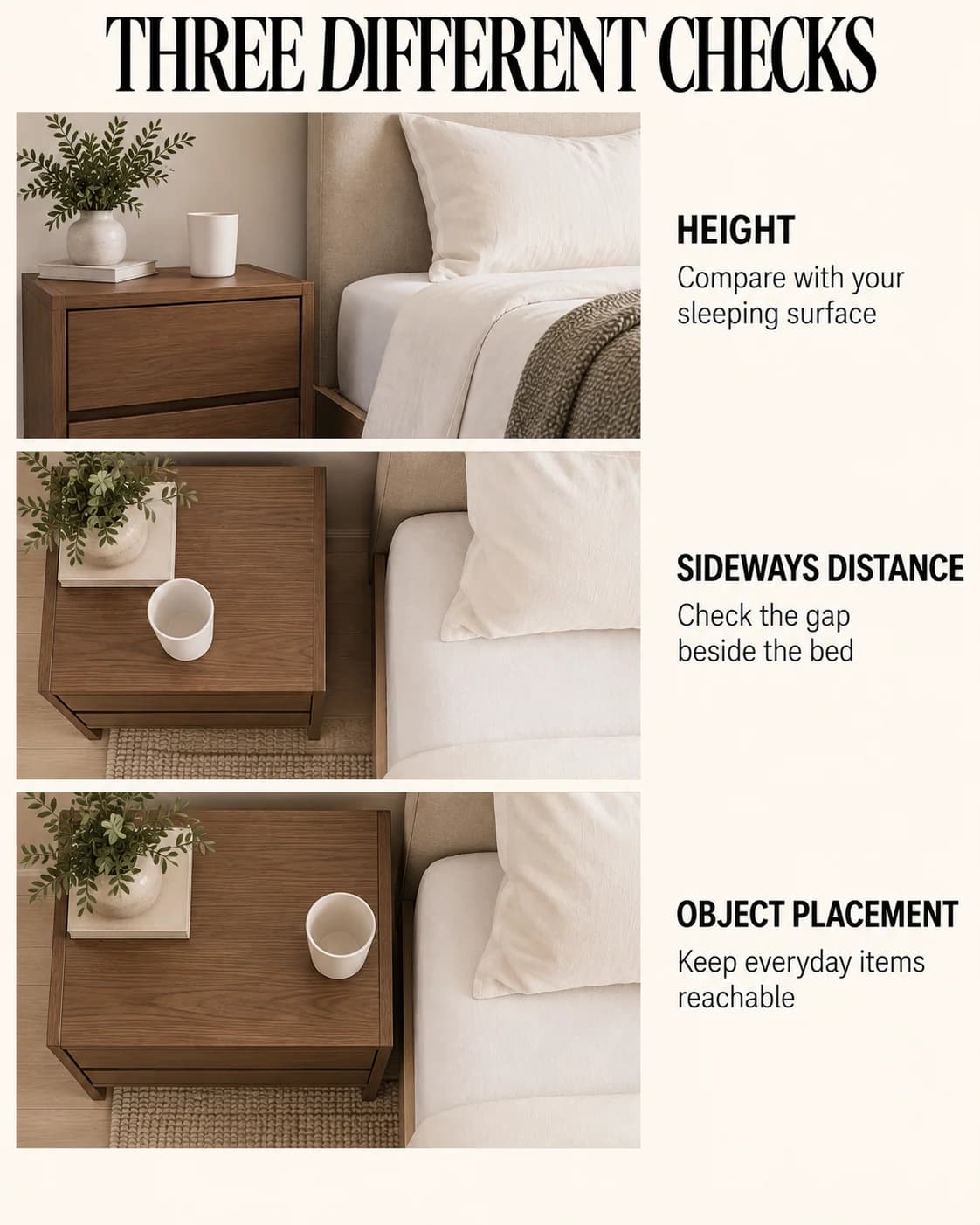
A table at a reasonable height may still be too far away. A broad bed frame, projecting headboard or large gap can create a sideways reach that a taller table does not solve.
Move an existing stable table within the space you have, while keeping the route beside the bed and any drawer movement usable. Then test again.
| What feels awkward | Check first | Possible adjustment |
|---|---|---|
| Reaching far sideways | Gap and position beside bed | Move a stable table closer if access remains clear |
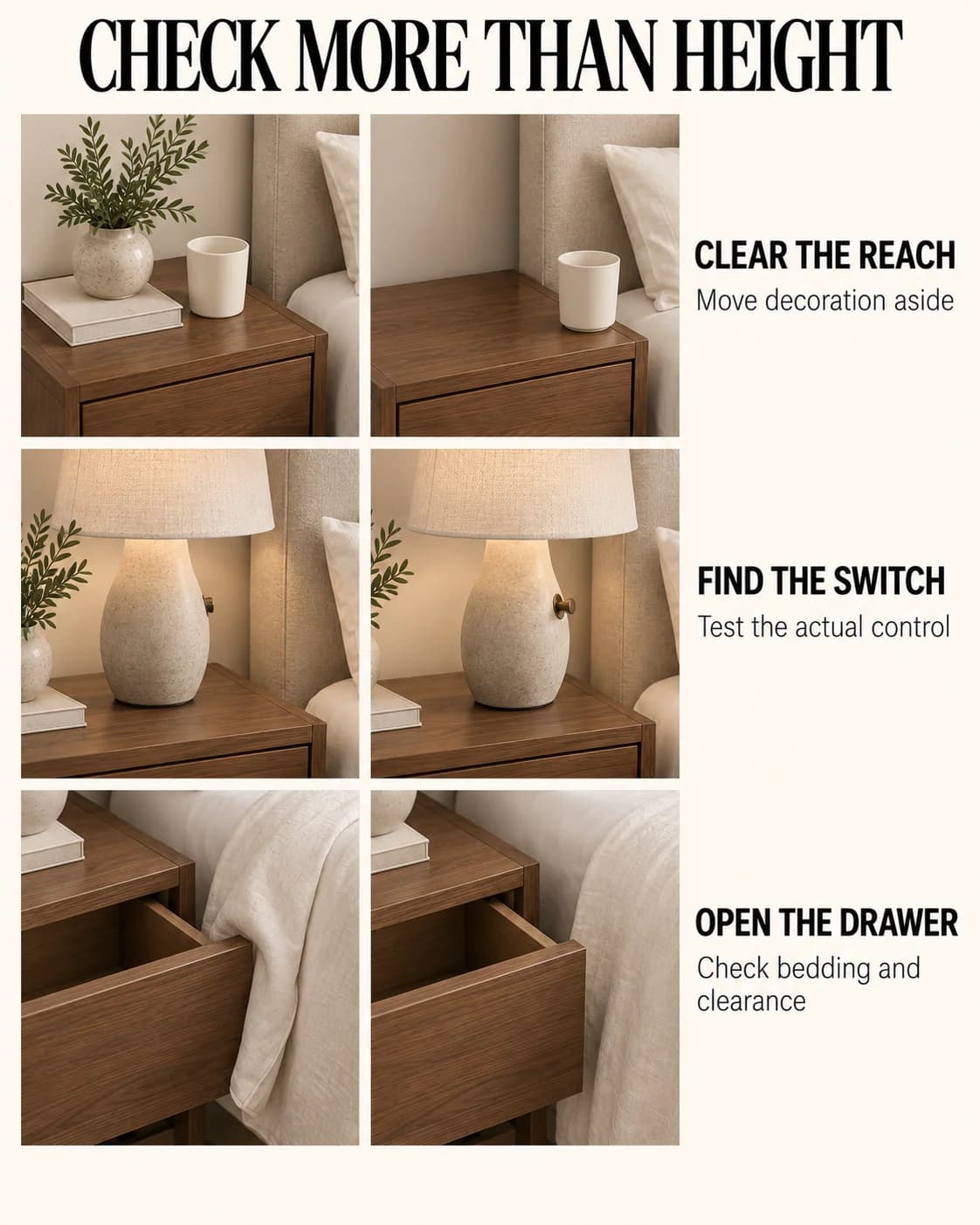
| Reaching over objects | Surface layout | Move decorative items out of the reach path |
| Hand lands too high or low | Surface relative to sleeping position | Reassess table height |
| Lamp switch remains hard to reach | Switch location | Change lamp placement or control arrangement |
| Drawer catches bedding | Drawer path and bedding overhang | Reposition furniture or reconsider its fit |
Keep the items you use most often in the easiest part of the surface to reach. Decoration can go elsewhere. A lamp's switch may present a separate problem from the height of the tabletop; check the actual control rather than assuming both will work together.
Treat each side of the bed as a real place
Two people may use their bedside surfaces differently. One side may need space for a book; another may mainly hold a phone. A matching pair is an aesthetic option, not a requirement to duplicate an inconvenient setup.
Different furniture pieces can still look related through a color, shape or finish. If wood finishes are the concern, mixing wood tones is a separate styling decision.
Do not raise furniture on loose books or improvised blocks. Follow the furniture manufacturer's requirements for any supported adjustment or installation. When the basic fit is wrong, changing the piece may be more useful than disguising it.
Compare relative height without chasing a universal number
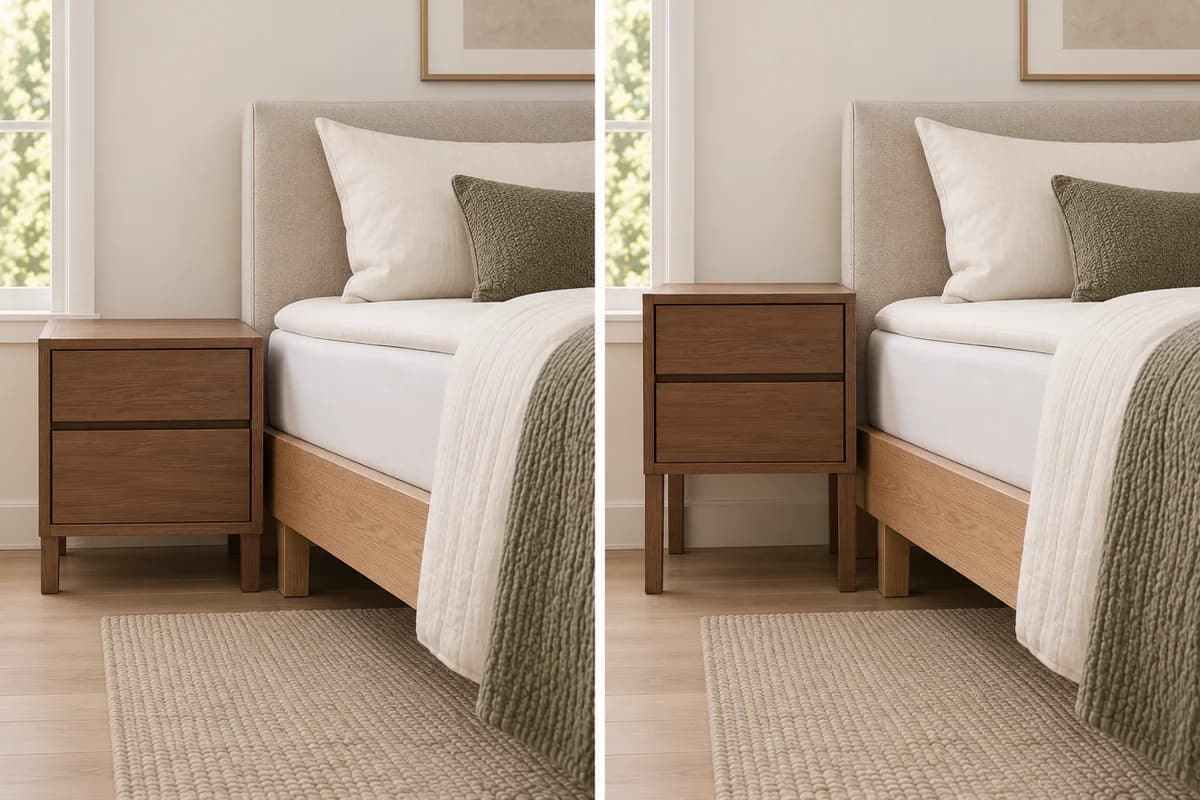
A side view makes the tabletop-to-mattress relationship easy to see. Compare a surface near the mattress top with one visibly higher, keeping the bed unchanged.
Use that visual to understand the relationship, then return to the real reach test. It is not a clinical assessment or a substitute for individual advice when mobility or care needs determine the setup.
Frequently asked questions
Should I measure to the bed frame or the mattress?
Measure from the floor to the top of the mattress, including a topper you normally sleep on. Do not use the top of a piled duvet or the headboard as the reference.
Must two nightstands be the same height?
No. Each side should work for the person using it. Similar heights can look coordinated, but matching appearance is not a reason to keep an awkward reach.
Can I fix a low nightstand by stacking books under it?
Do not use loose books or improvised blocks as supports. Use a stable purpose-built solution compatible with the furniture, or change the furniture rather than creating an unstable base.