Kelvin describes the color of white light, not how forcefully the bulb announces itself. A cool dim lamp and a warm bright lamp can both be wrong for bedtime in different ways.
Separate color temperature from brightness
Warm light sits lower on the Kelvin scale and appears more yellow or amber. Cool light sits higher and appears whiter or bluer. Lumens describe output. Read both values. A 2700K bulb can still glare if it is too bright or exposed; a 4000K bulb can be modest in output and still make an evening bedroom feel clinical.
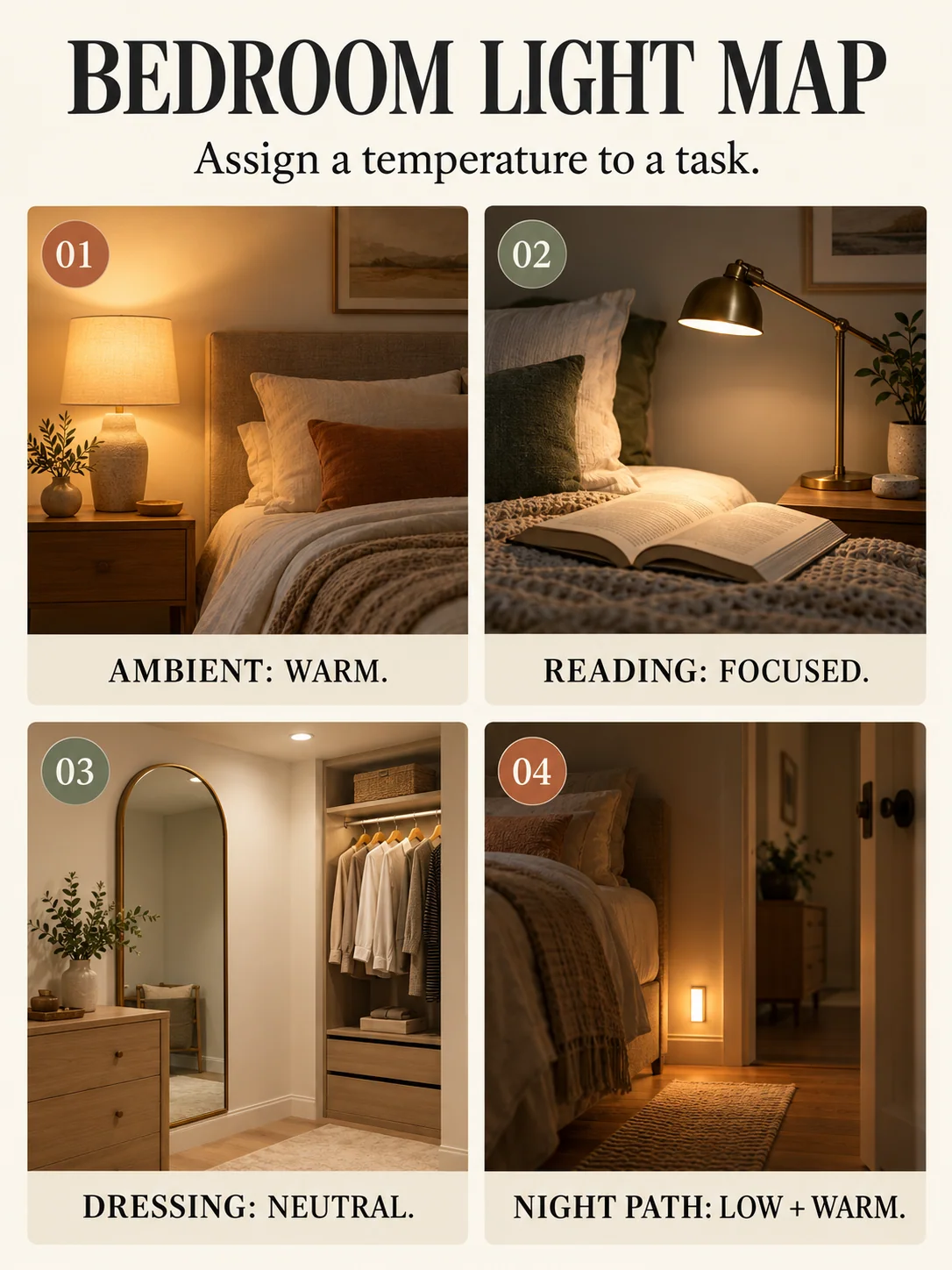
| Use | Color direction | Control |
|---|---|---|
| Evening ambient | Warm 2700K–3000K | Dimmer |
| Bedside reading | Warm-neutral | Focused beam |
| Dressing detail | Neutral-cool | High color rendering |
| Night path | Very warm and low | Shielded source |
Give ambient light the evening shift
For ceiling fixtures, shaded lamps and general glow, roughly 2700K to 3000K is a practical starting zone. Dim it as the evening progresses. Shades, wall color and lamp placement will alter the result, so test the bulb after dark rather than judging it in a bright store aisle.
Aim task light instead of cooling the whole room
Reading, mending and dressing may need better contrast. Solve that locally with a focused bedside lamp, sconce or dressing light. A cooler or neutral task source can work when it illuminates the book or mirror without washing the entire room. The lampshade guide helps control what the lamp exposes and hides.
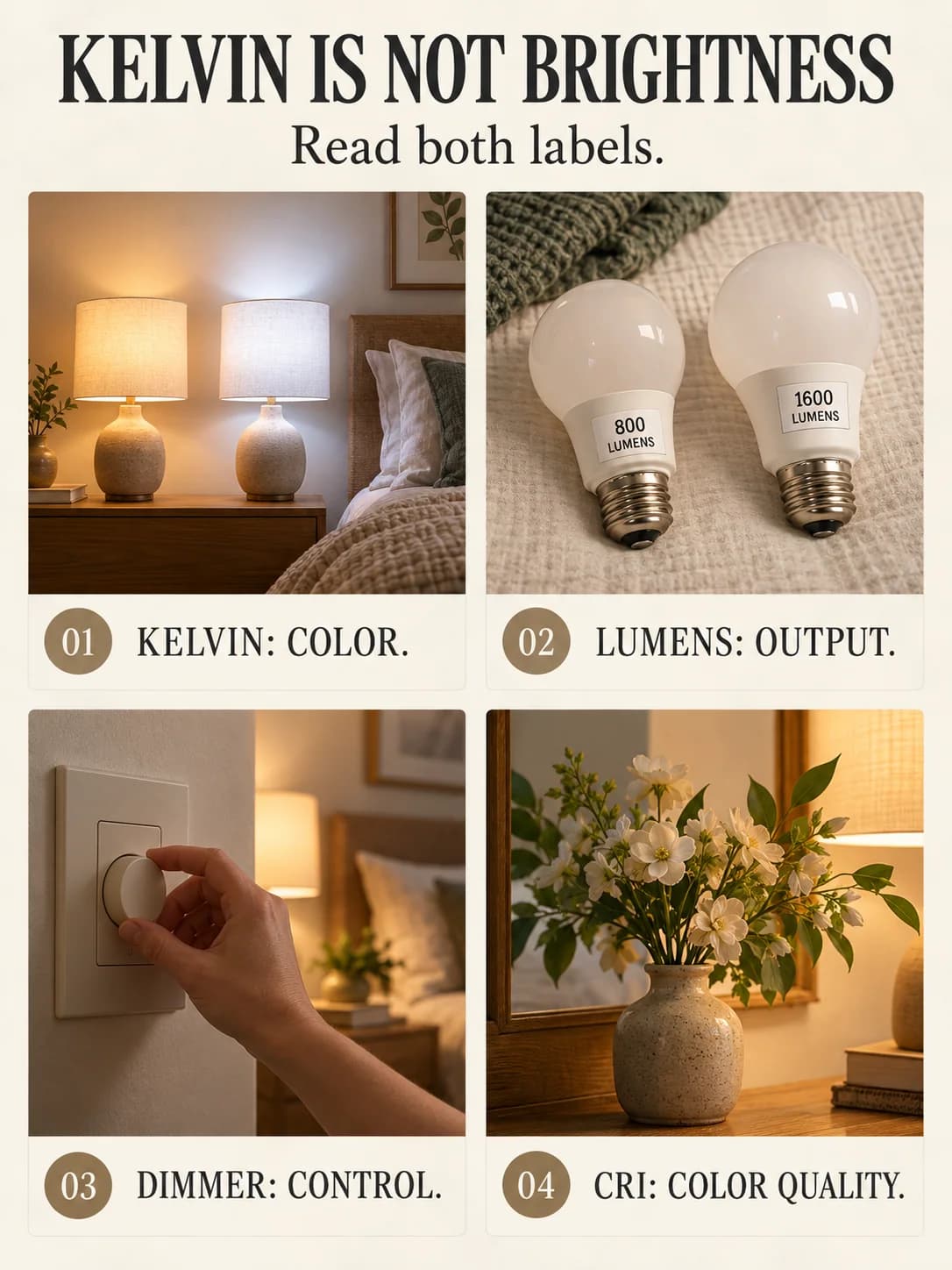
Watch what the bulbs do to color
Warm light can enrich wood, cream and rust while muting some blues. Cool light can sharpen blue and gray while flattening warm textiles. Color rendering quality matters too. Test bedding, paint and clothing under the proposed source. A sage wall selected from the sage color guide may look olive under one lamp and gray under another.
Mix temperatures only when the jobs are distinct
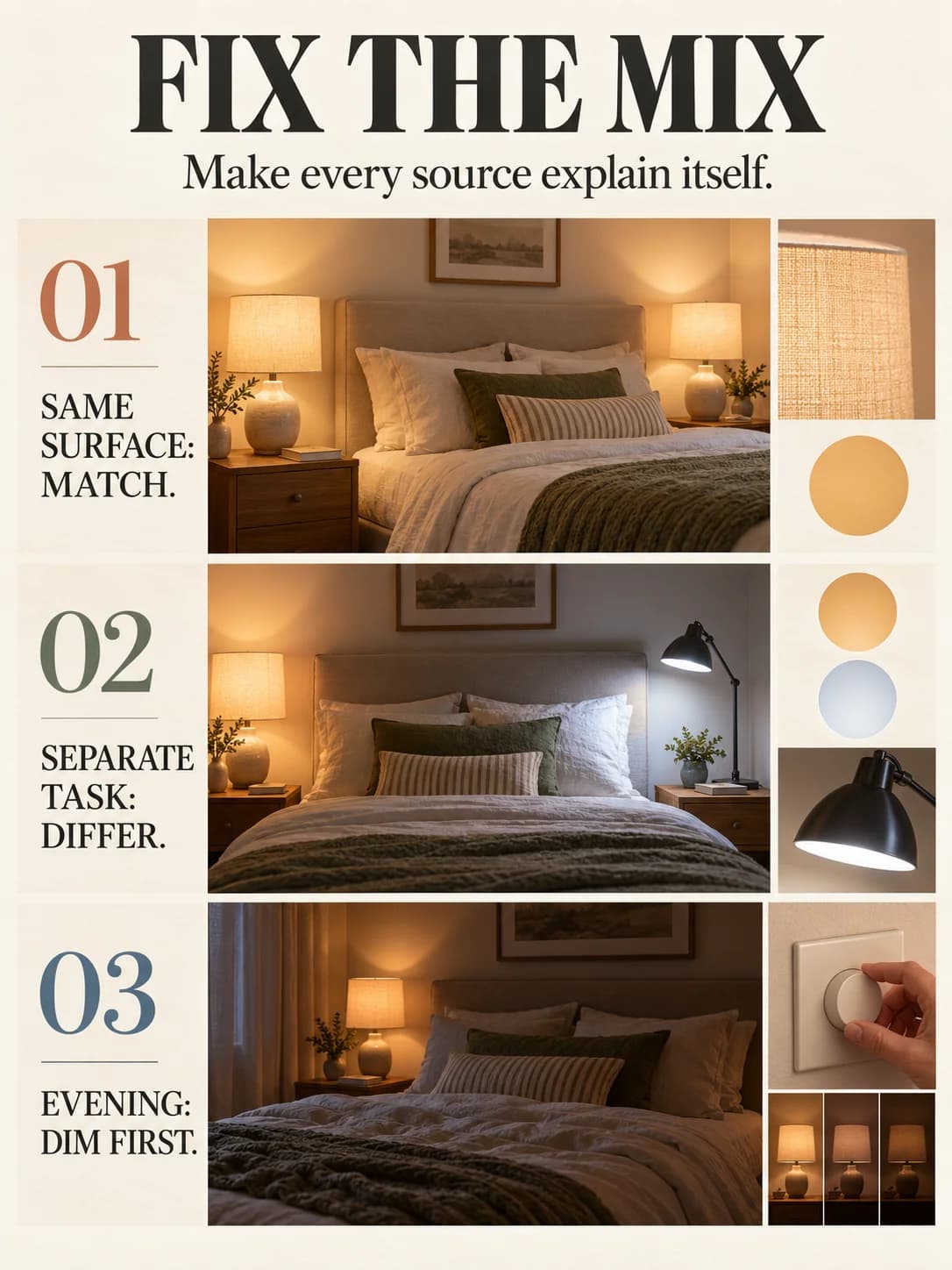
A warm ambient lamp and a neutral dressing light can coexist because they serve separate moments. Two exposed bulbs of visibly different white on the same wall usually look accidental. Group matching ambient sources, then switch task lights independently.
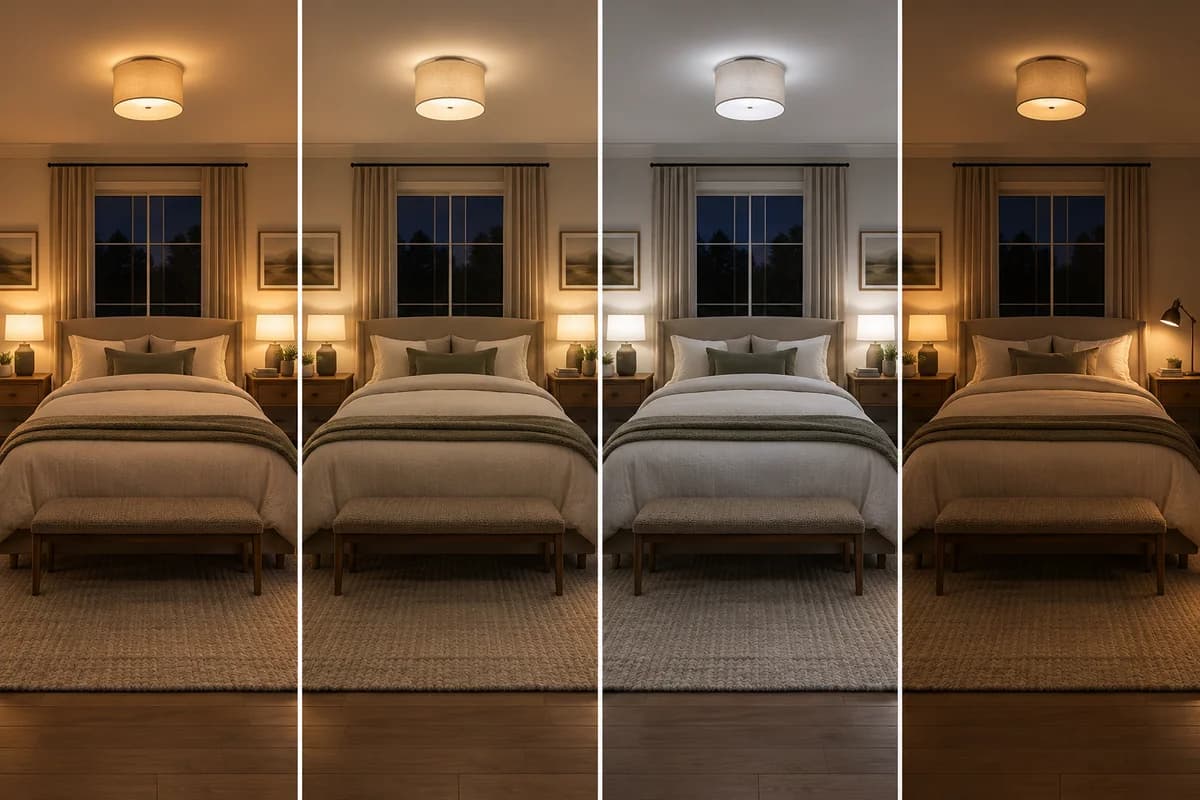
If a ceiling pendant is part of the room, its physical height still needs solving; the pendant-height guide demonstrates the clearance logic even though the furniture relationship differs.
Do a three-night trial before replacing every bulb. Use the room for dressing in the morning, reading in the evening and moving around after lights-out. Note glare, color shift and which switch you actually reach for. One adjustable lamp may solve the conflict more elegantly than matching every source to the same temperature.
In the bedroom, the most useful lighting plan changes by hour without turning every switch into an experiment.
Frequently asked questions
Is 3000K too bright for a bedroom?
Color temperature does not determine brightness by itself. At a comfortable lumen level, 3000K can work well for bedroom ambient light.
Is 4000K good for a bedroom?
It can help at a dressing table or task area, but many people find it stark for evening ambient lighting.
Can you mix warm and cool light in one bedroom?
Yes, if each source has a clear job. Avoid overlapping temperatures on the same surface when the mismatch looks accidental.