Measure a lamp base, estimate shade proportions, check the fitter and adjust for bulb clearance before buying a replacement shade.
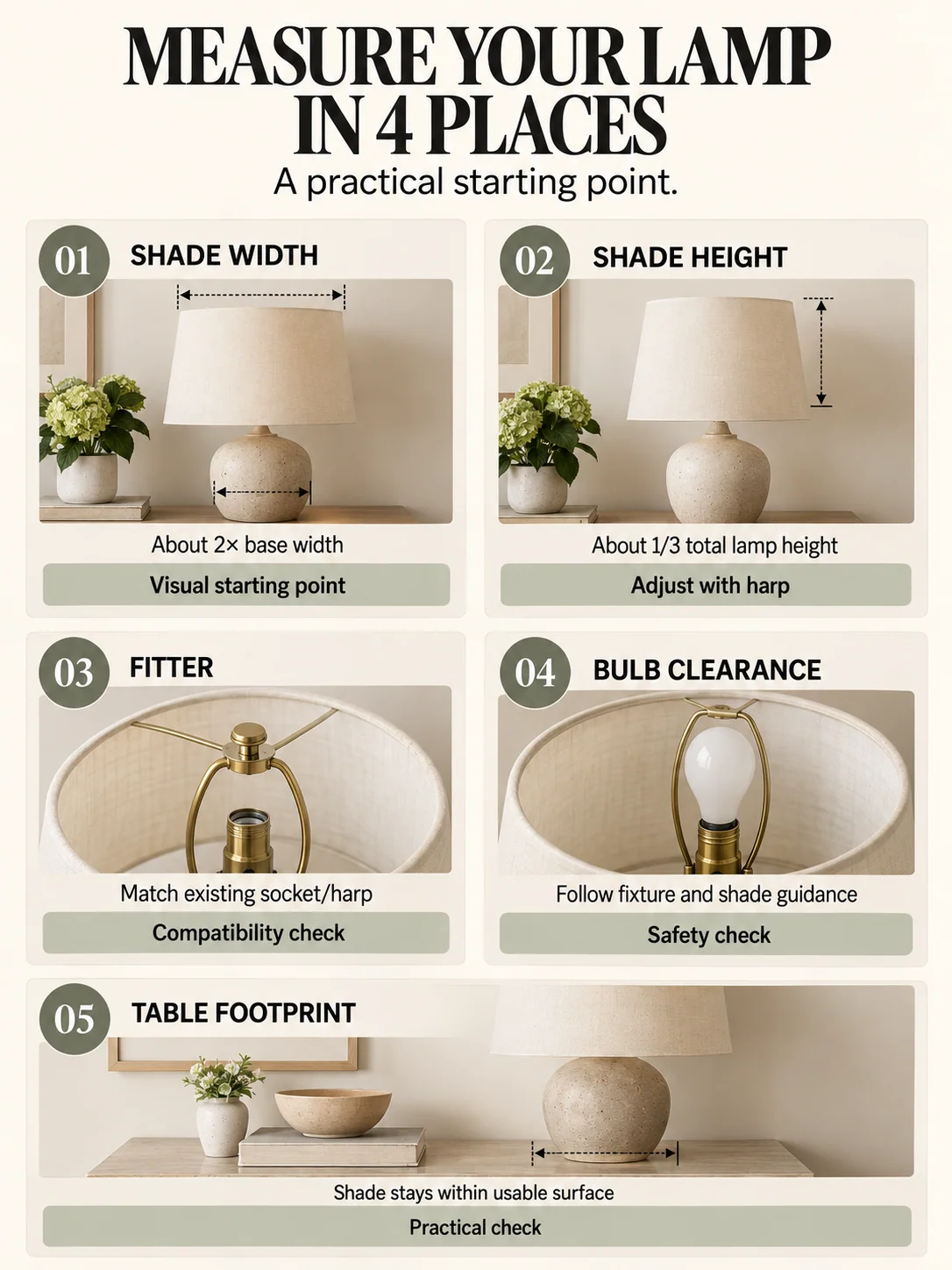
| Situation | Use | Check |
|---|---|---|
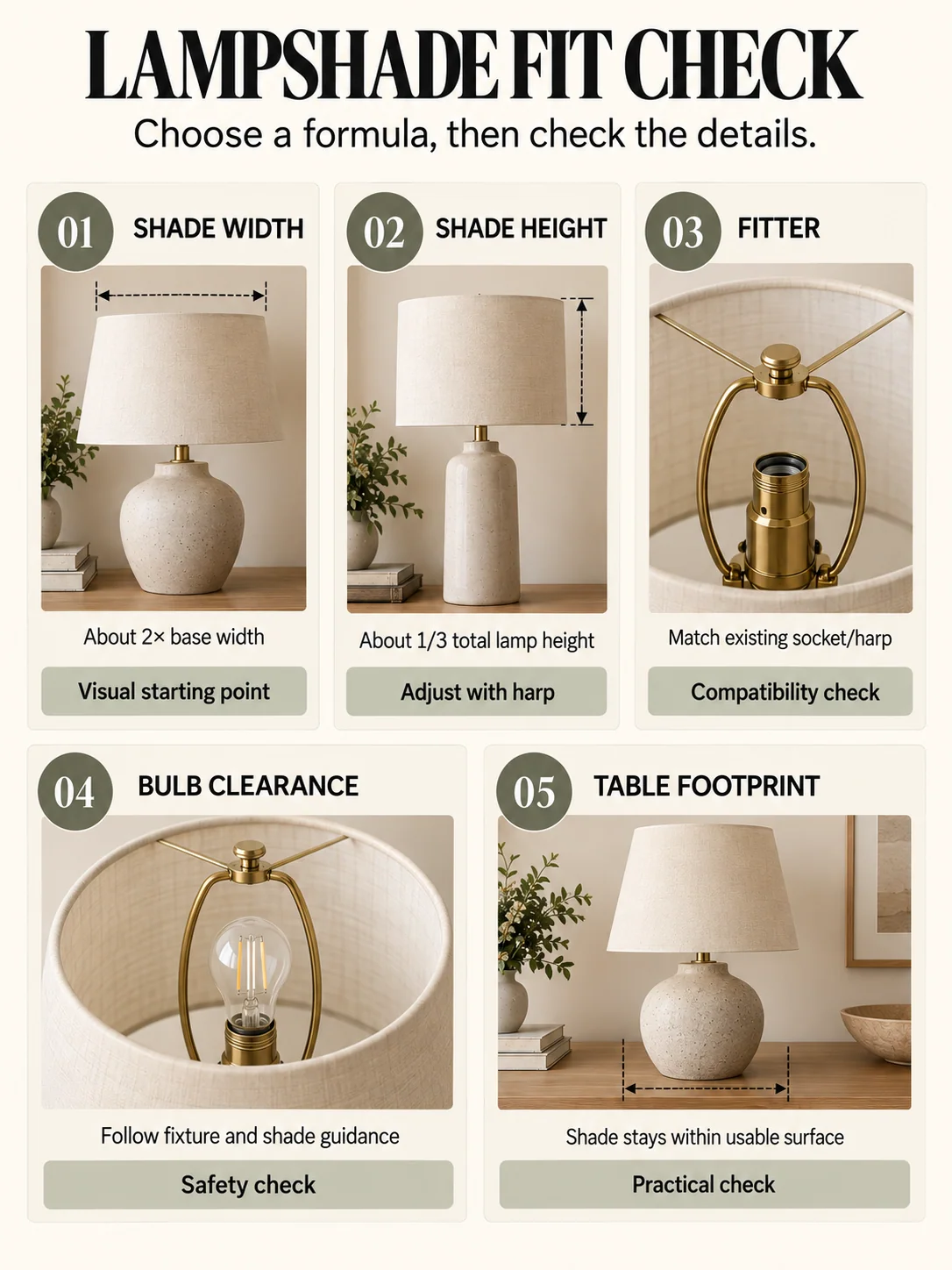
| Shade width | About 2× base width | Visual starting point |
| Shade height | About 1/3 total lamp height | Adjust with harp |
| Fitter | Match existing socket/harp | Compatibility check |
| Bulb clearance | Follow fixture and shade guidance | Safety check |
| Table footprint | Shade stays within usable surface | Practical check |
1. Measure the lamp in four places
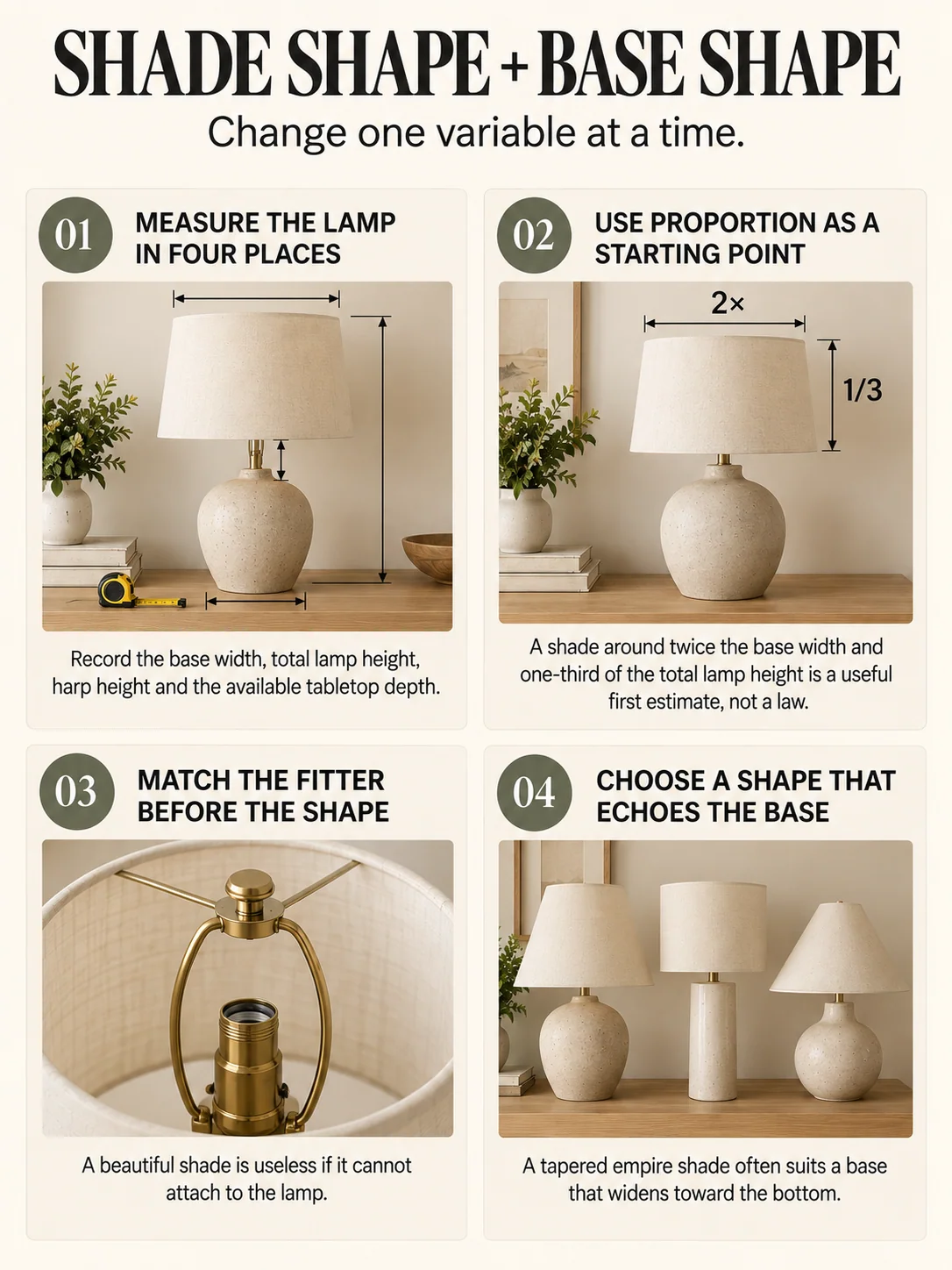
Record the base width, total lamp height, harp height and the available tabletop depth. If you have the old shade, measure its bottom diameter, top diameter and slant height. Bring those numbers to the store; “medium shade” is not a dependable specification.
2. Use proportion as a starting point
A shade around twice the base width and one-third of the total lamp height is a useful first estimate, not a law. A very slender base may need less width; a broad ceramic base may need more. Judge the outline from several feet away.
3. Match the fitter before the shape
A beautiful shade is useless if it cannot attach to the lamp. Identify whether the lamp uses a harp-and-spider fitter, uno fitter, clip-on or another system. Harp height changes where the shade sits, so it can correct a shade that looks too high or too low.
4. Choose a shape that echoes the base
A tapered empire shade often suits a base that widens toward the bottom. A drum shade creates a cleaner, more modern line. A square or rectangular shade can work on a narrow console where a round shade would project too far. Echoing one element is enough; the shapes do not need to match exactly.
5. Check sightline, clearance and surface space
Sit beside the lamp and make sure the socket hardware is not glaringly visible. Confirm adequate space between bulb and shade using the shade and fixture instructions. Finally, check that the shade does not crowd the wall, overlap the edge of the table or block normal use.
A five-minute room test
Mock up the decision before drilling, buying or carrying heavy pieces. Use painter’s tape, cardboard, stacked books or objects you already own to mark the proposed outline. View it from the main doorway, the closest seat and the route through the room. A choice that looks correct in one photograph can still obstruct movement or feel wrong from where the room is actually used.
Test the first two situations in the table while holding everything else constant. Compare “Shade width” with “Shade height” and notice whether the stated checks—“Visual starting point” and “Adjust with harp”—are satisfied. Take quick photos from the same position. The fixed camera makes scale and placement differences easier to see.
Common mistakes to avoid
Do not style or install around an imaginary empty room. Include the doors, chairs, serving pieces, switches and sightlines that will be present in daily life. Avoid adding more objects to disguise an unresolved proportion; editing is often the faster correction.
Finally, treat numeric guidance as a starting range where the article says it is one. Actual fixture construction, furniture size and room use still matter. The successful result should remain safe, reachable, cleanable and visually clear after the room returns to normal use.
The final check
Step back and look for one clear relationship: the eye should understand what leads, what supports it and whether the result still works in real use. If something feels off, change one variable at a time instead of replacing everything. That is the fastest way to learn which detail is doing the work.
Frequently asked questions
How wide should a lampshade be?
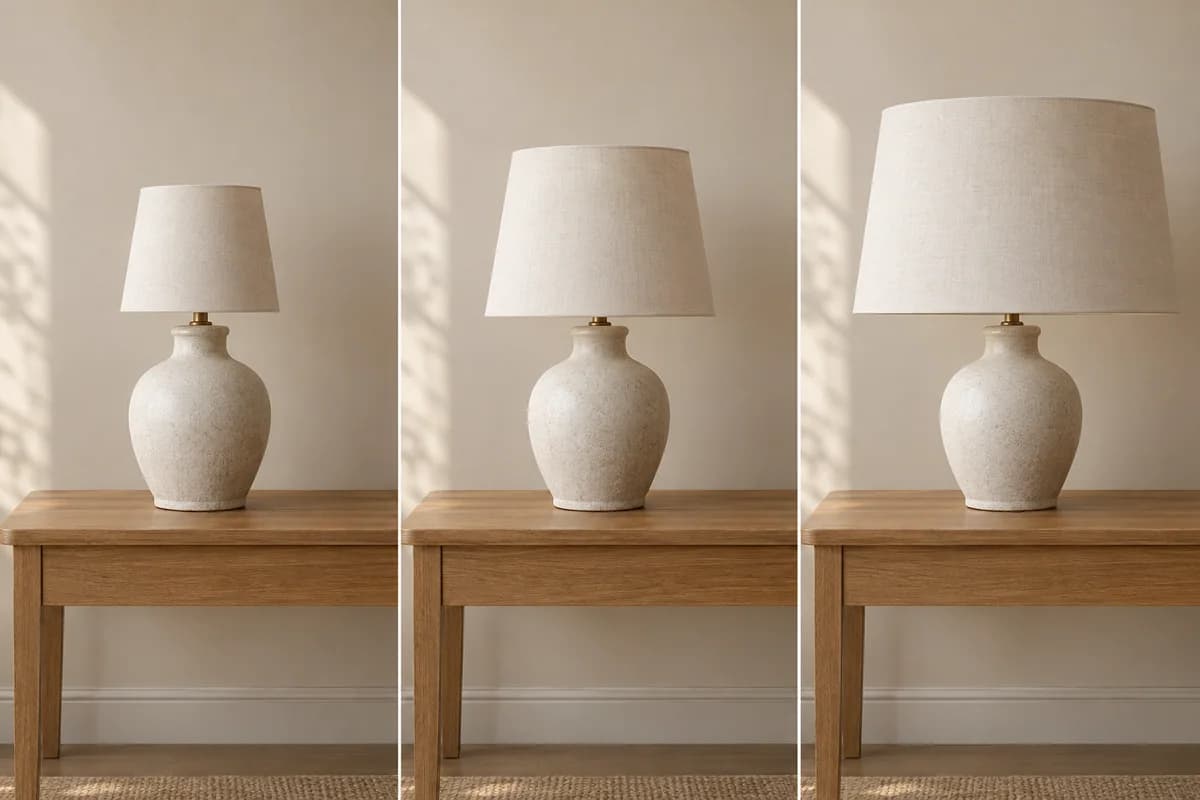
A useful starting point is about twice the width of the lamp base, then adjust for the base shape and available table space.
How tall should a lampshade be?
Around one-third of the lamp’s total height is a common starting estimate. Harp height affects the final position.
Can I put a drum shade on any lamp?
Sometimes, but check the fitter, proportions, bulb clearance and whether the wide cylindrical shape suits the base and table.