Start with a practical pendant-to-table range, then adjust for fixture size, sightlines, ceiling height and actual light spread.
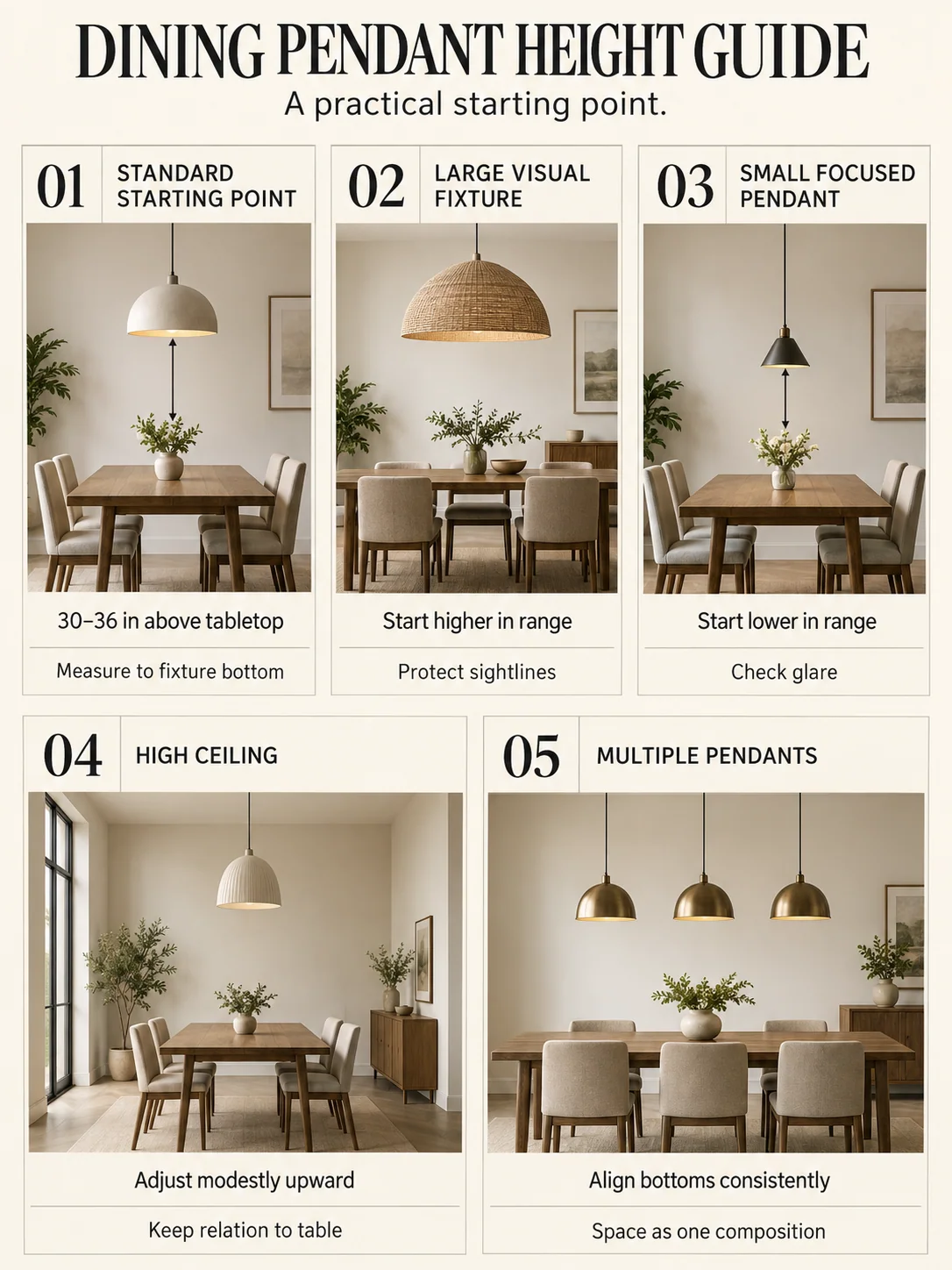
| Situation | Use | Check |
|---|---|---|
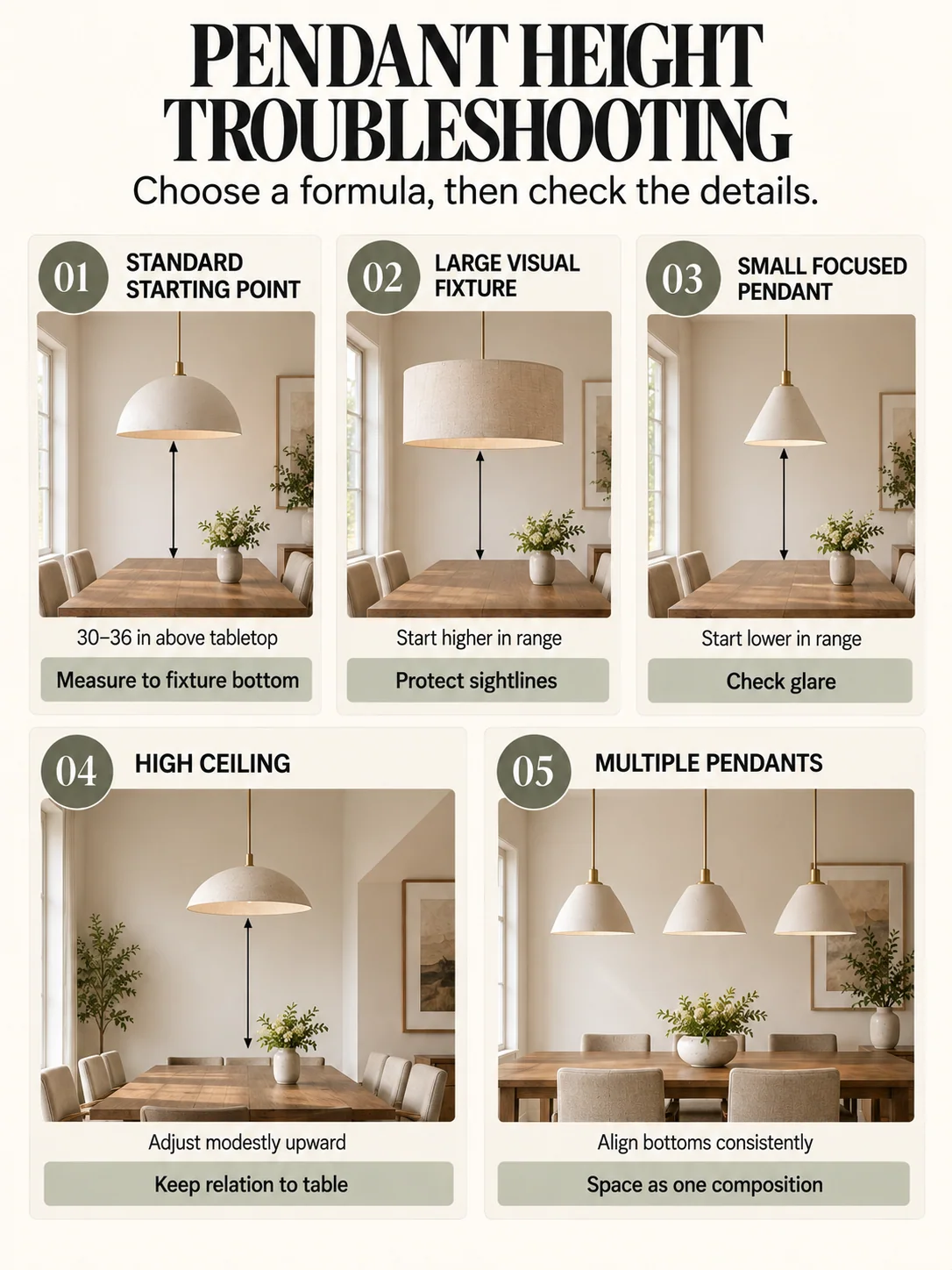
| Standard starting point | 30–36 in above tabletop | Measure to fixture bottom |
| Large visual fixture | Start higher in range | Protect sightlines |
| Small focused pendant | Start lower in range | Check glare |
| High ceiling | Adjust modestly upward | Keep relation to table |
| Multiple pendants | Align bottoms consistently | Space as one composition |
1. Measure from the tabletop
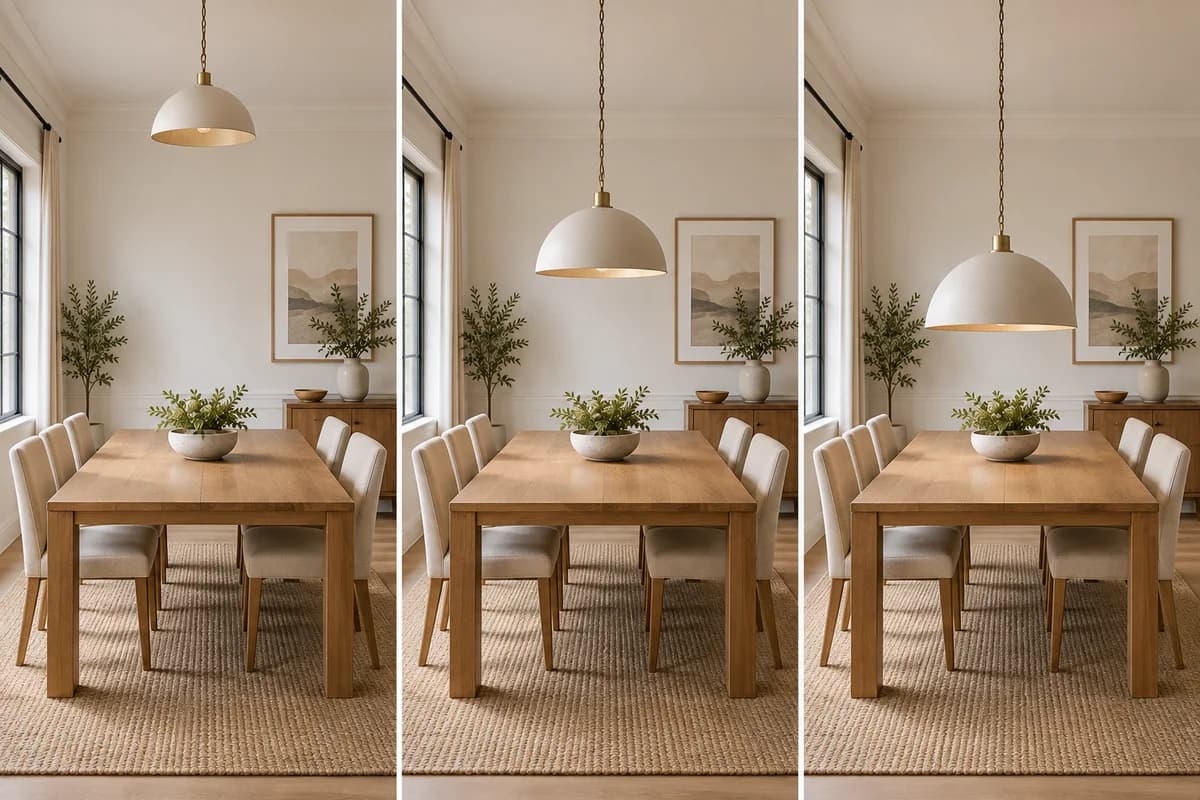
Dining pendants relate to the table, so measure from the tabletop to the lowest visible part of the fixture—not only from the ceiling. Start around 30 to 36 inches, then test. This range is a decision zone, not a command.
2. Mock up the bottom edge
Tape a paper strip to the wall at the proposed height or hang a lightweight cardboard outline from string. Sit in every regular chair. Stand at the room entrances. The fixture should feel connected to the table without cutting across faces or dominating the room.
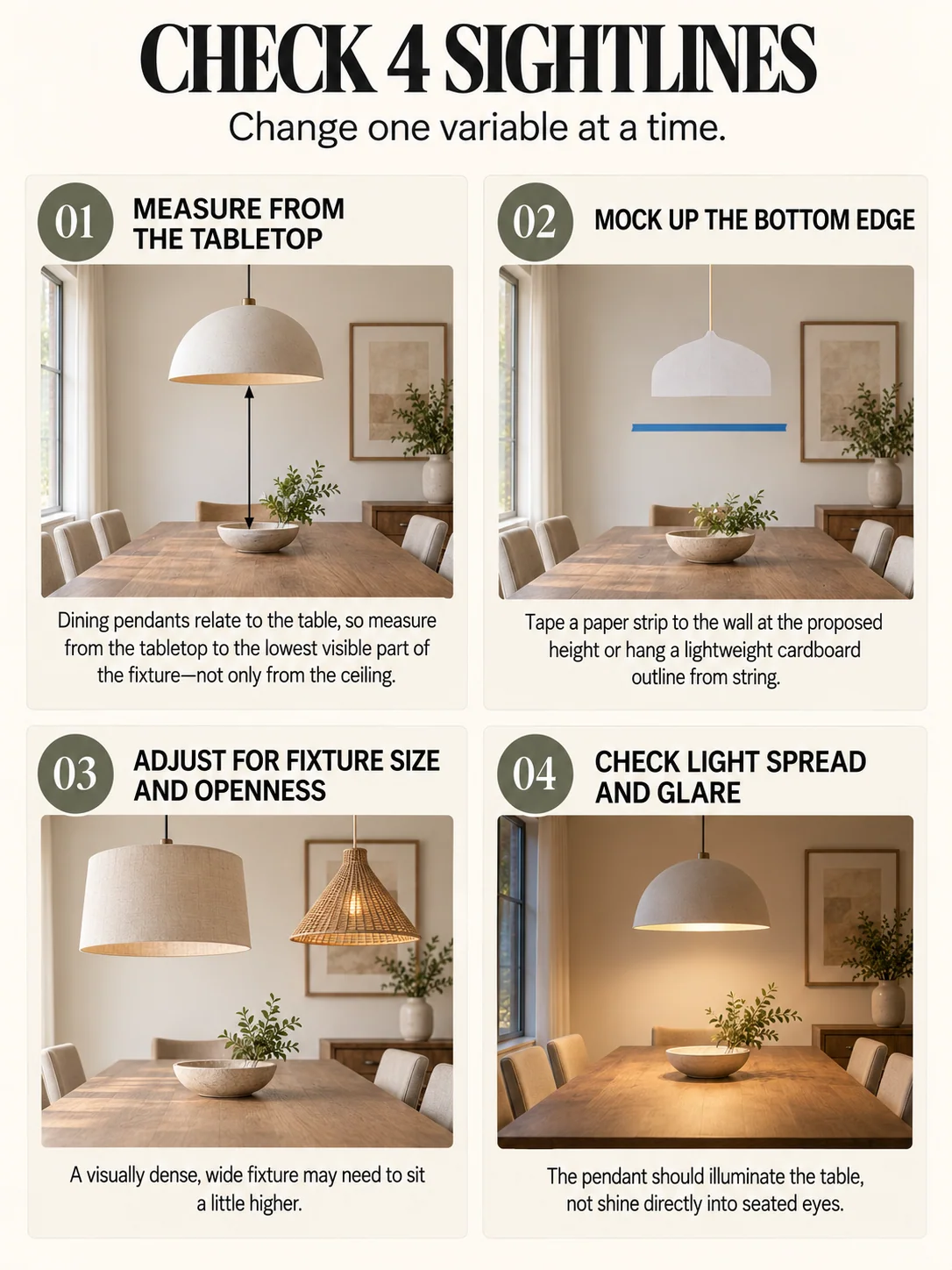
3. Adjust for fixture size and openness
A visually dense, wide fixture may need to sit a little higher. An open frame or clear glass pendant can often sit lower because it blocks less of the view. Judge visual mass, not diameter alone.
4. Check light spread and glare
The pendant should illuminate the table, not shine directly into seated eyes. Diffused shades are more forgiving; exposed bulbs require careful height and dimming. Test the actual bulb output before making the cord or stem permanent.
5. Keep the fixture centered on the table
Center the pendant on the dining table rather than automatically on the room, especially when the table is intentionally offset. If the table may move often, use a ceiling hook or adjustable system designed for that purpose and installed correctly.
A five-minute room test
Mock up the decision before drilling, buying or carrying heavy pieces. Use painter’s tape, cardboard, stacked books or objects you already own to mark the proposed outline. View it from the main doorway, the closest seat and the route through the room. A choice that looks correct in one photograph can still obstruct movement or feel wrong from where the room is actually used.
Test the first two situations in the table while holding everything else constant. Compare “Standard starting point” with “Large visual fixture” and notice whether the stated checks—“Measure to fixture bottom” and “Protect sightlines”—are satisfied. Take quick photos from the same position. The fixed camera makes scale and placement differences easier to see.
Common mistakes to avoid
Do not style or install around an imaginary empty room. Include the doors, chairs, serving pieces, switches and sightlines that will be present in daily life. Avoid adding more objects to disguise an unresolved proportion; editing is often the faster correction.
Finally, treat numeric guidance as a starting range where the article says it is one. Actual fixture construction, furniture size and room use still matter. The successful result should remain safe, reachable, cleanable and visually clear after the room returns to normal use.
The final check
Step back and look for one clear relationship: the eye should understand what leads, what supports it and whether the result still works in real use. If something feels off, change one variable at a time instead of replacing everything. That is the fastest way to learn which detail is doing the work.
Frequently asked questions
Is 30 inches too low over a dining table?
Not necessarily. It is a common starting point, but a large opaque fixture or tall sightline may need more clearance.
Do high ceilings mean the pendant should hang much higher?
Usually only modestly. The fixture should still relate visually to the table rather than floating near the ceiling.
Should the pendant be centered in the room or over the table?
Center it over the table when the table placement is deliberate; the dining composition matters more than the room center.