A dining table is not selected in a showroom. It is selected in a room containing doors, chairs, people and the route to the kitchen.
That room usually has an opinion about shape.
| Decision | Round table | Rectangular table |
|---|---|---|
| Room shape | Square or compact | Long or rectangular |
| Circulation | No corners; easier diagonals | Clear linear routes |
| Conversation | Everyone faces inward | Works well along both long sides |
| Seating flexibility | Pedestal base helps | Benches and leaves are easy |
| Serving surface | Center can be hard to reach when large | More length for platters |
| Visual effect | Soft and sociable | Structured and architectural |
The round-table case
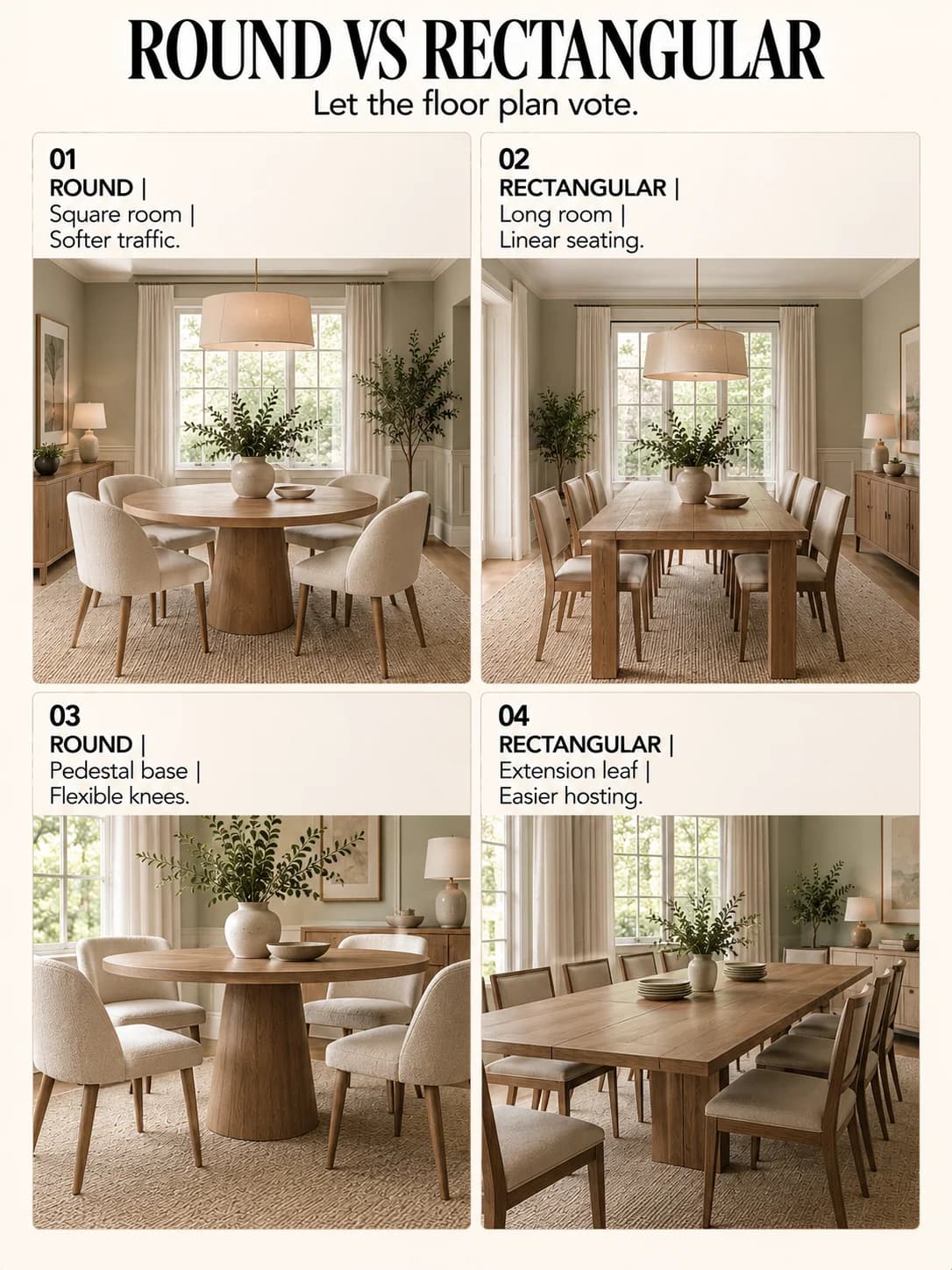
Round tables suit square rooms, compact breakfast areas and spaces where people cross diagonally. No corners means fewer sharp interruptions in the walking path.
A pedestal base matters. Four legs on a small round table can dictate exactly where knees are allowed to exist. Check the base diameter and where feet will land, not only the tabletop size.
Round tables also keep everyone oriented toward the center. Once the diameter grows very large, however, that center becomes difficult to reach and conversation across it can feel less intimate.
The rectangular-table case
Rectangular tables follow the direction of long rooms. They give platters a clear central lane, accept benches easily and are commonly available with extension leaves.
They also create corners, which require room. In a narrow space, a rectangular table may fit visually but leave one chair permanently negotiating with a wall.
Count chairs in their least convenient position
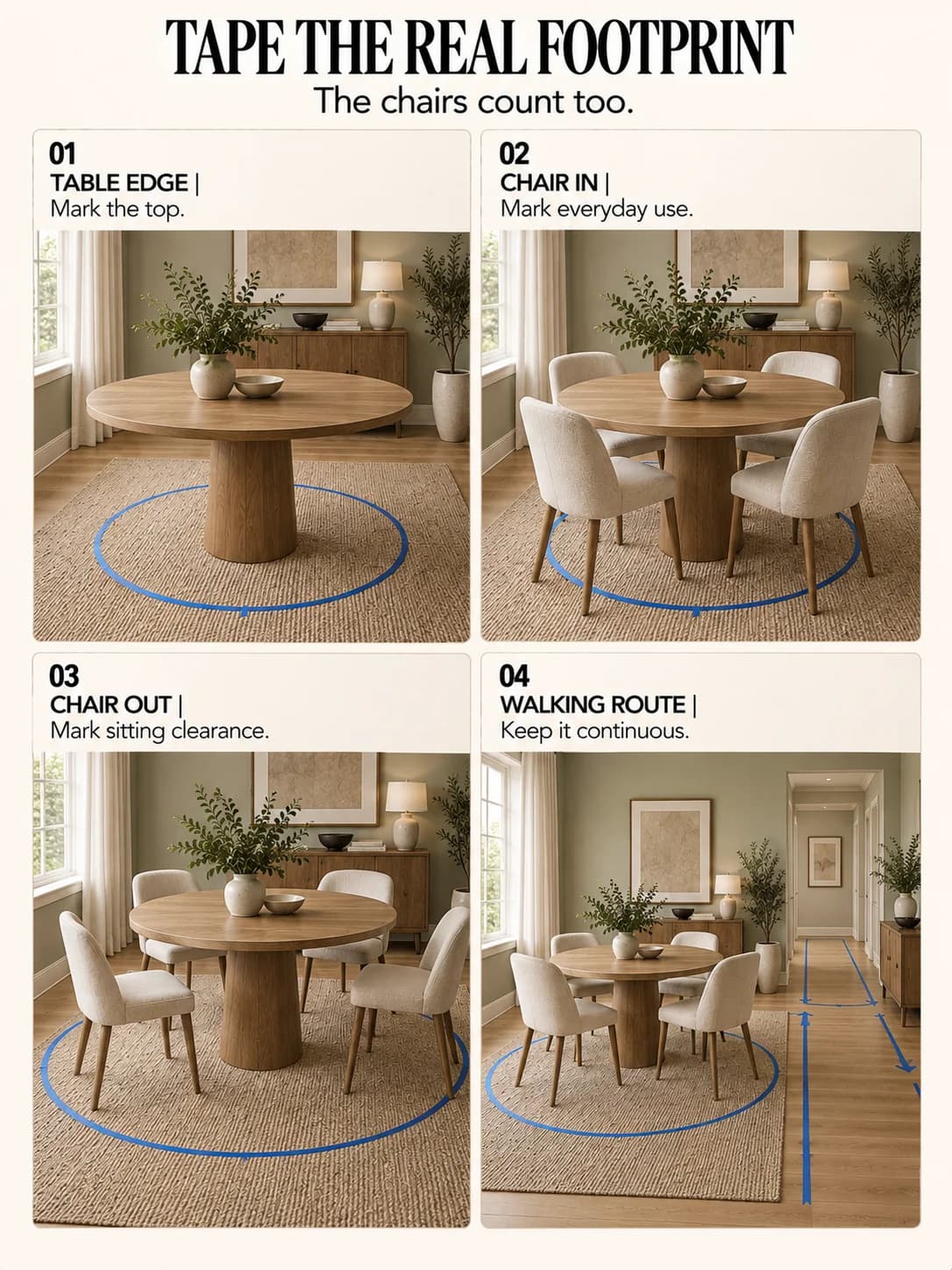
Do not measure the table with every chair tucked in. Mark where a chair sits when someone is using it, then mark the route behind that person. About 36 inches around a table is a common planning starting point, but actual chair depth, traffic and accessibility needs may require more.
The same practical lesson appears in sizing a rug under a dining table: measure the chair movement, not only the furniture at rest.
Think about ordinary Tuesday and maximum holiday
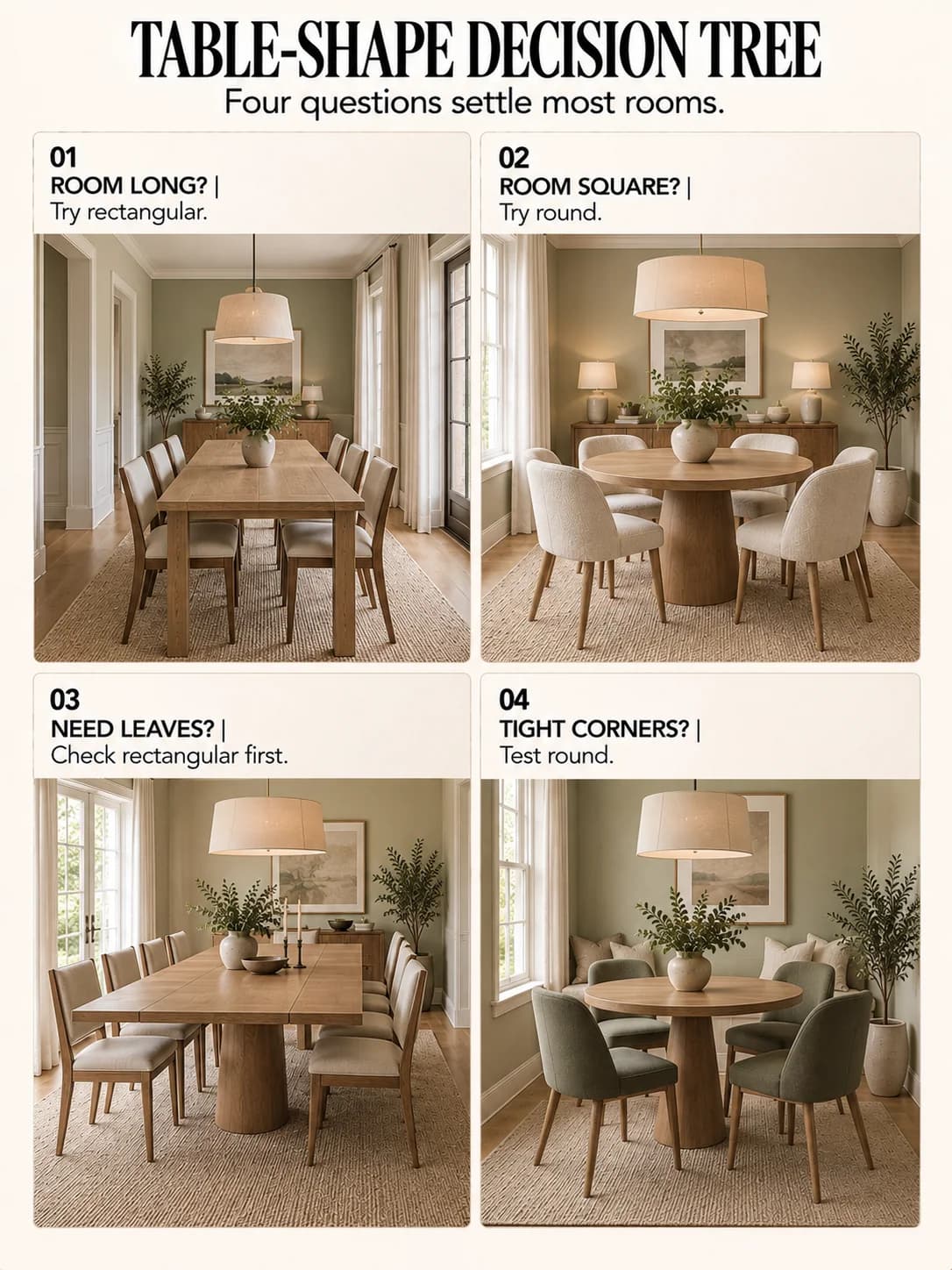
How many people use the table most days? How many arrive occasionally? A rectangular extension table can expand in one direction. A round extension table often becomes oval, which changes both the seating and the room footprint.
If the table is usually small, avoid buying for the largest dinner you might host once every three years. Folding tables are allowed to have a career too.
Serving style changes the useful surface
Family-style platters need reachable center space. A very wide round table can place dishes beyond comfortable reach. A narrow rectangular table may fit the room but leave no central serving lane once plates and glasses are set.
Centerpiece plans matter here. A dining centerpiece should leave room for dinner, which sounds obvious until the flowers become the largest guest.
Put both tables on the floor before buying either
Use painter’s tape for the tabletop outline. Add paper or cardboard for chairs, first tucked and then pulled out. Walk every real route: kitchen to table, hallway to patio, chair to sideboard.
Move the tape until the room stops making you turn sideways.
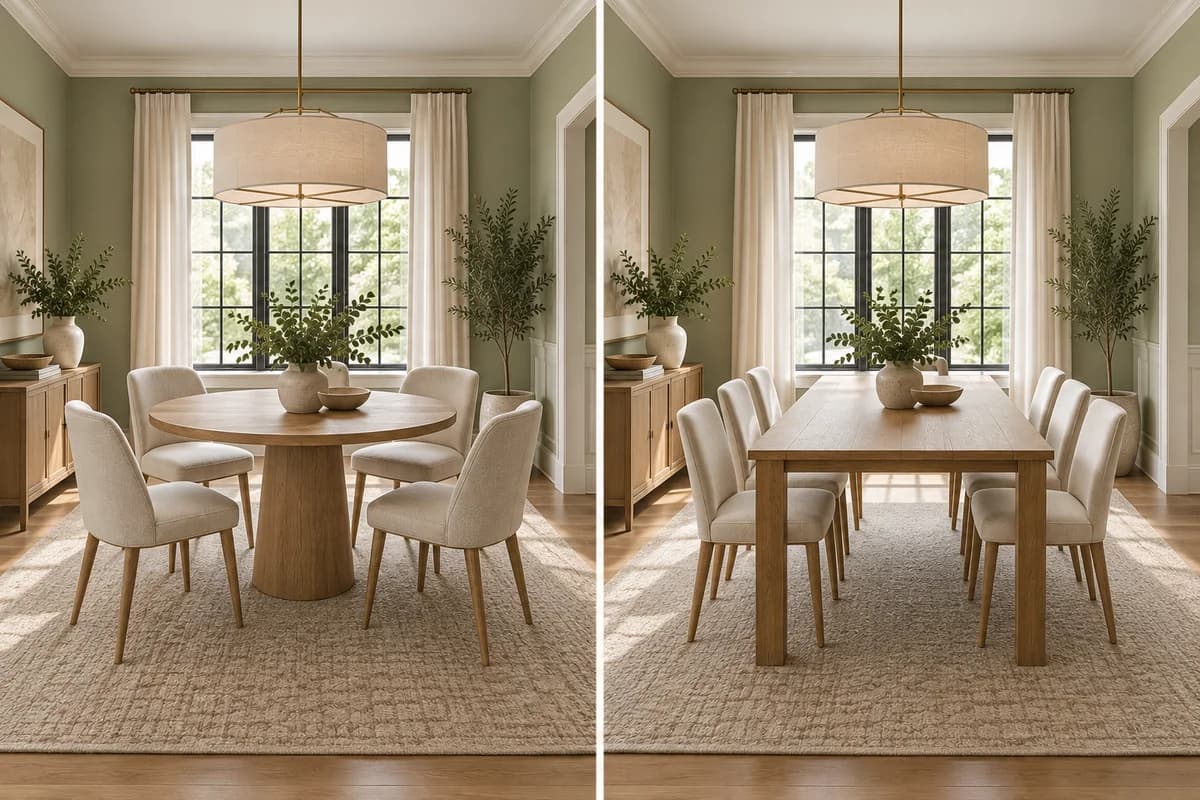
Round is softer. Rectangular is more directional. Neither is automatically better for small spaces or large families. The winner is the shape that gives the people at the table enough room to arrive, sit and get up again.
Frequently asked questions
Is a round table better for a small dining room?
Often, because it removes corners and can improve diagonal circulation. Measure chair pull-out space and check the base before deciding.
Which table seats more people?
Rectangular tables usually scale to larger capacities and often offer extension leaves. A round table can seat efficiently when it has a pedestal base.
Can you put a round table in a rectangular room?
Yes. It can create contrast or define one end of an open plan, but the remaining circulation and furniture layout should support it.