Choose a dining centerpiece by table shape, sightline, serving plan and stability, with low formulas for everyday and entertaining.
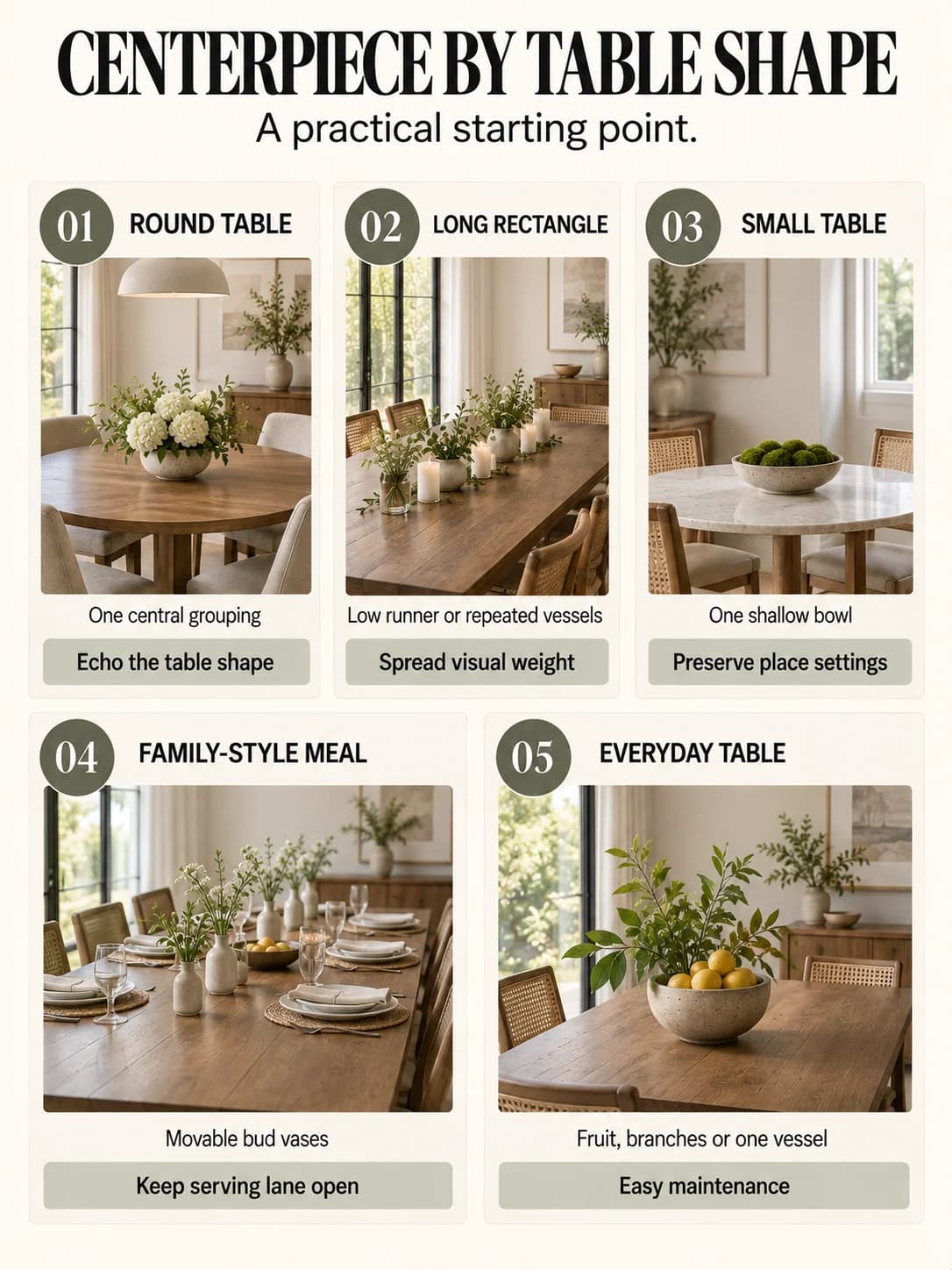
| Situation | Use | Check |
|---|---|---|
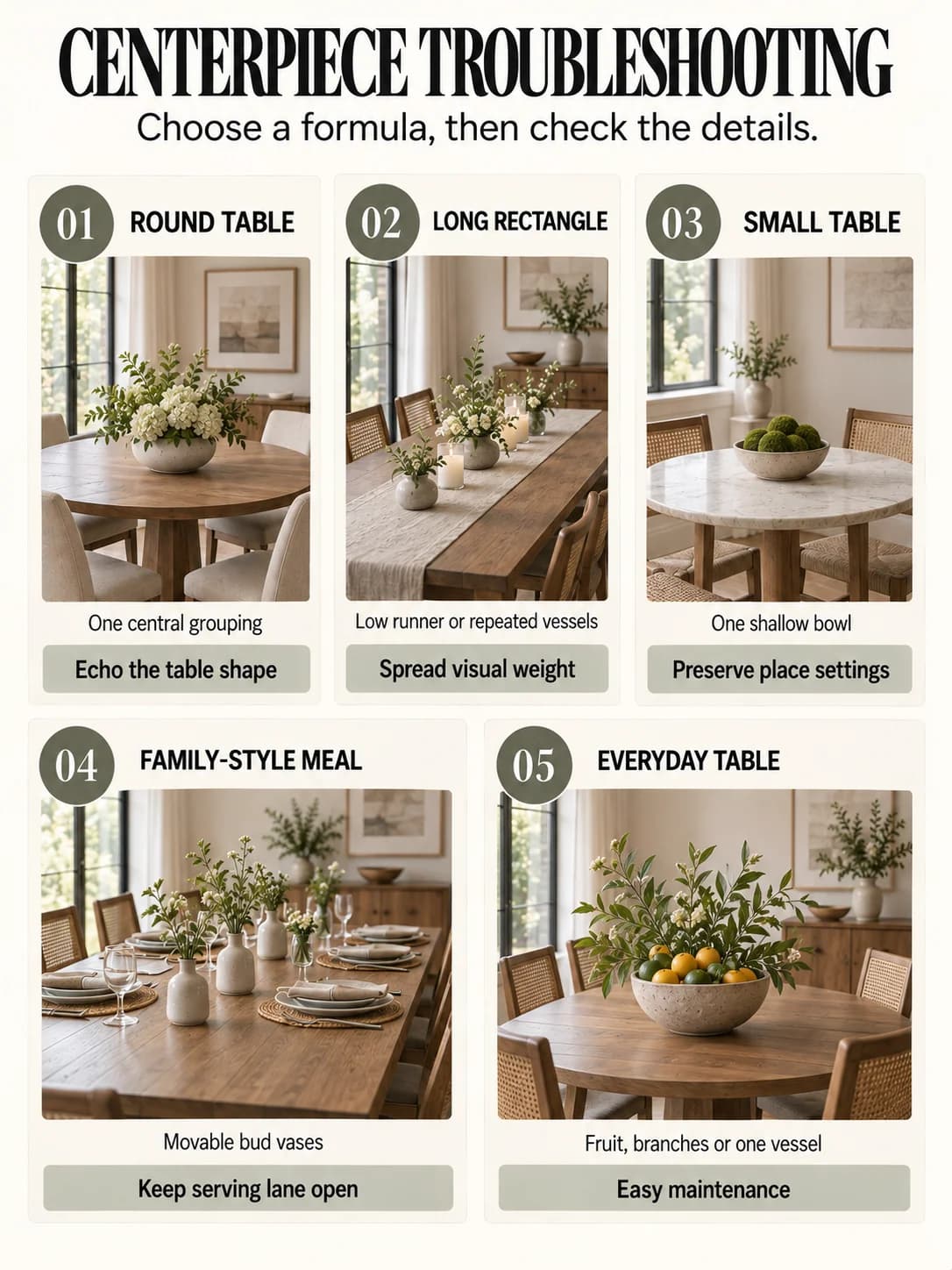
| Round table | One central grouping | Echo the table shape |
| Long rectangle | Low runner or repeated vessels | Spread visual weight |
| Small table | One shallow bowl | Preserve place settings |
| Family-style meal | Movable bud vases | Keep serving lane open |
| Everyday table | Fruit, branches or one vessel | Easy maintenance |
1. Start with the meal plan
Before arranging flowers, decide where platters, water, condiments and serving utensils will go. A centerpiece is successful only if the table still works. For family-style service, reserve a clear lane down the center or use small pieces that can move in seconds.
2. Protect the conversation line
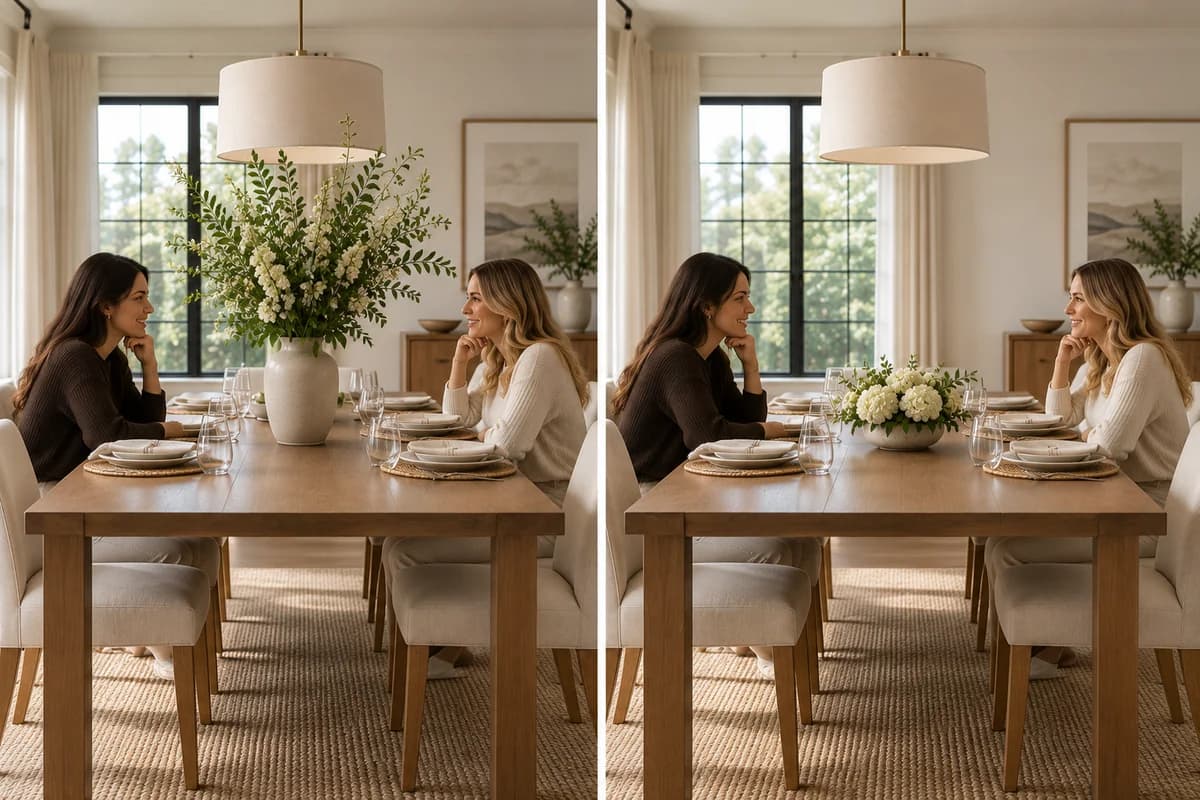
Sit in the chairs and look across the table. Keep most of the arrangement below the line between faces, or raise a narrow arrangement clearly above it. The difficult zone is a dense arrangement directly at eye level. The simple elbow-and-fist check can provide a quick low-height reference.
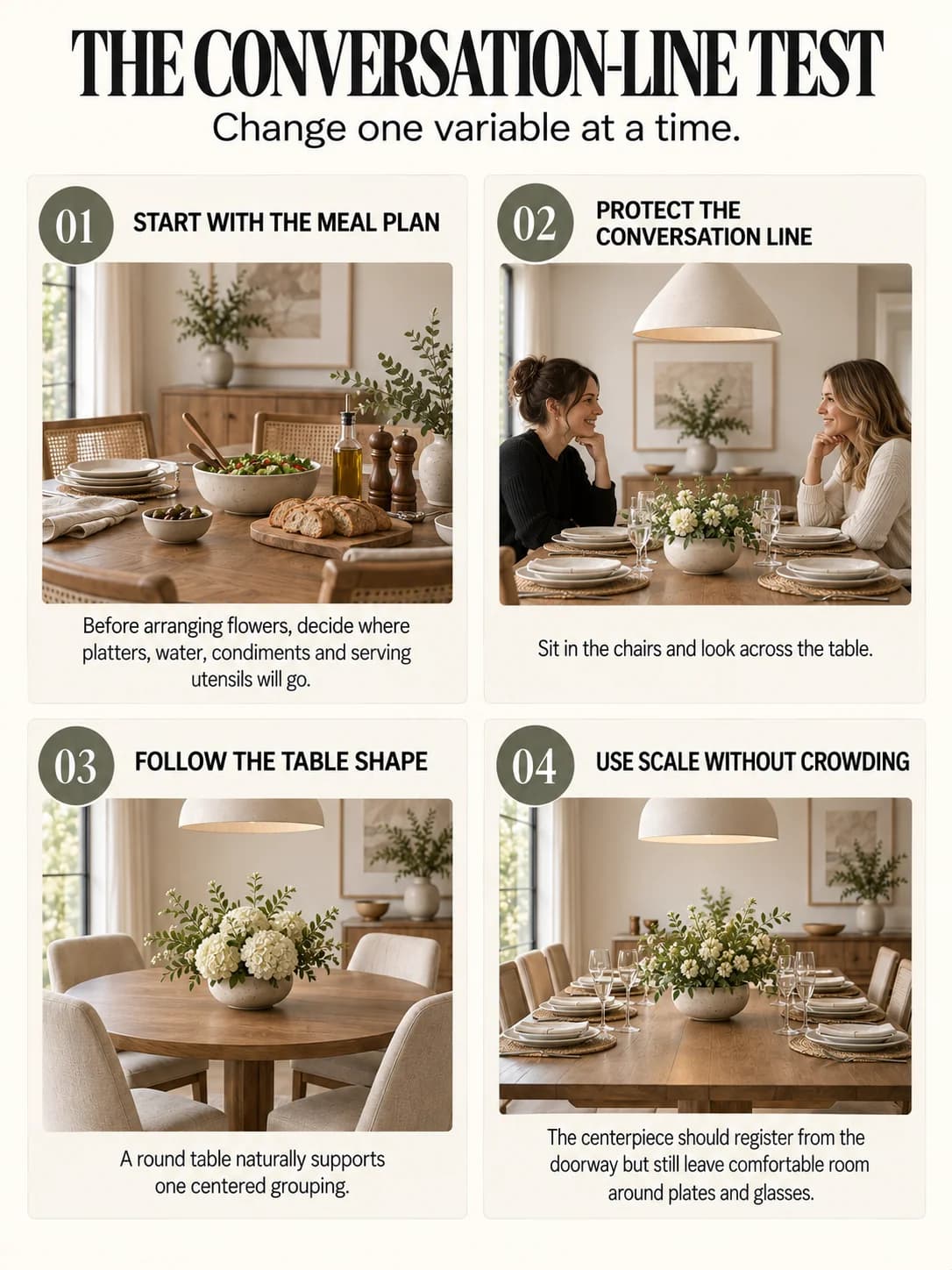
3. Follow the table shape
A round table naturally supports one centered grouping. A long table often looks more connected with a low runner, staggered bud vases or repeated candles. On a square table, a compact square or round composition keeps the corners available for place settings.
4. Use scale without crowding
The centerpiece should register from the doorway but still leave comfortable room around plates and glasses. Several low elements can create presence with less obstruction than one bulky vase. Keep branches, flames and trailing greenery away from sleeves and serving dishes.
5. Check scent, stability and cleanup
Strongly scented flowers or candles compete with food. Tall narrow vessels need stable bases. Water should be easy to refresh, and loose materials should not shed across the table. An everyday centerpiece works best when it can be maintained in a minute.
A five-minute room test
Mock up the decision before drilling, buying or carrying heavy pieces. Use painter’s tape, cardboard, stacked books or objects you already own to mark the proposed outline. View it from the main doorway, the closest seat and the route through the room. A choice that looks correct in one photograph can still obstruct movement or feel wrong from where the room is actually used.
Test the first two situations in the table while holding everything else constant. Compare “Round table” with “Long rectangle” and notice whether the stated checks—“Echo the table shape” and “Spread visual weight”—are satisfied. Take quick photos from the same position. The fixed camera makes scale and placement differences easier to see.
Common mistakes to avoid
Do not style or install around an imaginary empty room. Include the doors, chairs, serving pieces, switches and sightlines that will be present in daily life. Avoid adding more objects to disguise an unresolved proportion; editing is often the faster correction.
Finally, treat numeric guidance as a starting range where the article says it is one. Actual fixture construction, furniture size and room use still matter. The successful result should remain safe, reachable, cleanable and visually clear after the room returns to normal use.
The final check
Step back and look for one clear relationship: the eye should understand what leads, what supports it and whether the result still works in real use. If something feels off, change one variable at a time instead of replacing everything. That is the fastest way to learn which detail is doing the work.
Frequently asked questions
How tall should a dining table centerpiece be?
Keep it low enough for seated guests to see one another, or raise a narrow arrangement clearly above the conversation line. Test it while seated.
What centerpiece works on a long table?
A low runner, repeated bud vases, or a rhythm of candles and small objects spreads the visual weight without one bulky mass.
What can I use instead of flowers?
A shallow fruit bowl, clipped branches, potted herbs, candles, seasonal produce or a sculptural vessel can all work.