A silk scarf has an impressive talent for looking either effortless or as though it has an appointment at noon. Usually, the knot decides.
The modern version is less about mastering twelve complicated folds and more about choosing one place for the color to land.
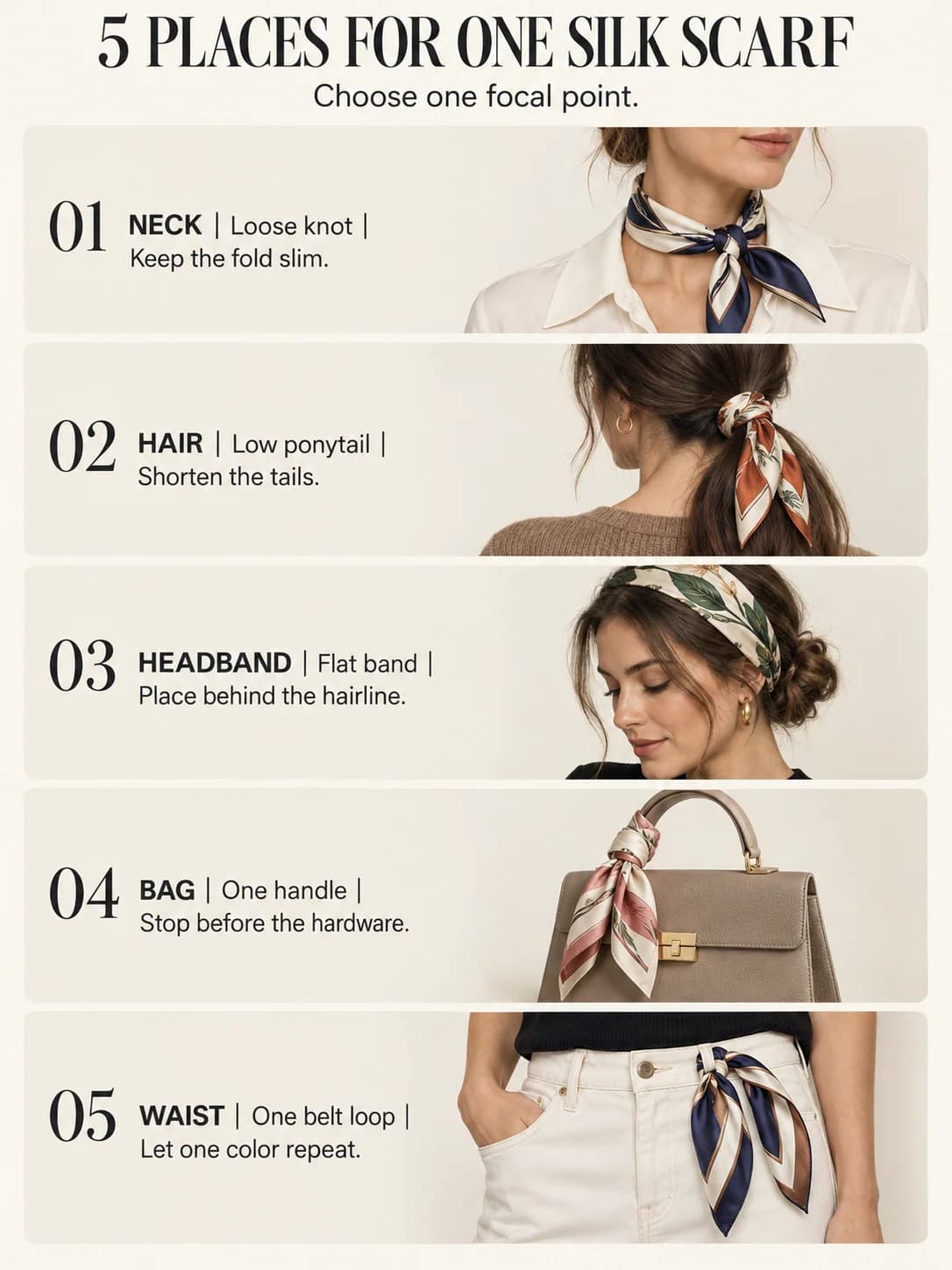
If it is going around your neck, loosen the evidence
Fold a small square into a narrow band. Tie one simple knot slightly off-center, then stop adjusting it. A perfectly symmetrical bow can feel formal; a short tail and a little breathing room look more relaxed.
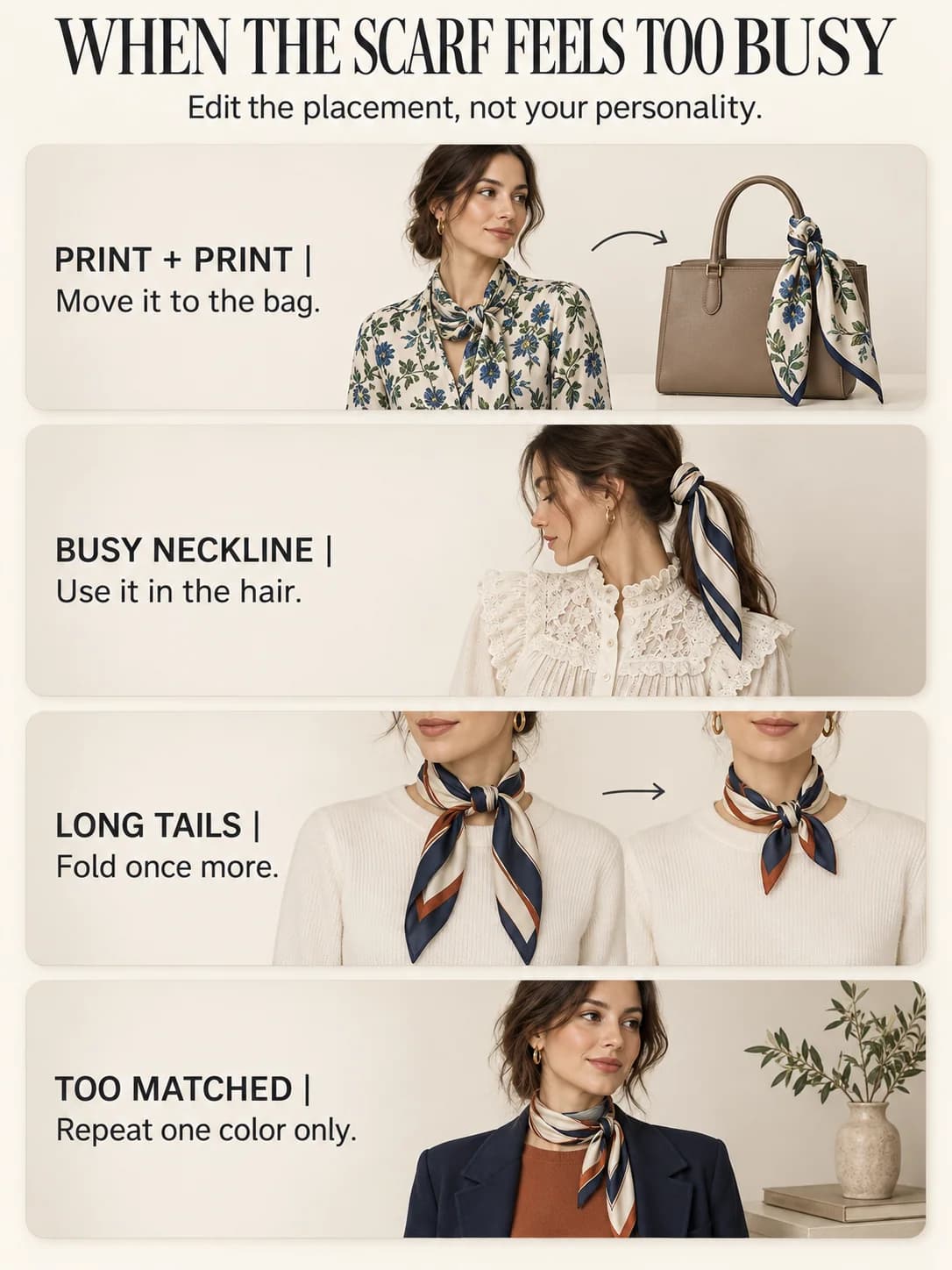
This works best with a plain tee, open button-down or fine knit. If the neckline already has a necklace, ruffle or strong collar, move the scarf elsewhere. Our guide to matching necklaces to necklines follows the same principle: the area around your face does not need four people giving a speech.
Hair is the easiest low-stakes placement
Tie the scarf around a low ponytail or bun, using a regular hair elastic underneath so the silk is decoration rather than engineering. Short tails feel neat. Longer tails add movement, especially with a simple shirt or dress.
For a headband, fold the scarf flat and place it just behind the hairline. Keep the knot at the nape. If it slides, a pair of hidden pins does more good than pulling the scarf painfully tight.
Let the bag do the scarf work
A handle wrap gives you color without adding anything near the face. Wrap one handle only, or tie a short knot where the handle meets the bag. Leave visible hardware and enough bare handle to hold the bag normally.
The scarf should support the bag, not gift-wrap it. Choose one shade from the scarf that already appears in the outfit. This is the accessory version of building a three-color combination: repeat one color and let the rest behave.
The belt-loop tie is surprisingly useful
Thread a small scarf through one front or side belt loop and knot it once. It gives jeans and trousers a focal point without the bulk of a full scarf belt. Keep the tails above mid-thigh so they do not tangle with pockets or bags.
This placement is especially good when the top is tucked or cropped and the waistband is visible. With an untucked long shirt, the scarf and hem simply argue behind your back.
| Option | Best with | Effect |
|---|---|---|
| Loose neck knot | Plain tee, shirt or knit | Soft focal point |
| Ponytail or bun | Simple neckline | Color away from the face |
| Headband fold | Open collar or crewneck | Graphic frame |
| Bag-handle wrap | Minimal outfit | Low-commitment accent |
| Single belt-loop tie | Jeans or trousers | Unexpected color at the waist |
Print decides how quiet everything else should be
A high-contrast print can be the main event. A tonal print behaves more like texture. Before adding earrings, a brooch and a patterned bag, decide which object is actually meant to lead. If the answer is all of them, the scarf has been invited to the wrong meeting.
If you enjoy combining accessories, a brooch can take the focal-point job while the scarf moves to the bag or hair. Separation keeps both details visible.
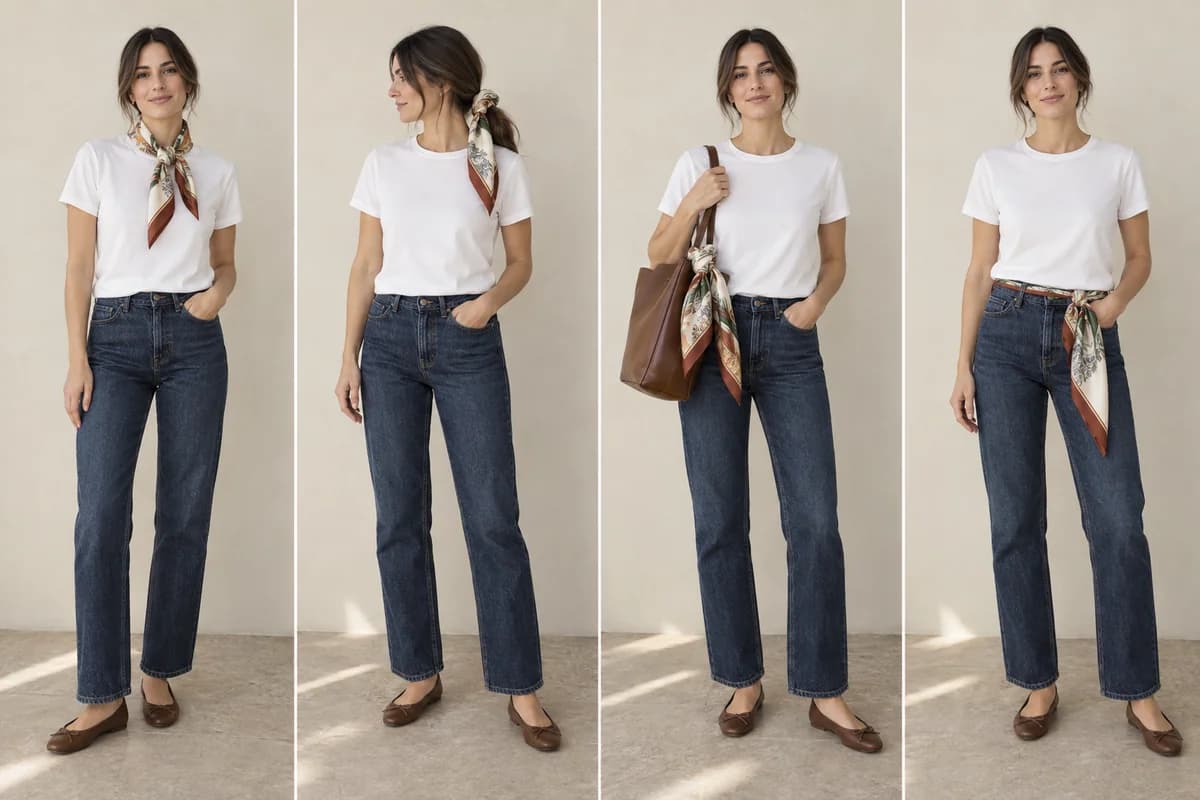
One scarf, four photographs
Try the same outfit with the scarf at the neck, hair, bag and waist. Take the photos from the same distance. The best placement is not the cleverest knot. It is the one that finishes the outfit without making you notice the scarf before you notice yourself.
Frequently asked questions
How do you keep a silk scarf from looking old-fashioned?
Use a compact, slightly relaxed tie and pair it with current simple pieces. Avoid combining several classic scarf signals in one outfit.
What size silk scarf is easiest to wear?
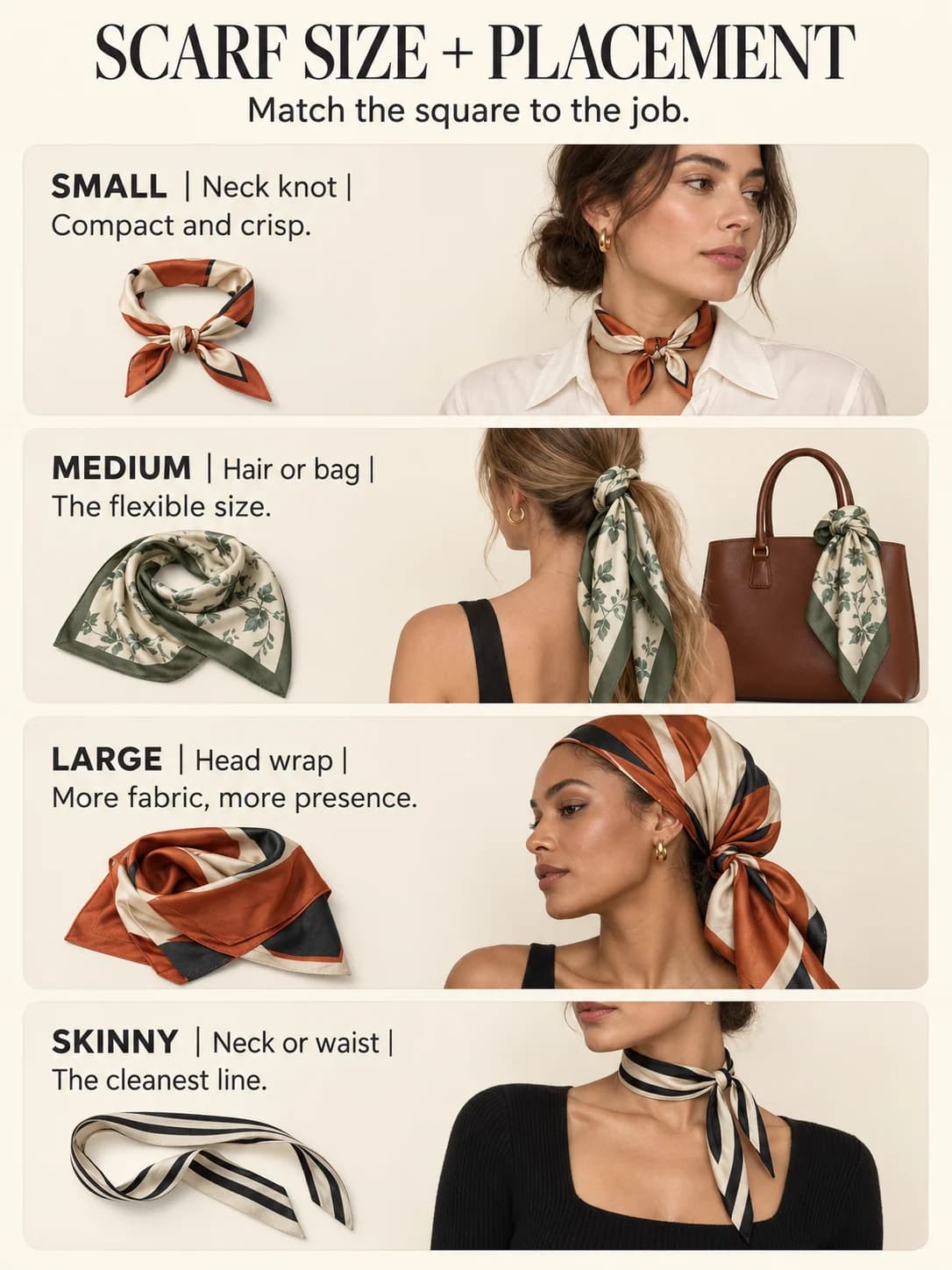
A small or medium square is easiest for neck, hair and bag ties because it folds neatly without very long tails.
Can a silk scarf work with a necklace?
Yes, but give one piece priority. A small chain can sit beside a loose scarf; a statement necklace usually wants the scarf moved to the hair or bag.