Try putting down an open book while lying in your usual sleeping position. If you first have to move a vase, reach across a lamp or balance the book on a stack, the nightstand is arranged for someone looking at it from the doorway. Its most useful layout starts with the person in the bed.
Map the last few minutes before sleep
Put only your actual bedtime objects on the empty surface: perhaps a lamp, glasses, water, one book and a phone. Lie down against the pillows you normally use and reach for each one. Your comfortable reach from that position matters more than an arbitrary distance measured from the mattress edge. Repeat the test sitting up to read because your head and arm will move.
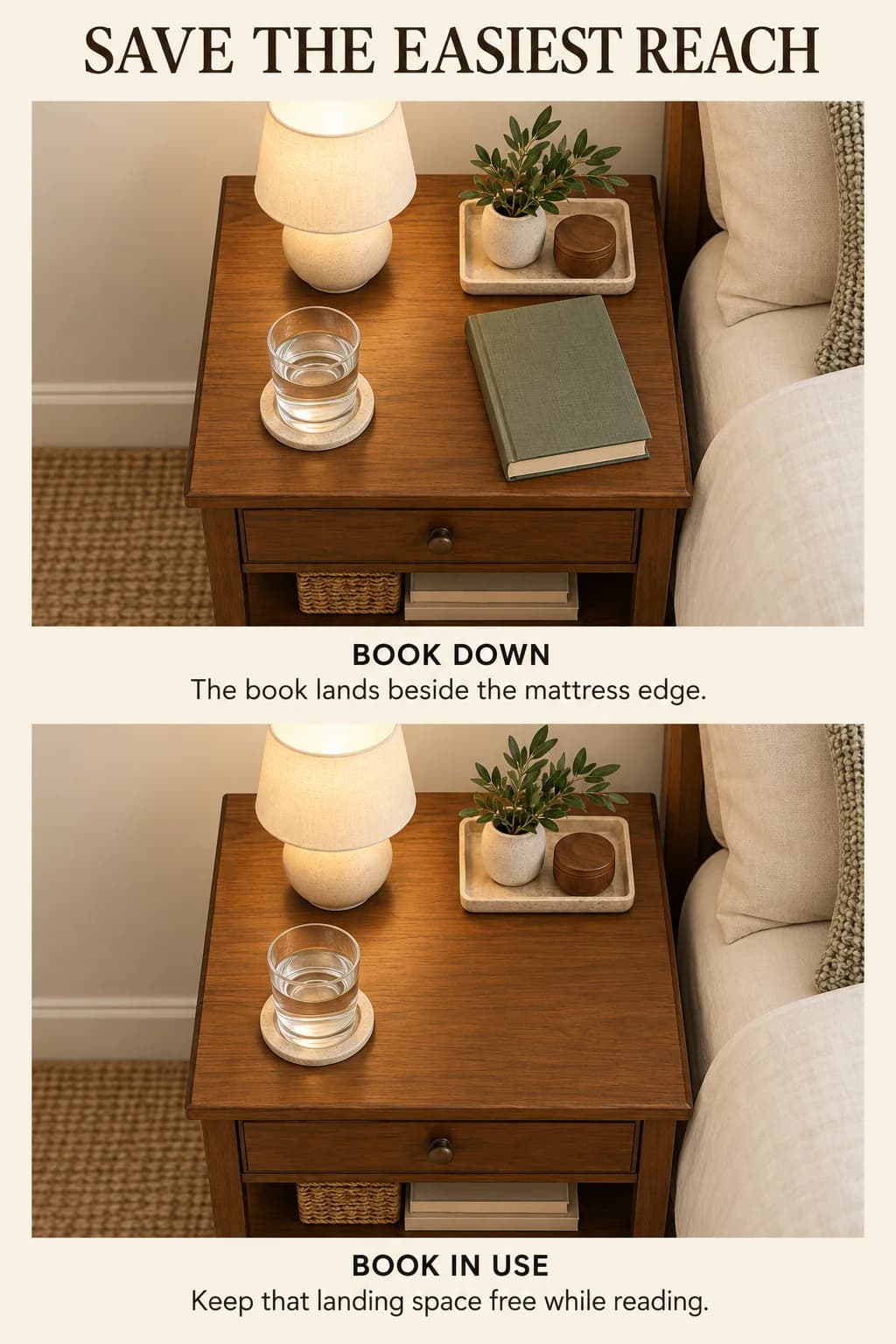
Reserve the easiest-to-reach area for the item you put down last. For a reader, that might be enough clear space for an open book. For someone who removes glasses after switching off the light, a stable glasses dish may deserve that position. Keep drinking water on a dependable spot where reaching for another object will not sweep it over.
If the whole tabletop is difficult to reach, moving decorative objects cannot solve the furniture relationship. Check the nightstand’s height relative to the bed and whether the table is too far behind the mattress or separated by a wide bed frame. Keep any bed drawers and the route out of bed usable.
A narrow 18-by-16-inch table: protect one clear patch
Consider an illustrative wooden nightstand 18 inches wide and 16 inches deep, with one drawer. The sleeper reads a paperback, keeps glasses beside the bed and wants water within reach. A compact lamp with a 5-inch base sits at the back outer corner, away from the mattress side. Its shade stays within the available space instead of projecting into the sleeper’s shoulder. The lamp’s reachable base switch faces the bed.
A small glasses dish sits toward the back inner side. A water glass on a stable coaster occupies the outer front corner, separated from the lamp’s electrical parts. The front area nearest the mattress remains clear for the book. Check the actual objects on the actual top: an 18-inch width does not guarantee this arrangement if the lamp has a wide shade or the glass is easily knocked over.
During reading, the book is in the sleeper’s hands. At lights-out, it goes into the clear landing area, the glasses enter their dish and the switch remains accessible without reaching across the water. In the morning, the glass returns to the kitchen and the book moves into the drawer if the top needs to be clear. That sequence explains the arrangement better than a rule about using three decorative objects.
If the lamp consumes most of the surface, remove the optional photograph or vase before shrinking the working area. If that is still insufficient, consider an appropriately installed wall light or a manufacturer-approved clip light suitable for the furniture. A smaller lamp base can help, but check the shade and switch as well; the base alone does not describe its usable footprint.
A larger 28-by-18-inch table: separate current use from storage
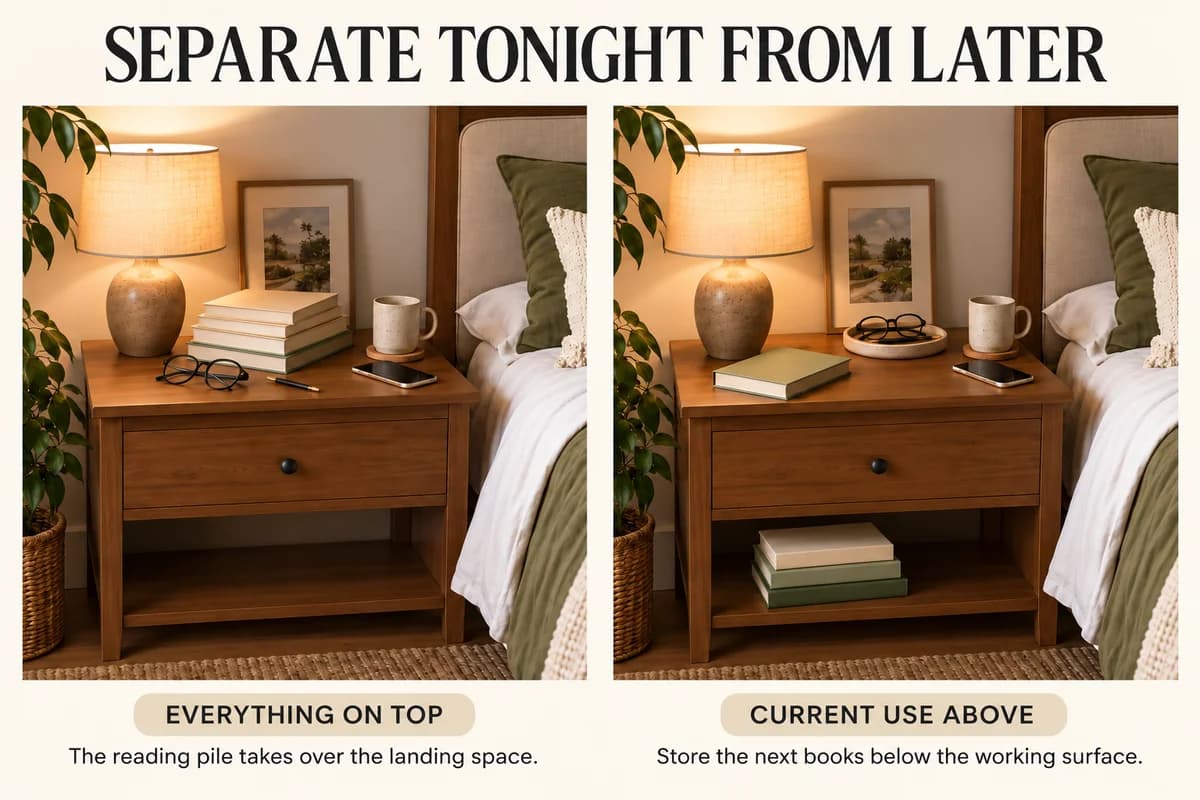
A second illustrative nightstand measures 28 inches wide and 18 inches deep and has a drawer plus an open shelf. This sleeper uses a reading light, notebook, glasses, phone and water. Place a shaded lamp at the back outer side. Keep the front half nearest the bed open for the notebook or the book currently being read, rather than displaying the entire reading pile there.
A shallow tray at the back inner side can hold glasses and a pen. Use a tray small enough that you can lift out either object without rearranging the rest; raised handles or deep sides can make it awkward from bed. The phone can rest on a separate dry spot, with its charging lead routed toward the rear and enough slack that it does not pull the phone off the top. Water gets its own stable coaster away from the charging area.
The shelf holds the next two books. The drawer takes spare charging leads, tissues or other occasional items in a small organizer, according to what the user needs. Do not assume that a drawer is an appropriate place to operate charging equipment: follow the device and furniture instructions, including ventilation and cable routing. Store medicines according to their requirements and away from children and pets, rather than treating them as display accessories.
This larger surface can support one personal object, such as a small framed photograph at the back. Place it after completing the night-time routine. If it blocks the clock, switch or view of the tray, it has not earned that position merely because there is room in a photograph.
Keep the reset smaller than the collection
Set a simple limit based on the layout: one current book or notebook stays on top, while the next reads remain below. A tray should collect a few small objects, not turn into a second drawer. If receipts, jewelry and extra books return every day, move their storage closer to where you actually remove or use them. Repeated clutter often points to a missing destination, not a need for a larger tray.
Check the light with your head on the pillow
A lamp that looks proportionate beside a tall headboard can expose its bulb when you lie down. Check both reclining and reading positions. If the source is glaring, adjust the shade or lamp position so it shields the source while still lighting the page. Merely reducing brightness may leave a dim book beside the same irritating point of light. The lampshade sizing guide helps distinguish a shade-fit problem from a placement problem.
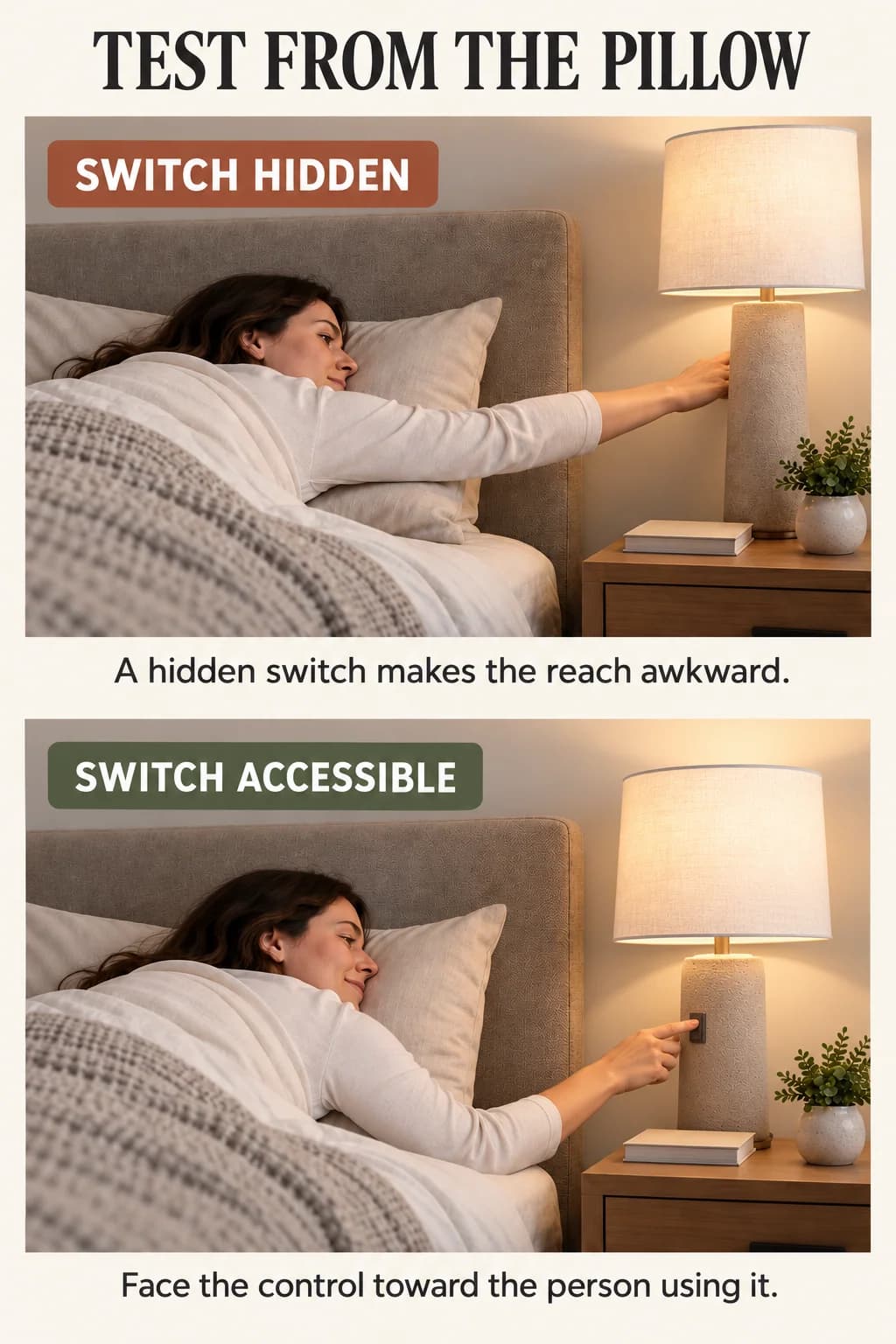
Put the switch where your hand can find it without reaching behind hot or fragile parts. If moving the lamp forward eliminates the landing area, a different lamp or an accessible control is a better solution than a crowded surface. Choose controls the actual user can operate, including anyone with limited grip or reach.
Let the two sides of a bed work differently
Partners do not need matching tabletop inventories. A reader may need a directional light and book space; the other person may prefer glasses, water and an empty surface. Aim the reading light toward the page and check from the other pillow for spill. Matching finishes can provide visual continuity even when the lamps or storage differ.
Necessary bedside equipment takes priority over styling. Preserve the access, stable support and ventilation its manufacturer requires; do not conceal it inside a decorative box. Route cords outside walking paths and away from points where furniture or drawers can pinch them. Do not hide them under rugs or bedding.
After a few nights, judge the arrangement by what happens without thought: where the book lands, whether the glasses are easy to find, and whether the light turns off without a stretch. Move the objects that keep interrupting that sequence. A useful nightstand is allowed to look different in the morning because it has done its job overnight.