A necklace stack is read as a set of landing points. The eye notices where each chain sits, where each pendant stops and whether those points collide with the neckline. Chain length matters, but the visible gap is the real measurement.
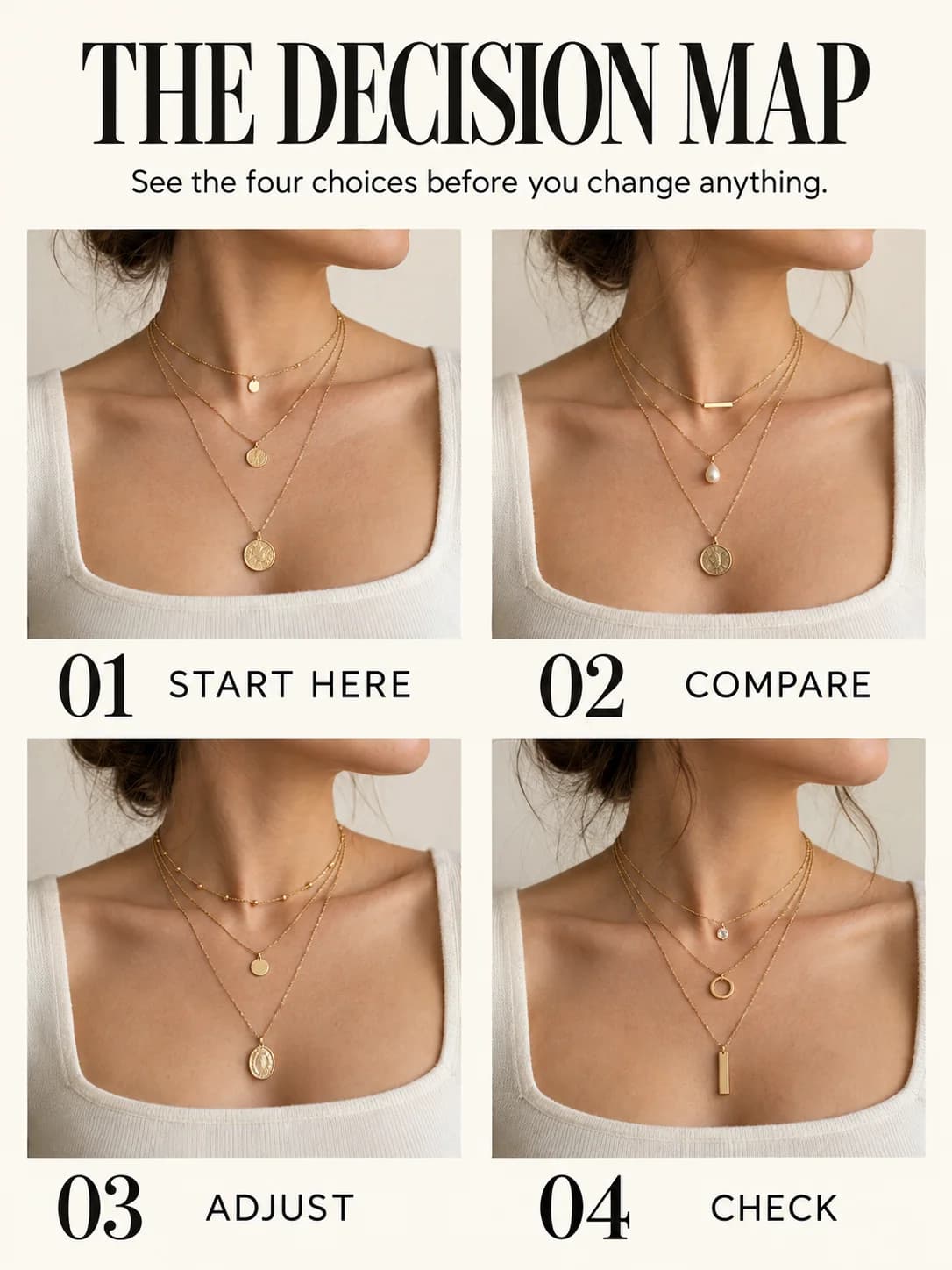
Build a two-necklace stack first
Choose a short chain that sits cleanly at the collarbone, then add a longer necklace with a pendant. The short piece provides a line; the pendant provides an endpoint. If both pieces carry large pendants, they compete in the same small area of the chest.
Lay the two necklaces on the shirt you plan to wear. A mathematically neat two-inch difference can vanish on a curved neck or over a raised collar. Adjust with extenders until both focal points remain visible when you turn your head.
For one-piece guidance before you start stacking, use the neckline positions in our necklace and neckline guide.
A third necklace needs a quieter job
With three pieces, let the top and bottom carry the interest and make the middle chain cleaner. A fine chain can bridge a choker and a pendant without creating a row of charms. If the shortest necklace has color near the face, keep the lower pieces more neutral so the stack has a clear hierarchy.
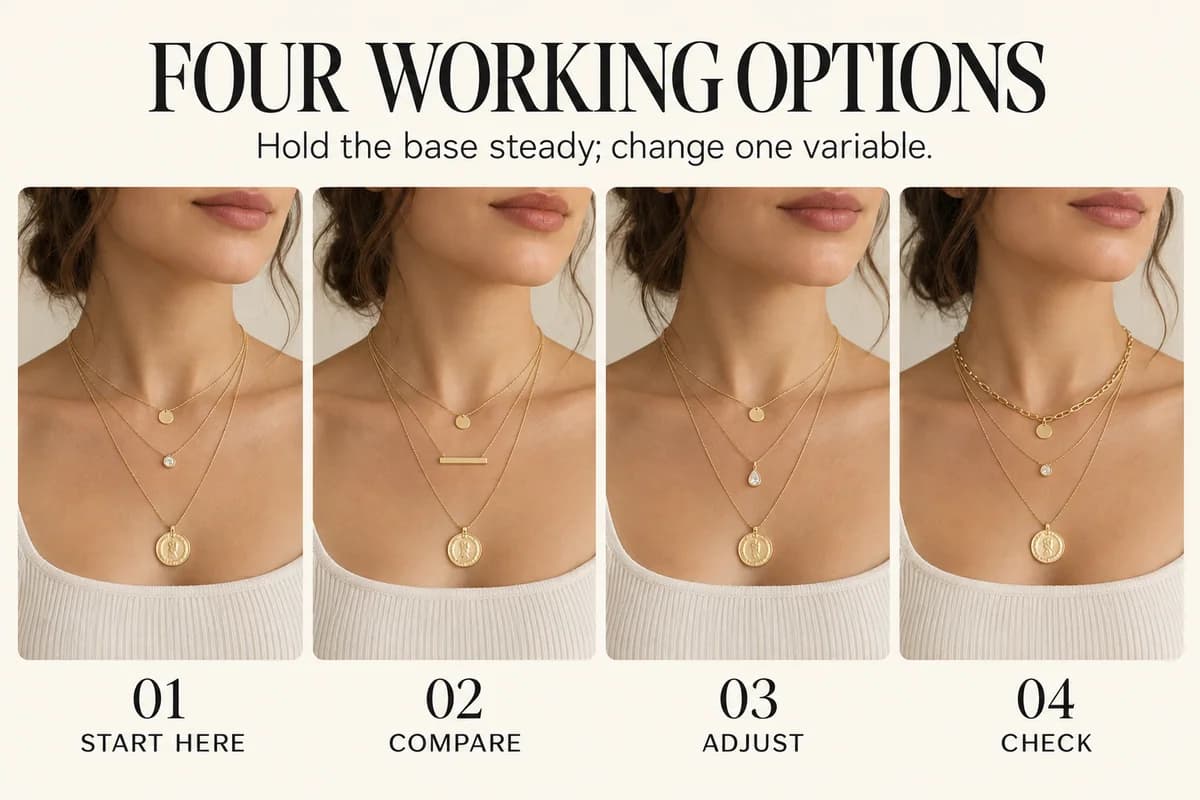
Mix texture before mixing everything else
A flat herringbone chain reflects light as a broad ribbon. Beside it, a fine cable, rope or paperclip chain creates separation even when the metal color is the same. Two chains with the same link size and weight are more likely to read as duplicates and to twist together.
Mixed metals can also create hierarchy, but repeat each metal once if you want the combination to feel deliberate. The easiest methods in our gold and silver jewelry guide work here too: use one bridge piece or distribute both tones instead of isolating one silver chain in a field of gold.
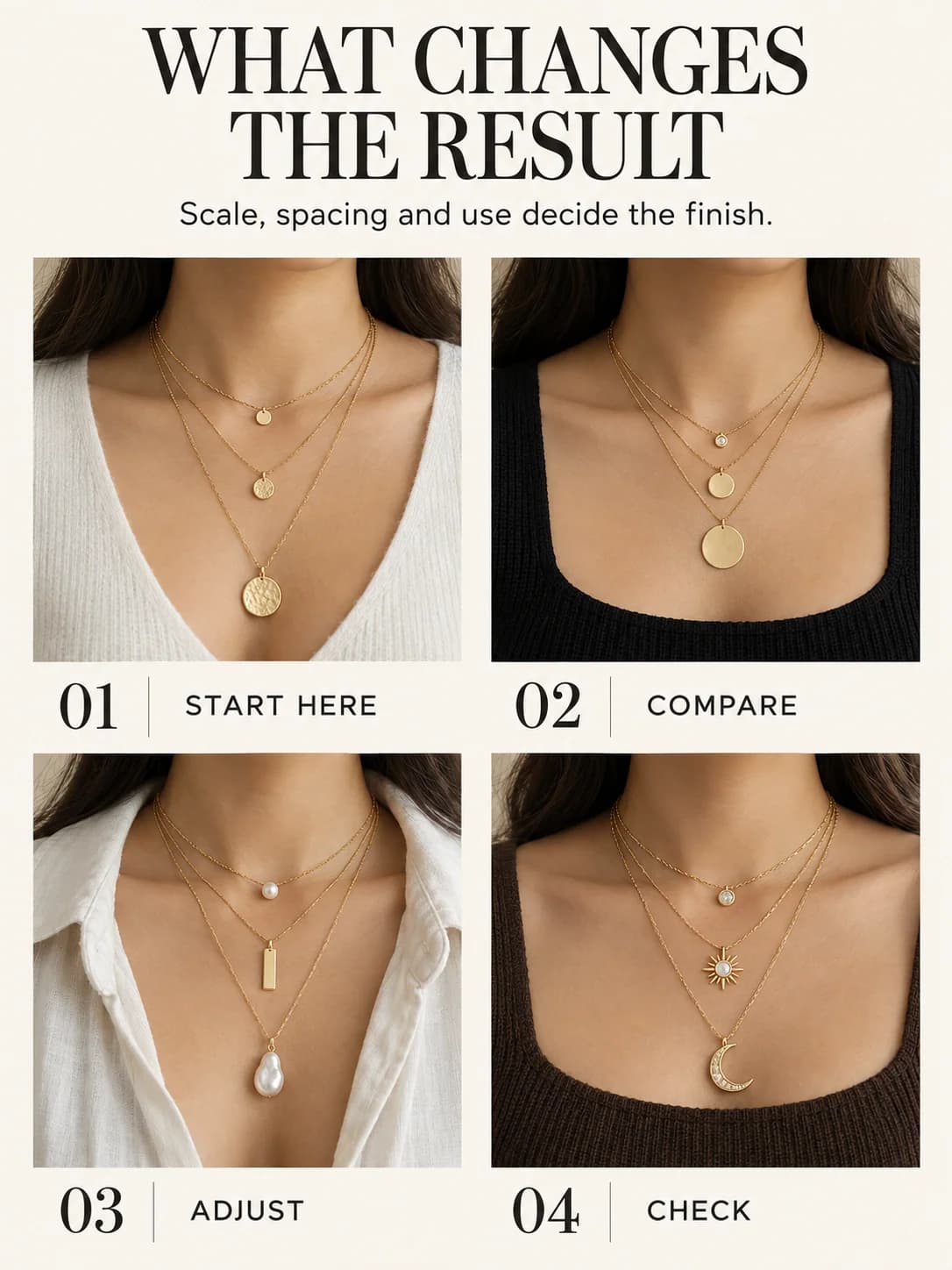
Match the stack to the available space
A crewneck leaves room above the fabric for short pieces. A V-neck invites one pendant to follow its angle. An open shirt creates a tall frame, while a turtleneck turns the garment into a background for longer chains. Busy prints and scarf knots already occupy the neckline; if you are also learning how to wear a silk scarf, give either the scarf or the necklaces the leading role.
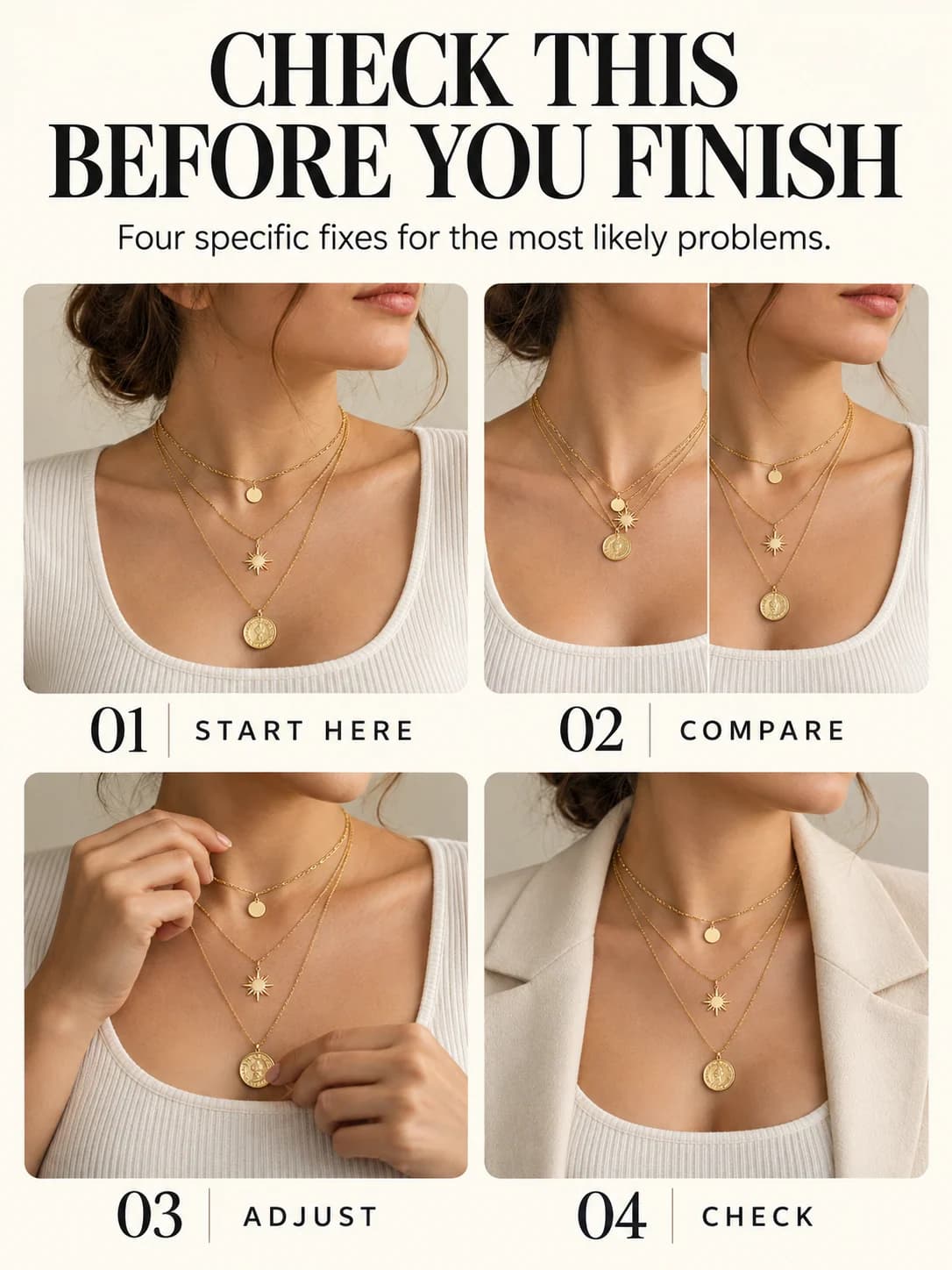
Tangles are a design problem and a hardware problem
Separate similar chain weights, avoid placing two pendants at the same height and fasten delicate chains on different extension links. A necklace separator clasp can keep several closures aligned, though it cannot fix pendants that overlap in front. Before leaving, bend, sit and put on your coat. The stack that behaves only while you stand perfectly still is auditioning for a photograph, not your day.
Two necklaces are a complete stack. Three are an option. Four require a reason and unusually cooperative chains.
Frequently asked questions
How far apart should layered necklaces be?
Use a visible gap rather than relying on a fixed measurement. Around two inches is a useful starting point, but neck shape, pendants and neckline change the result.
How many necklaces should I layer?
Two or three is usually enough for each piece to remain visible. Add more only when the chains and focal points stay distinct.