Put the hoodie on before judging the coat. A coat that fits over a T-shirt may have no spare room at the armholes, even when its body looks generously cut. The combination needs to work closed and moving, not only hanging open in a photograph.
Find out where the layers are competing
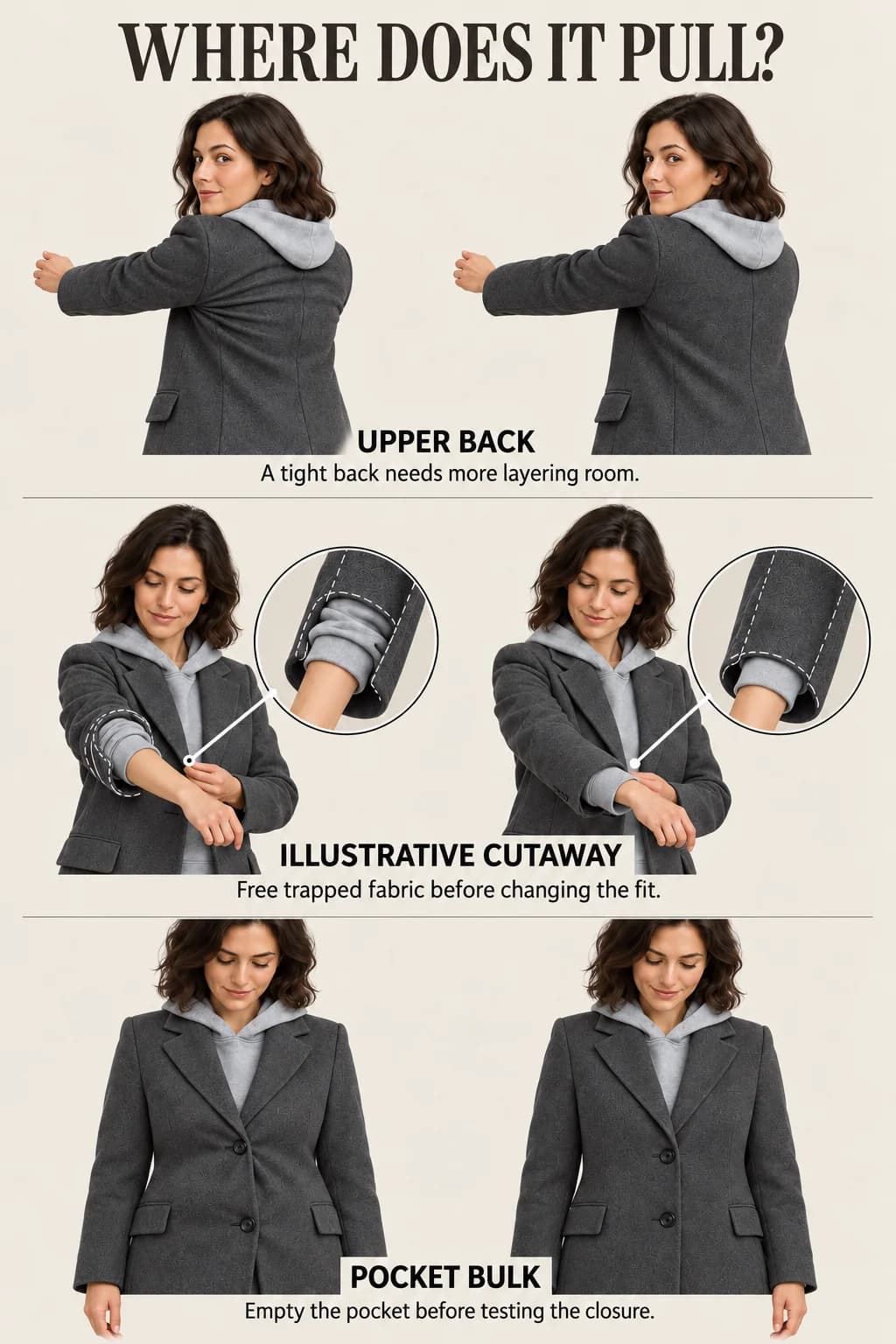
Start with the base layer you intend to wear. Pull the hoodie sleeves into place, then put on the coat without dragging the sweatshirt cuffs halfway up your arms. Close the coat, reach forward and sit. You are looking for the location of the restriction, because different problems need different fixes.
- Tight across the upper back: Reach forward as though picking up a bag. If the coat pulls strongly between the shoulders, try a thinner hoodie or a coat with more back and armhole room. Wearing it open changes the front; it may do little for the back.
- A rope of fabric inside the sleeves: Pull a trapped cuff back into place. If the sleeve still twists or pinches, the hoodie sleeve is too bulky for that coat. Dropped-shoulder sweatshirts can gather where a higher coat armhole begins, even when neither garment is too small by itself.
- A mound at the front fastening: Empty the hoodie pocket. A kangaroo pocket, heavy ribbed hem and coat buttons can stack at the same point. Try a flatter zip hoodie or a different coat fastening rather than tightening a belt over the mound.
- A collar pressing into your neck: Arrange the hood before deciding that the whole coat is too small. If the neckline remains uncomfortable once the hood lies flat, this pairing needs a different collar or thinner hood.
Do not automatically buy a coat a size larger. Extra body width does not guarantee the sleeve shape you need, and it can leave the shoulders in the wrong place. Try the actual layers together whenever possible.
Position the hood for the collar and the weather
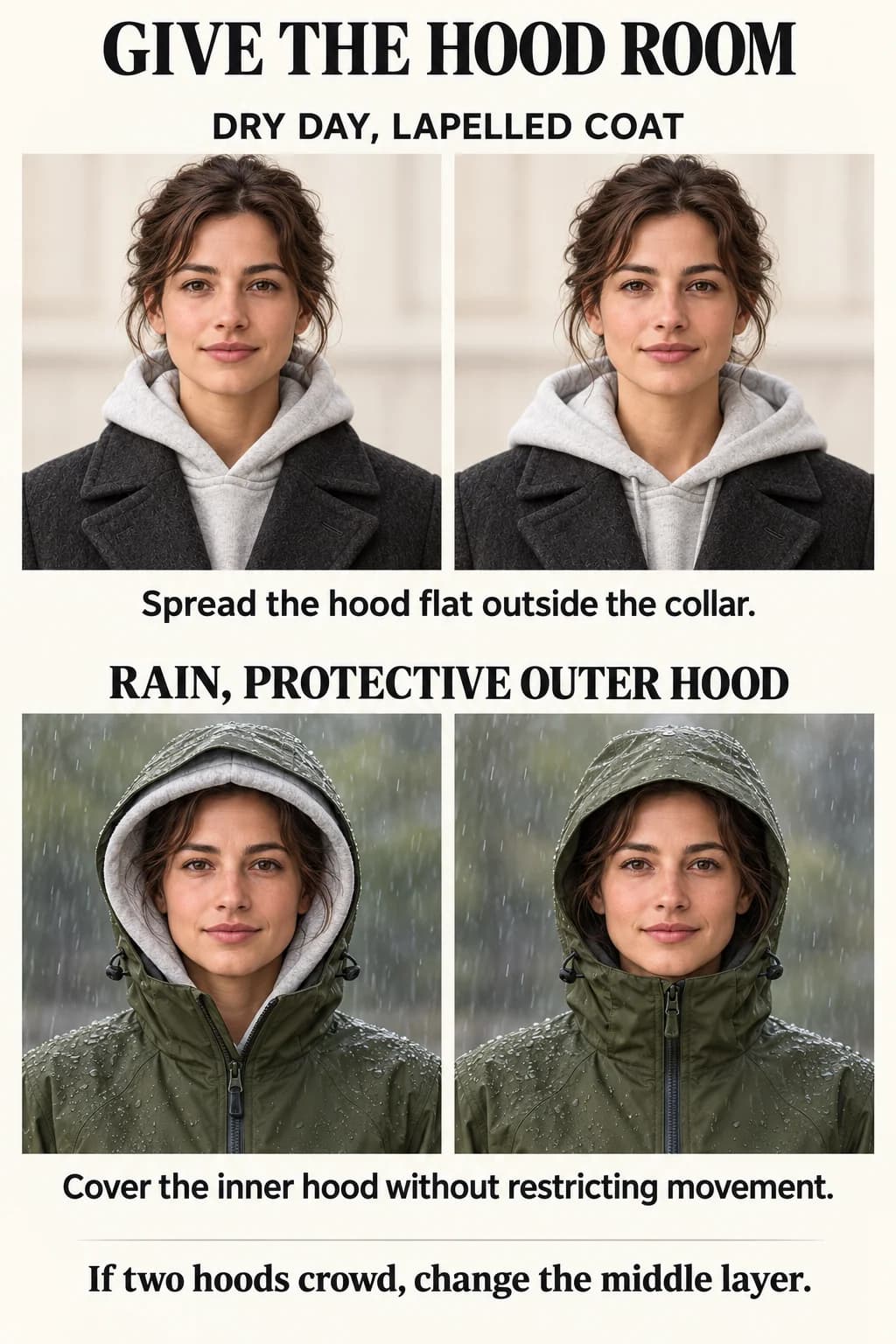
With an ordinary lapelled wool coat, bring the sweatshirt hood outside the coat and spread it over the upper back. Let the lapels frame its opening. A hood folded into a lump underneath the collar pushes the coat away from the neck; pulling the drawstrings tight will not flatten that lump.
A high stand collar is a different negotiation. Fasten it to the height you will use outdoors, then turn your head. If it presses the hood into your jaw, try a lighter hoodie or a coat with a lower neckline. Leaving the collar open is only a workable solution when the weather allows it.
Two hoods are not automatically wrong, but their bulk and function matter. In dry weather, a detachable outer hood can come off if the coat is designed for that. In rain, the protective outer hood needs to cover the sweatshirt hood without restricting your view or movement. If the two cannot nest comfortably, use a hoodless middle layer. Do not leave an absorbent sweatshirt hood exposed merely to preserve the look.
A wool coat for errands and a lunch stop
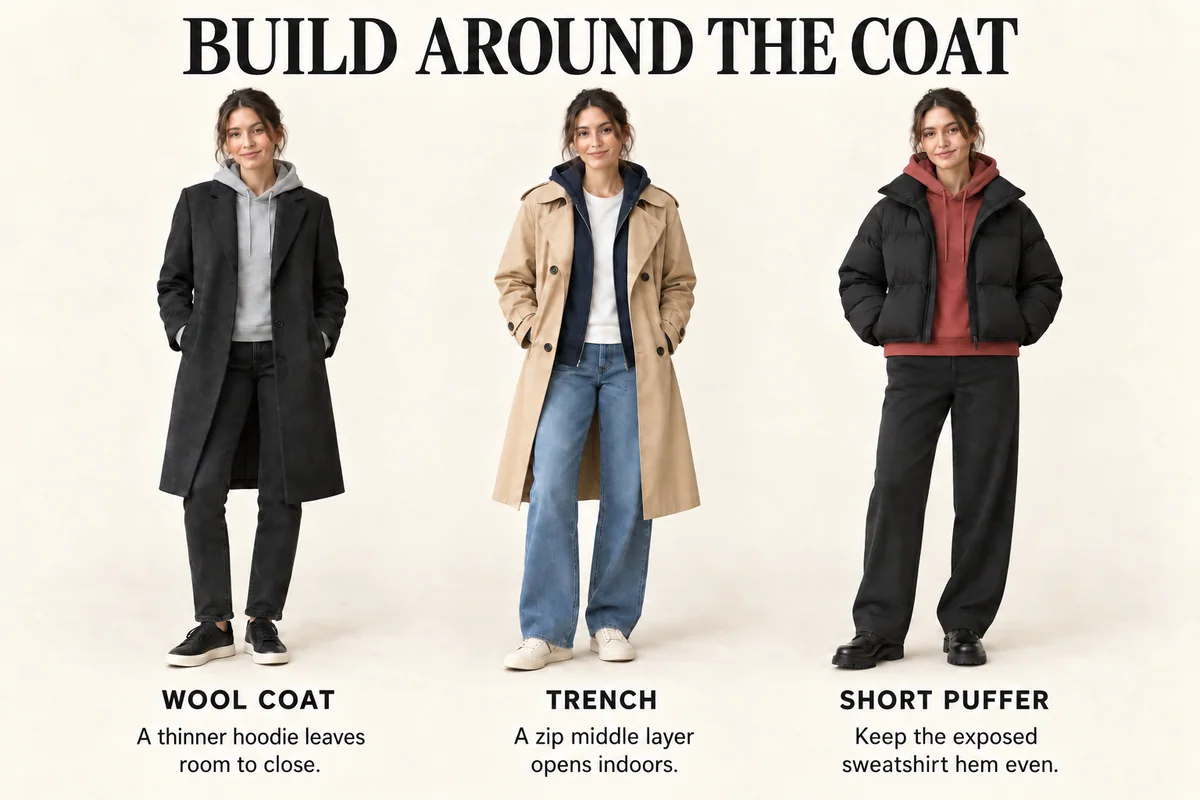
Combine a charcoal single-breasted wool coat, mid-gray hoodie, dark straight jeans and black leather sneakers. The gray hood softens the coat's formal edge while the dark jeans and shoes keep a continuous lower half. A moderately fitted hoodie leaves space for the coat to fall from the shoulders instead of bulging over its pocket.
Choose this for a cool, dry day when you will move between outdoors and cafés. Wear a comfortable plain tee underneath so you can remove the hoodie as well as the coat in a warm room. If sneakers feel too casual for the destination, use black ankle boots with the jeans sitting cleanly over the shaft. For more warmth, change the insulation or outerwear for the actual forecast; a thicker hoodie is useful only if the coat still closes and moves.
A trench when the day keeps changing
Try a stone trench over a navy zip hoodie, an ivory tee, blue straight jeans and cream sneakers. The trench gives the outfit a longer outline, and the navy layer keeps its center distinct. A zip hoodie lets you open the middle without unfastening or removing every layer, useful on a mild day with indoor stops.
Wear the trench belt loosely or tie it behind only if that does not distort the coat. Tight cinching over sweatshirt pockets can make a ridge at the waist. If you prefer trousers, swap the jeans for navy straight-leg trousers and keep the ivory tee as a small light area at the neck. The casual trench-coat guide explores the outer layer separately. Check your particular trench's weather specifications; its name alone does not establish rain protection.
A short puffer with a deliberate sweatshirt hem
For a cold-weather journey, a black short puffer, muted red hoodie, charcoal straight trousers and black boots make the visible hood the main color accent. A hoodie ending close to the jacket hem keeps the middle simple. If it extends below the puffer, let a clear, even band show rather than trying to hide half of a thick ribbed hem inside the trousers.
Use boots and outerwear appropriate to the route, including traction if the surface needs it. If you want wide-leg trousers, keep their hems clear of the ground and compare the shorter outer line with the examples in jackets for wide-leg pants. A longer parka is a useful substitution when you want more coverage, provided it accommodates the same hoodie through the sleeves and back.
Warmth and rain are separate jobs
A hoodie can supply insulation, but it is not automatically the protective outer layer. REI's layering guidance distinguishes insulation from wind-and-rain protection and notes cotton's tendency to hold moisture. A cotton sweatshirt is a reasonable casual choice for many dry outings; it is not the default solution for prolonged cold, wet exposure.
Before leaving, fasten the complete outfit and check the movements your day needs. If it works only with the coat open, keep it for suitable mild weather. For a colder or wetter route, change the combination rather than spending the journey trying to hold the front shut.