“Leather jacket” names a material, not a silhouette. A cropped funnel neck and an oversized bomber do not want the same supporting cast.
Name the jacket before styling it
Zip or fasten the jacket and note where the hem ends, where the shoulders sit and how much air surrounds the torso. Cropped, fitted, boxy and oversized are useful working labels. Ignore the label on the product page; use the shape on your body. That observation is more helpful than collecting ten outfit photographs featuring a different jacket.
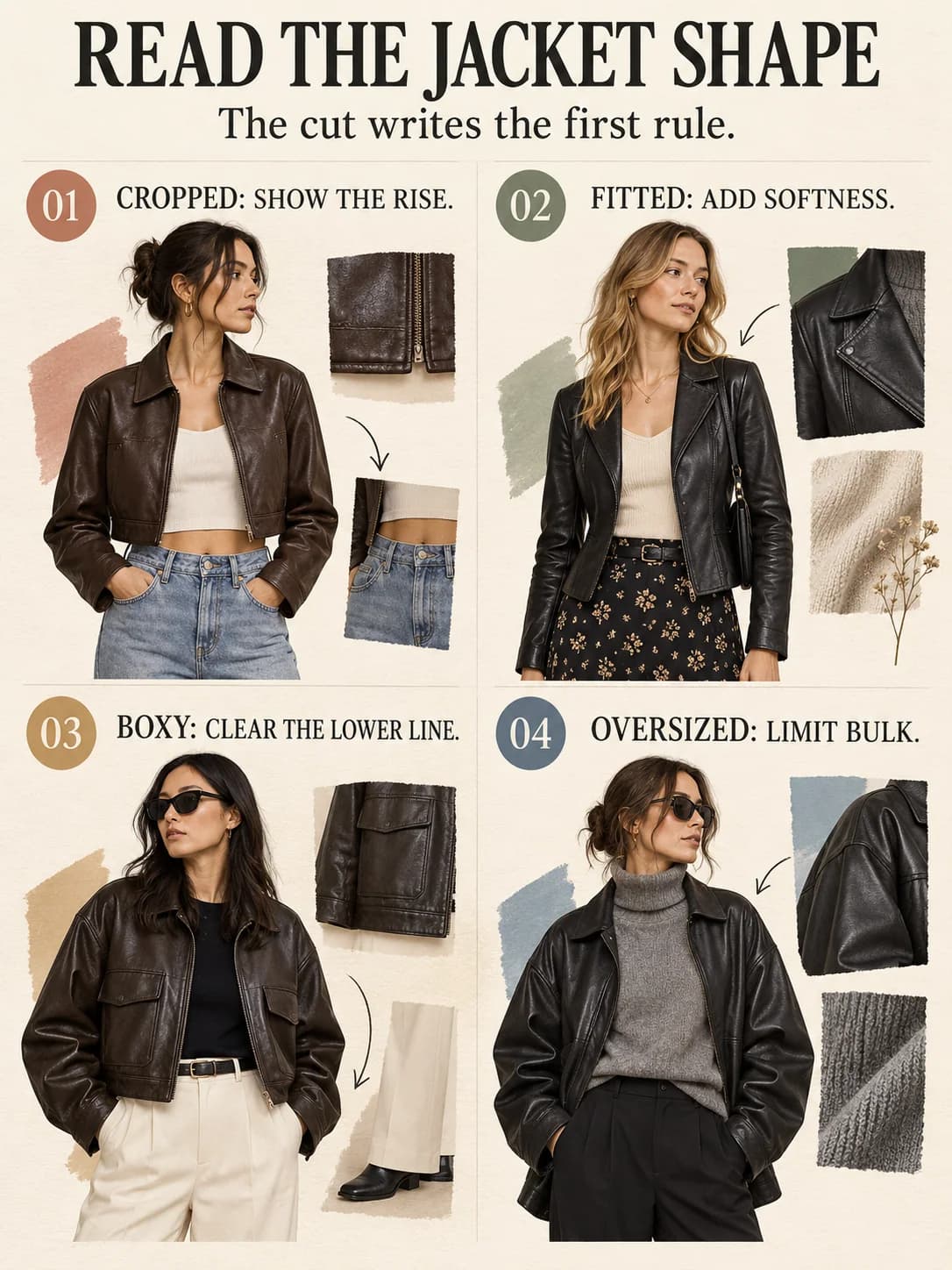
| Jacket shape | Easy base | Balance move |
|---|---|---|
| Cropped | High-rise trouser | Continue waist line |
| Fitted moto | Soft dress or skirt | Contrast structure |
| Boxy | Straight jean | Keep lower line clear |
| Oversized | Fluid trouser | Limit extra bulk |
Let a cropped jacket expose the rise
A jacket ending near the natural waist works cleanly with higher-rise jeans, trousers and skirts because the two edges acknowledge each other. If a long top hangs far below, decide whether that extra line is deliberate. Tucking or choosing a shorter base layer restores the jacket’s architectural advantage.
Balance boxy leather with one readable lower shape
Straight jeans give a boxy jacket a firm vertical continuation. Fluid wide trousers can also work when the waistband remains visible and the hem is controlled. The jacket-and-wide-leg guide explains why jacket length matters when the lower half already carries volume.
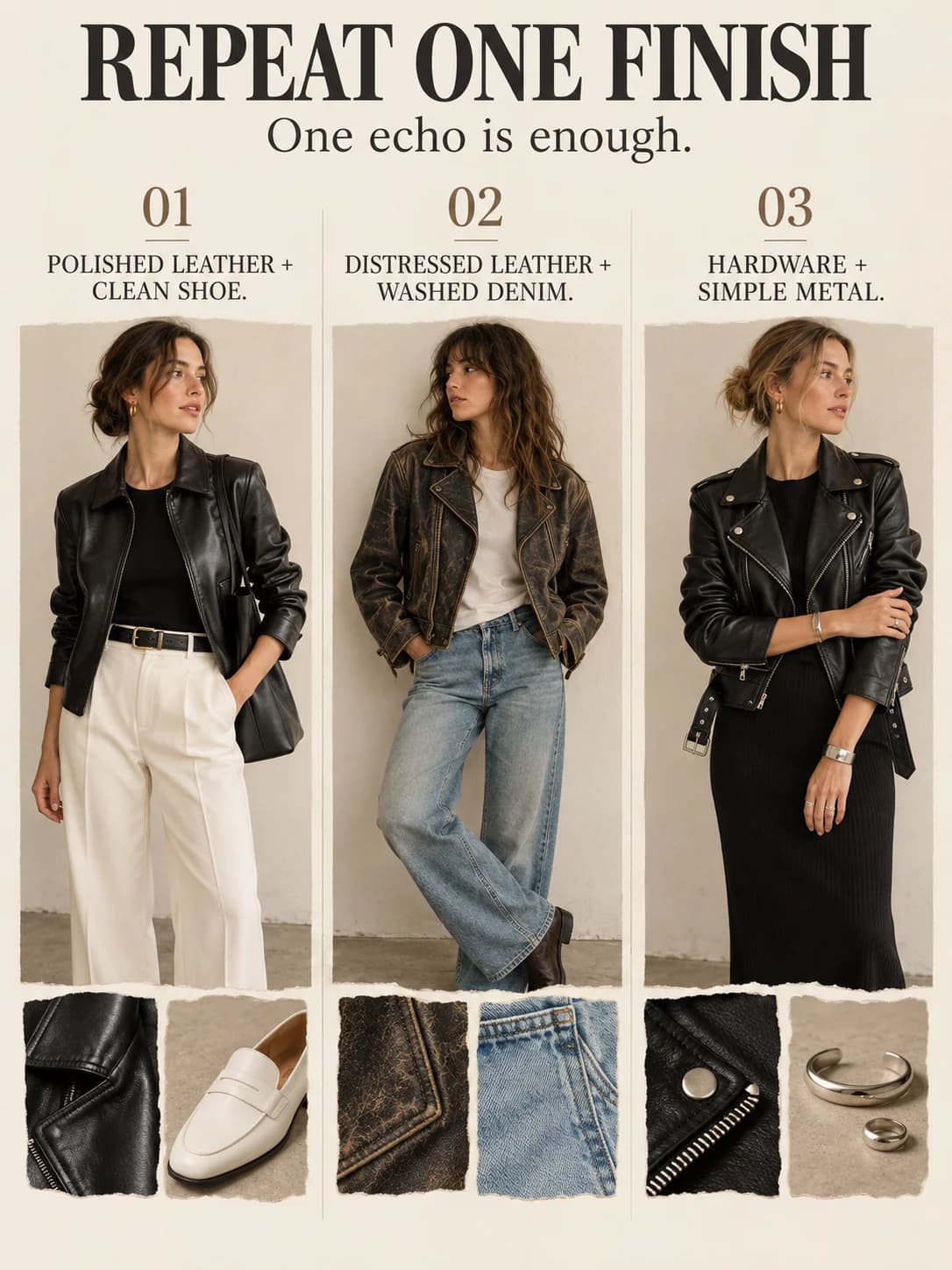
Put fitted leather beside something softer
A close moto jacket can sharpen a slip dress, pleated skirt or soft knit. The contrast works because each material keeps its identity. Avoid adding hardware to every accessory. One buckle, zipper family or polished shoe is enough to repeat the jacket’s finish without staging a theme night.
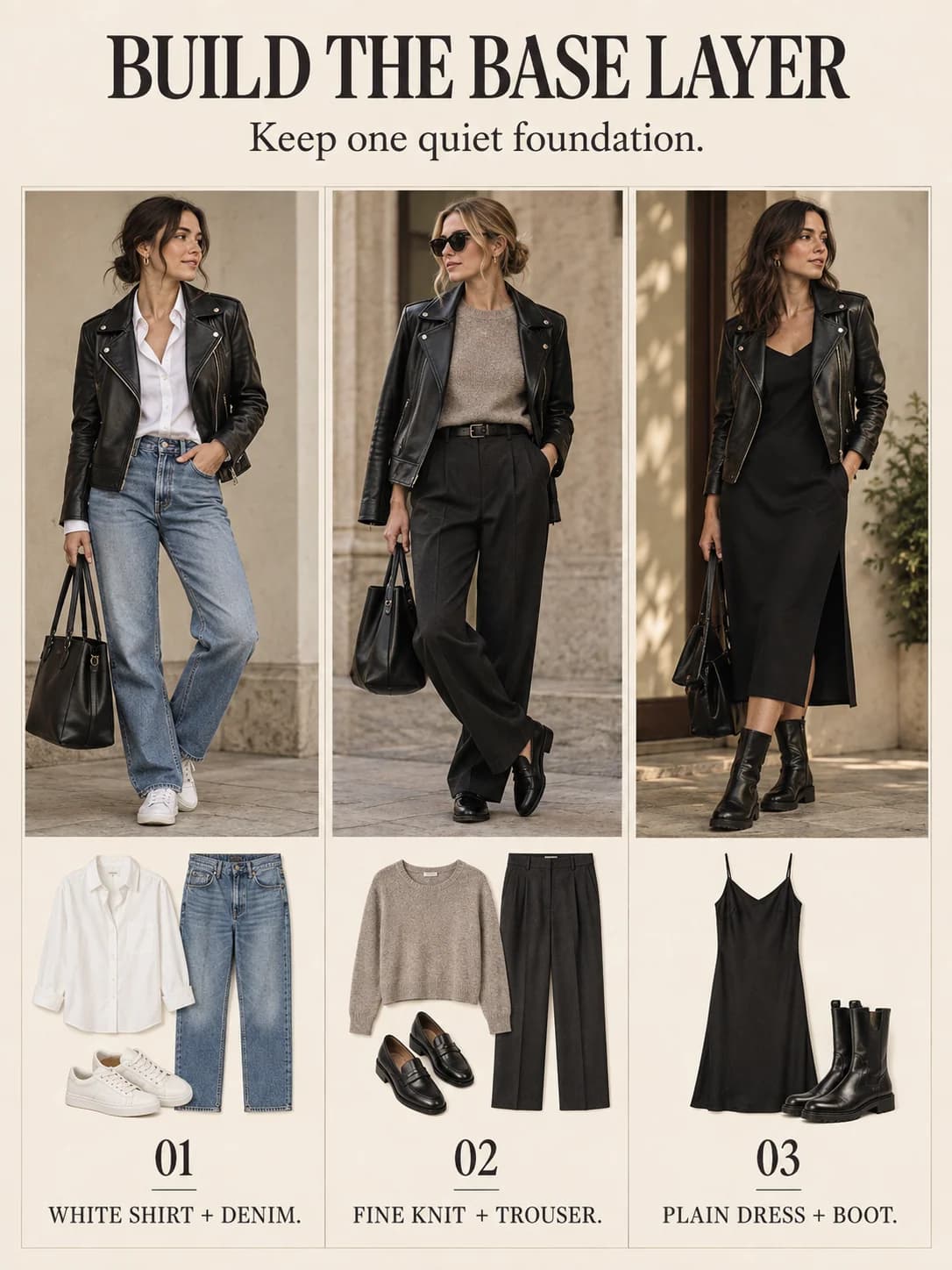
Use a quiet base for statement leather
Patchwork, colored, distressed or highly sculpted jackets need less narrative underneath. A white button-down and denim give texture room to register; the white-shirt guide offers several proportion options. If the jacket is simple black, a monochrome base can shift attention to shape, as shown in the monochrome guide.
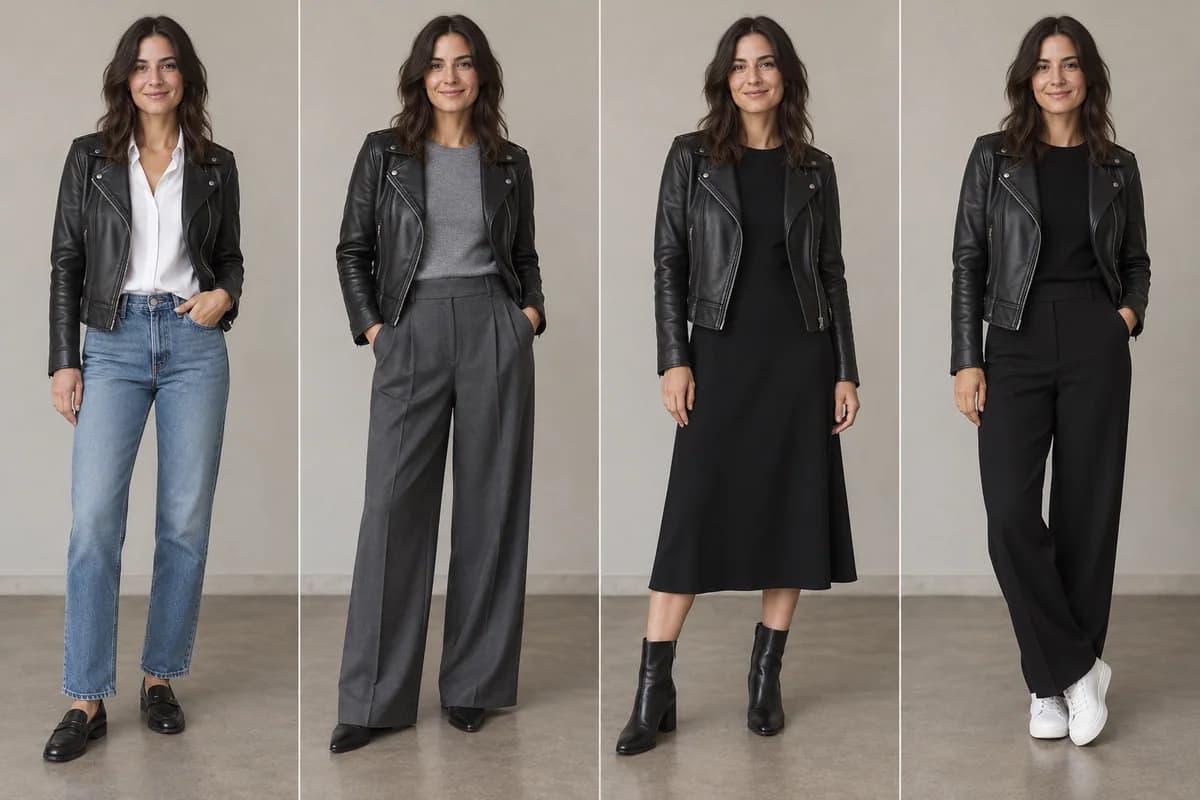
Photograph the outfit with the jacket open and closed. Some formulas work only when the lapels create a vertical frame; others survive fastening.
Then check sleeve volume. A substantial leather sleeve over a thick sweater can stiffen the whole upper body and pull the shoulder seam out of place. Try a fine knit, smooth shirt or sleeveless base before blaming the jacket. Cuffs should meet rather than pile, and the underlayer should not extend in a way that looks like an accidental lining.
The better formula supports the actual jacket through weather, sitting and movement, not merely the version draped over one shoulder for six seconds.
Frequently asked questions
What pants go with a leather jacket?
Straight jeans, wide-leg trousers, tailored pants and skirts can all work. Match the lower-half volume to the jacket’s length and width.
Can a leather jacket look polished?
Yes. Use a clean base layer, controlled color palette and refined shoe; avoid piling on unrelated hardware.
How do you style an oversized leather jacket?
Keep one lower line clear, such as a straight jean or fluid trouser, and let the jacket be the largest shape.