A gallery wall should look collected over time, even if you assembled it on Tuesday.
The secret is not buying frames that pretend to be related. It is giving the entire group one organizing idea.
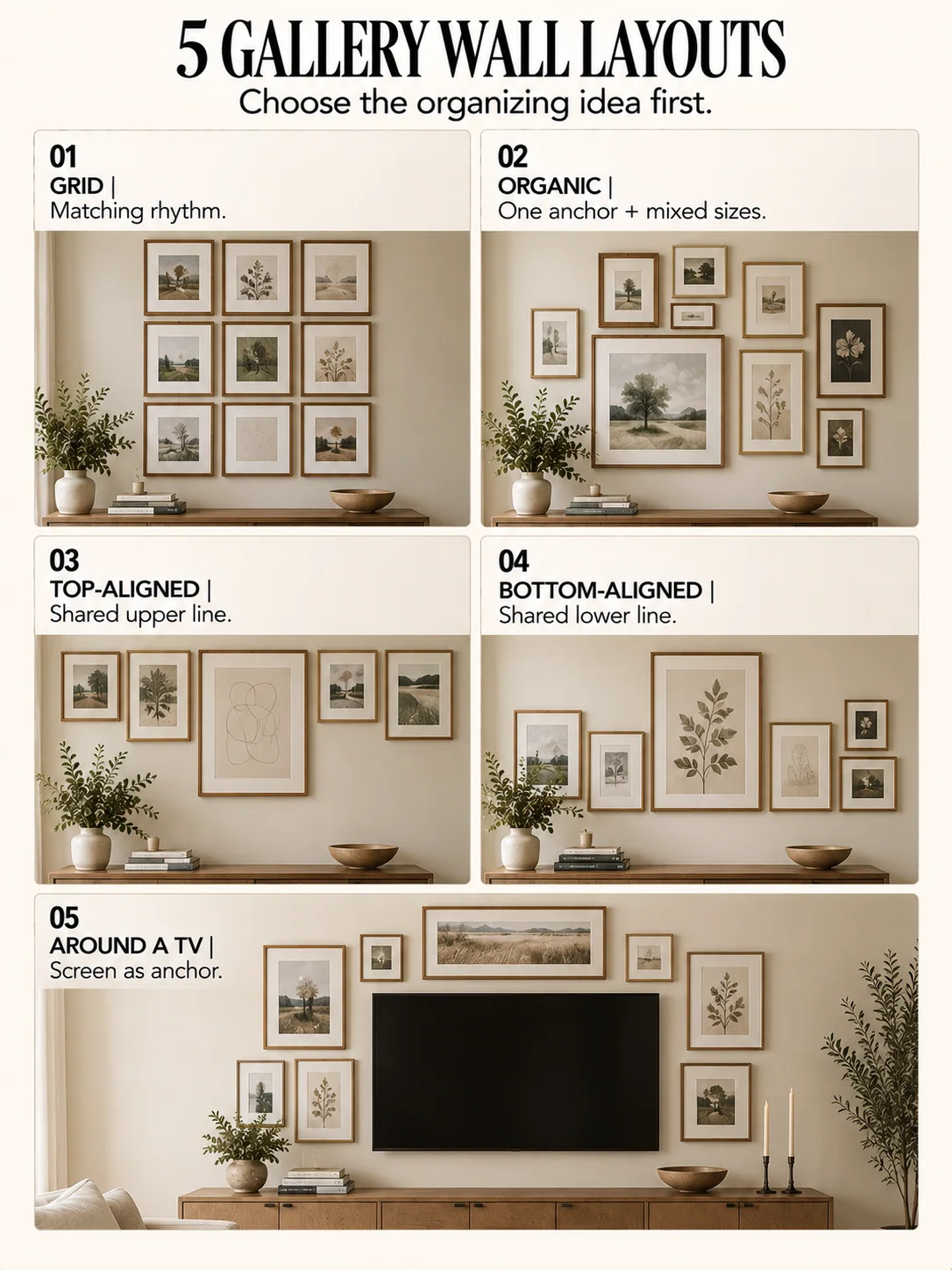
Pick the layout personality
| Option | Best with | Effect |
|---|---|---|
| Grid | Matching frames or related art | Most orderly |
| Organic salon | Mixed sizes around one anchor | Most collected |
| Top-aligned | Frames share an upper line | Useful above furniture |
| Bottom-aligned | Frames share a lower line | Calm in hallways |
| Around a TV | Screen acts as anchor | Repeat black in art |
A grid is disciplined. An organic salon arrangement feels collected. A top-aligned group creates a strong horizontal line. Choose one before moving frames around the floor, because each system solves spacing differently.
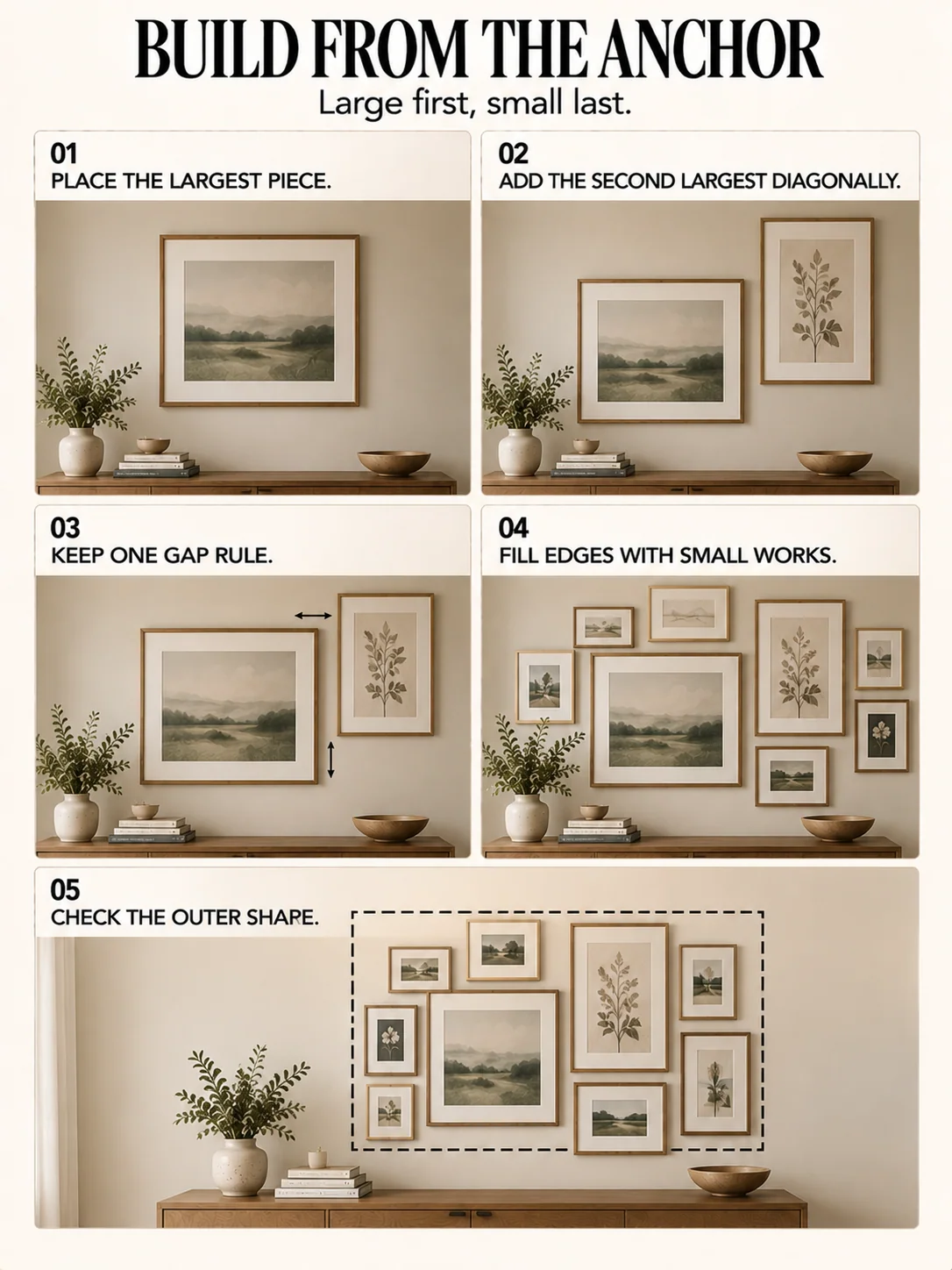
The largest piece gets first say
Place the anchor slightly off-center for an organic wall or in the key grid position for a formal one. Put the second-largest piece diagonally from it. The smaller works should bridge the distance rather than forming a border of tiny satellites.
Look at the art, too. Two visually dark pieces can balance one another across the group even when their frames differ.
Consistent space makes mixed frames behave
Choose a gap and keep it visually steady. Two to four inches works for many home-scale arrangements; larger art can tolerate more. Measure frame edge to frame edge, not image to image.
The exact number matters less than consistency. One six-inch canyon in the middle can split the collection into two unrelated families.
Frames need a family resemblance, not uniforms
Mix black, warm wood, brass or painted frames, but repeat at least one finish. Similar mats can connect different frame materials. Matching frames can support varied art.
If the room already contains several woods, use one dominant wood tone and repeat the secondary tone rather than matching every frame to the furniture.
Treat the outer edge as one artwork
Step back and ignore the gaps for a moment. What shape does the entire arrangement make? Above a console or sofa, the full group should relate to the furniture width.
The proportion checks in our art-above-sofa guide still apply because a gallery wall reads as one large piece from across the room.
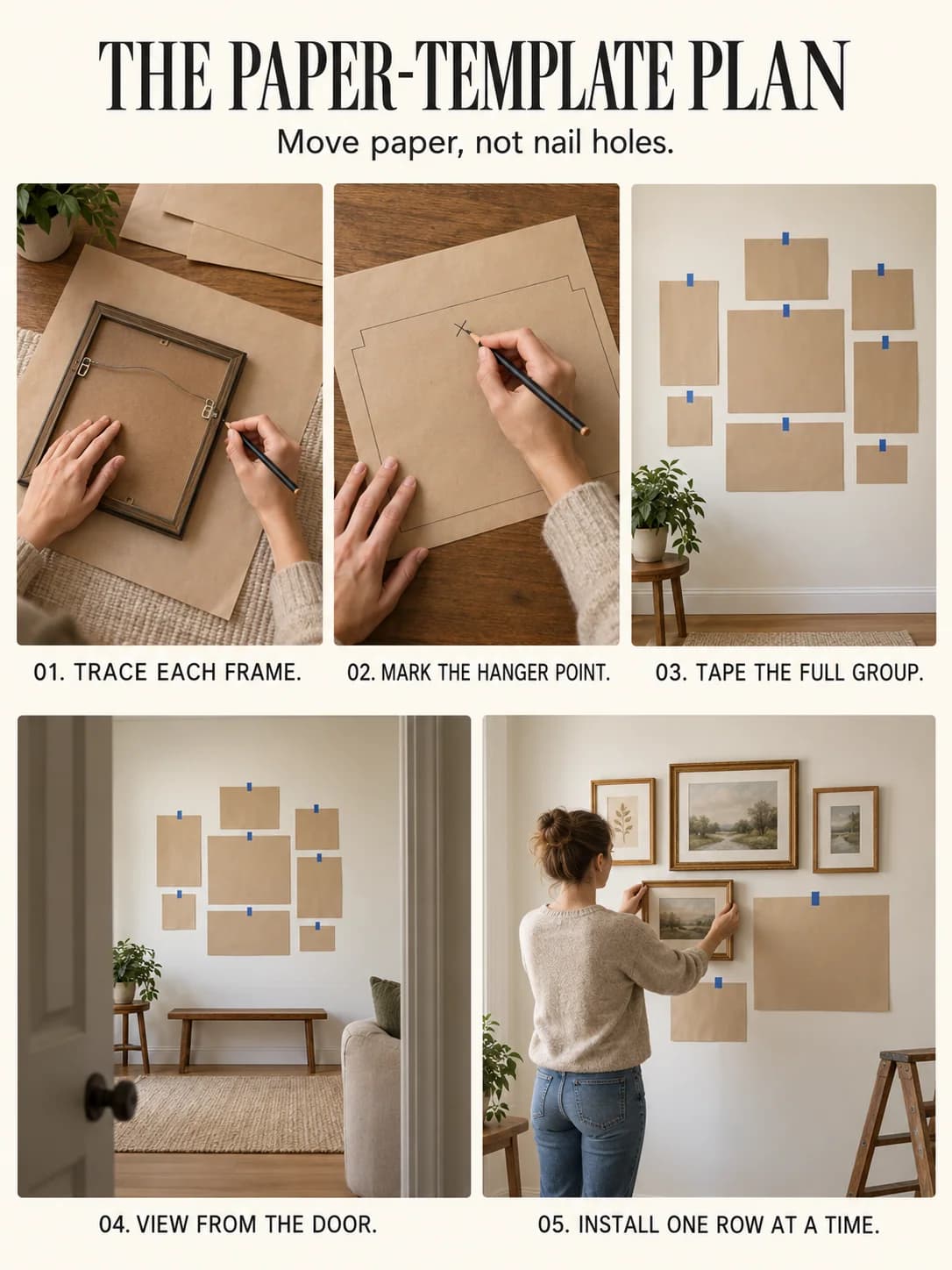
Paper first, hardware second
Trace every frame onto kraft paper. Mark the hanger position on each template, then tape the shapes to the wall. Live with the arrangement through daytime and evening light.
Once satisfied, install the anchor and work outward. Use hardware rated for the frame weight and wall type. If valuable art, heavy mirrors or uncertain construction are involved, professional installation is a sensible ending to the story.
Building around a television
Use the screen as the anchor rectangle and repeat black in a few frames or artworks. Keep vents, speakers and viewing lines clear. Let the console and backdrop stay quiet enough that the gallery remains the organizing idea.
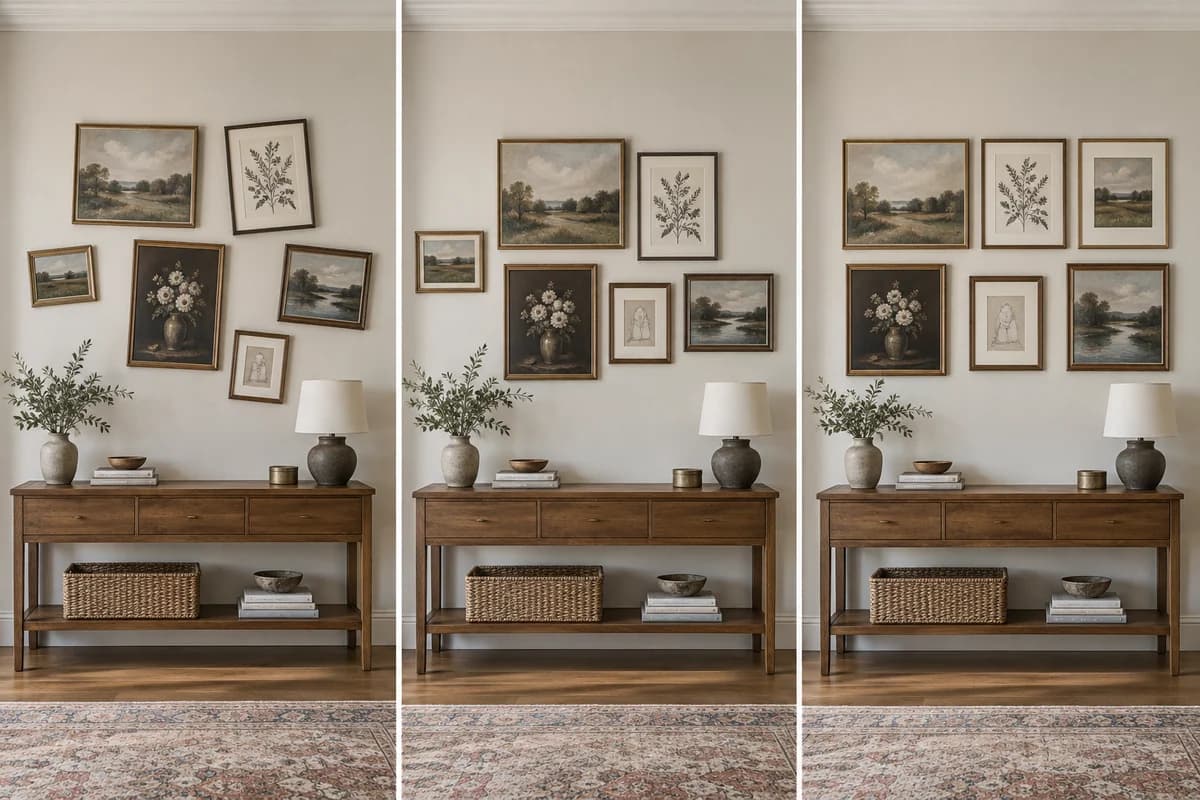
The wall is finished when your eye can move through the collection without landing on one inexplicable gap. Perfection is not required. Relationships are.
Frequently asked questions
How much space should be between gallery wall frames?
Consistent gaps matter more than one perfect number. Around 2 to 4 inches often works for home-scale art; increase the gap for larger pieces.
Should gallery wall frames match?
They do not have to. Repeat one feature, such as black, warm wood, brass or similar mats, so the mix has a visible relationship.
How do you center a gallery wall?
Center the full outer shape over the furniture or within the available wall, rather than centering one individual frame.