The television is not a decorative emergency.
It is a large black rectangle that people genuinely use. The wall works better when the room admits this calmly.
Give the screen something solid to stand over
A console wider than the TV makes the screen look anchored rather than stranded. It also gives you space for devices, speakers and a small amount of decor without building a tiny-object parade directly under the picture.
Start with one low stack, one taller object and some empty surface. The TV already has plenty of visual weight. It does not require twelve ceramic assistants.
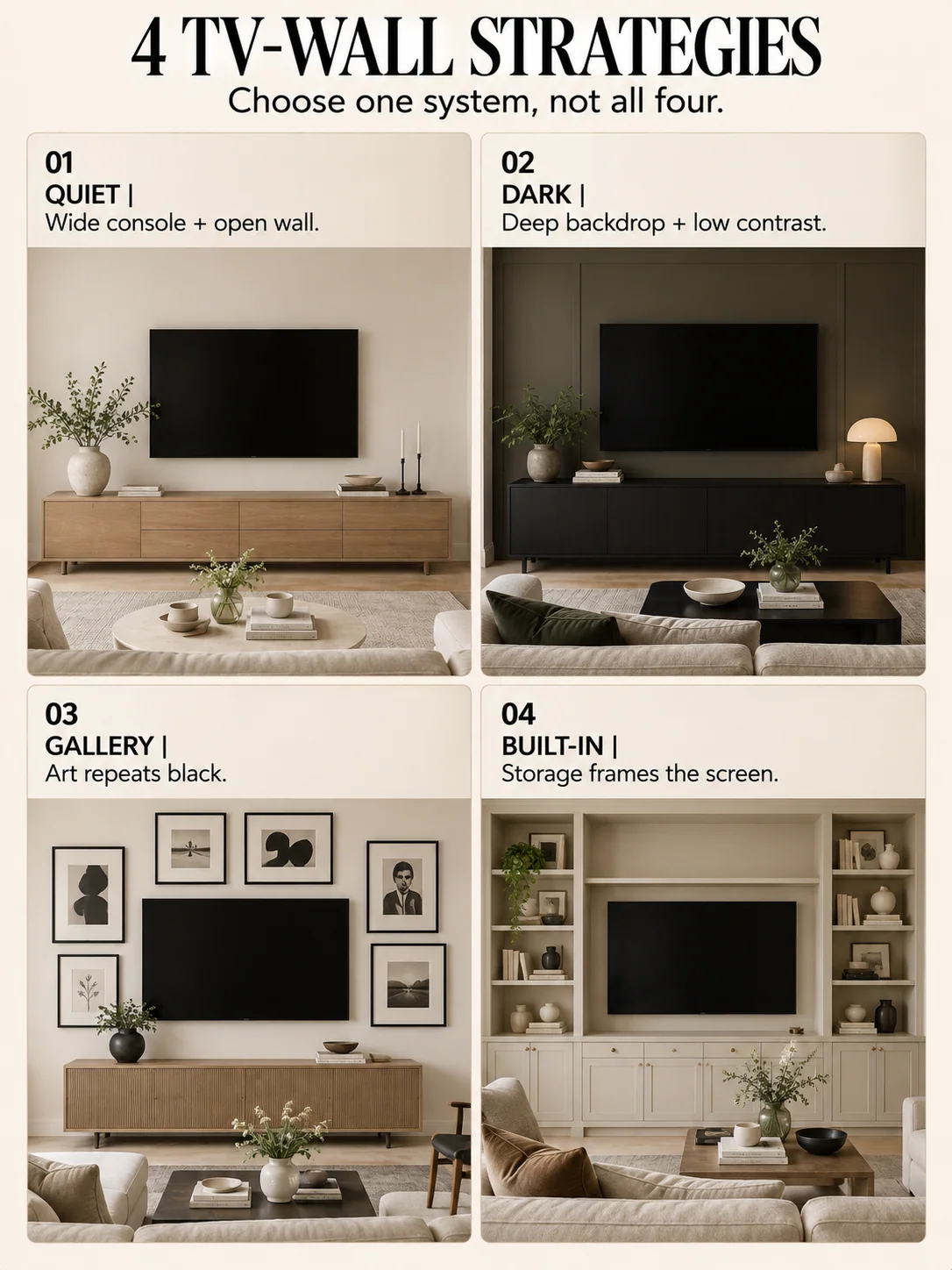
Choose one of four wall strategies
| Option | Best with | Effect |
|---|---|---|
| Quiet wall | Wide console + two lamps or objects | TV stays the focal rectangle |
| Dark backdrop | Charcoal, navy or dark wood | Screen recedes when off |
| Gallery wall | Art with repeated dark notes | TV joins a larger composition |
| Built-ins | Shelves or closed cabinetry | Storage frames the screen |
| Art-mode screen | Simple ledge or low console | Keep surrounding decor restrained |
The quiet wall is underrated. A good console and a well-centered TV can be enough.
A dark wall reduces the contrast around the screen. A gallery wall gives the TV company. Built-ins frame it and solve storage. Mixing dark paint, floating shelves, gallery art, slatted wood and a plant canopy usually creates a wall with five separate plans.
If you use art, repeat the black
Treat the television as one shape in the composition. Include a few frames or artworks with black elements, vary the frame sizes and maintain consistent gaps. The art should extend far enough to look like a group, not like nervous confetti clinging to the screen.
Our guide to sizing art above a sofa is useful for understanding how a group reads as one larger shape.
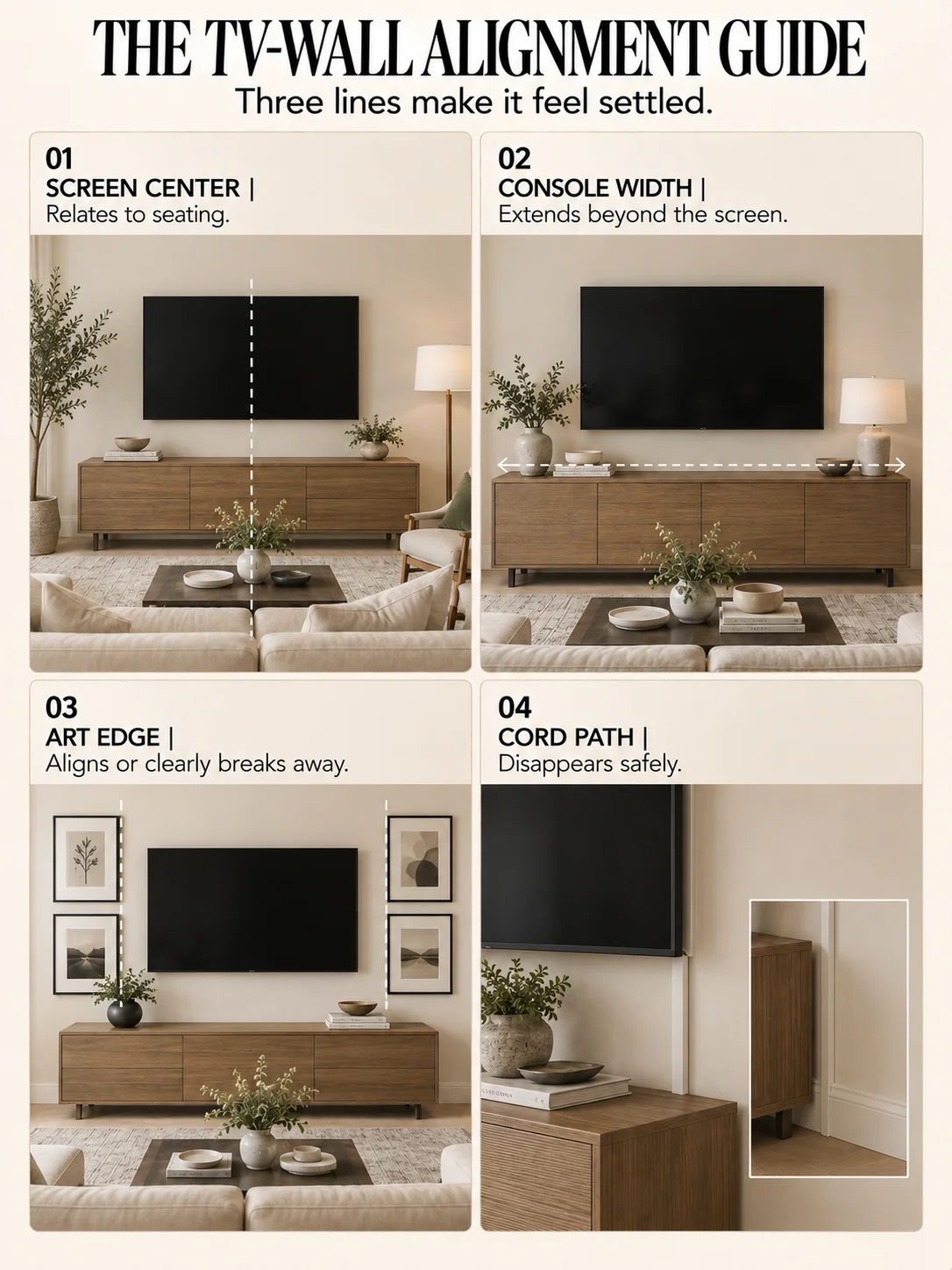
Shelves need restraint near a moving picture
Keep shelving symmetrical if you want the wall to feel architectural, or clearly asymmetrical if the room needs looseness. What looks accidental is two shelves on one side and a tall plant on the other with no shared line or weight.
Leave room around ventilation points and follow the television manufacturer’s mounting requirements. Closed cabinetry can hide devices, but heat and remote signals still need a plan.
The editing principles from styling bookshelves with actual books also apply: useful objects first, then breathing room.
Cords are part of the design problem
Plan power, media devices, sound bars and gaming equipment before centering a beautiful empty console. Use code-compliant in-wall solutions or visible cord covers designed for the purpose. Do not route ordinary power cords inside walls.
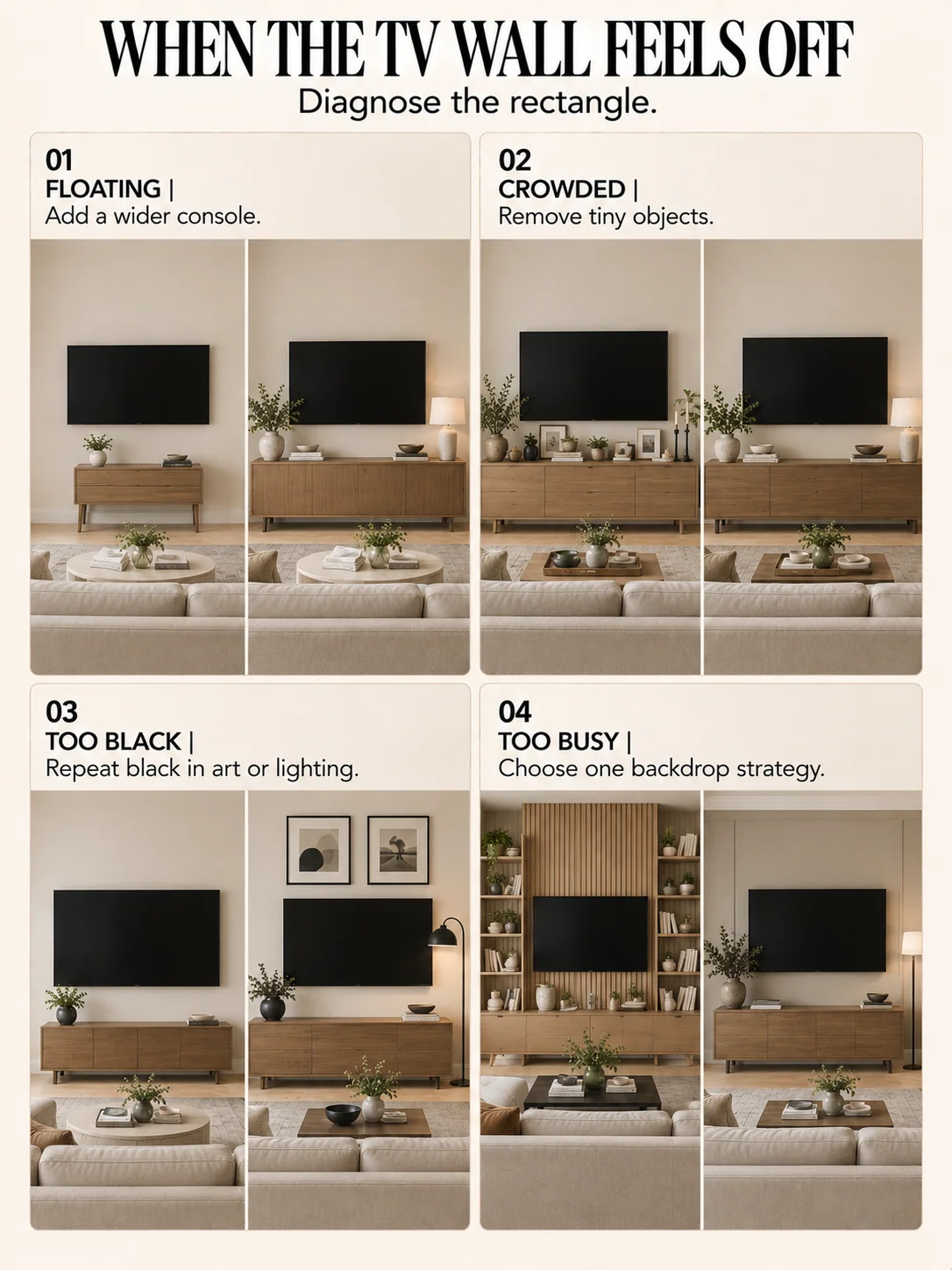
Look at the wall with the TV on
Decorating photographs are usually taken with the screen black or displaying art. Your room also contains subtitles, football scores and a very bright cartoon at 7:12 a.m.
Sit in the regular seat. Check glare, speaker clearance and whether nearby lamps reflect in the screen. The finished wall has to work during the part where it is being a television.
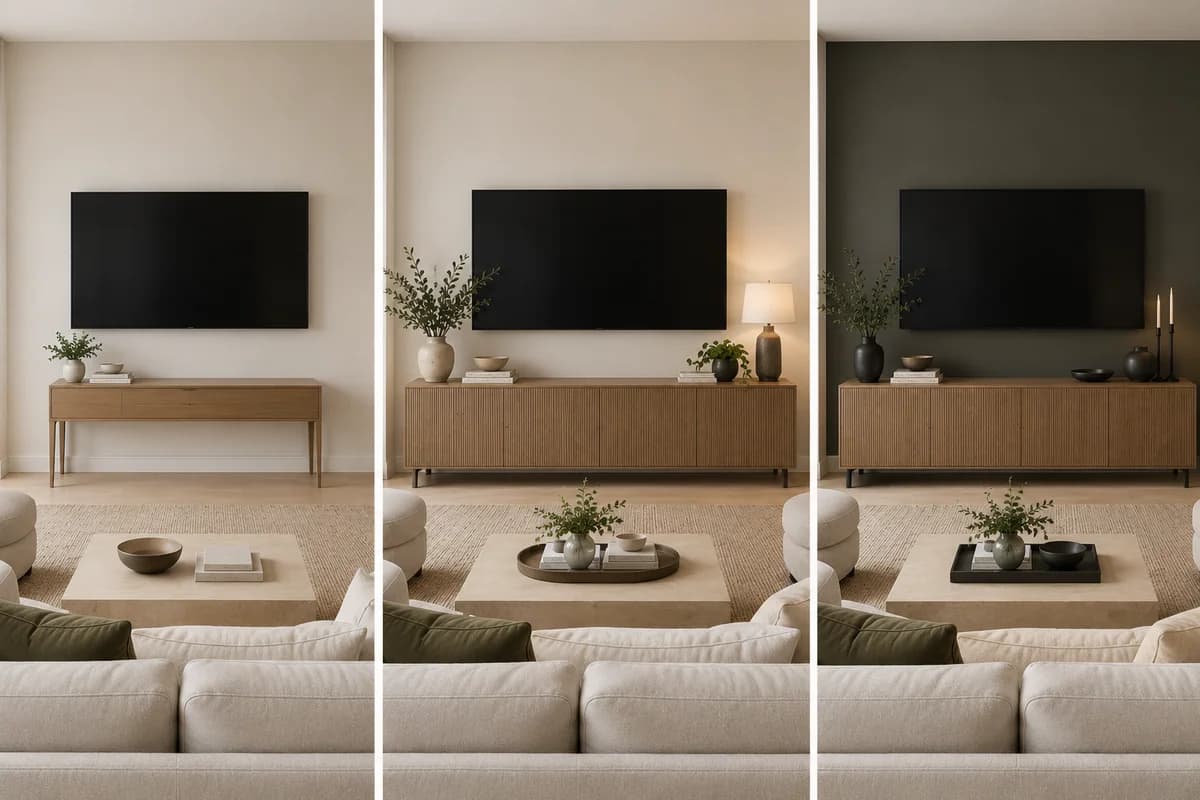
The goal is not to make the TV vanish. It is to make the rest of the wall look as though it knew the TV was coming.
Frequently asked questions
How do you decorate around a TV without making the wall busy?
Use a wide console, one or two objects with different heights, and either a quiet backdrop or a small amount of art with consistent spacing.
Should the TV be wider than the console?
Usually the console looks more stable when it is wider than the screen. It also gives devices and decor room to sit without crowding.
What color wall helps a TV blend in?
Charcoal, deep navy, brown-black and dark wood reduce contrast with a black screen. Mid-tone walls can also work when black is repeated elsewhere.