A fireplace is a focal point, not a stage director. It should influence the room without forcing every seat into a row facing the hearth. The more useful goal is a conversation group that can acknowledge the fire and still let people look at one another.
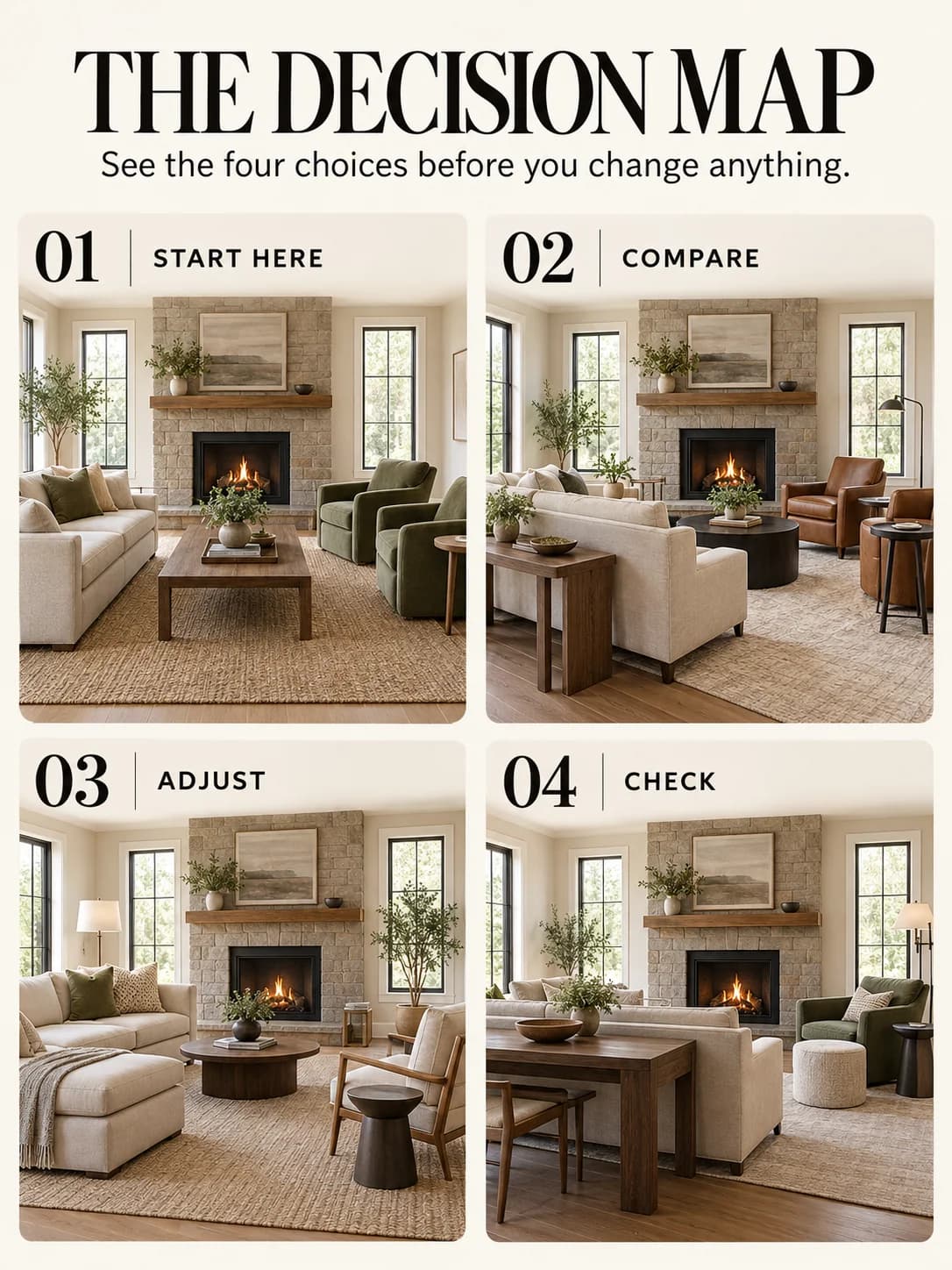
Draw the walking route before the seating plan
Mark the path from each doorway to the next room. Do not send that route between the sofa and coffee table if another arrangement is possible. In a narrow room, this decision matters more than symmetry; the layout strategies in our long, narrow living-room guide can help separate passage from seating.
Check the fireplace manufacturer’s clearance requirements and local safety guidance. Keep combustible upholstery, rugs, baskets and curtains outside the required zone. A pretty chair is still combustible when angled attractively.
Place the largest seat according to the room shape
In a square room with a centered fireplace, the sofa can face the hearth with chairs perpendicular on either side. In a longer room, place the sofa perpendicular to the fireplace and use chairs opposite it. The fire remains visible, but the seating reads as a group.
Float the sofa when its back can define the living zone in an open plan. A narrow table behind it can finish the view, provided circulation remains generous.
Use movable chairs for competing focal points
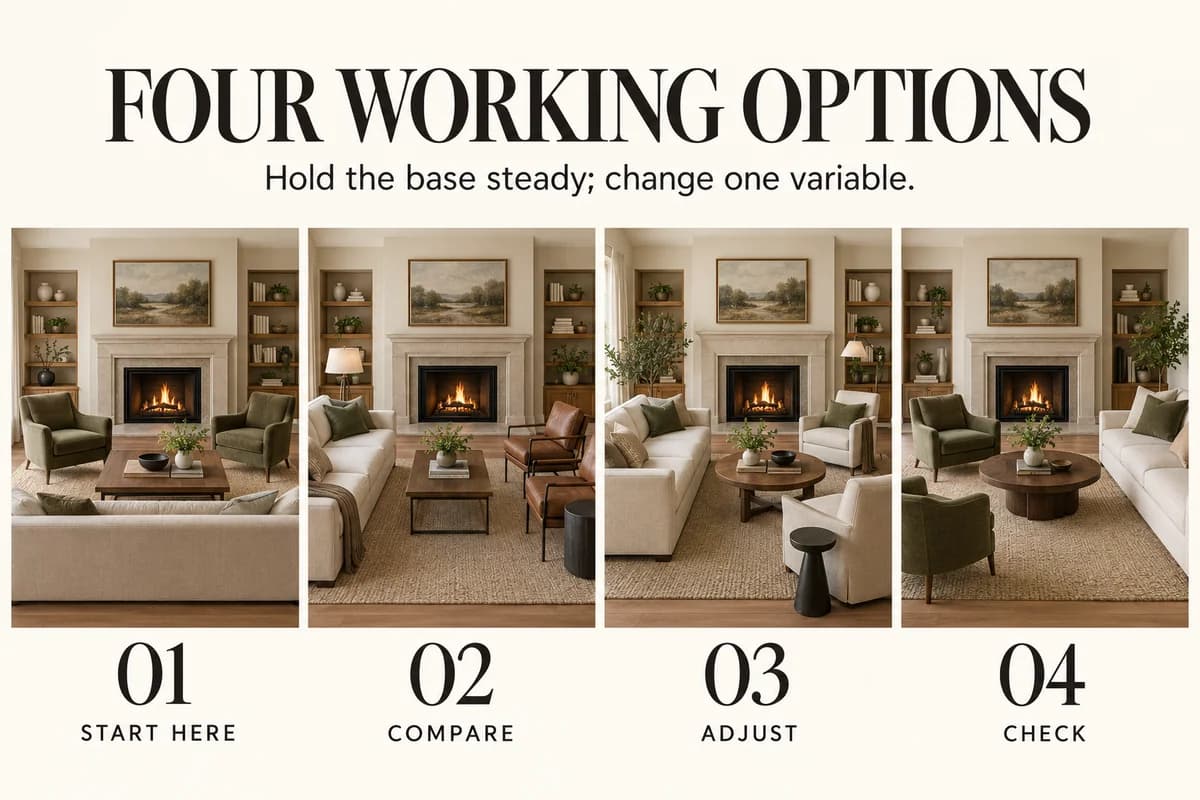
When a television sits on another wall, swivel chairs can turn between screen, fire and conversation. Avoid mounting decisions that strain the neck merely to preserve visual alignment. Decorating around a TV is easier once viewing height and seating direction are settled.
A bench or low stool can add occasional seating without blocking the fireplace view. It must remain outside the active heat and spark zone and should be easy to move.
Let the rug confirm the conversation area
Choose a rug large enough to connect the main seats, usually with at least the front legs participating. Rotate it to support the seating group, not automatically the fireplace wall. Sectionals need their own proportion check; use our sectional rug guide if one is involved.
Balance does not require matching pairs
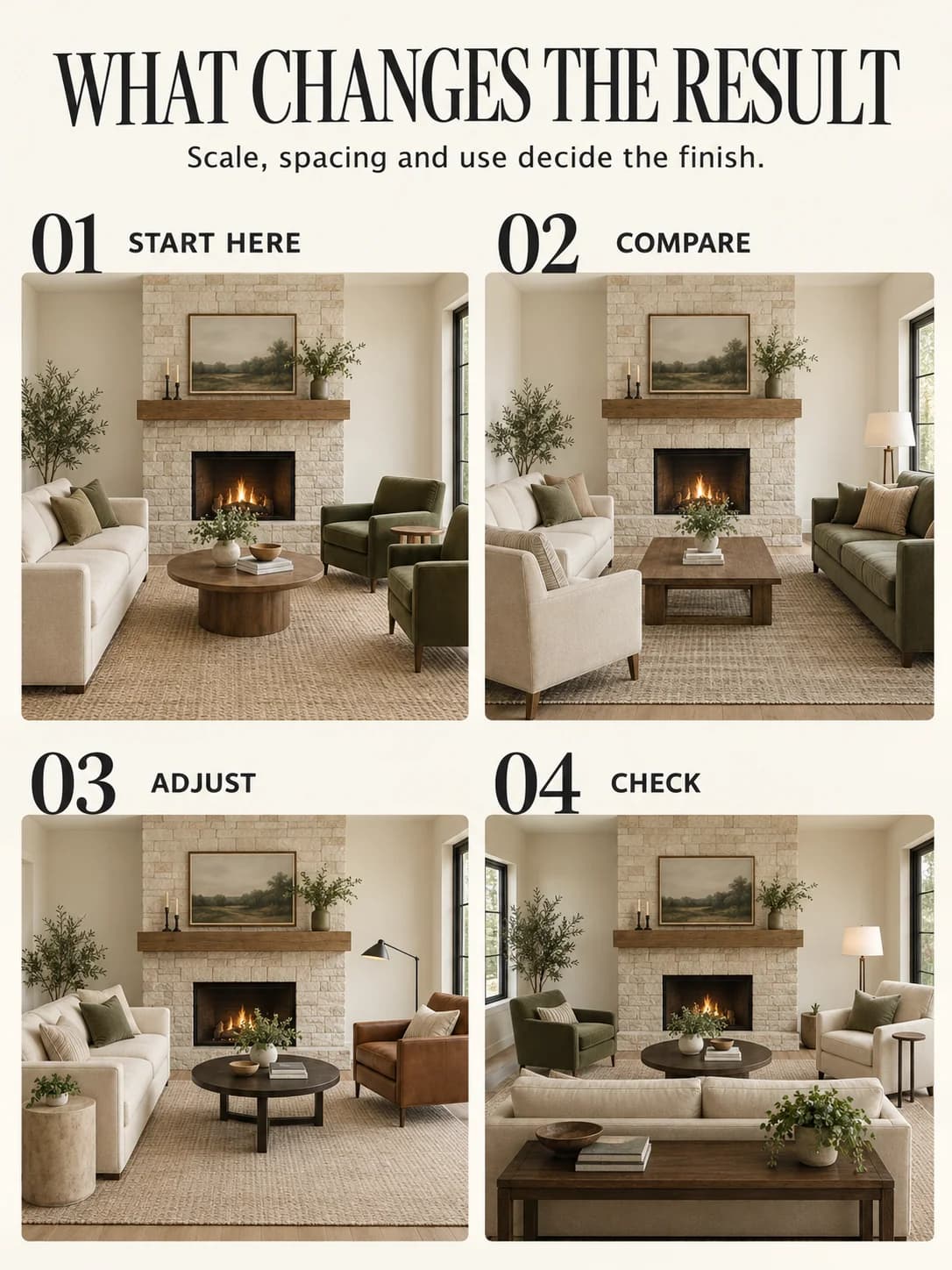
One side of the hearth may contain built-ins while the other is blank. Answer visual weight with a chair, tall plant or floor lamp rather than forcing identical furniture. Keep the mantel quieter when the surround already has strong stone, tile or millwork.
Test the room in use
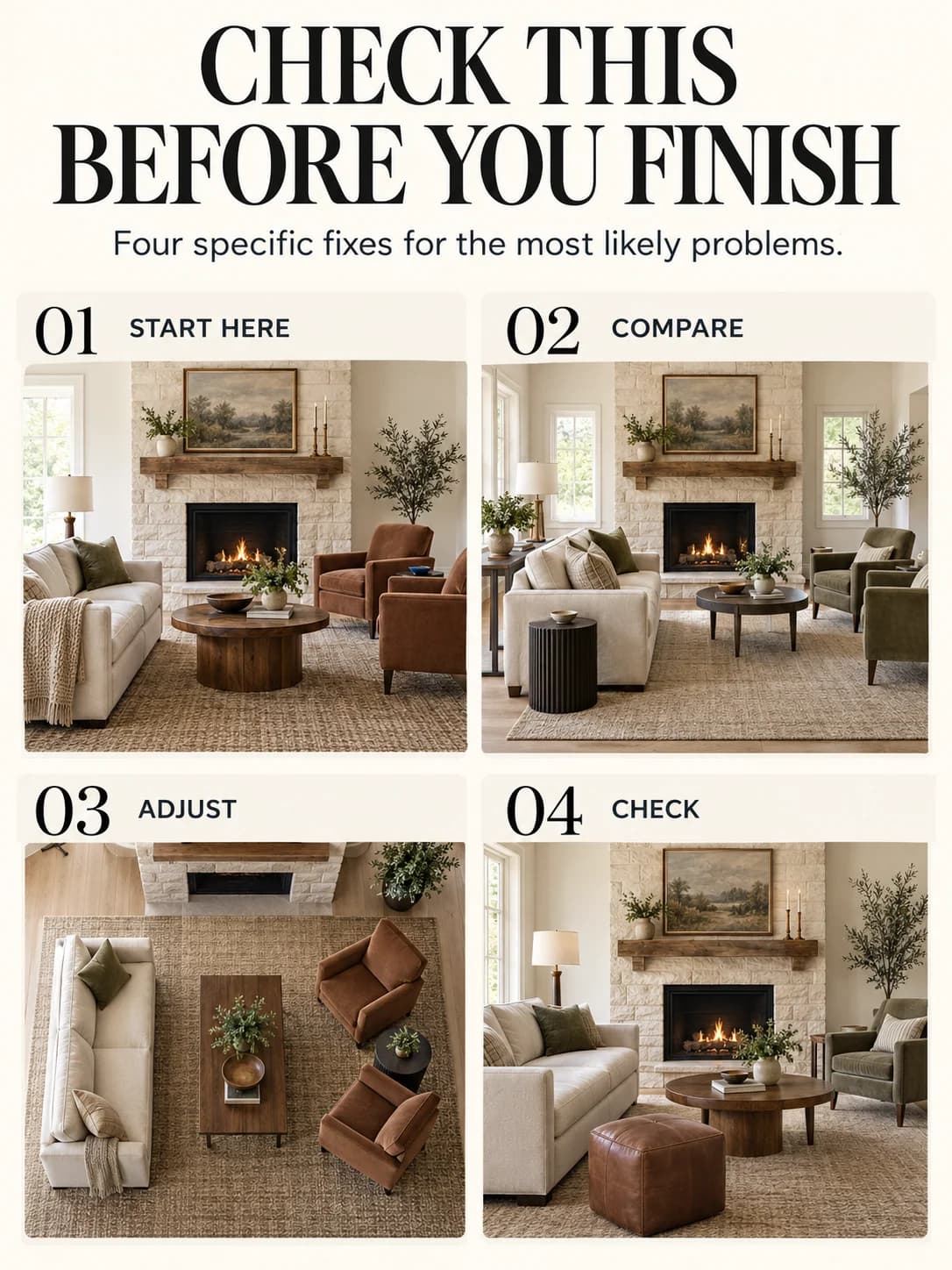
Sit in every seat. Can you speak without turning sharply? Can someone walk through while the coffee table is in use? Can the fireplace operate safely? Can a chair move without catching the rug? A layout succeeds in motion, when symmetry has stopped posing for the picture.
Frequently asked questions
Does the sofa have to face the fireplace?
No. It can sit perpendicular to the fireplace if that creates a better conversation area and clearer path.
How close can furniture be to a fireplace?
Follow the fireplace manufacturer, code and local safety requirements. Active fireplaces need a protected clearance zone for combustible furniture and textiles.