A bench may promise three seats while quietly assigning the middle person a committee meeting every time they stand.
Draw the exit path
Place tape where the bench or chairs will sit. Then trace how each diner reaches a seat. Chairs create individual pull-out lanes. A bench asks several people to shift together, especially when it sits against a wall. That can be perfectly acceptable for children or quick breakfasts and irritating during long dinners with frequent trips to the kitchen.
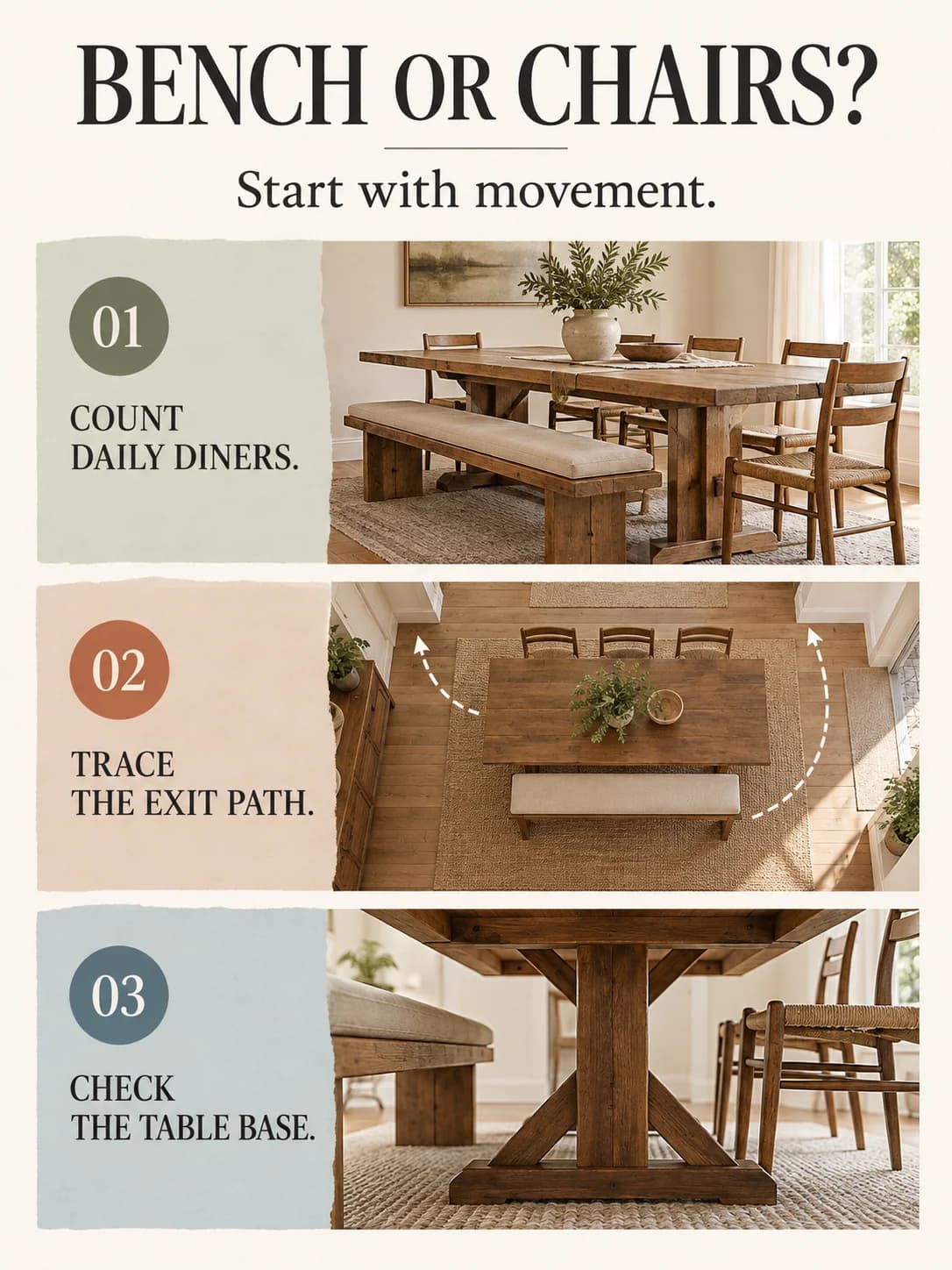
| Question | Bench | Chairs |
|---|---|---|
| Tucks away | Often | Partly |
| Independent exit | Limited | Yes |
| Back support | Model dependent | Usually |
| Flexible count | Good | Fixed |
| Easy to move | Varies | Usually |
Measure between the table supports
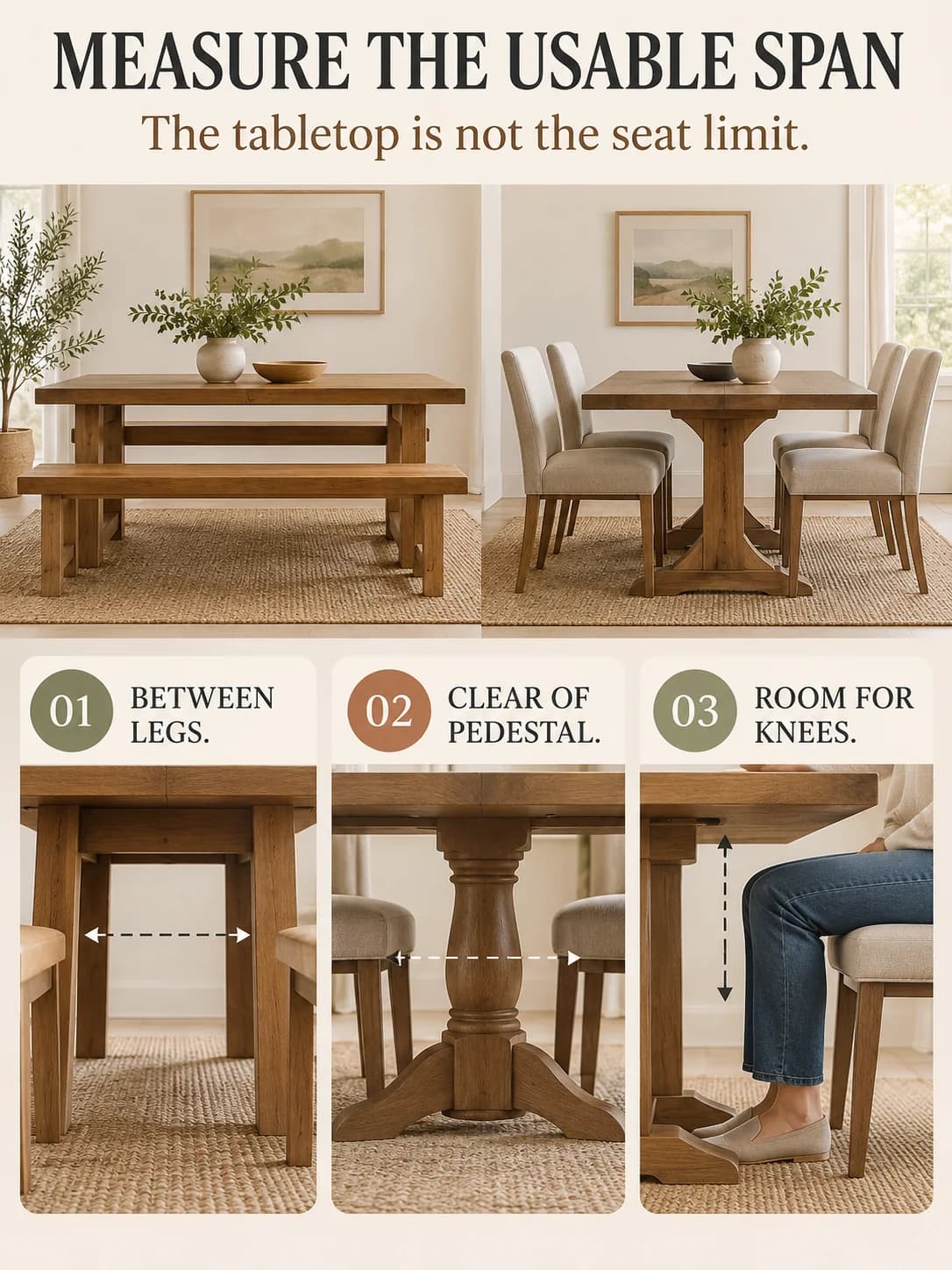
The tabletop width is not the usable bench width. Legs, trestles and pedestals claim knee and foot space. Measure the clear span at seat height and below the table, then check whether the bench can slide far enough under without striking the base. A table chosen from the round-versus-rectangular guide may create a very different support pattern.
Price the visual calm honestly
A tucked bench can make a small dining area look quieter because one long line replaces several chair backs. That visual benefit disappears if the bench must remain pulled into the walking route. Chairs occupy more visible pieces, but they can be distributed, angled and removed one at a time.
Let meal length decide how much back support matters
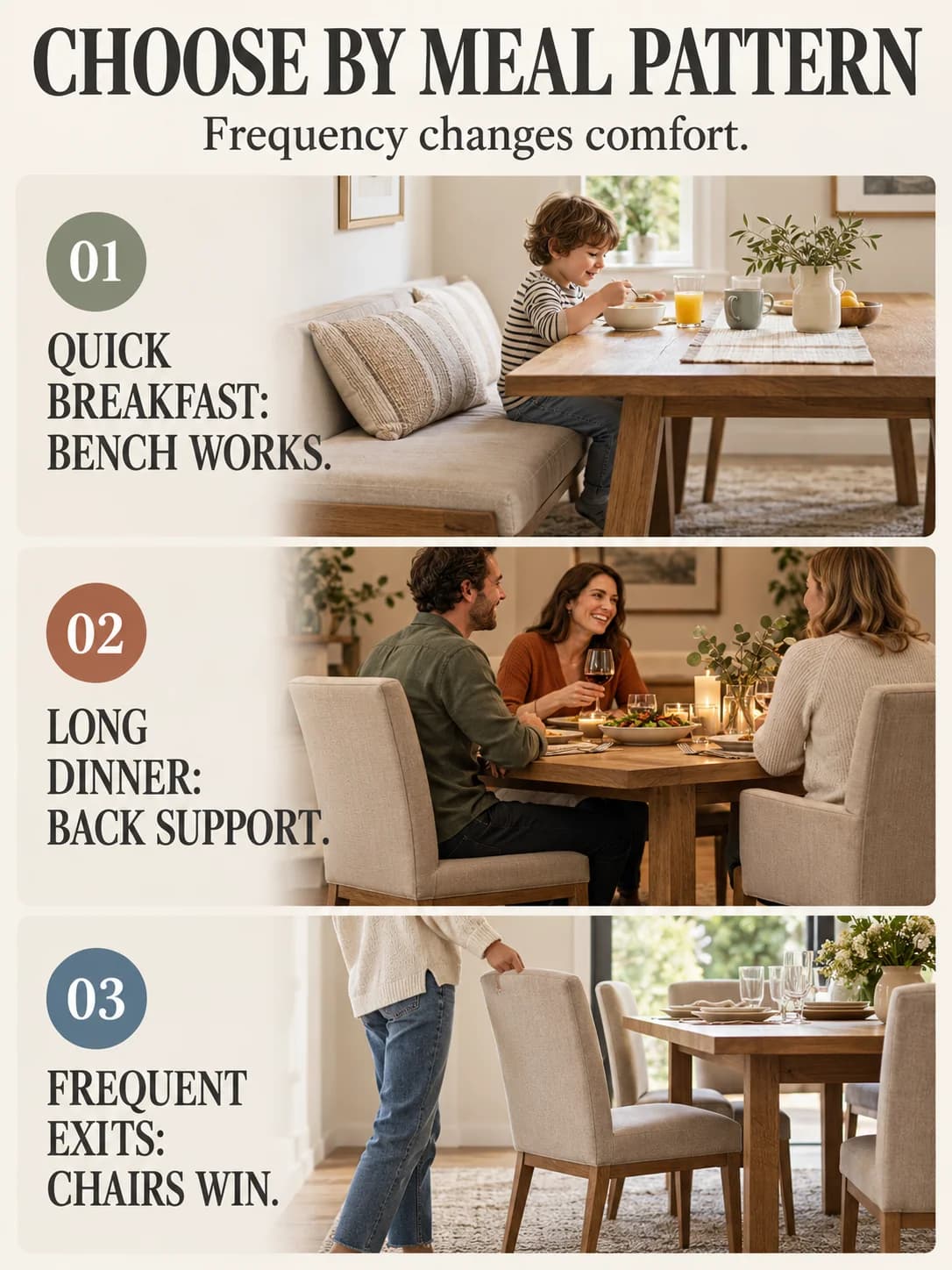
For twenty-minute meals, a backless bench may be comfortable enough. For homework, game nights or long dinners, individual chairs or a backed banquette support more postures. Seat depth and cushion firmness also matter; a deep soft bench can push shorter diners away from the table.
Check the floor layer
Both options must operate on the rug, not merely look centered over it. Chairs need enough rug beyond the table to stay on the surface when pulled out. A heavy bench needs a predictable sliding or lifting routine. The dining-rug guide explains that clearance separately.
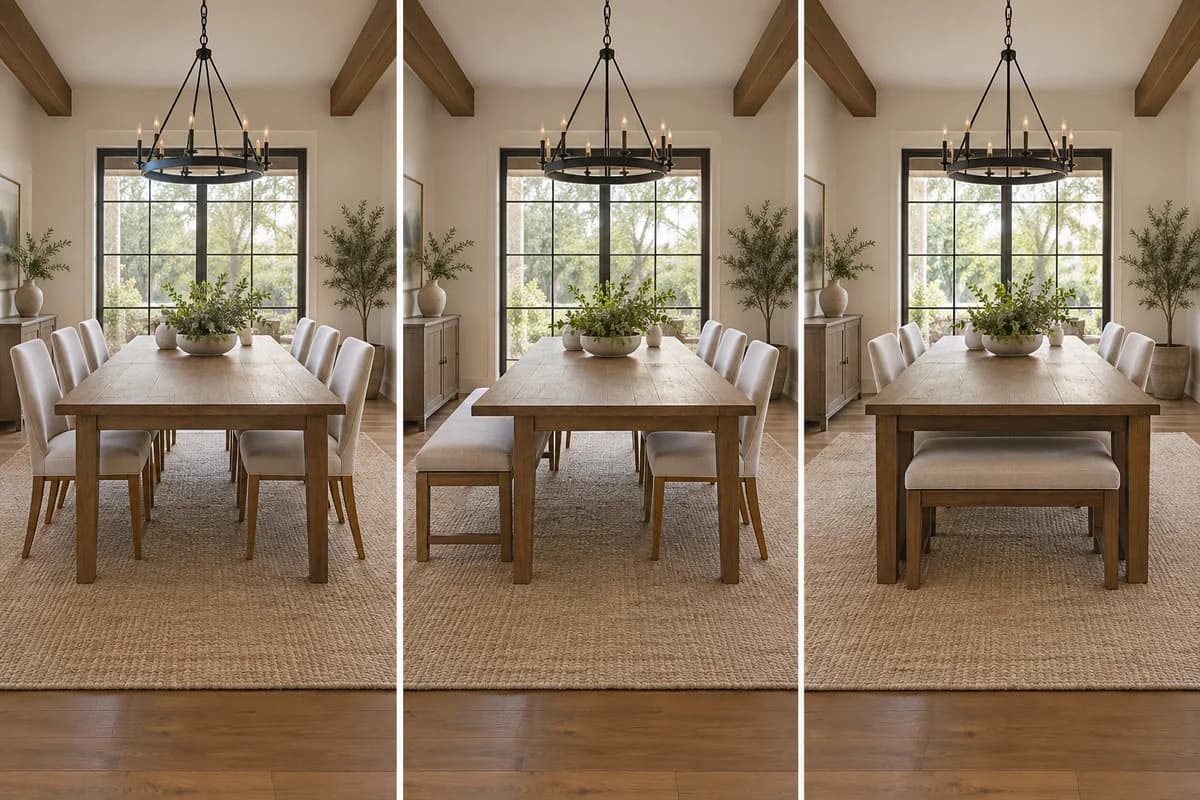
A mixed arrangement often earns the room: bench on the low-traffic side, chairs where adults stand frequently.
Run one final occupancy test with coats, bags and serving dishes present. A bench that seats three in an empty photograph may seat two once winter layers and table legs claim space. Chairs reveal their capacity more honestly, but their backs can collide when adjacent diners push out together. Use the ordinary busiest meal as the standard, not the maximum number of people who can perch for a minute.
Once the seating works, the centerpiece guide keeps the tabletop usable. Choose the plan that lets real people arrive, sit, leave and return without choreography.
Frequently asked questions
Does a dining bench save space?
It can tuck under the table and reduce visual clutter, but diners still need a clear route to sit and stand.
How long should a dining bench be?
It should fit between table legs or within the base and provide realistic width per diner. Measure the usable span, not only the tabletop.
Are dining benches comfortable?
They can be for shorter meals. Backless versions offer less support, while backed or banquette styles need more permanent space.