The best bedroom window treatment is not the one that looks most serene at noon. It is the one that behaves at 6 a.m. when the sun begins an unrequested presentation.
Choose the problem before the fabric
List what the window must control: early light, street visibility, heat, drafts, noise, limited wall space or all of the above. Curtains and shades can both help, but they solve those problems in different places.
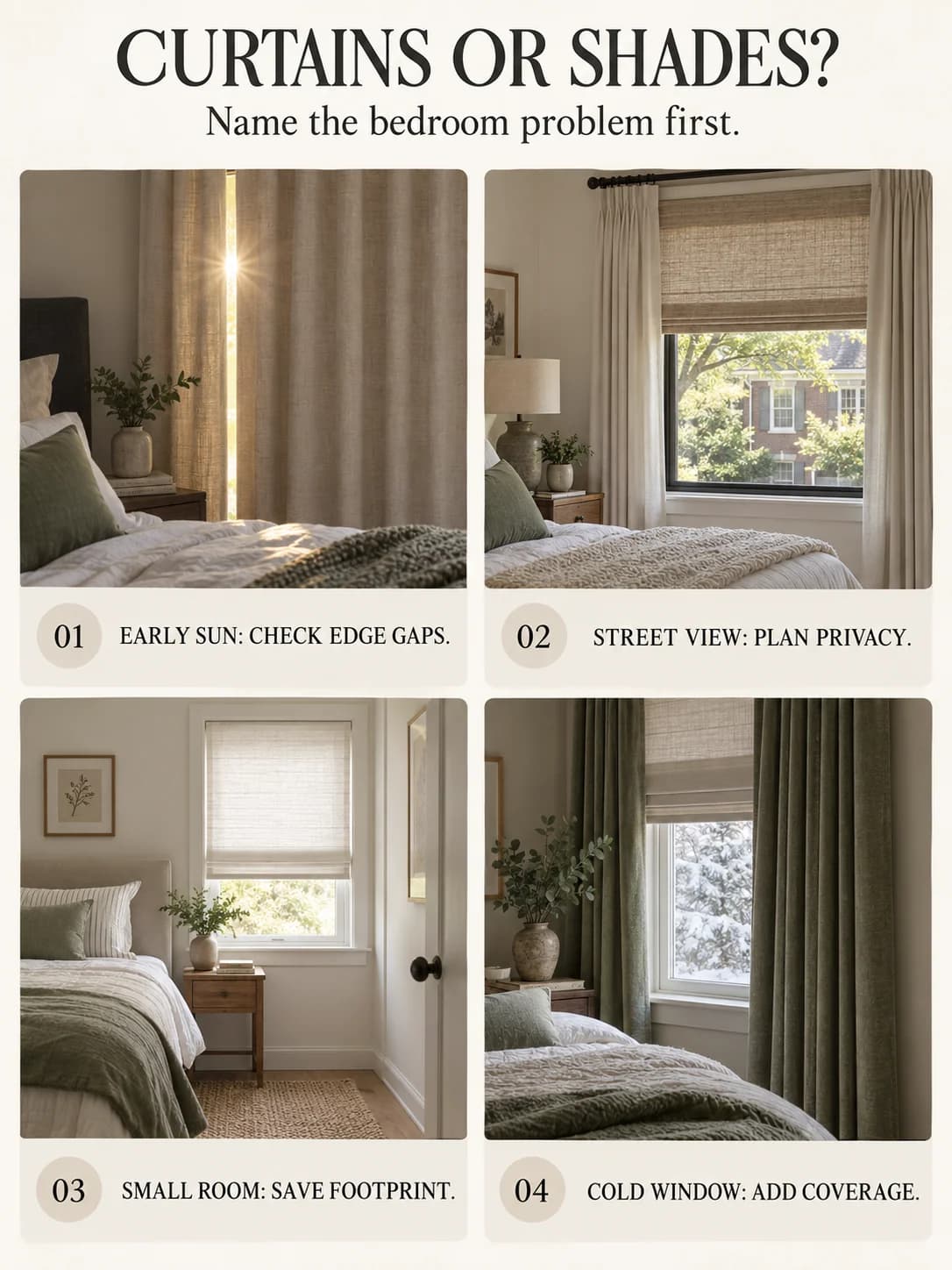
| Need | Curtains | Shades |
|---|---|---|
| Maximum edge coverage | Wide panels can overlap frame | Side channels or exact fit help |
| Small footprint | Need wall and floor space | Compact inside mount |
| Soft visual finish | Strong advantage | More architectural |
| Easy daily adjustment | Tiebacks or traverse rod | Simple raise and lower |
| Layering flexibility | Pairs over shade | Fits beneath curtains |
Curtains cover beyond the glass
Full-length panels can extend above and to both sides of the frame, reducing edge light and visually enlarging the window. They also bring softness and fabric texture into a room. The tradeoff is footprint: panels need wall width, floor clearance and enough fullness to close without pulling tight.
Measure before ordering. Our curtain-measuring guide covers rod position, panel width and finished length.
Shades stay close to the window
An inside-mounted shade has a clean profile and does not occupy floor space. It is easy to raise fully during the day. The weak point is often the side gap between shade and frame. Outside mounts or side-channel systems can improve coverage, but the exact window and installation matter.
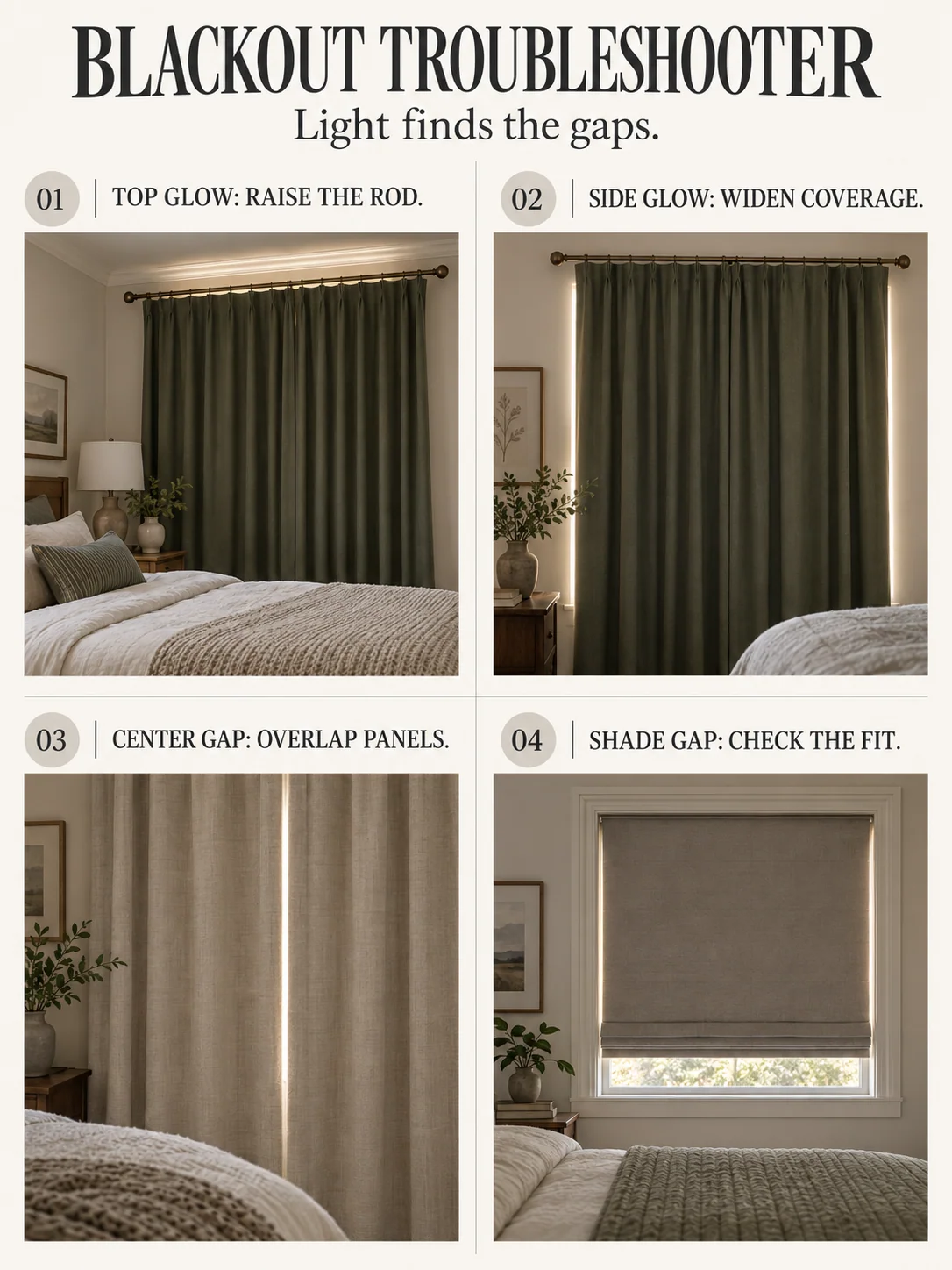
Blackout is a performance claim, not a mood
Dark fabric is not automatically better, and a blackout material can still allow light around its edges. Inspect the full installation: top, sides, center overlap and bottom. Test at the time of day the room is brightest.
Privacy also changes between day and night. A light-filtering shade may obscure the view inward during daylight but reveal silhouettes after dark when the room is lit. Stand outside or ask someone to check from the relevant sightline before assuming the treatment handles both conditions.
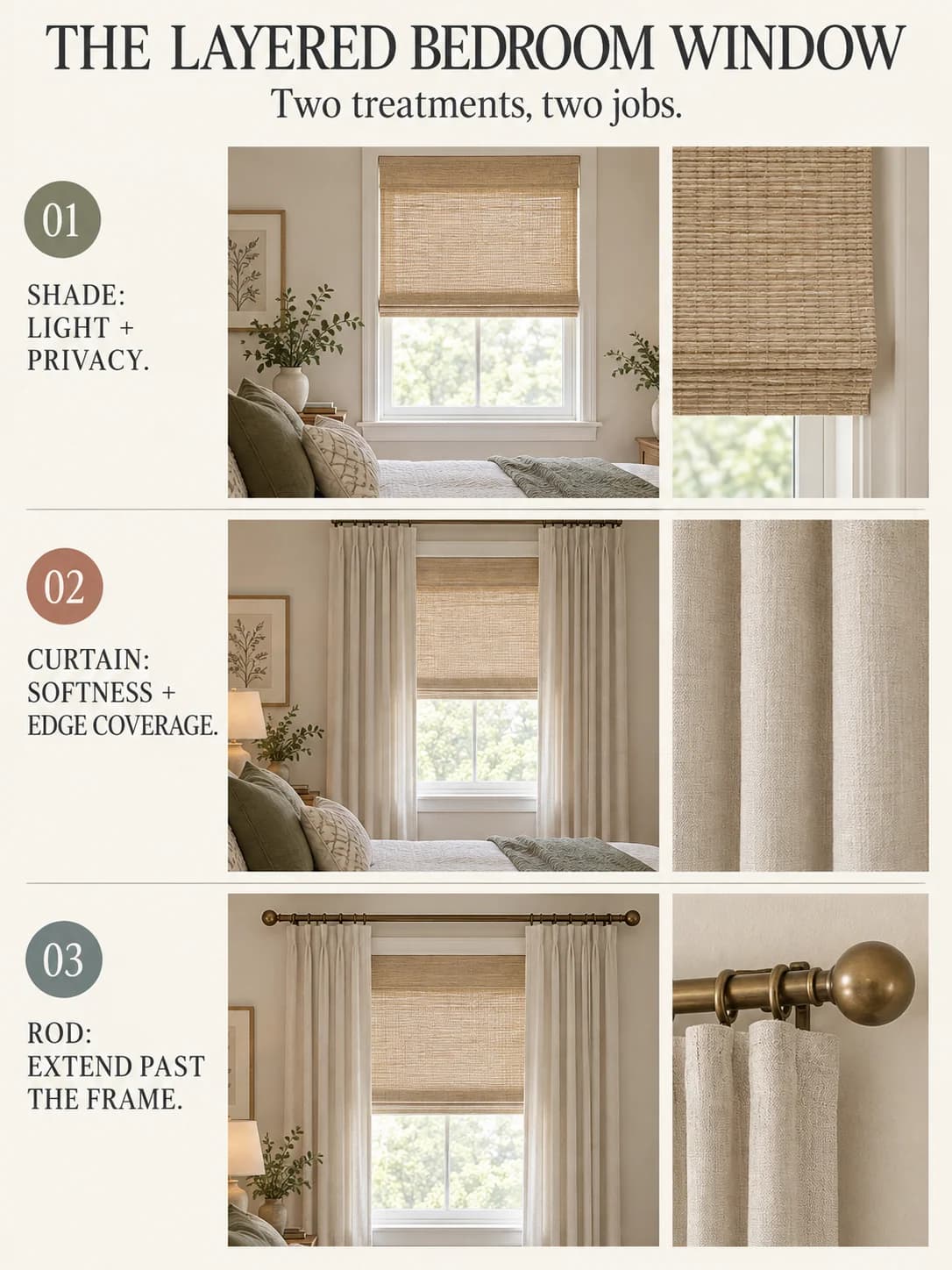
Layering gives each treatment one job
A fitted shade can handle daily light and privacy. Curtains can add softness, insulation and wider edge coverage. The layered window-treatment guide explains how the two planes work together without crowding the frame.
Remember the rest of the room
A bed tight against the wall may interfere with curtain fall. A radiator needs safe clearance. Dust sensitivity may favor a simpler washable treatment. If the lamps are fighting the window visually, the lampshade-size guide can settle their scale separately.
Open and close the chosen treatment several times. A beautiful panel trapped behind a nightstand or a shade cord hidden by the headboard will become annoying quickly. Daily reach belongs in the decision alongside fabric and color.
Confirm that every operating cord and control follows current child-safety guidance for the installation.
Choose after darkening the room in real conditions. Bedroom windows are practical equipment wearing decorative clothes.
Frequently asked questions
Are curtains or shades better for blackout?
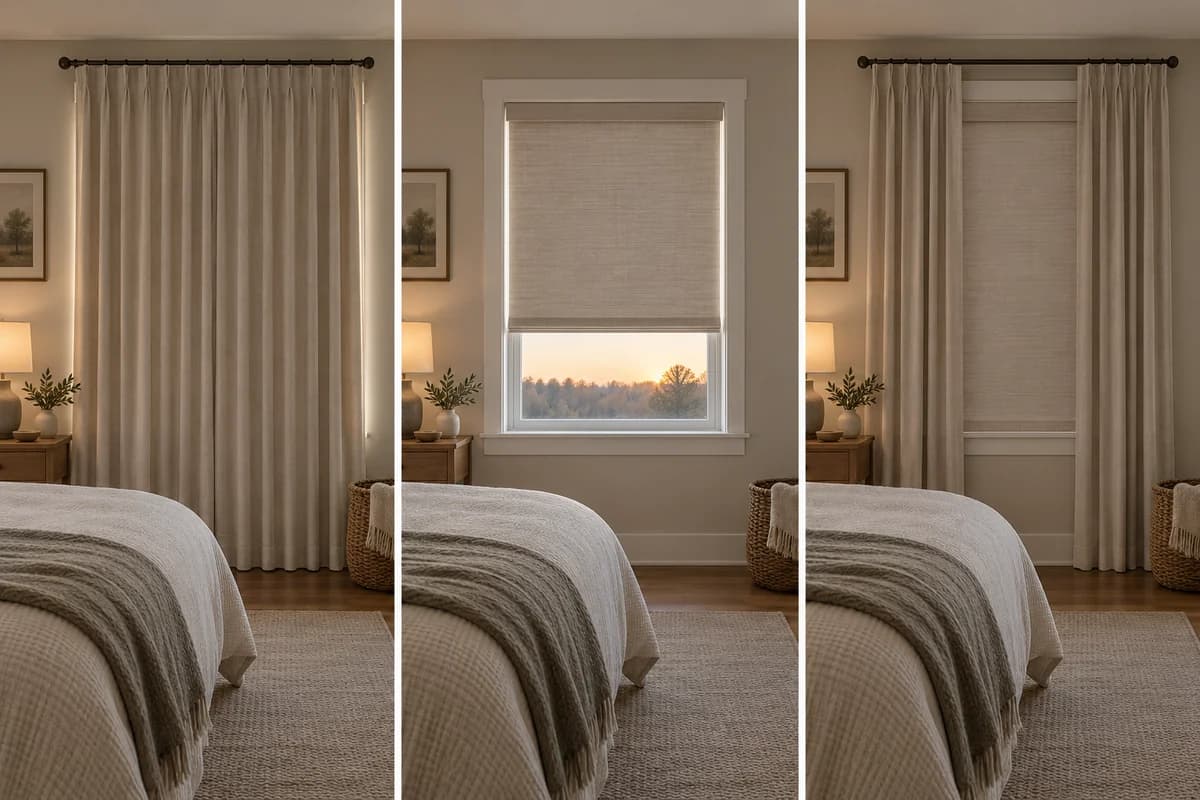
Either can darken a room, but fit matters. Shades can leak light at side gaps; curtains can leak above and around the rod. Layering often gives the most complete coverage.
Do bedroom curtains need to reach the floor?
Floor-length panels usually create the cleanest line and broader coverage. Short curtains can work when furniture or a radiator requires them.
Can you use curtains and shades together?
Yes. The shade manages light and privacy at the glass while curtains soften the room and extend coverage beyond the window frame.