Getting dressed for an outdoor concert means dressing for two different moments: arriving while you are moving, and leaving after you have spent hours outside. A jacket that feels unnecessary in the queue may become the most useful part of the outfit once you sit down.
Check the ticket, the ground and the forecast together
Look at the forecast through the journey home, not only the start time. Then check whether you will stand on pavement, cross grass, climb steps or sit in exposed seats. Those details determine footwear and layers more reliably than the performer's genre.
Read the venue's current bag and prohibited-item rules for your specific event. A crossbody bag is not automatically permitted, a clear bag is not always required, and an umbrella may not be allowed. Do not build an outfit around leaving layers in a locker or returning to the car unless the venue confirms those options.
Outdoor exposure can be substantial. Red Rocks' official FAQ describes the range of weather at that venue; it is a reminder to check the actual place, not a forecast for every concert. Follow the organizer's weather instructions if conditions change.
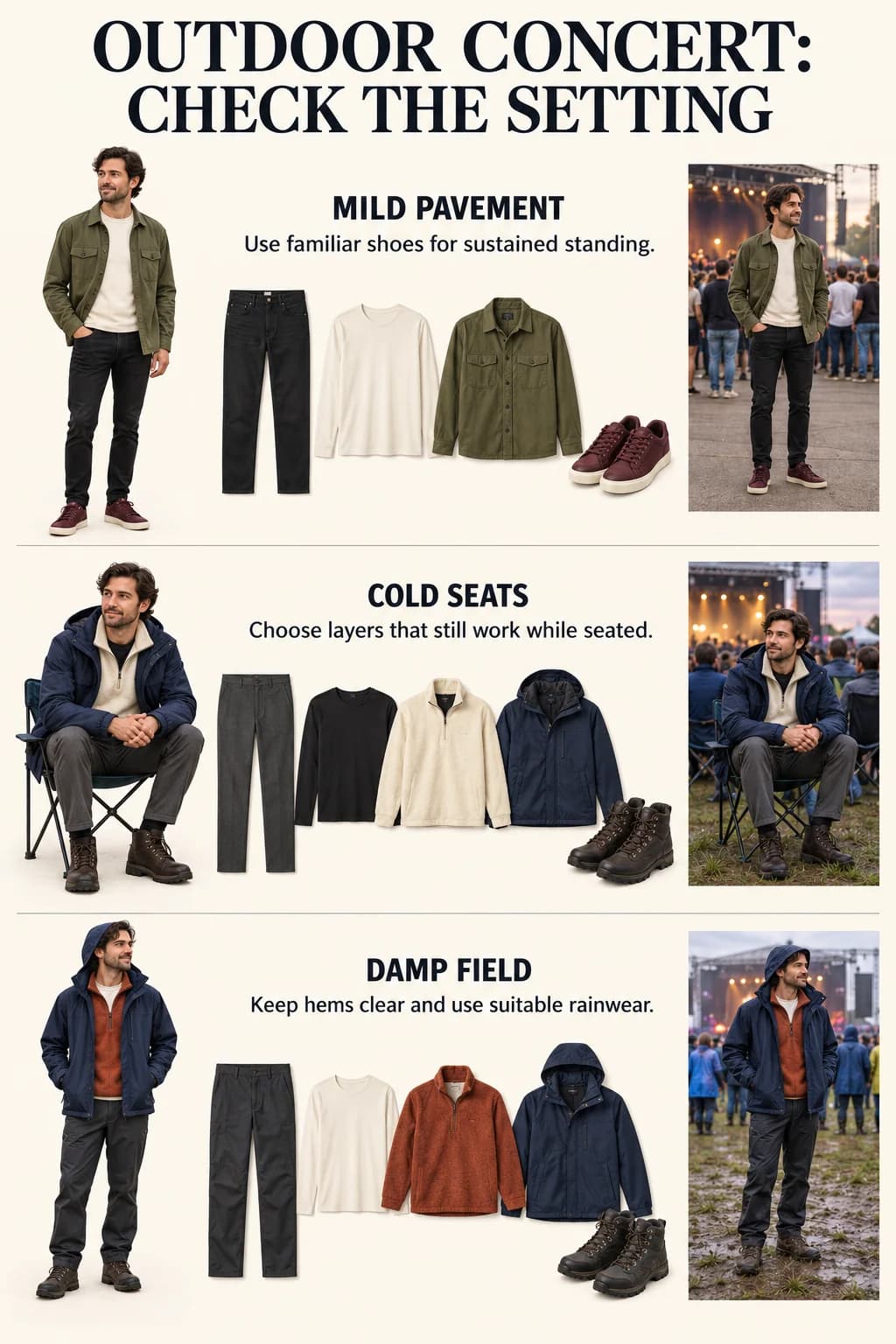
A mild evening on pavement
Try black straight jeans, a soft ivory long-sleeve tee, an olive overshirt and burgundy sneakers you already find comfortable for sustained standing. A small black bag works with the palette if it meets the event's rules. The overshirt provides a removable layer, while the dark jeans are easy to combine with a different jacket if the forecast changes.
Wear the tee as a complete top in its own right. Check that you are comfortable in it without the overshirt, since a crowded arrival can feel warmer than your seat later. The burgundy shoes add color without requiring a statement accessory that catches on the outer layer.
If the night looks cooler than expected, replace the light overshirt with a jacket offering the warmth you need rather than adding several thin shirts at random. If you prefer a skirt, a charcoal midi with enough room to walk and sit can replace the jeans; pair it with suitable flat boots and hosiery for the conditions. Keep the hem clear of the ground.
Cold seats call for a different layer plan
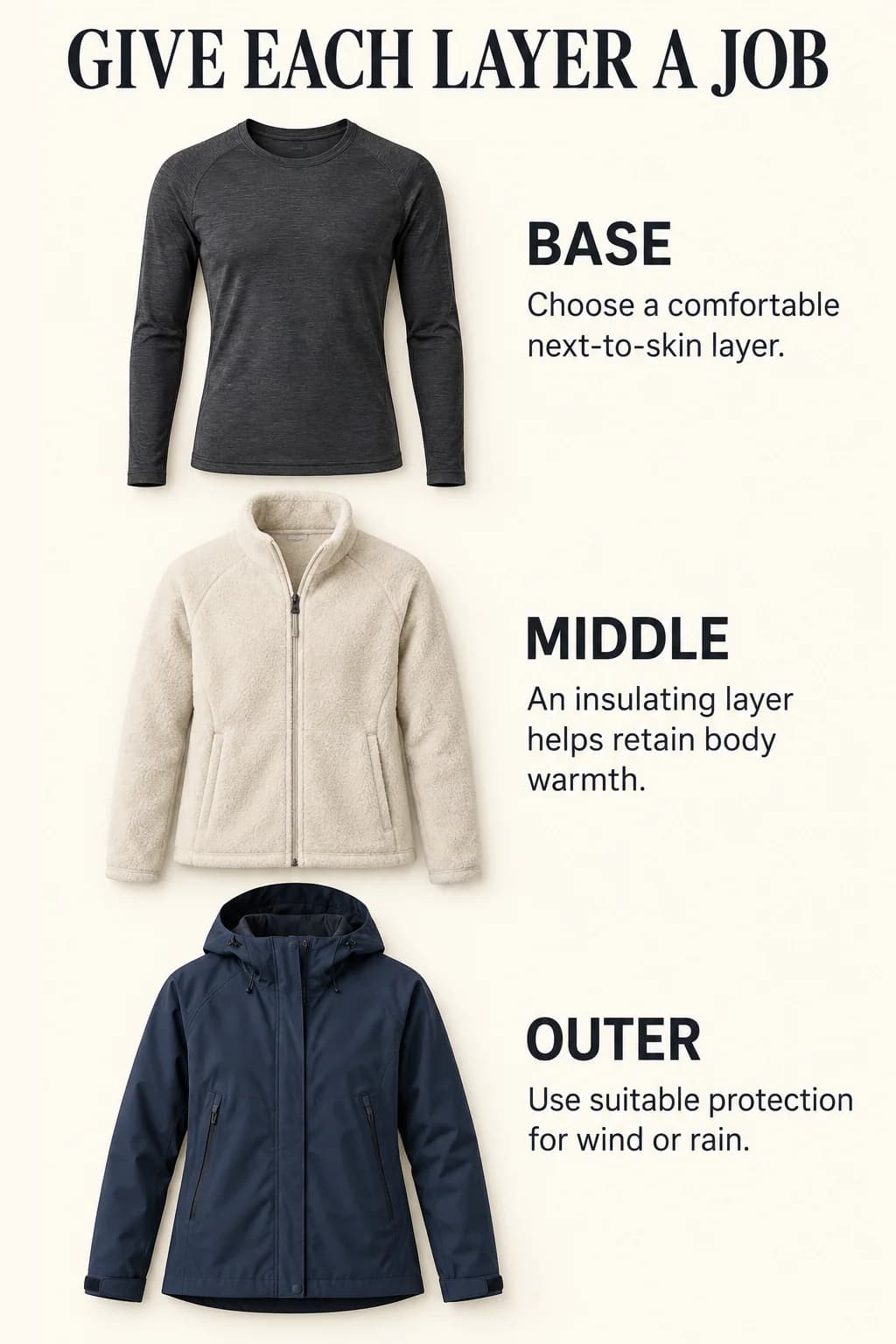
For a dry, chilly seated show, use charcoal trousers, a thin base top, a cream fleece or wool-blend midlayer and a navy outer jacket appropriate to the forecast. Wear familiar dark boots with socks that fit comfortably inside them. A permitted compact bag can hold gloves or another small layer, but only if there is genuine room left after your essentials.
The useful distinction is between retaining warmth and resisting the weather. REI's layering guide separates these functions. A warm knit may still need a suitable outer layer in wind or rain. The exact combination depends on the garments, your activity and your own temperature preference; there is no single outfit guaranteed for a numerical temperature.
Try sitting in the whole arrangement before leaving. The outer jacket should close without crushing the layers or pulling across the lap. If you use a hoodie instead of the fleece, settle the hood and neckline as described in our hoodie-under-a-coat guide. More layers are useful only if you can move and close the coat comfortably.
For someone who runs warm while walking, keep the outer layer easy to remove on the approach and accessible when seated. If you expect to remain seated for most of the show, prioritize coverage in that position rather than judging warmth after a brisk walk around the house.
A damp field needs footwear before styling extras
For a show involving wet grass, consider dark trousers with hems clear of the ground, an ivory next-to-skin top, a rust fleece and a hooded navy rain layer suited to the expected conditions. Use weather-appropriate boots with a sole you trust on that surface. The rust remains a warm accent when the shell is open, but the outfit does not depend on keeping it visible.
A fashion boot is not automatically waterproof, and a flat sole is not automatically grippy. Check the particular footwear rather than its category name. Wear the socks you have already tried with the boots; a thicker pair can change fit enough to create discomfort. This is a poor occasion to discover what new shoes do after an hour.
If the ground is firm and the forecast improves, suitable sneakers may be a more comfortable option. If conditions worsen beyond what your clothes and the venue setup can reasonably handle, change the plan according to official guidance. A styling guide cannot make severe weather manageable through a better color combination.
Where will the layer go when it comes off?
Lay out the permitted bag and put in your actual essentials before adding a spare layer. A jacket described as packable may still fill most of a small bag. If it does not fit, choose a wearable arrangement you can manage, a more compact suitable layer, or an allowed bag with enough capacity. Do not assume you can bring a second bag through security.
A jacket tied at the waist can work in dry conditions, but check that its sleeves and hem will not drag or repeatedly catch as you move. Carrying it over an arm may be simpler for a seated show and inconvenient for a standing one. Make that decision now, while you can still change the outer layer.
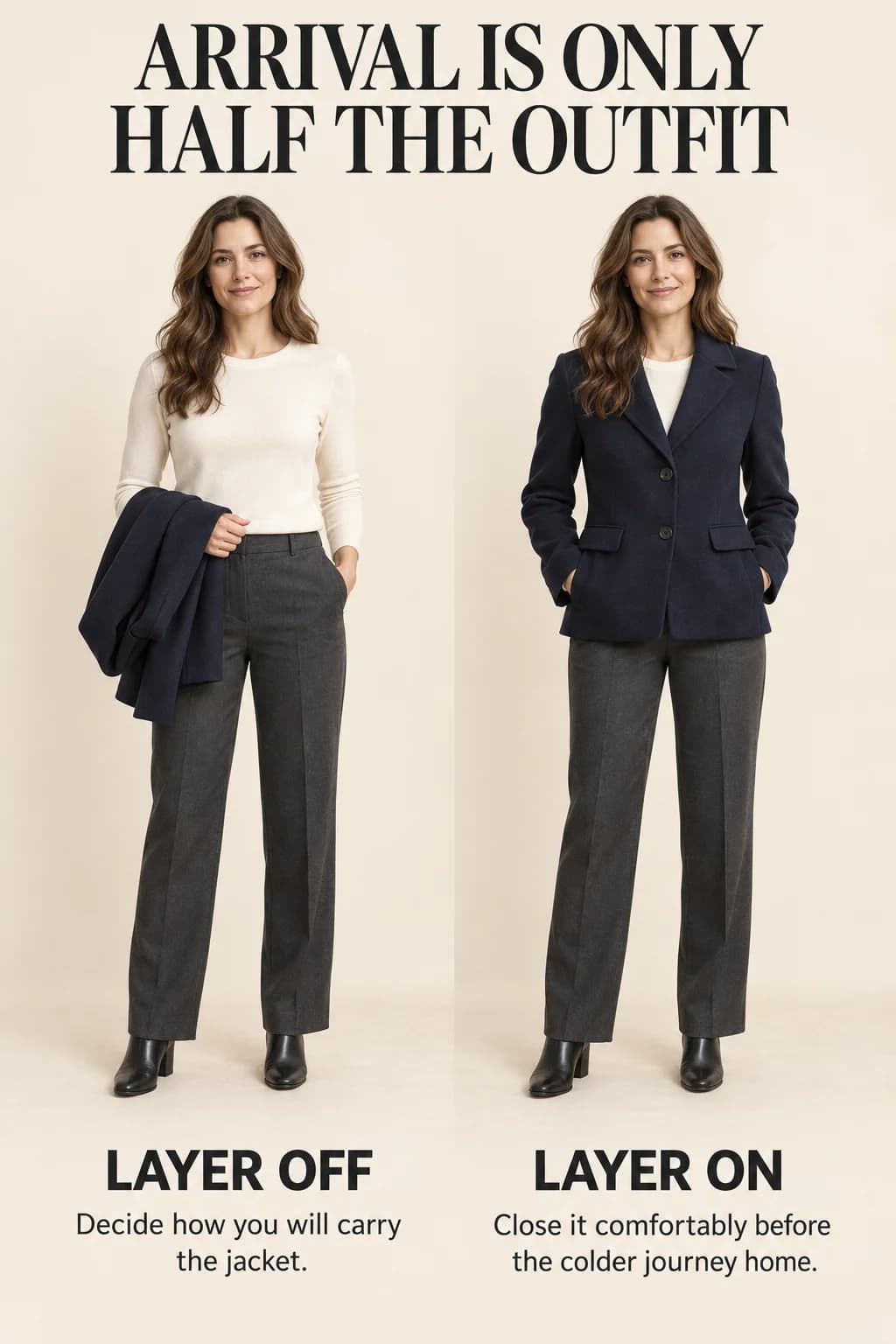
Adjust an approved crossbody bag over the full outer layer, then check that you can open it without removing the coat. The crossbody-strap guide explains why a strap that works over a tee may sit differently over insulation. Keep the fastening accessible and the bag comfortable when seated.
Before leaving, put the outfit through the actions the evening will require: close the coat, sit, walk, use the bag and put the removed layer somewhere. If one of those actions needs both hands and a patient assistant, simplify that part. The music can supply the excitement; getting dressed does not need to.