Dress for the whole museum visit: the journey there, time in the galleries, a seated film or café stop, and the trip home. A jacket that looks good outside can become an awkward parcel indoors. Shoes that feel fine for ten minutes may be the only thing you notice by the second floor.
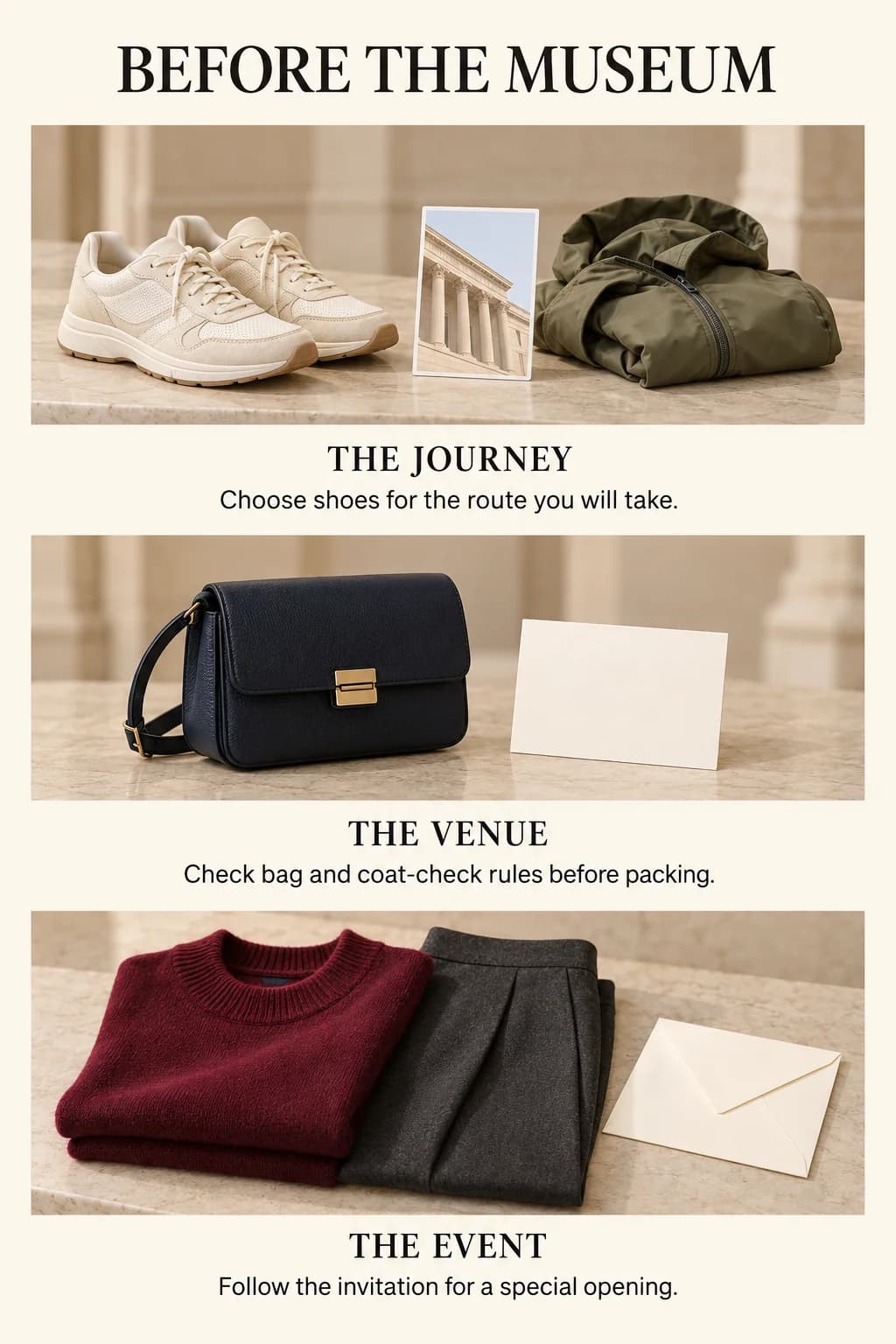
Check the invitation and the bag policy first
For a regular daytime visit, build around clothes you can move and sit in comfortably. Jeans, trousers, skirts and dresses can all be practical starting points. You do not need an “art person” uniform. A gala or a separately ticketed opening may have an invitation dress code, so check that event rather than borrowing expectations from an ordinary gallery visit.
Bag rules and storage arrangements belong to the actual venue. MoMA's visitor FAQ lists coat-check facilities but also explains that certain prohibited items cannot be left there. That is a useful warning against assuming a museum will store whatever you arrive carrying. The Met's visitor guidelines provide its own prohibited-item and entry information. Read your destination's current guidance before packing a large tote or an extra pair of shoes.
Consider the route as well. A short taxi trip, a long walk from transit and an outdoor sculpture garden ask different things of your footwear and coat. If stairs or long standing periods are difficult, check the venue's access information, lifts and seating instead of choosing an outfit around movements you do not intend to do. Comfort includes the way you use the space.
A warm-day visit with a light layer to put away
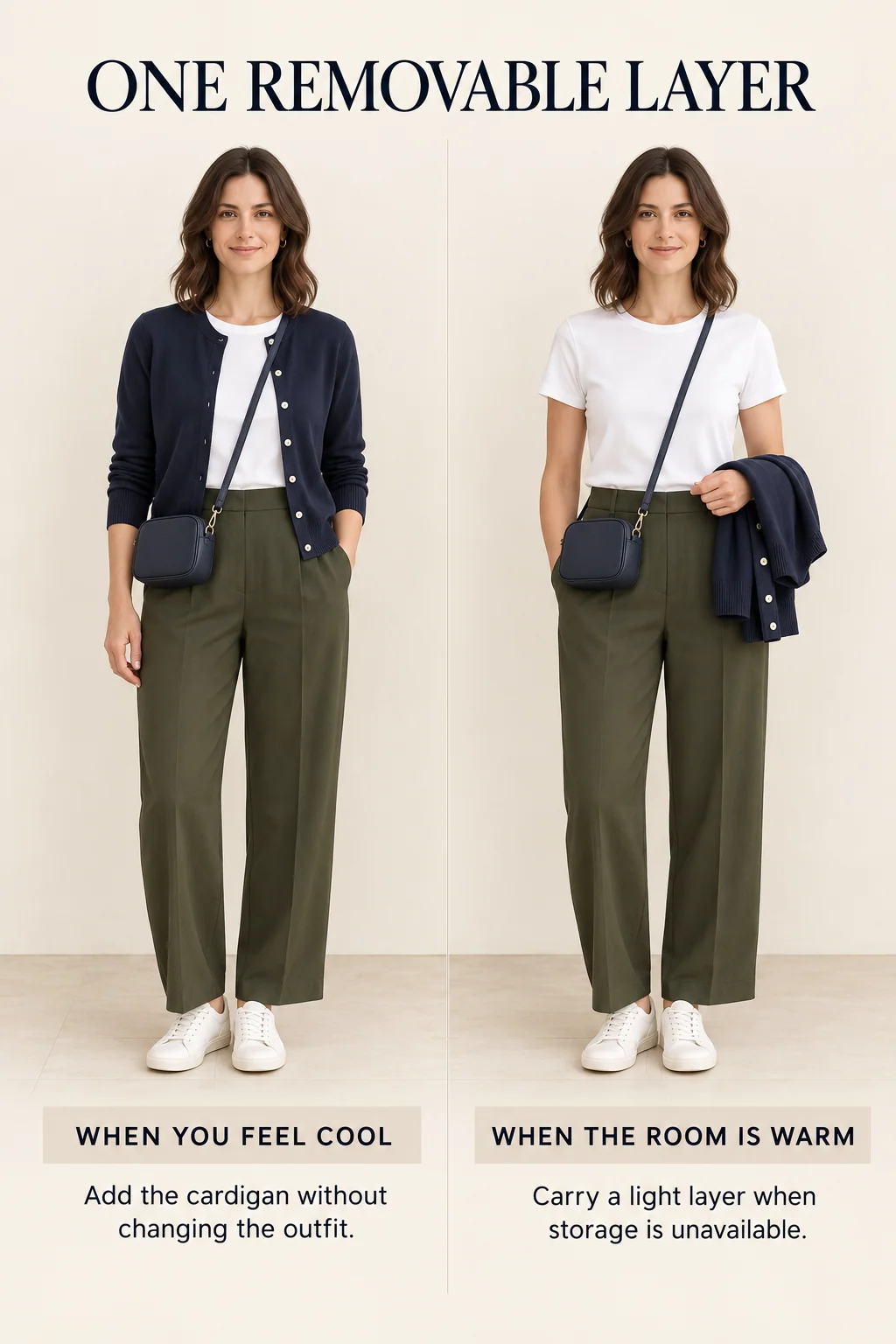
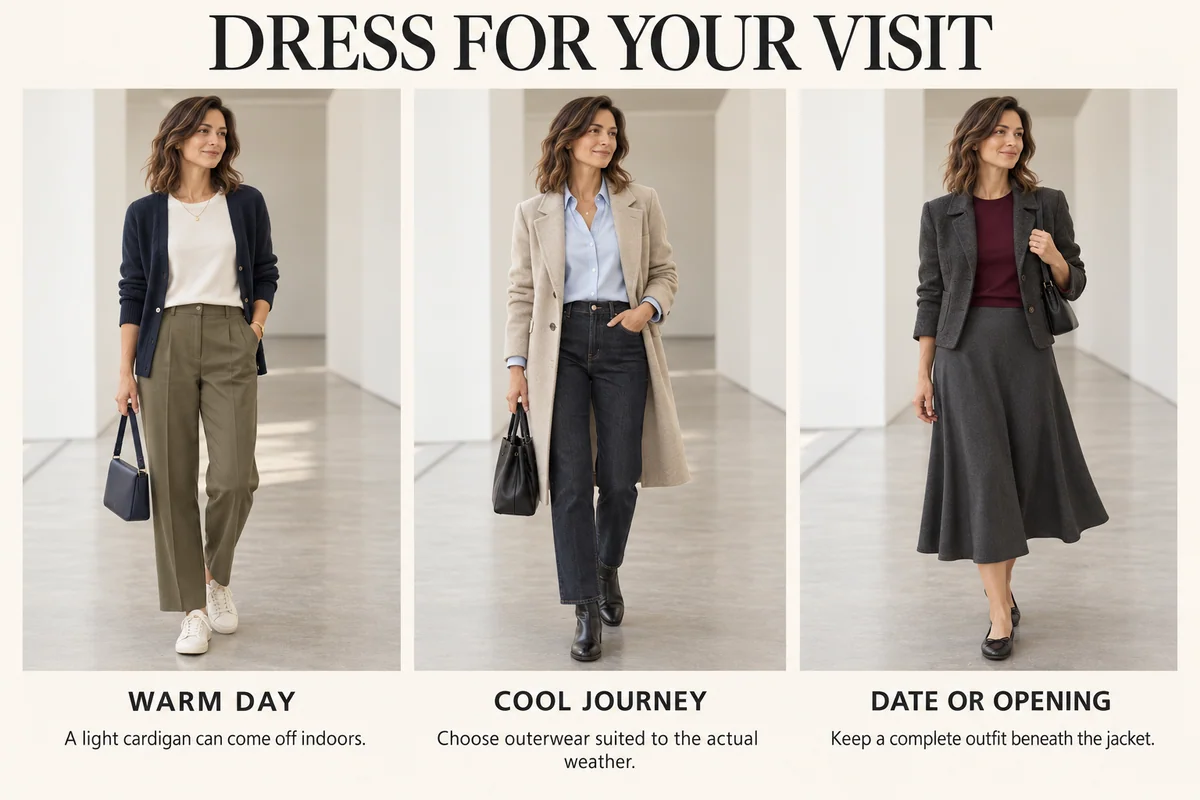
Try an ivory tee, olive straight-leg trousers and cream sneakers, with a fine navy cardigan folded into a compact bag if permitted. The olive gives the outfit color without requiring accessories to finish it, while the light tee and shoes keep the combination relaxed. Choose trousers with enough room to sit at the waist and knee rather than a pair you tolerate only while standing.
This is a useful formula for a daytime collection visit followed by lunch. The cardigan adds warmth if you feel cool indoors and can come off without changing the rest of the outfit. Wear it open to keep the tee visible; button it if that feels warmer and the front remains comfortable. Do not assume every gallery is cold, or bring a heavy knit solely because it is a museum.
If you prefer a skirt, use an olive A-line midi with enough walking room and a hem clear of the ground. Keep the same tee, sneakers and cardigan. For more covered arms outdoors, replace the tee with a light long-sleeved top and assess whether you still need the cardigan. Avoid packing two layers that perform the same job unless the forecast gives you a reason.
A cool or rainy day without carrying your whole wardrobe
Dark straight jeans, a soft blue shirt, black familiar walking boots and a stone weather-appropriate coat make a practical cooler-weather outfit. The blue shirt gives the coat something distinct to frame; the dark jeans and boots keep the lower half simple. Add a thin charcoal cardigan beneath the coat if you expect to need warmth after taking the outer layer off.
Choose the boots for the pavement and weather, not just their label. A comfortable boot in dry conditions may have unsuitable grip or protection for a wet journey. Likewise, a trench silhouette does not guarantee waterproofing: check the garment's specifications. Our casual trench-coat guide covers the styling decisions once the practical outer layer is settled.
If coat check is unavailable or you prefer to keep your belongings with you, take a coat you can comfortably carry or wear open. A bulky scarf and heavy coat can leave your hands full. For a warmer forecast, remove the cardigan from this formula rather than planning to carry it unused. If you prefer trousers to jeans, navy straight trousers work with the blue shirt and black boots; let the hem clear wet ground.
A museum date or evening opening
Wear a burgundy fine-knit top, a charcoal fluid midi skirt and black flats, with a short charcoal jacket and a small black shoulder bag. The burgundy makes the upper half feel considered without relying on delicate shoes or a complicated neckline. The jacket ends high enough to leave the skirt's movement visible, while the quiet bag and footwear let the color do the work.
For a daytime date, use the flats you already know you can walk in. If the invitation asks for smarter evening dress, choose a more refined fabric or a simple piece of jewelry before deciding you need higher heels. A dress code still governs the event; this formula is not intended to cover a black-tie gala.
Prefer trousers? Replace the skirt with charcoal tailored trousers and keep the burgundy top. A low heel is an optional change if you find it comfortable, but a polished flat can finish the same combination. If the hem meets the shoe awkwardly, use our cropped-trouser footwear guide to compare the opening and shoe shape. The point is to have a complete outfit when the jacket comes off, rather than depending on outerwear to make it feel dressed.
What to adjust before you leave
Use shoes you have already worn for a comparable outing. Sneakers, loafers, flats and boots can each work, but none is comfortable for everyone. A shoe that slips at the heel or rubs before leaving is a poor experiment for a long visit. Choose a secure familiar pair and revise the outfit around it.
Sit in the skirt or trousers and check the waistband and coverage you prefer. If a long hem catches underfoot or trails beside a seat, change the length or garment. You should not need one hand constantly gathering fabric. For wheelchair use, check how hems, coat tails and bag straps sit around the chair and use the arrangement that works for you.
A compact bag can keep essentials close without swinging behind you. Adjust its strap to the position you can reach comfortably, and follow any venue instructions about carrying it. Keep a loose scarf contained so it does not brush objects or other visitors. Put tickets and essential items somewhere accessible before the entrance queue; the nicest finishing detail may be not having to unpack everything at security.