Bootcut jeans can work with sneakers, flats and heeled boots. The catch is that a pair hemmed for one of those shoes may be too long or too short for another. Before choosing the prettiest toe shape, put on the actual jeans and look at where their back hem sits above the floor.
Choose a shoe-and-hem combination
Bootcuts widen toward the hem, so there is fabric around the shoe rather than a narrow ankle opening holding the leg in place. For a full-length pair, look for a clean fall that leaves the back hem clear of the ground and does not pile heavily over the front. Walk, turn and step up before deciding: the hem can move differently once the foot bends.
There is no single ground-clearance measurement that resolves every fabric, opening and shoe. H&M's fit guide and Primark's denim advice both discuss a near-ground full-length finish. Treat that as a styling starting point, not permission to let the fabric drag outdoors. Use your walking conditions and actual footwear to decide how much clearance is practical.
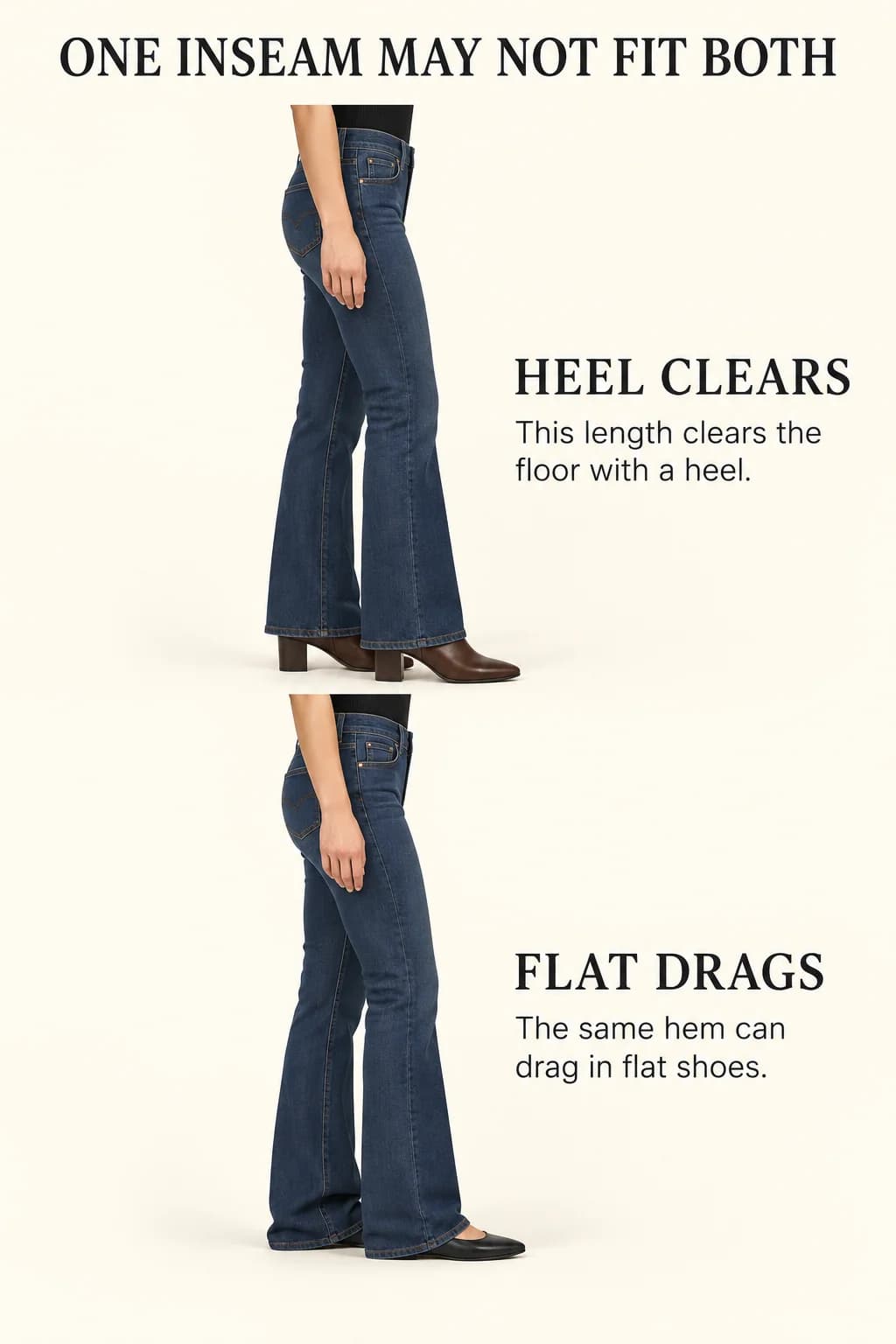
If a pair just clears the floor in heeled boots, changing to flat shoes can leave its back hem underneath your heel. If it is shortened for flats, a higher heel will show more shoe and may make the same jeans look unintentionally short. Neither shoe is wrong for bootcuts; the one inseam may simply not serve both.
Choose the footwear you expect to wear most often before a permanent alteration, and bring it to the fitting. Keep the jeans at their normal waist position rather than pulling them higher to create temporary clearance. If you regularly wear very different shoe heights, separate lengths may be more useful than a compromise that works poorly with both.
Sneakers: a complete casual outfit with a flat-first length
Start with medium-blue bootcut jeans, cream low-profile sneakers, a white crew-neck tee and a short olive utility jacket. Add a cream canvas tote for errands or a relaxed day out. Use jeans whose hem clears the ground in those sneakers, with enough toe visible that the front does not look folded over the shoe.
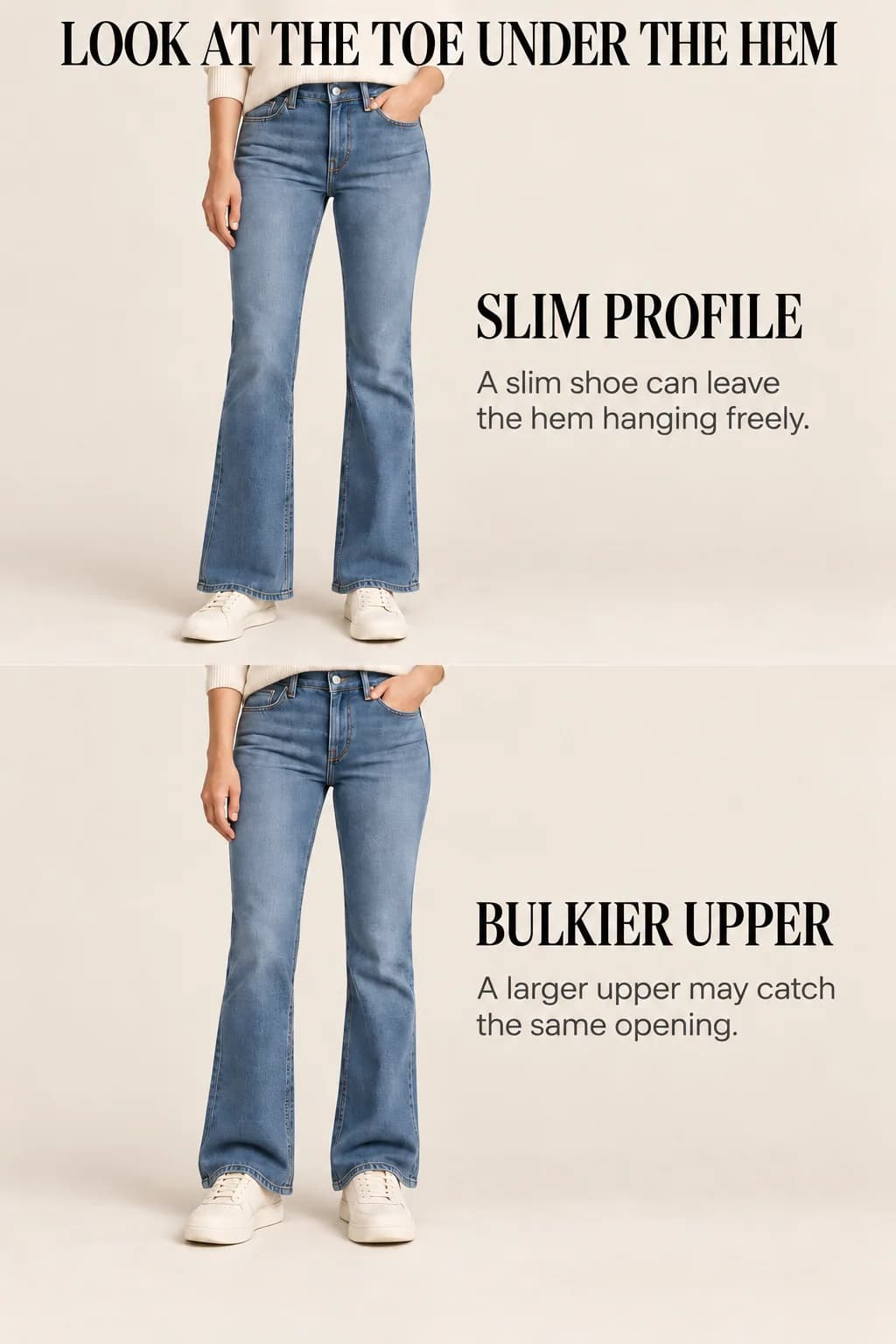
The short jacket leaves the shape of the jeans on view, while the white and cream make the base feel lighter than a head-to-toe dark outfit. A slim sneaker profile can sit neatly beneath a modest bootcut opening. That does not make chunky sneakers forbidden: their larger toe and sole simply need more room, so check whether the hem falls around them or rests awkwardly on top.
If you want more coverage at the waist, replace the short jacket with an open hip-length overshirt and leave the tee untucked. The outfit still works when the waistband is hidden. For cold weather, add socks that remain comfortable inside the sneakers and check the hem again with the same shoes. Socks do not compensate for an inseam that is too long.
For a truly wet walk, consider a shorter practical jean length or another trouser instead of relying on a sneaker sole to keep long denim dry. A hem that barely misses a dry studio floor may still brush wet pavement when you stride. Our wide-leg jeans and shoes guide explores a related problem with a more generous opening.
Heeled ankle boots: watch the shaft as well as the heel
For a casual dinner, pair dark indigo bootcuts with chocolate ankle boots on a low block heel, a cream soft blouse and a chocolate belt if you want a tucked waist. Add a navy coat and a small cream bag. Choose jeans long enough for the intended full-length finish in those particular boots, rather than borrowing a pair already shortened for flat sneakers.
An almond or softly squared toe gives the dark denim a clear ending. The cream blouse makes a distinct upper half, and the chocolate accessories repeat without demanding that every leather surface match exactly. A block heel is an option for the look, not a guarantee of comfort; choose a height and shoe you can actually wear for the evening.
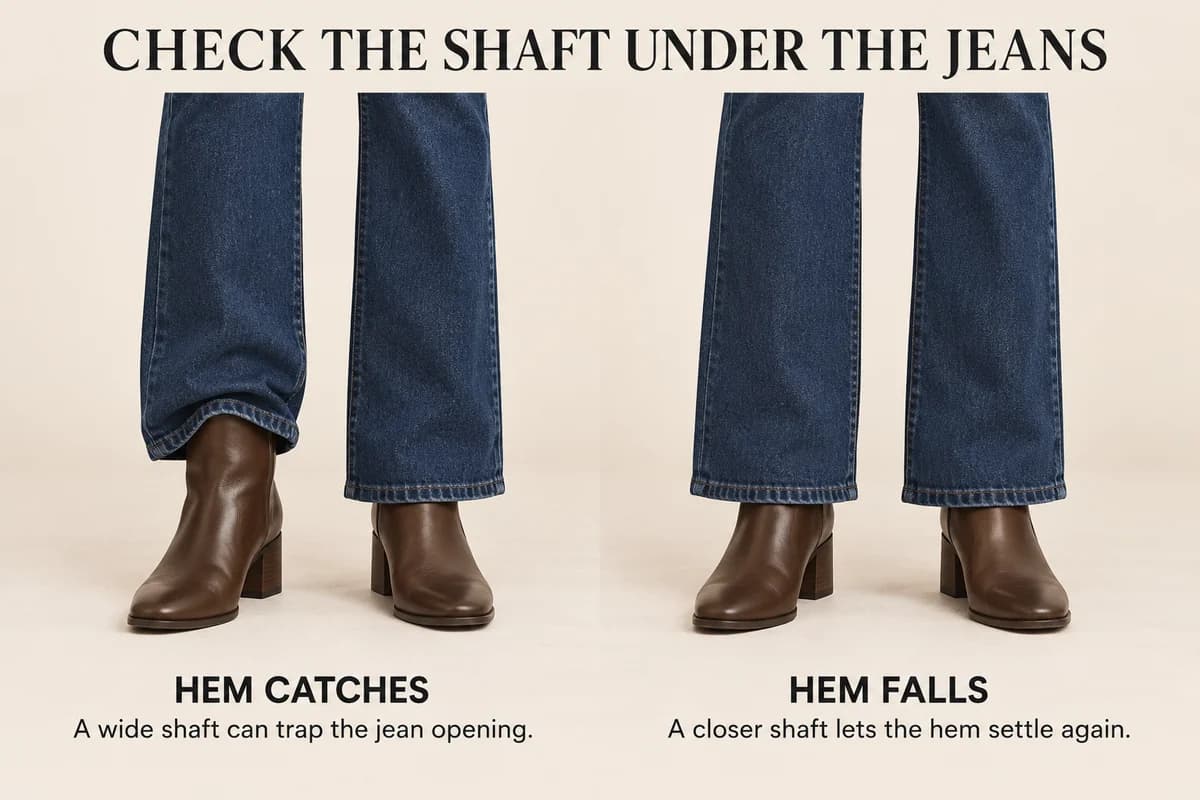
The boot shaft needs to fit beneath the opening without trapping the jean leg. Sit down, stand up and see whether the hem drops back into place. If it catches on a wide shaft, try a closer-fitting shaft or jeans with more room at the opening. Do not tuck the bootcut hem into the boot as a way to preserve the original silhouette: that creates a different shape altogether.
For a flat-boot version, use jeans whose length suits the lower shoe and keep the other pieces. A pointed toe can supply a sharper finish without adding heel height. If the blouse is long and you prefer it untucked, leave it loose beneath the open coat, then check that its hem does not bunch against the waistband. See ankle boots with straight-leg jeans for a different hem-and-shaft relationship.
Pointed flats: let a little shoe remain visible
Use black full-length bootcuts hemmed for flats, burgundy pointed flats, a fine gray crew-neck knit and a black blazer for an informal office that permits denim. Carry a burgundy or black bag. The small area of burgundy below the hem gives the otherwise neutral outfit a deliberate accent; it does not need a heel to make that point.
The important relationship is between the flare opening and the exposed front of the shoe. If the shoe disappears under a puddle of denim, reducing excess length may help. If the hem already clears properly, a wider or more visible toe shape is another option. A pointed flat should not have to be uncomfortably narrow to earn its place in this outfit.
For a softer weekend version, swap the blazer for a gray cardigan and the pointed flat for a simple loafer with a similar effective sole height. Recheck rather than assuming all flats sit equally low: a thick loafer sole may lift the foot more than a thin ballet flat. Keep the cardigan hem clear of any bulky waistband folds, whether tucked or loose.
Cropped bootcuts make a different promise
An intentionally cropped bootcut or kick flare shows the shoe and often some ankle; it is not trying to imitate a near-floor hem. Flats, loafers and close-shaft boots can all suit that outline. In cold weather, a boot shaft can continue under the cropped hem, while socks create another visible layer with loafers. Choose that exposed relationship deliberately rather than calling every short hem a mistake.
Do not shorten a full-length pair casually and assume the flare will remain identical. Removing length also removes some of the wider lower section. A large cuff can make a heavy band rather than a smooth flare. Pin a proposed alteration and assess it standing, then have the temporary pins safely removed before walking normally; a tailor can advise on keeping the intended shape. The reliable outfit is the one whose hem works with its shoes in motion, not just in a still photograph.