The jeans fit. The boots fit. Put them together, though, and a fold of denim can stop the zipper halfway up. That is useful information about the combination, not a challenge to pull harder.
Decide where the denim can comfortably go
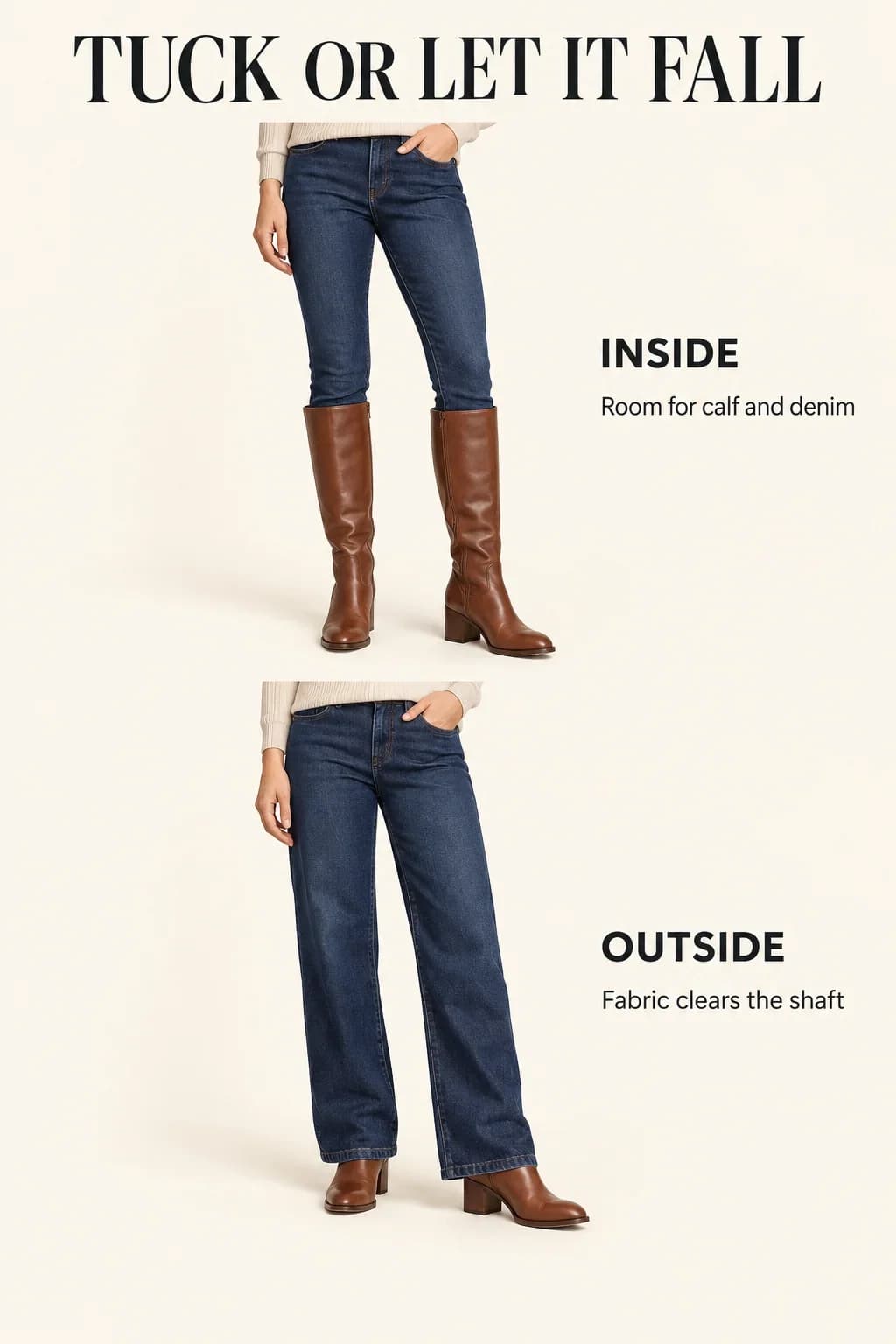
For a tucked outfit, the boot needs room for your leg and the jeans at the same time. A slim jean usually contributes less fabric than a wide one, but the label alone cannot settle the question. Thick seams, a stiff hem and a rolled cuff can all add bulk where the shaft narrows.
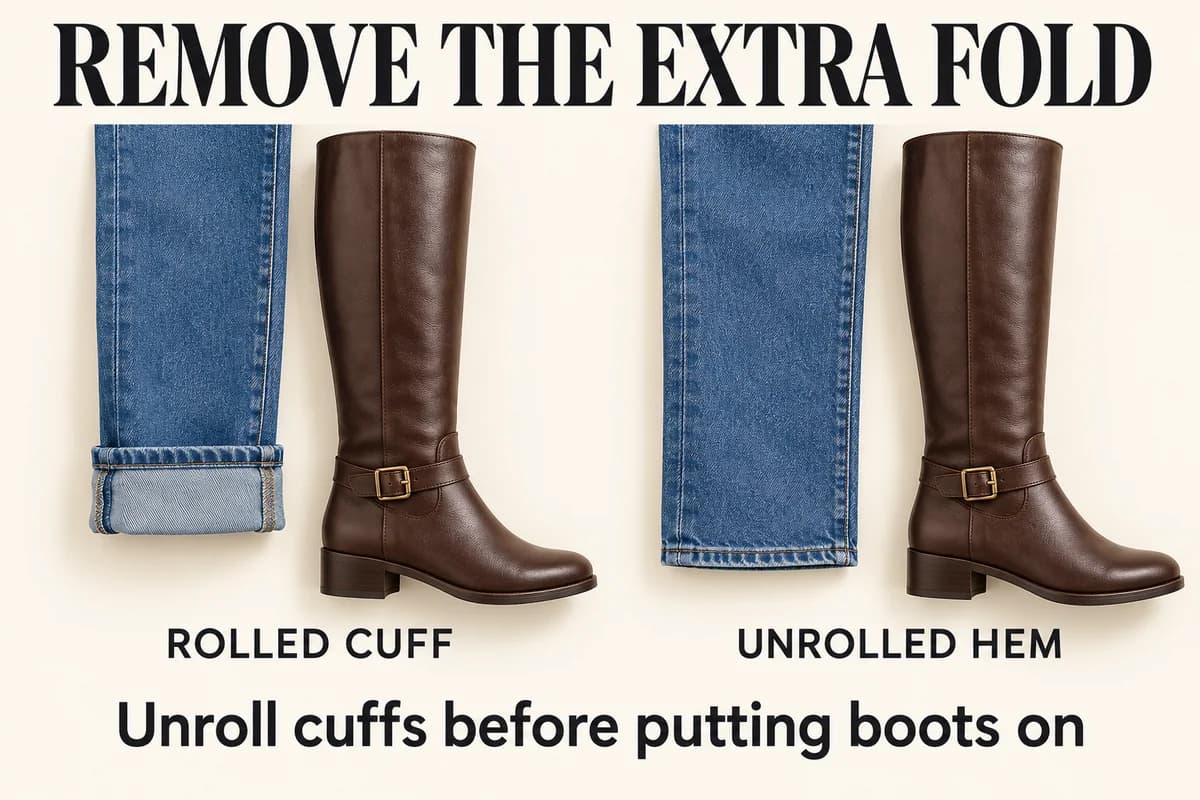
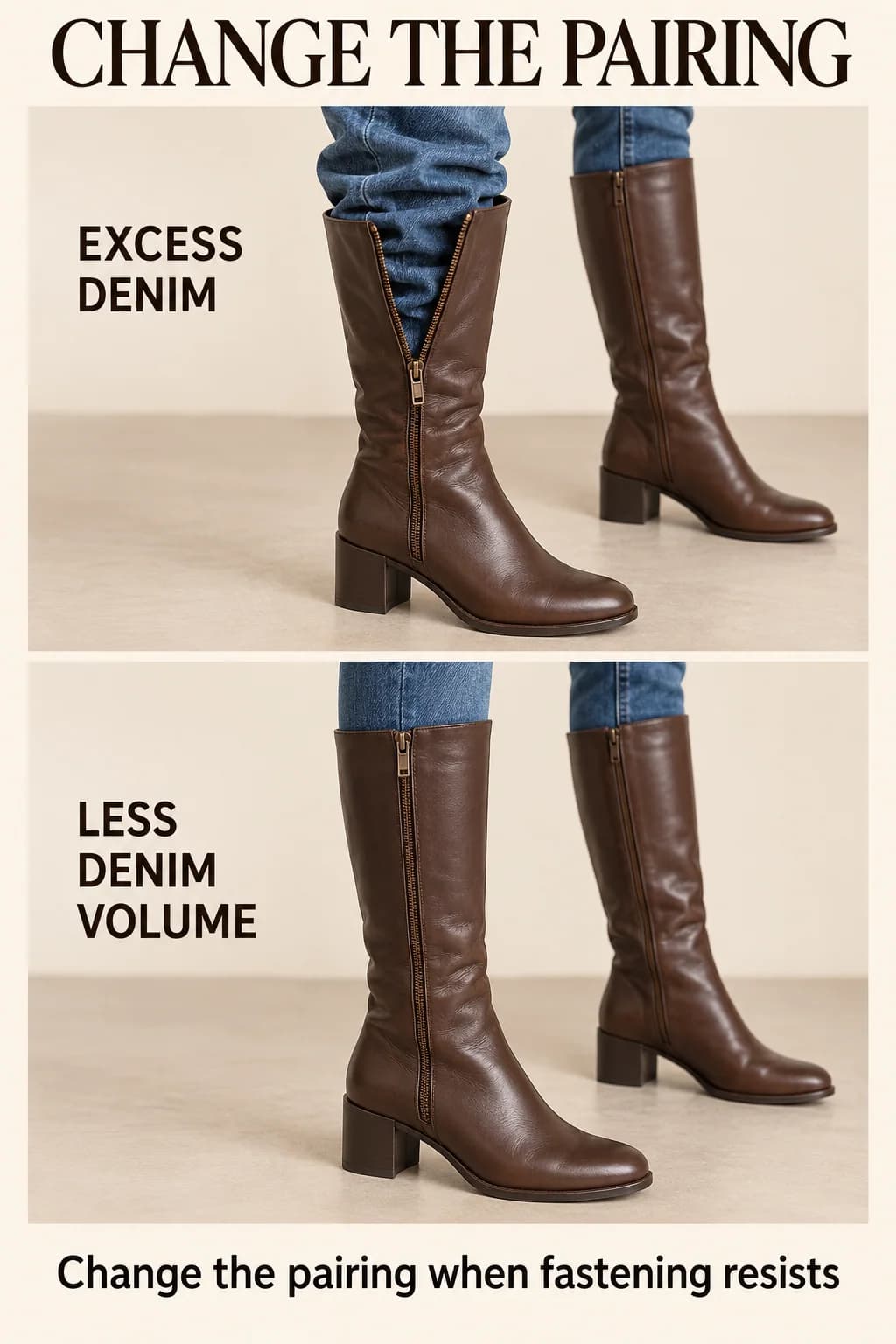
Start with the denim lying as smoothly as it naturally can at the ankle. Unroll a cuff before putting on the boot. Do not bind a wide leg into a narrow bundle or add tight bands to hold it down. Fasten the boot normally, then stand, walk and sit. Pressure, a hard ridge or a fastening that resists is a reason to change the pairing.
Wearing jeans outside the shaft is another option. The hem needs enough width to fall over the boot without catching at its top. In that arrangement, most of the knee-high shaft may be hidden, so choose it for the use you actually want rather than expecting it to change the visible outfit dramatically.
Three jeans-and-boot combinations
Lightweight skinny jeans inside a close, comfortable shaft
For a casual dinner, try lightweight black skinny jeans tucked into black leather knee-high boots with a low block heel. Add an oatmeal fine-knit sweater and a charcoal coat that falls below the hip. The black denim and boots make a relatively continuous lower half, while the lighter knit separates the outfit from the coat.
The close jean supplies little spare fabric at the calf, but the boot still has to close without effort. Smooth the jean down rather than rolling its hem into a thick band. The sweater can stay untucked if it falls freely over the waistband; this outfit does not depend on a visible belt.
A low block heel gives the boot a defined base without requiring a high heel for the skirtless outfit. If your dinner involves a long walk, use a comfortable flat-soled boot instead and assess its fit independently. For a milder evening, replace the coat with a leather jacket. The leather-jacket guide can help with the jacket's length over an untucked knit.
Soft slim-straight jeans inside a roomier shaft
For a weekend lunch, combine soft mid-blue slim-straight jeans with roomier chocolate knee boots, an ivory cotton shirt and an olive jacket. The brown and olive bring warm, muted color around the blue denim, while the ivory shirt keeps the upper half light. A flat or low-heeled boot suits the relaxed jacket better here than a sharply dressed-up shoe would.
This example depends on the particular jean and boot. A soft, fairly narrow straight leg may settle inside a roomy shaft without much excess, while rigid denim of the same nominal size may form a hard fold. Let the jeans fall down inside the boot, with no rolled cuff. If there is a little natural softness above the shaft, that is different from a bulky ridge pressing against the leg.
Check the fit after walking, not just after arranging it in a mirror. If denim gathers uncomfortably at the ankle, try a less voluminous jean. If the boot is comfortable but the jacket and shirt hems compete, leave the shirt untucked only when it falls clearly below the jacket, or use a shallow front tuck to reduce the overlap. On a colder day, replace the shirt with a thin cream knit while keeping the same boot-fit check.
Wider straight jeans over the shaft
Wear indigo wider straight jeans outside dark-brown knee boots, with a burgundy fine knit and a camel coat, for an office that allows denim. Choose a boot with a relatively smooth shaft that does not project sharply through the trouser leg. The visible brown toe and heel anchor the warm burgundy and camel; the indigo gives those colors a darker background.
The hem should fall past the shaft without perching on its top edge, and clear the ground with the actual boots on. If the trouser leg catches every time you sit, it may be too narrow around the calf even when the opening at the ankle looks wide enough. Try a roomier cut or an ankle boot rather than continually pulling the jeans down.
This is also the simplest adaptation when you like a knee boot but do not want tucked denim. If the weather is mild and the shaft adds unwanted warmth, use an ankle boot with a similar toe and sole. The visible effect may be nearly the same. The straight-jeans and ankle-boots guide covers that alternative.
When the zipper stops, stop
Suppose rigid straight jeans leave a thick fold along the calf and the boot closes easily only without the jeans. Do not yank the zipper, squeeze the leg into shape or add tight socks to compress the denim. Take the boot off and choose a thinner, narrower jean or a roomier shaft. Wearing the jeans outside can work only if they have enough room to clear the boot.
Removing a rolled cuff is a reasonable first adjustment because it removes doubled layers at the ankle. It cannot make a fundamentally wide jean fit a close shaft. Likewise, a boot that pinches the foot needs a footwear change, even if the calf looks smooth. The goal is a wearable outfit, not a perfectly packed boot.
Let weather and outerwear make the last decision
A long coat can overlap the boot shaft without causing a problem; check that you can sit and climb steps comfortably in the complete outfit. If the coat catches behind the knees or the boot edge presses when seated, change that combination instead of judging it only while standing.
Fashion knee boots are not automatically suitable for rain or slippery ground. Check the particular material, care instructions and tread, and keep an outside trouser hem clear of wet pavement. A different shoe is a better adaptation than letting a soaked hem decide how you walk.