The sweater dress brings softness before the shoe even arrives. Footwear decides whether that softness looks grounded, light, sporty or precise.
Read the hem-to-shoe interval
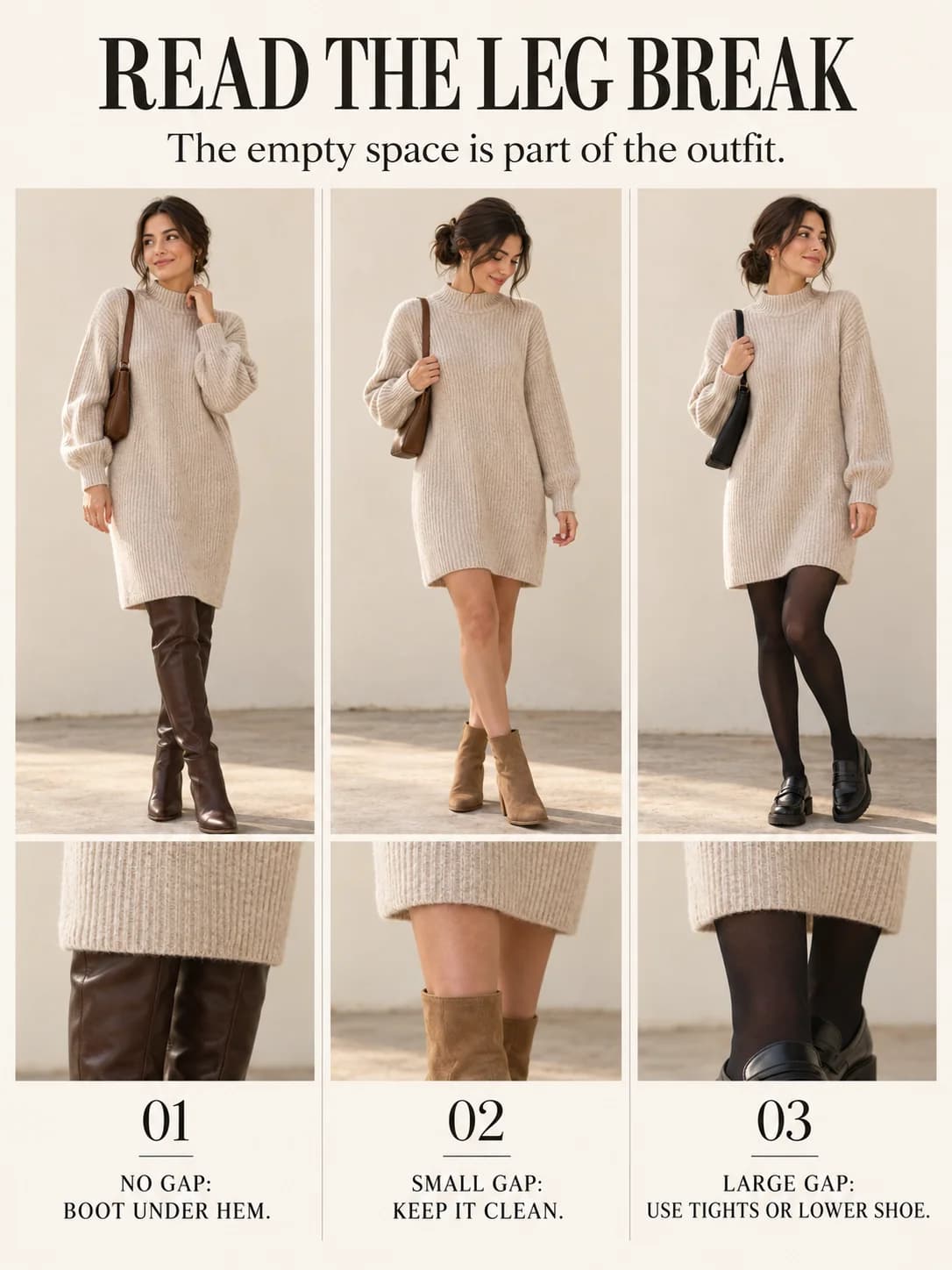
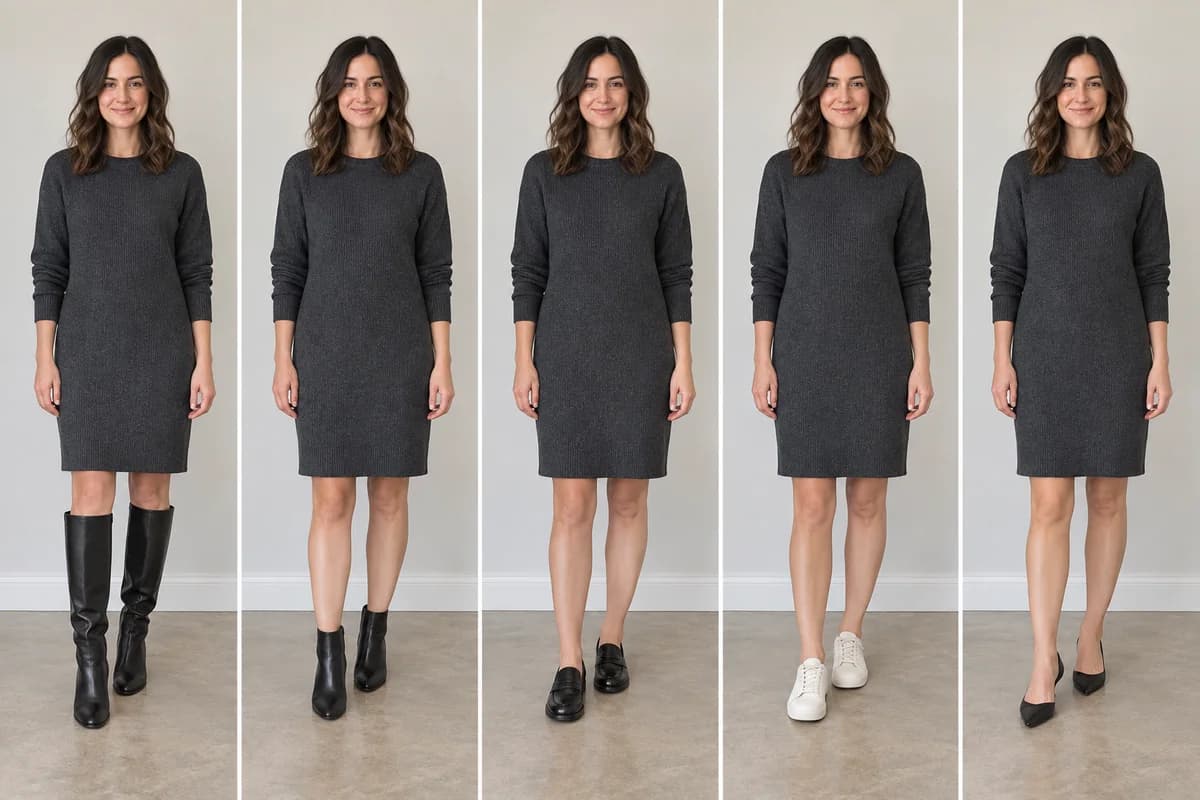
Put on the dress and intended tights, then measure the visible stretch between hem and shoe. A knee-high boot can remove the break completely. An ankle boot creates a clear interval. A loafer or flat leaves the whole lower leg visible. None is automatically correct; the interval only needs to look deliberate rather than like two unrelated lengths met by accident.
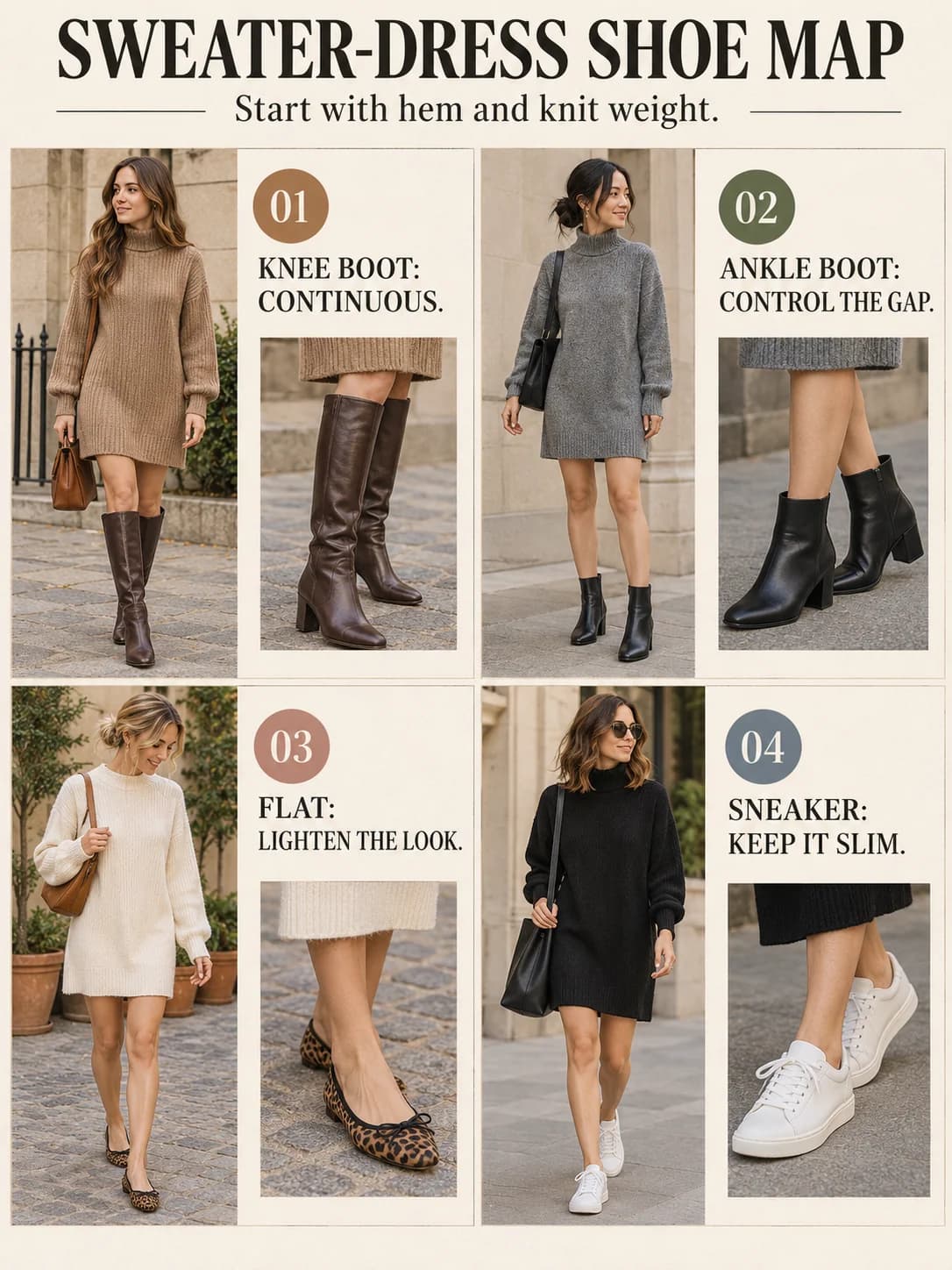
| Shoe | Best effect | Check |
|---|---|---|
| Knee-high boot | Continuous line | Hem clears shaft |
| Ankle boot | Defined break | Gap is intentional |
| Loafer or flat | Lighter finish | Toe reads clearly |
| Slim sneaker | Casual contrast | Sole suits knit |
| Heel | Sharper line | Hem works at height |
Let tall boots make one long line
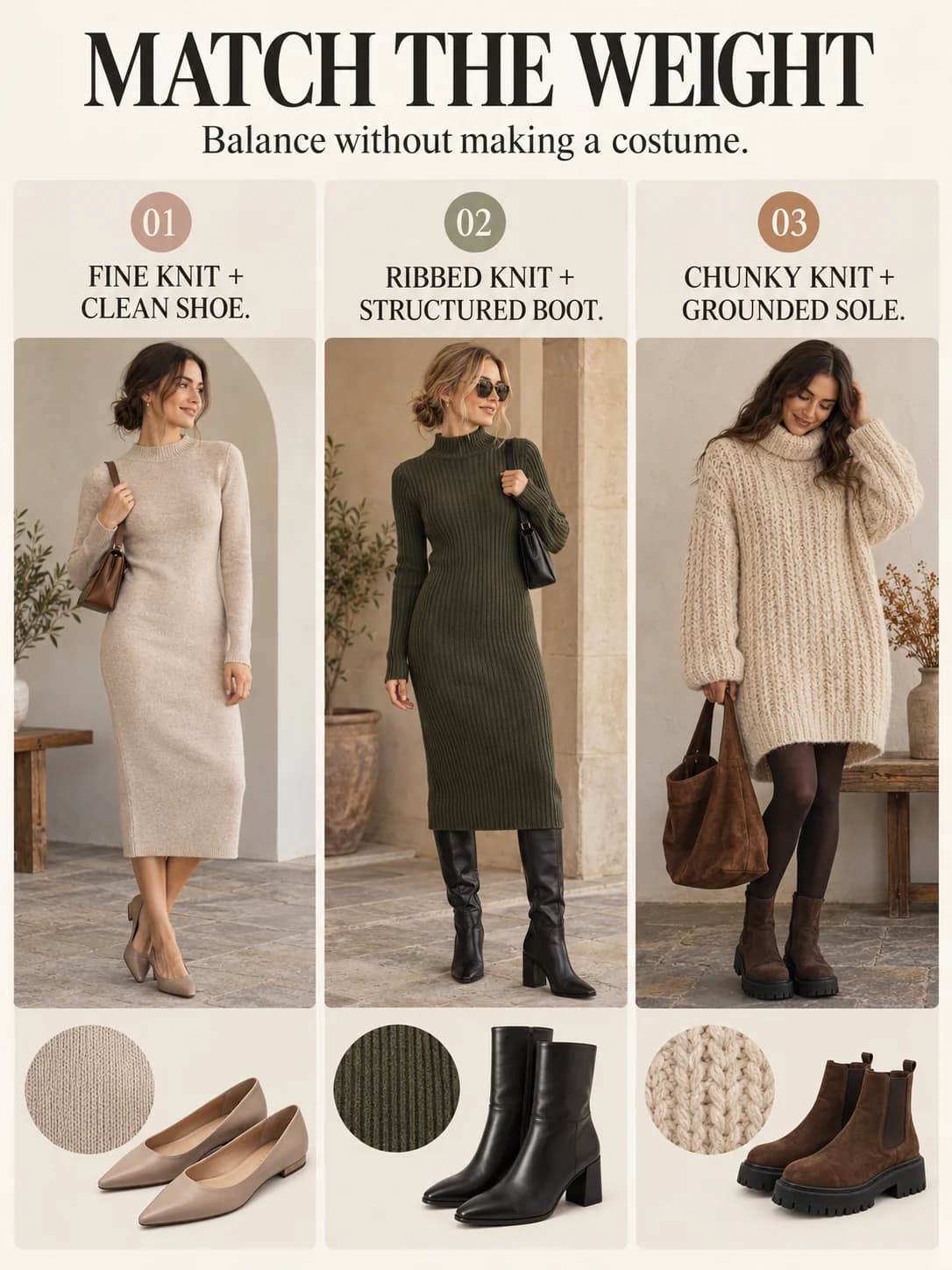
Knee-high boots are especially useful under midi sweater dresses because the hem can pass over the shaft. With shorter dresses, the boot becomes more visible, so toe shape and shaft width matter. A close shaft looks streamlined; a wider riding shape looks stronger. Check walking clearance so the knit does not catch and climb.
Make ankle boots meet the gap on purpose
A close-shaft ankle boot is easiest because it gives the leg a clean edge. If the gap feels choppy, add tights related to the boot or dress. The tights color guide explains how continuity and contrast produce different results. Avoid adding several narrow bands of bare skin, sock and wide boot opening unless that punctuation is intentional.
Use flats and sneakers to release the weight
Loafers and ballet flats make a dense knit feel less wintry. A readable toe prevents the shoe from vanishing beneath a longer hem. Slim sneakers work with relaxed ribbed, polo or hoodie-style dresses; a huge technical sole needs enough visual weight elsewhere to feel connected.
Change heel height before judging dress length
A low heel sharpens the line, but it also changes where the hem lands relative to the floor and calf. Fit the complete outfit, not the dress in isolation. The same practical check appears in the maxi-dress shoe guide, where a few inches of hem clearance determine whether the pairing is usable.
Add a coat only after the lower line works. The coat-length guide handles that second set of proportions.
Test the dress in motion as well as standing. Ribbed knit can climb slightly as you walk, changing the apparent gap above an ankle boot. A heavy boot may also catch a soft hem. Take ten steps, sit and cross one leg. If the relationship changes dramatically, tights, a closer shaft or a different hem length will be more reliable than repeated adjustments.
If the shoe survives those tests and the weather outside, it has earned the outfit.
Frequently asked questions
Can you wear sneakers with a sweater dress?
Yes. A slim or moderate sneaker keeps the look casual; very chunky soles work best with a substantial knit or sporty details.
Do ankle boots work with a midi sweater dress?
Yes, especially when the shaft is close to the ankle and the gap to the hem looks deliberate.
What tights go with a sweater dress?
Choose tights that relate to the shoe or dress for a continuous line, or use a deliberate contrasting color as an accent.