When tights look wrong with an outfit, the problem is not always the color. A dense black pair and a sheer black pair can create quite different amounts of contrast against the same dress.
Make two decisions separately: what the color should connect to, then how solid you want that color to appear.
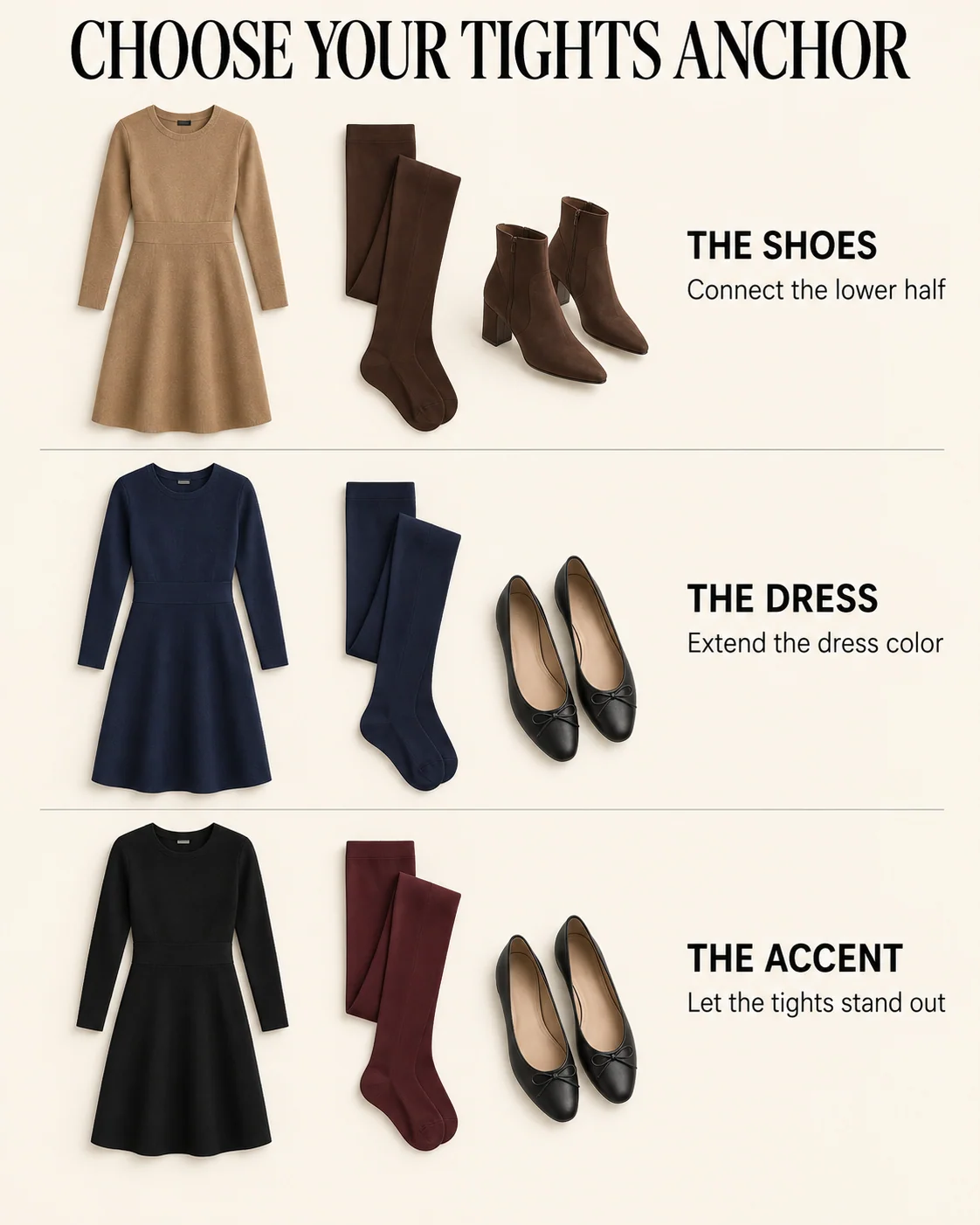
Choose one anchor
Connect the tights to the shoes
Brown tights with brown boots or charcoal tights with gray shoes can create a relatively continuous lower section. This is useful when you want the dress to be the more noticeable piece.
You do not need an exact match. Compare the colors together in daylight. A warm chocolate tight and a cooler brown boot may read as two distinct shades; decide whether that is a contrast you enjoy.
Connect the tights to the dress
Navy tights under a navy dress make a larger area of navy, even with black shoes. The shoe remains a separate finish at the bottom.
That is different from matching the tights to black footwear. Neither choice is more correct; one repeats the dress and the other repeats the shoe.
Make the tights the accent
Burgundy tights with a black dress and black flats put the color between two dark pieces. Start with the rest of the outfit simple so you can judge that contrast clearly.
You can repeat burgundy in a small accessory if you enjoy repetition. You do not need to add another purchase to justify the tights.
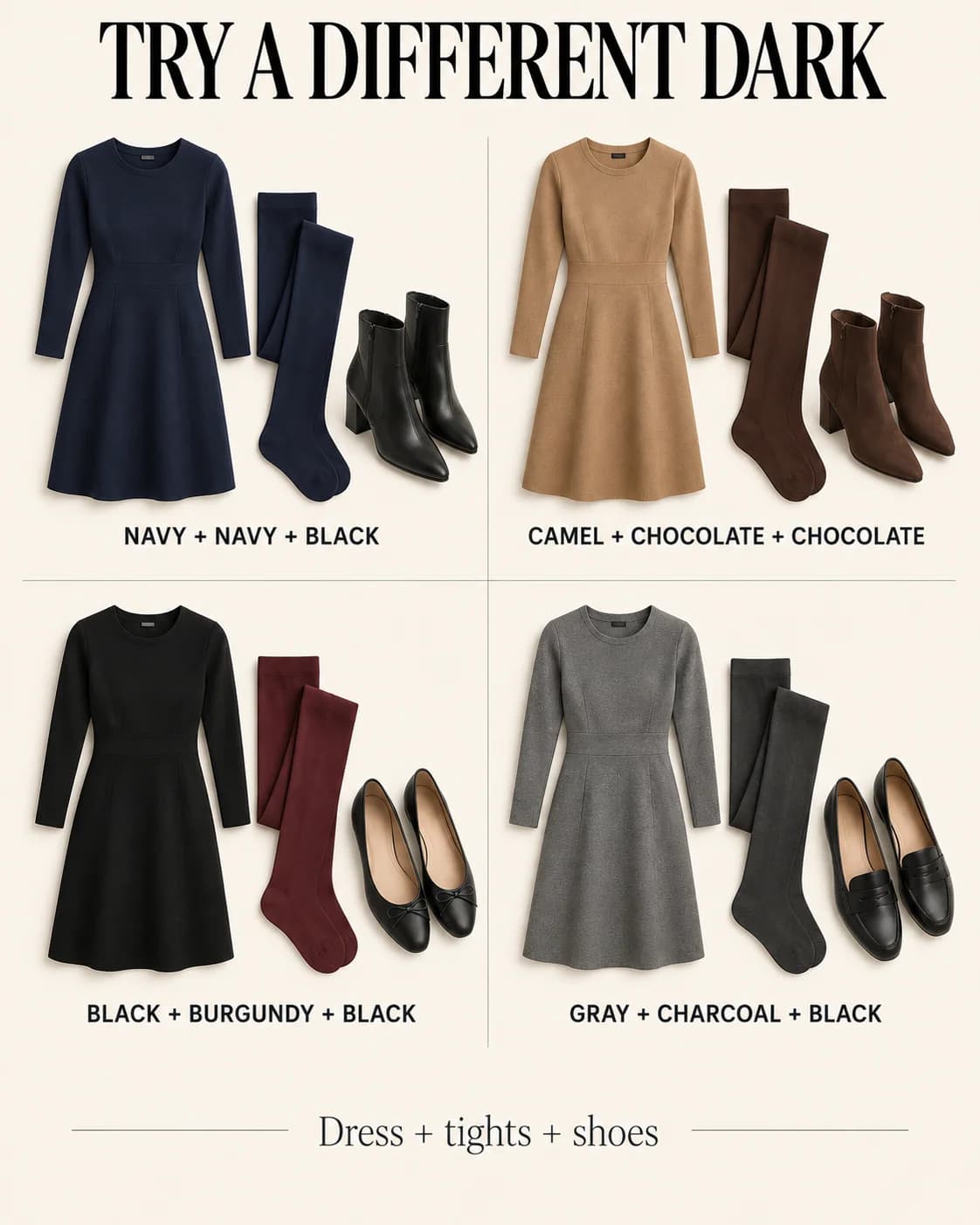
Try these combinations before defaulting to black
Stylist Imogen Lamport shows gray, brown and navy as practical alternatives to black, including combinations with differently colored shoes. They expand the choices without creating another matching rule. Inside Out Style.
| Dress | Shoes | Tights to try | What changes |
|---|---|---|---|
| Navy | Black ankle boots | Navy | Color continues from dress |
| Camel | Chocolate boots | Chocolate | Tights connect to footwear |
| Black | Black flats | Burgundy | Legwear becomes the accent |
| Gray | Black loafers | Charcoal | A softer dark transition |
For a navy dress, compare navy tights with black shoes rather than rejecting the combination on principle. The separate guide to navy and black together explains how those colors can coexist.
For a camel dress and chocolate boots, chocolate tights are a useful first test because the footwear gives them a clear companion. If that creates more brown than you want, compare a sheerer version before changing the whole palette. More supporting colors appear in the chocolate-brown guide.
Treat opacity as its own control
Opaque tights make a more solid area of color. Sheerer tights allow the skin beneath to participate in the result, so a package color does not tell the whole story.
Denier refers to yarn weight, not a guaranteed level of coverage. Knit construction also matters; Esty Lingerie's original comparison demonstrates why pairs with different constructions can look unlike one another even when the denier suggests otherwise. Esty Lingerie.
Try the tights on, bend your knee and look at the color next to both the dress hem and shoe. Do not use a swatch or number as a substitute for that comparison.
Opacity is not a complete warmth guide either. Choose for the weather and your comfort, then make color decisions within the pairs that are suitable for your day.
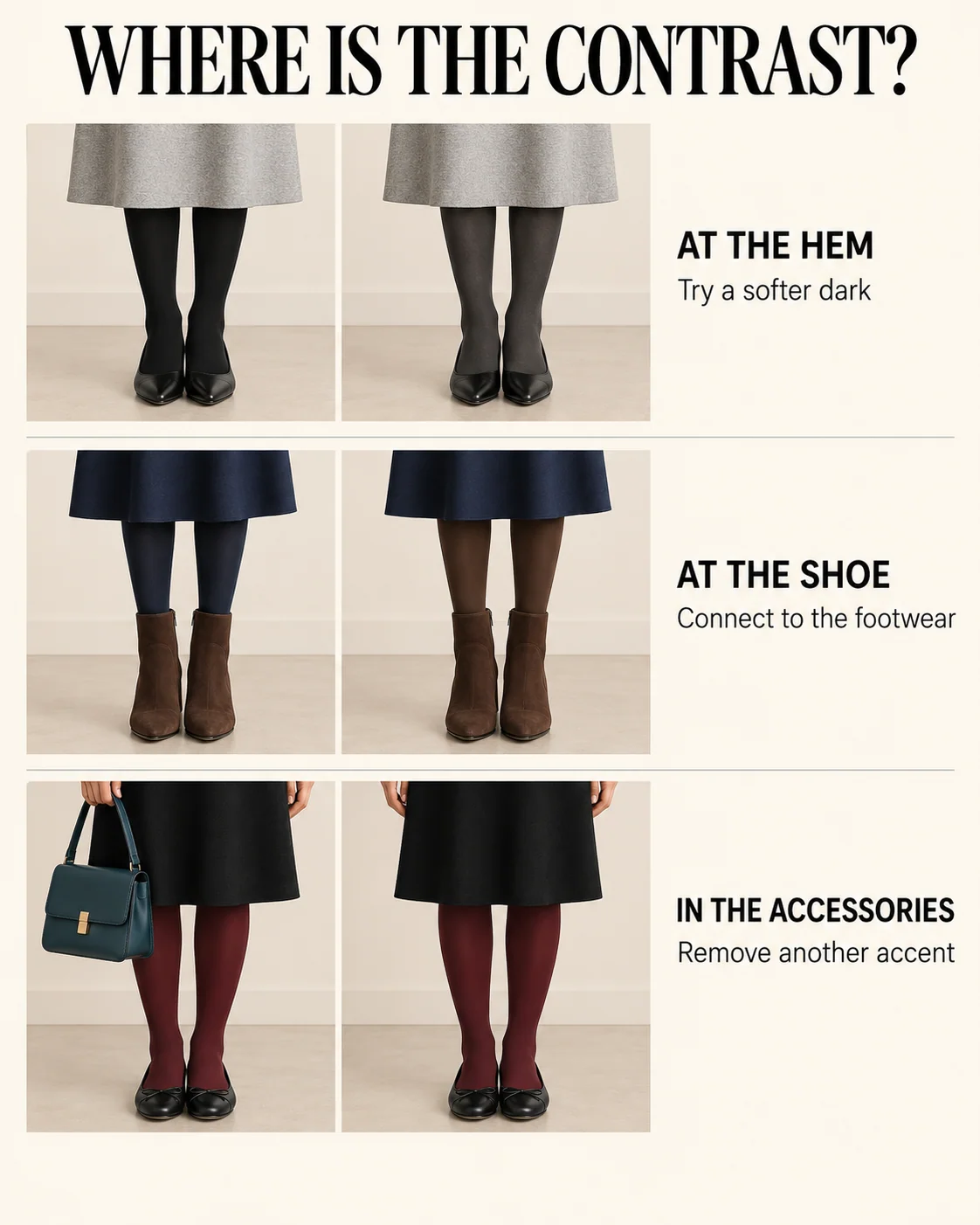
If the outfit feels too heavy, locate the contrast
Look at the two junctions: dress to tights, and tights to shoes. A light dress over very dark, dense tights creates a strong break at the hem. If you dislike that break, try a softer dark shade, a sheerer finish or tights nearer the dress color.
If the shoe looks isolated instead, compare tights nearer the footwear color. Keep the dress fixed so the result is easy to judge.
If a bright pair feels busier than expected, remove an unrelated accessory color before giving up on the tights. The issue may be several competing accents rather than the hosiery itself.
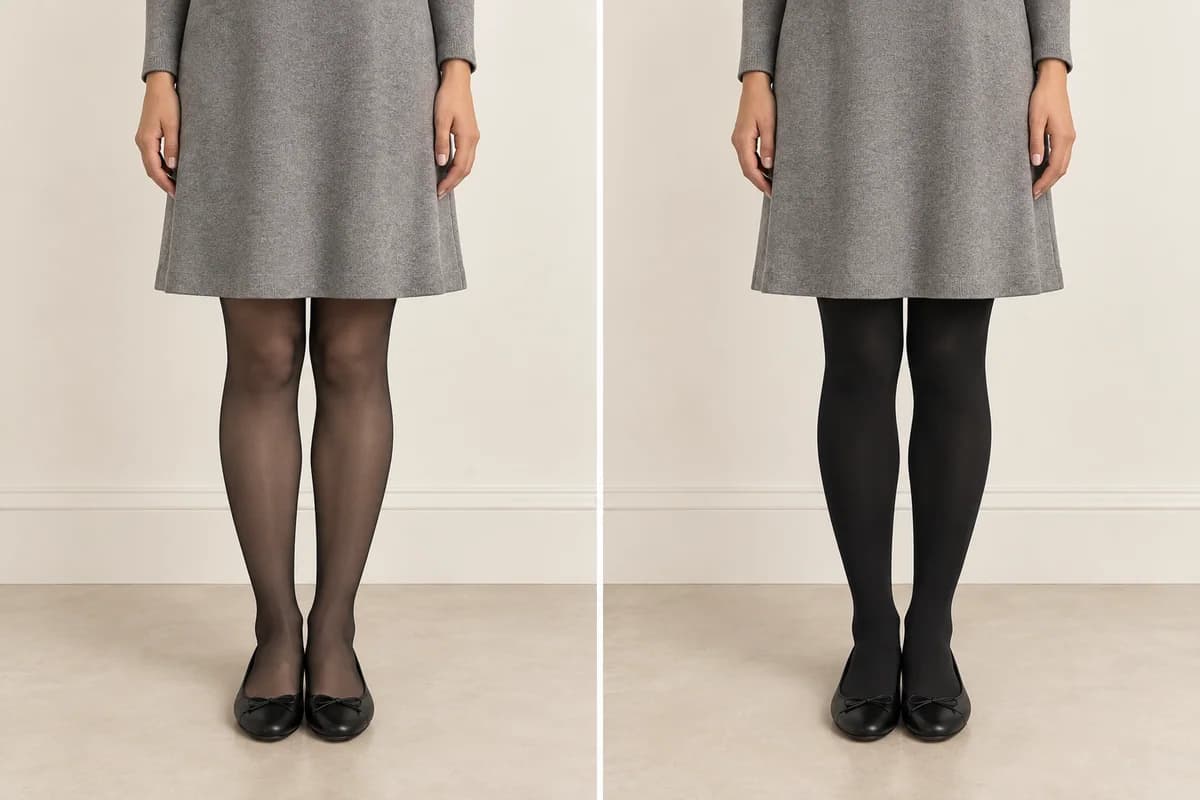
See the same color at two opacities
Keep the dress, shoes, pose and lighting the same. Compare sheer black with opaque black tights. Notice how much of the lower outfit reads as a solid dark block in each version.
This comparison is about the effect you prefer, not hiding legs or making a body look smaller. There is no obligation to choose the quieter option.
Frequently asked questions
Can I wear navy tights with black shoes?
Yes. Treat navy and black as a deliberate dark pairing and check that you like the contrast in daylight. They do not need to be an exact match.
Are skin-tone tights always beige?
No. If you want hosiery to blend with your skin, compare shades against your own skin in useful light; a shade name or package image is not enough.
Does higher denier always mean opaque tights?
No. Denier describes yarn weight, while knit construction, fit and stretch also affect appearance. Check the actual pair rather than relying on one number.