Yes, navy and black can go together. The useful question is how much difference you want to see between them.
Sometimes you want two distinct colors. Sometimes you want an outfit that stays dark and understated, with the difference only becoming obvious up close. Both are worth making on purpose.
Choose subtle or clearly separated
Put the navy piece beside the black piece before adding anything else. Look at the combination as it is, rather than comparing it with the outfit you think the color names should produce.
For a quiet result: keep near-black navy beside black. Similar depths make the boundary less prominent, so the shape of the clothes can become the main feature.
For clearer separation: try a navy that looks visibly blue next to the same black garment. You will see a stronger distinction where the pieces meet, without introducing a bright color.
Neither result needs correcting just because someone else would choose the other one.
Compare navy depth with the black piece fixed
In the top row below, the black trousers, top shape, shoes and matte finish stay the same. The left top is near-black navy; the right is a more visibly blue navy. Compare across the row to see what changing the navy does.
Then compare down either column. The navy depth stays consistent, but the top changes from matte to softly reflective. That is a different way to make the pieces distinct.
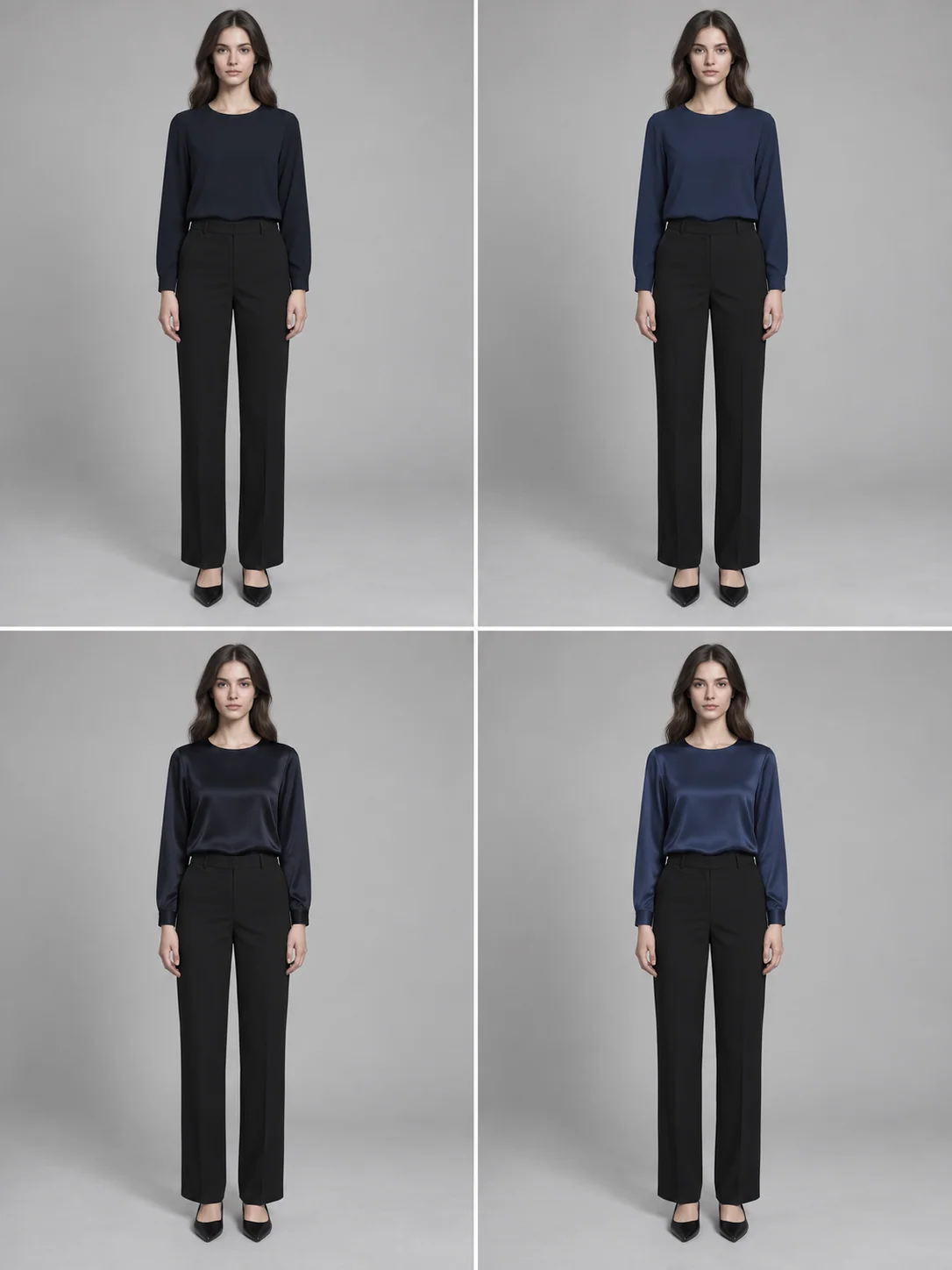
These images illustrate the relationships. Screen settings and lighting affect what you see, so use your own clothes for the final decision rather than treating the image as a fabric color match.
If the subtle version appeals to you, there is no need to find a bluer navy. Try the complete outfit and let the small difference remain small.
Use texture when you want another kind of distinction
Two dark pieces with similar smooth, matte surfaces can look closely related. A softly reflective top beside matte trousers gives the eye a different surface to read, even when the colors remain deep.
In the bottom row of the grid, highlights across the navy top reveal folds and edges. The black trousers stay matte. The outfit changes without changing the top’s neckline, sleeve length or cut.
Try: a navy top with a satin-like sheen and matte black trousers. Or reverse the placement with a matte navy knit and a black skirt with a little shine. Keep the shapes simple while you judge the finish.
In your wardrobe, changing fabric may also change drape. Look at that effect separately: if the new top hangs much more loosely, its silhouette is contributing to the difference as well.
You do not have to add shine. A ribbed knit beside a smooth woven piece gives another surface contrast, while two matte pieces can preserve the quieter result.
Two ways to build the outfit
Keep the palette close
Try a near-black navy fine knit, matte black straight trousers and black flats. The small color difference gives the outfit variation without a strong dividing line through the middle.
Check the knit’s hem and the trouser shape as you would in any outfit. If both pieces fit in the way you want, there is no reason to add an accent just to prove you know they are different colors.
Make the navy easier to see
Try a visibly blue navy blouse with black trousers or a black midi skirt. Repeating black in the shoes leaves the blouse as the clearer color change.
The reverse works, too: a black top with navy trousers or a navy skirt. Choose which piece you want to stand out. These are digital palette examples, not exact dye or fabric references.
Add a light accent only if you want a new focal point
An ivory scarf, cream shoe or pale bag introduces a much larger light-dark difference than the one between navy and black. That changes where you look first.
The comparison below keeps the navy top, black trousers and black shoes identical. The right view adds only a small ivory scarf. Notice how the scarf draws attention upward; it does not make the navy-black combination more permissible.
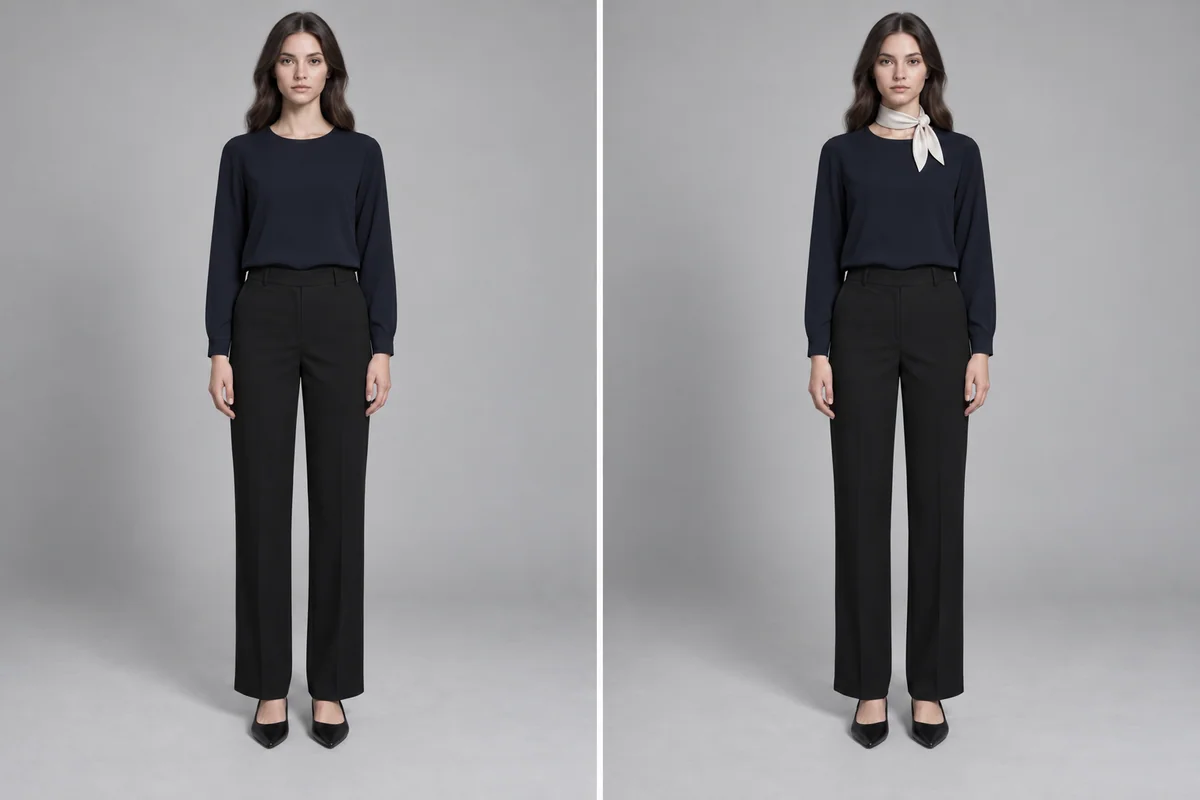
Try the outfit without it first. Add the accent, then remove it once more. Keep whichever version matches the effect you wanted. A dark outfit does not automatically need brightening.
Check the clothes together in the light you will use
Take both pieces into indirect daylight to compare them side by side. Then check under the indoor or evening light relevant to your plans. Look at them together, with the fabrics facing the same light, rather than comparing one piece in shadow with the other beside a bright window.
With reflective fabric, turn slightly and let the folds settle. A highlight can make one part of the garment look much lighter than another. Decide whether you like the changing appearance, rather than choosing from one still reflection.
If you enjoy the outfit in both settings, keep it. If you only like it when the navy is unmistakably blue, a more distinct shade or finish may suit your goal better.
When the outfit is not doing what you wanted
Use the goal to choose the change. If you wanted quiet tones and got a strong blue block, try deeper navy. If you wanted two clear colors and they nearly merge, try a bluer navy or more surface difference. If you wanted a lighter focal point, add one small accent.
| Desired result | Try | What changes |
|---|---|---|
| Quiet, close tones | Near-black navy with matte black | The two dark colors remain subtly different |
| A more obvious two-color outfit | Visibly blue navy with the same black piece | A clearer color boundary at the garment join |
| More surface detail | A softly reflective piece beside a matte one | Highlights and texture distinguish the garments |
| One light focal point | An ivory scarf or other small light accessory | Attention shifts toward the accent |
| A result you like beyond the mirror | Compare the actual fabrics together in relevant lighting | You can decide whether their changing appearance still suits you |
Also check the expectation behind the outfit. A navy blazer and black trousers can work as separates. If you were hoping they would look like one matched suit, their differences may feel distracting for that reason. Decide whether you want coordinated pieces or a true match before trying to solve it with accessories.
Frequently asked questions
Can I wear black shoes with a navy dress?
Yes. They keep the outfit dark and simple, particularly if you enjoy a low-contrast result. You do not need a matching black bag. A polished shoe adds a different surface from a matte dress, while a matte shoe keeps the transition quieter.
Is very dark navy too close to black?
Only if you wanted a clearly separated color combination. Near-black navy can create a deliberate tonal outfit. If the small difference bothers you, try a more visibly blue navy or a different fabric finish; do not assume that subtle contrast is inherently wrong.
Do navy and black need a third color?
No. The two colors can form the complete palette. Add ivory, cream or another accent only if you want a new focal point or a stronger light-dark contrast.
Can I pair a navy blazer with black trousers?
Yes. Wear them as separate pieces and check their shade, finish and silhouette together. If you expected them to look like a matched suit, their differences may bother you. As a deliberate separates outfit, those differences can be part of the appeal.