A chocolate-brown dress and a chocolate-brown bag may have the same color name. They do very different amounts of work in an outfit.
The dress sets the palette. The bag can simply finish one. That is the useful place to start when deciding what to wear with brown: how much of it will you actually see?
Find your starting piece
Lay out the brown item first, then add the clothes you need around it. Keep the shoes in view. A palette that stops at the knees is only a proposal.
If it is a coat, consider whether you will wear it open or closed. An open brown coat reveals a large block of another color; a closed one makes brown much more dominant.
| Brown item you own | A complete starting palette | Where to put the contrast |
|---|---|---|
| Dress or closed coat | Chocolate + ivory; optional small red accent | At an open neckline, shoe or one bag |
| Trousers or skirt | Chocolate + pale blue + ivory | A lighter top creates the main change |
| Top or jacket | Chocolate + gray + white | A pale lower half or visible white layer |
| Shoes or bag only | Navy + ivory + chocolate | Let the clothes lead; brown supplies a small warm finish |
These are routes into an outfit, not a list of permitted colors. Begin with two shades if that solves the problem. Add a third only when it contributes something you can point to: lightness, a focal point or a useful repeat.
If brown is the dress or coat, choose a supporting color
A large brown piece already gives the outfit its main color. Ivory or cream can add a gentle-looking light break; a crisp white creates a sharper one.
For a brown midi dress, try ivory flats and a brown bag. You get one clear light detail without introducing another major color. If you want more energy, replace the brown bag with red and check whether you still like both accents together.
For a brown coat, try a pale-blue shirt with ivory trousers, then let the coat remain the darkest piece. Wear it open to show more of those lighter colors, or close it for a mostly brown silhouette.
The amount of exposed fabric changes the result as much as the color choice does. A glimpse of blue at the collar is a different decision from a whole blue shirt on display.
If brown is on the bottom, let the top set the contrast
Brown trousers or a skirt give you a substantial dark base. A lighter top makes the two halves easy to distinguish.
Pale blue brings a cooler-looking contrast. Soft pink gives you a muted alternative to a sharper red accent. Ivory keeps the result quiet and neutral. Choose the effect, then finish the shoes within that small palette.
With this formula, the shirt supplies the color change and the ivory shoes repeat the lightness. Brown shoes would make the lower half more continuous instead. Both work; they direct your attention differently.
Now reverse the placement: keep the same trouser-and-shirt shapes, but make the trousers pale blue and the shirt ivory. Keep brown only in the shoes and bag. It is still a brown, blue and ivory palette, but it no longer reads as a brown-led outfit.
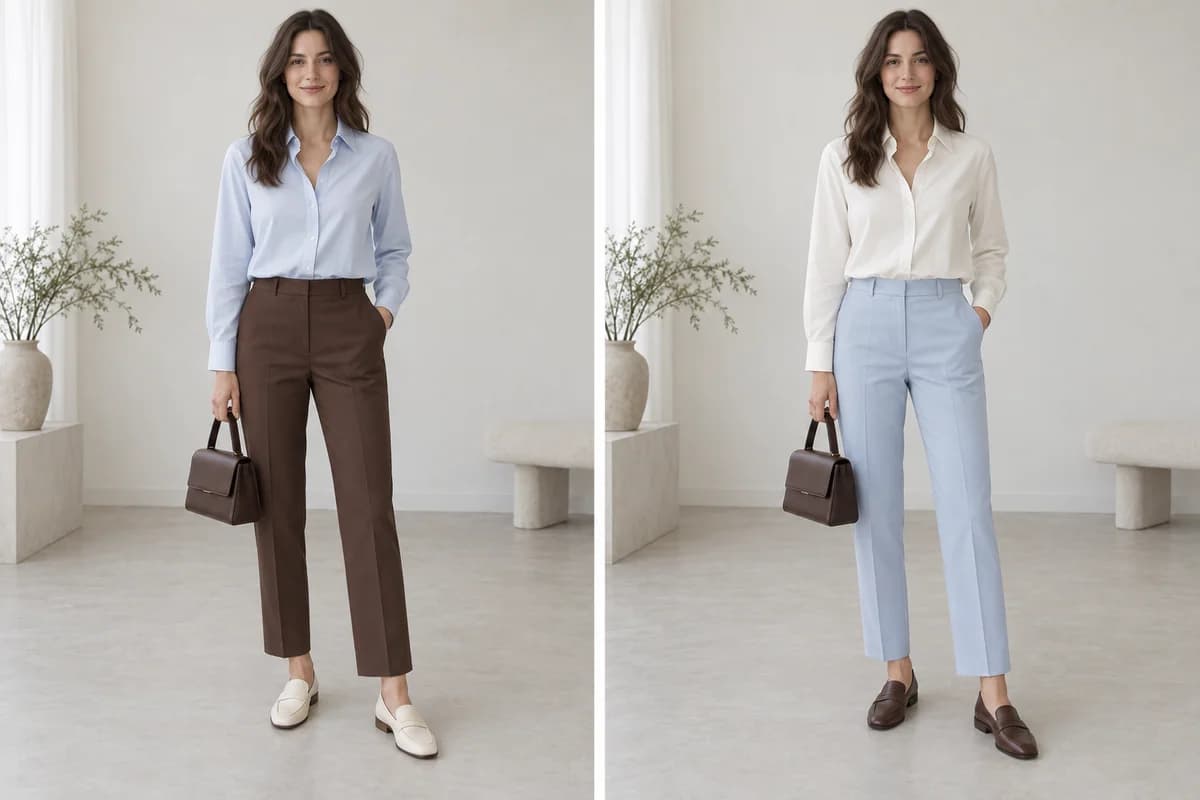
The same three colors, reassigned: brown leads through the trousers on the left and finishes the outfit through accessories on the right.
You do not need a percentage formula. Notice which color occupies the largest visible garment and which appears only in a small detail.
If brown is the top or jacket, give it a clear neighbor
Try a chocolate knit with light-gray trousers and brown loafers. The pale lower half separates the colors while the shoe returns to the knit.
For a jacket, a visible white layer can do that separating job at the neckline and front opening.
If you prefer deeper colors, replace the light-gray trousers with navy or black. For a warmer tonal route, try camel instead, keeping it visibly lighter than the jacket. The palette becomes quieter in light-dark contrast, so check it in the lighting where you will wear it.
When two dark shades seem to disappear into each other, you have options: make one clearly lighter, reveal a light layer or choose noticeably different surfaces. A matte brown knit beside smooth black trousers can read more distinctly than two similar dark knits.
That distinction is a styling choice, not a requirement to make every dark outfit high contrast.
If brown is only in the shoes or bag, let it stay small
You can build an outfit in navy and ivory, then use brown leather for the finish. The clothes do not need another brown piece to explain the bag.
Here, repeating brown through shoes and bag makes the finish easy to see. It is optional: brown shoes with a navy bag can look equally considered when you prefer less repetition.
With olive trousers and an ivory top, a chocolate shoe adds a deeper note. If the olive garment is the piece you want to build around, the olive-green color guide takes that starting point further.
Compare brown accessories directly before wearing them. A golden tan bag and a red-brown shoe may be a more noticeable combination than you intended. Either enjoy that variation or simplify by repeating a clothing color in one accessory.
Decide how much accent color you want
Red works with brown, but “add red” leaves out the useful part: where, and how much?
Start with a chocolate knit, chocolate trousers and ivory loafers. A red bag creates one concentrated accent. A red jacket over that same base changes the whole upper half.
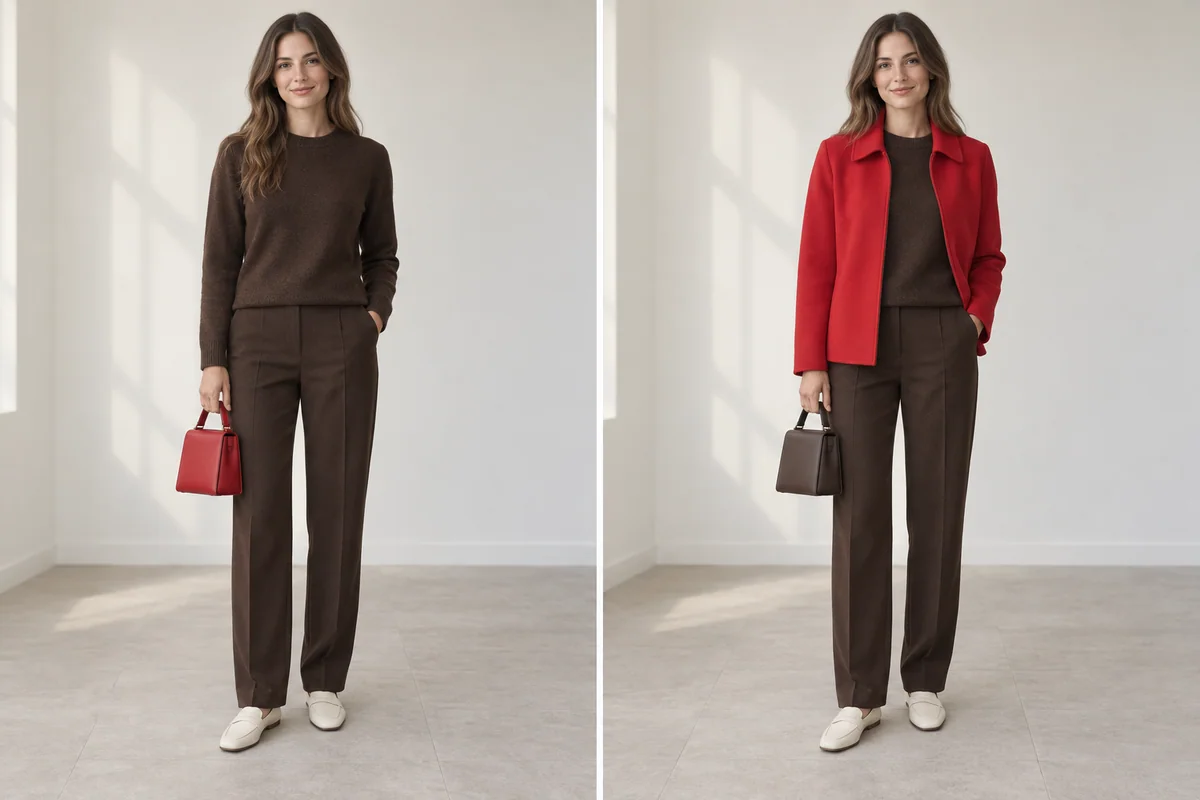
Red as one small bag on the left; red as a large open jacket on the right. The base outfit stays the same.
If the larger red layer feels too strong, reduce its area before abandoning the color combination. A shoe, scarf or bag gives you a smaller trial.
The reverse applies when an outfit feels flat. A tiny accent may be too small to create the change you want; try moving that color into the top instead of adding several unrelated accessories.
Check the exact brown before changing the whole outfit
“Chocolate” is a useful description, not a guaranteed match between garments. One piece may look redder, another more golden or almost charcoal. Compare the actual clothes in daylight and the indoor light where you plan to wear them.
If two browns look unintentionally close, separate them with ivory or choose a more visible difference in depth. If brown with camel feels too uniform, test a lighter top. If brown with white feels too sharp, try a softer off-white.
The digital swatches here describe the palette; they are not exact fabric matches.
Frequently asked questions
Can you wear chocolate brown with black?
Yes. Let one cover more of the outfit, or separate them with a visible difference in texture or a light detail. A brown jacket over a black knit and black trousers is a simple starting point; it does not need a matching set of brown accessories.
What color shoes work with a chocolate-brown dress?
Brown gives continuity, ivory adds a light break, black creates a darker finish and red makes the shoe an accent. Choose based on the effect you want and the other visible pieces, rather than treating one shoe color as compulsory.
Do a brown bag and brown shoes have to match exactly?
No. They can share a similar depth or warmth without matching perfectly. Compare them together: if the difference looks distracting, repeat one of the clothing colors for either the bag or shoes instead.
Can chocolate brown work in a mostly colorful outfit?
Yes. A brown shoe or bag can be the small neutral finish rather than the main color. Start with a complete clothing palette, then check that the brown's warmth and depth suit it. You do not have to add a brown garment to justify the accessory.