Thanksgiving asks quite a lot of one outfit: a car ride, a warm kitchen, a family photo and a long stretch at the table. Looking good in the hallway mirror is only the first audition.
Start with the dress level of the gathering, then choose clothes for what you will actually be doing. These four formulas cover hosting, a casual visit, a dressier dinner and a day when you would rather skip a fitted waistband altogether.
Choose for the dinner you are attending
If you are visiting and unsure how dressed up to be, ask what the host plans to wear. At a restaurant, check the stated dress code. A family meal can be casual or quite dressed up; the holiday name does not decide that for you.
Then choose your starting point:
| Your main priority | Start with | Check before choosing |
|---|---|---|
| Cooking and serving | 1. Short-sleeve knit + relaxed trousers + loafers | Top stays in place when reaching; trouser hems clear the floor. |
| A casual visit | 2. Buttoned cardigan + familiar jeans + loafers | The jeans feel comfortable when seated, not just through the legs. |
| A dressier table | 3. The same cardigan + satin midi skirt + loafers | The waistband feels easy and the skirt does not pull across the hips. |
| No fitted waistband | 4. Relaxed midi dress + low-heeled or flat boots | The dress has room through the middle and allows a normal stride. |
1. For hosting: a short-sleeve knit and relaxed trousers
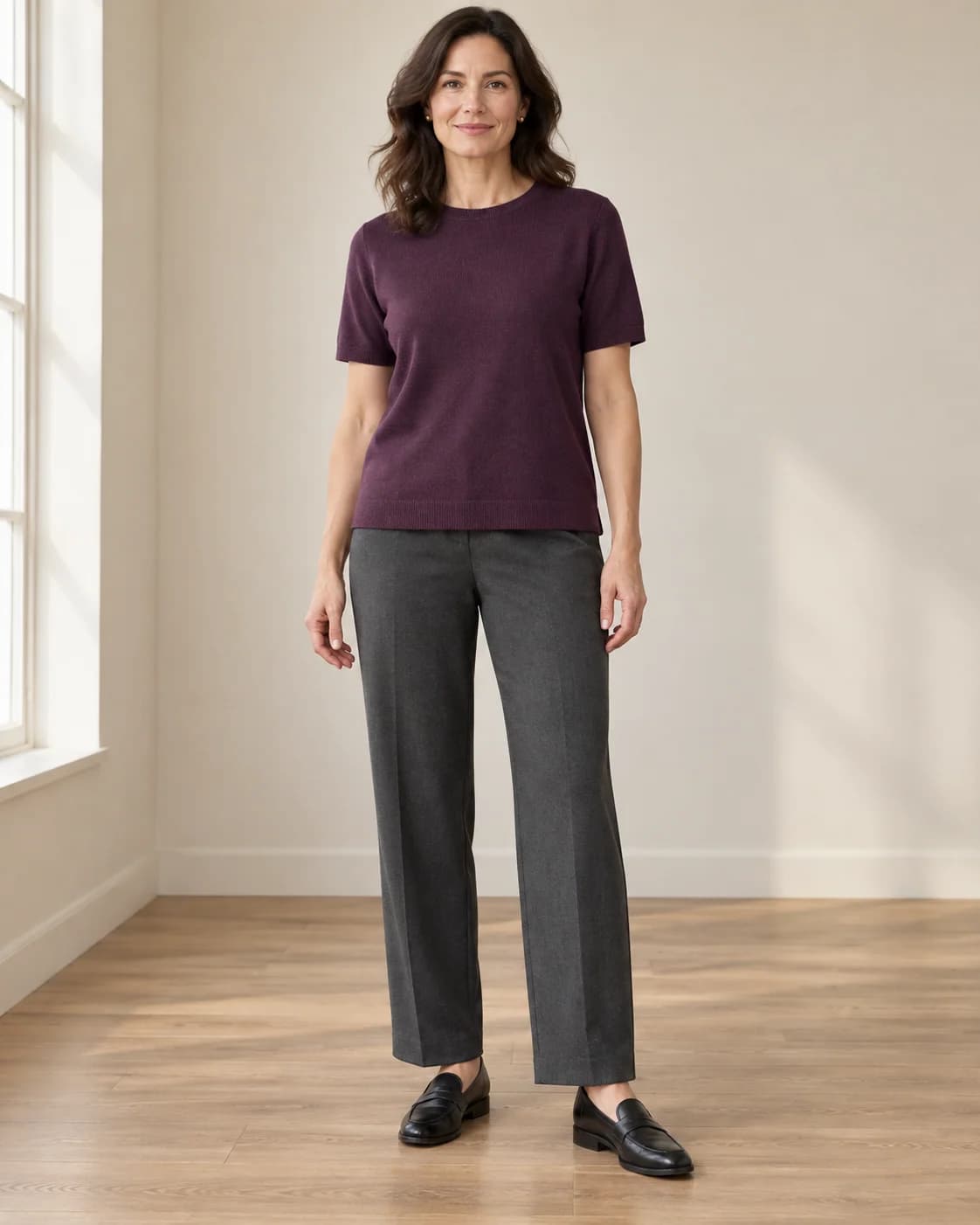
The formula: a plum short-sleeve fine-knit top + charcoal trousers with a flat front and elastic at the back + black loafers + small gold-tone earrings.
Choose trousers with a straight, relaxed leg and a hem that clears the floor. The smooth front gives them the outline of dressier trousers. Try the back elastic while seated: it should give comfortably instead of pressing into your waist.
Keep the knit untucked, with a straight hem ending at the upper hip and covering the waistband. That short, clean edge gives the outfit shape without a belt or a tight tuck. Plum brings color to the otherwise quiet charcoal-and-black combination.
Short sleeves keep your wrists clear when serving. Keep any cardigan removable, and choose loafers you already know you can stand in. Add an apron for food preparation and remove it before sitting down.
The useful adjustment: if your top bunches on the waistband, try one with a looser hem instead of repeatedly pulling it down. The outfit should survive reaching for a platter.
2. For a casual visit: a cardigan and familiar jeans
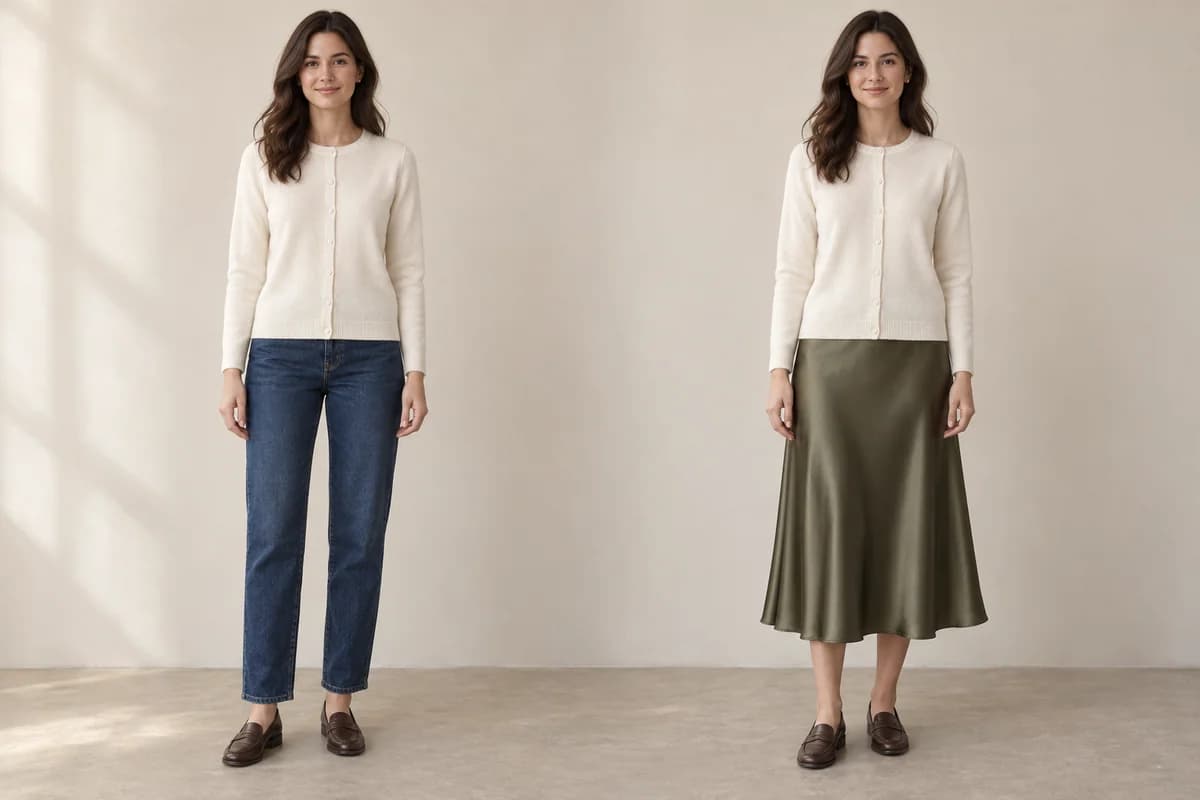
The formula: an ivory fine-knit cardigan, buttoned as a top + dark-indigo straight-leg jeans + chocolate loafers + small gold-tone earrings.
Use jeans you have already worn through a long sit. A wide or relaxed leg does not guarantee that the waistband feels good, and dinner is an inconvenient time to discover the difference.
The cardigan's buttons and neat neckline give the denim enough detail for a casual dinner. Let its hem just cover the waistband; there is no need to add a belt. Keep the jeans free of heavy distressing if you want the combination to read a little dressier.
Choose a hem that meets the shoe without pooling. Chocolate shoes soften the contrast against dark denim and ivory. Add a brown jacket for the journey, then let the cardigan carry the outfit indoors.
The useful adjustment: if you prefer wider denim, use the jeans you like and check the hem with your chosen shoe. Our guide to shoes with wide-leg jeans covers that specific pairing.
3. For a dressier table: keep the cardigan, change the bottom
The formula: the same ivory cardigan + an olive satin midi skirt + the same chocolate loafers and earrings.
The skirt changes the dress level through its shine and movement. Keeping the knit and flats makes the result feel relaxed enough for a home dinner. You do not have to replace every piece to look more dressed up.
Look for a skirt that falls away from the hips, with a waistband that stays comfortable when you sit. Satin is not automatically stretchy; an elastic-back waistband is useful only if it feels easy on you.
Leave the cardigan untucked, ending near the upper hip so most of the skirt remains visible. If its ribbed hem clings, choose a straighter hem rather than forcing a bulky tuck into the skirt.
Olive supplies color without taking over the outfit; ivory lightens it and chocolate finishes it. For more ways to wear an olive skirt you own, see what colors go with olive green.
4. For no fitted waistband: a relaxed dress and boots
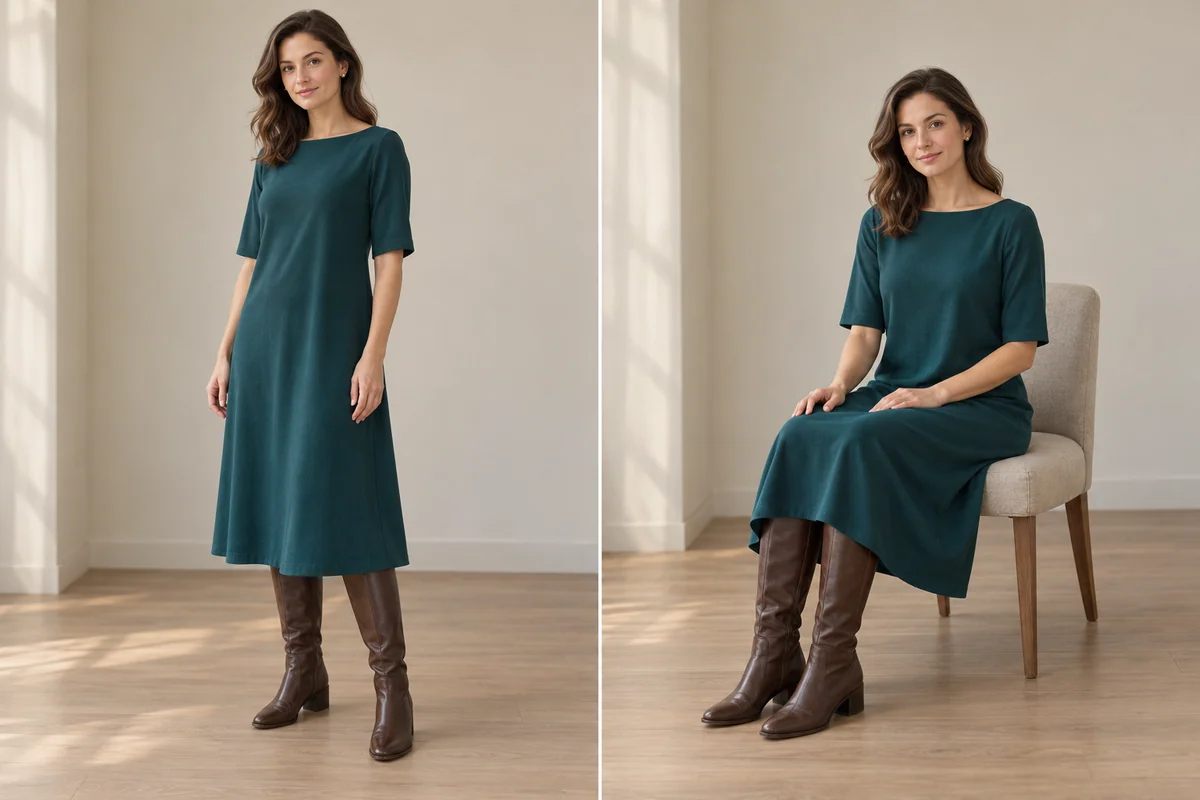
The formula: a deep-teal midi shift dress + chocolate knee-high boots with a low block heel + simple gold-tone earrings.
Choose a dress with room through the middle and a gentle A-line shape, rather than a close-fitting tube. A defined neckline and a shoulder seam that sits well can make an unbelted dress look deliberate. The waist does not need to do all the work.
The dress hem should overlap the boot shaft, leaving the skirt free to move over it. That connection keeps the lower half of the outfit visually simple. A low heel is an option, not a requirement: flat boots work too if those are the pair you enjoy wearing.
This is a useful hosting alternative if you prefer a dress. Choose short or elbow-length sleeves, check that you can reach comfortably, and skip loose ties that need constant rearranging.
The useful adjustment: if the dress feels too plain, change the earrings or neckline detail before adding a waist belt you do not want to wear.
Check comfort before the day begins
A loose-looking outfit can still be annoying to wear. Try the whole combination with the shoes and underlayers you intend to use.
If you have a long drive ahead, do the seated check with your coat off so you can notice a bulky tuck or pressing belt. Walk a few steps, too: check that a dress or skirt allows your normal stride and that shoe straps stay in place.
Adjust for the temperature, not the calendar
Warm weather or a warm house: use a lightweight short-sleeve knit for the trouser look. For the skirt formula, an ivory short-sleeve blouse gives the same light-and-dark balance without a sweater. Wear the relaxed dress with chocolate flats or flat sandals instead of boots. The deeper colors can supply the autumn mood without extra layers.
Cold weather: add a coat outside and a fine cardigan you can remove indoors. With the skirt or dress, use tights and boots if you want more coverage. Check the fit with those layers on; extra thickness can change how the clothes hang.
Keep an indoor top you are happy to show underneath. Otherwise taking off a warm sweater becomes an unexpectedly complicated decision.
If it is a shoes-off home
Ask ahead if you are unsure. Plan the socks or tights as part of the outfit, and check your hem without shoes: trousers that skim the floor over a heel may drag once it comes off.
For the denim look, chocolate or dark-indigo socks keep the lower half visually connected. With the skirt, fine brown socks echo the shoes when worn together; tights are another option if you prefer continuous coverage. Bring clean indoor shoes only if the host welcomes them.
Make sure the outfit has a finishing detail above the ankles, such as the cardigan buttons, a neat neckline or earrings. It should still look complete when your nicest shoes are waiting by the door.
Frequently asked questions
Can you wear leggings to Thanksgiving dinner?
Leggings can work for a casual meal at home if they suit the host's plans. Try opaque leggings with a longer knit and flat boots, and check coverage in daylight and while seated. For a dressier gathering, relaxed trousers offer a similar ease with a more tailored outline. Neither garment is automatically comfortable; choose the waistband that feels good on you.
Can you wear black to Thanksgiving, or should you wear fall colors?
You can wear black, and an autumn color palette is optional. If an all-black outfit feels plain, combine a matte knit with a skirt that has a little sheen, or add earrings you already own. Cream, teal, navy or brighter colors can work too. Let the invitation and the way the pieces fit together guide you.