Camel works with cream, navy, black, pale blue, chocolate and burgundy. To choose among them, decide where you want a light break, a dark edge or a colored accent. The amount of each color matters as much as the pairing itself.
Consider a camel fine-knit sweater with navy straight trousers, burgundy loafers and a navy bag for a relaxed workday or lunch. The trousers give the sweater a dark outline; the burgundy adds a small red-brown finish. Let a short sweater rest near the waistband, or tuck a fine hem loosely if that feels comfortable when seated.
That is a complete outfit, but it is also a useful starting arrangement. Change the shoes to chocolate and it becomes quieter. Change the trousers to cream and the sweater no longer stands out so strongly. Replace the navy trousers with dark indigo jeans and the loafers with cream sneakers for a more casual day. Each change has a visible purpose, so you can adapt the combination with clothes already in the wardrobe.
| Partner | Effect to compare | Useful starting point |
|---|---|---|
| Cream | Light and close in tone | Camel skirt with a cream knit |
| Navy | Dark, defined edge | Camel sweater with navy trousers |
| Pale blue | Cooler-looking light contrast | Blue shirt inside a camel coat |
| Black | Strong dark finish | Black shoes below camel trousers |
| Chocolate | Deeper warm contrast | Chocolate boots below a camel skirt |
| Burgundy | Contained red-brown accent | Burgundy bag with camel and cream |
Adjust the large areas before buying an accent
Take the sweater from that first outfit and compare it with cream, navy and pale-blue trousers. Cream keeps the two largest areas light and close in tone. Navy creates a stronger boundary. Pale blue introduces cooler-looking color without making the lower half very dark. Keep the shoes the same while comparing them so you can see what the trousers changed.
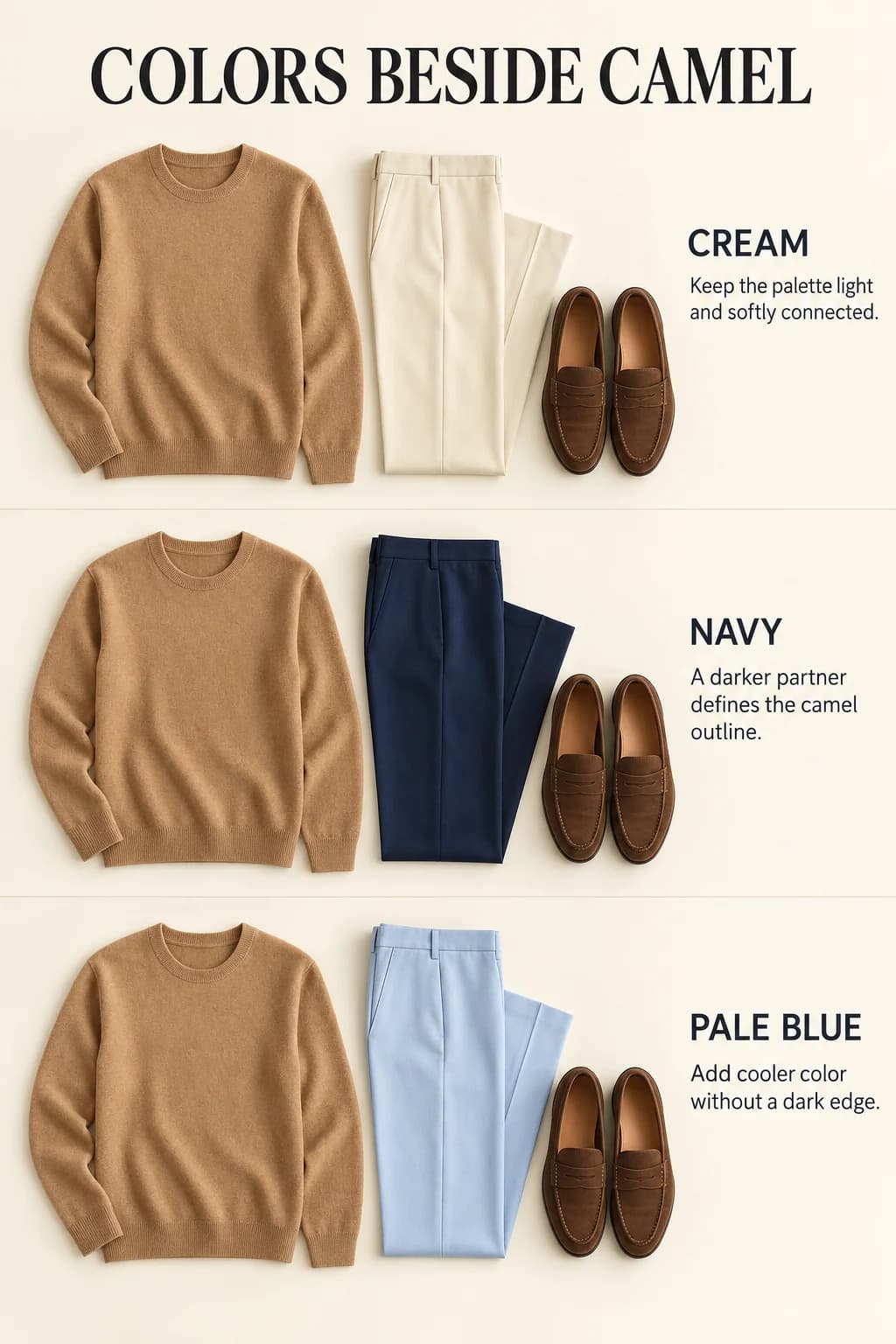
This is especially helpful if you keep adding a scarf or bag but the outfit still feels wrong. A small accessory cannot completely alter two large areas that have almost the same depth. If you want more definition, change a major piece to something clearly lighter or darker first. If you like the soft effect, leave it alone. A low-contrast outfit is a valid choice, not an unfinished one.
Camel also covers a range of real colors. One coat looks honey-colored, another pinkish beige, while a knit labeled camel may be close to brown. Lay the actual fabrics together near a window, then check them in the light where you will wear them. Names and product photographs cannot settle a close match.
You can use a bright accent without making it large. A red bag against camel and cream draws more attention than a burgundy bag of the same size. Navy or chocolate will feel quieter. Pick the job you want the accessory to do before asking it to match anything else.
Keep a soft palette, then give it a darker finish
For a weekend gathering, wear a camel midi skirt with an oatmeal knit, chocolate knee-high boots and a small chocolate bag. A short knit can meet the waistband; a thin longer knit can be lightly tucked if it does not form a ridge. Choose boots that sit beneath the skirt without catching its hem as you walk.
The oatmeal and camel are deliberately close. Texture makes that softness more interesting: a gently fuzzy knit against a smoother skirt leaves a visible distinction even when the colors are similar. Chocolate at the feet supplies depth without turning the outfit into a sharp black-and-white contrast.
On a mild day, brown flats can replace the boots. For more color, swap only the bag for burgundy and leave the boots chocolate. The shoes still finish the skirt quietly, while the smaller bag becomes the accent. There is no need to add matching burgundy jewelry to explain it.
If several browns merge more than you like, compare the shoes before replacing the whole palette. Camel, tan and cognac can occupy similar middle depths; a substantially darker chocolate shoe provides a clearer endpoint. The chocolate-brown color guide explores that darker starting color in more detail.
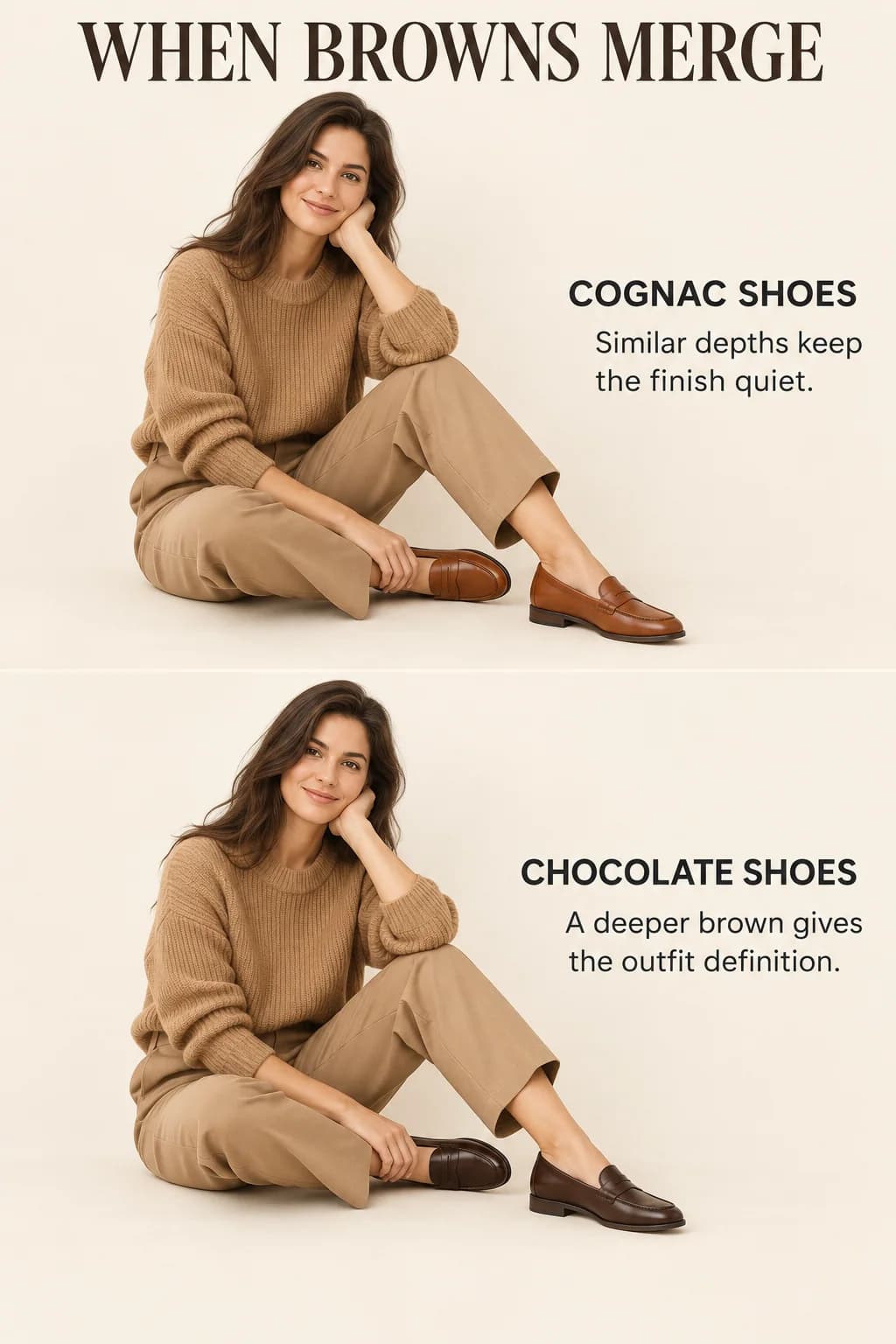
Near-matching accessories deserve a different decision from near-matching separates. A belt and shoes can vary slightly without resembling a mismatched suit. Two large camel pieces in almost the same color may be more noticeable, especially in similar fabrics. Either make the difference clearer with another layer between them or use the pieces in separate outfits. You do not have to replace every brown accessory to create an exact set.
A camel coat needs a palette with and without the coat
Try a camel coat over a pale-blue button-down, charcoal trousers and black loafers for a meeting followed by dinner. A black bag relates to the shoes, leaving pale blue as the only light, cool-looking area. Keep the shirt collar visible when the coat is open and make sure the shirt sits comfortably on its own.
With the coat on, blue creates a break between your face and the warm outer layer. With the coat off, blue, charcoal and black still make a complete combination. This is a useful way to assess a coat outfit that will spend much of the day hanging elsewhere: the inner colors should work without needing the camel to connect them.
For a more casual version, use a pale-blue fine knit and gray sneakers. For greater neck coverage, put a pale-blue scarf over a charcoal top, choosing a thickness that fits comfortably inside the coat collar. These alternatives keep the light color in the same useful area without requiring the identical shirt.
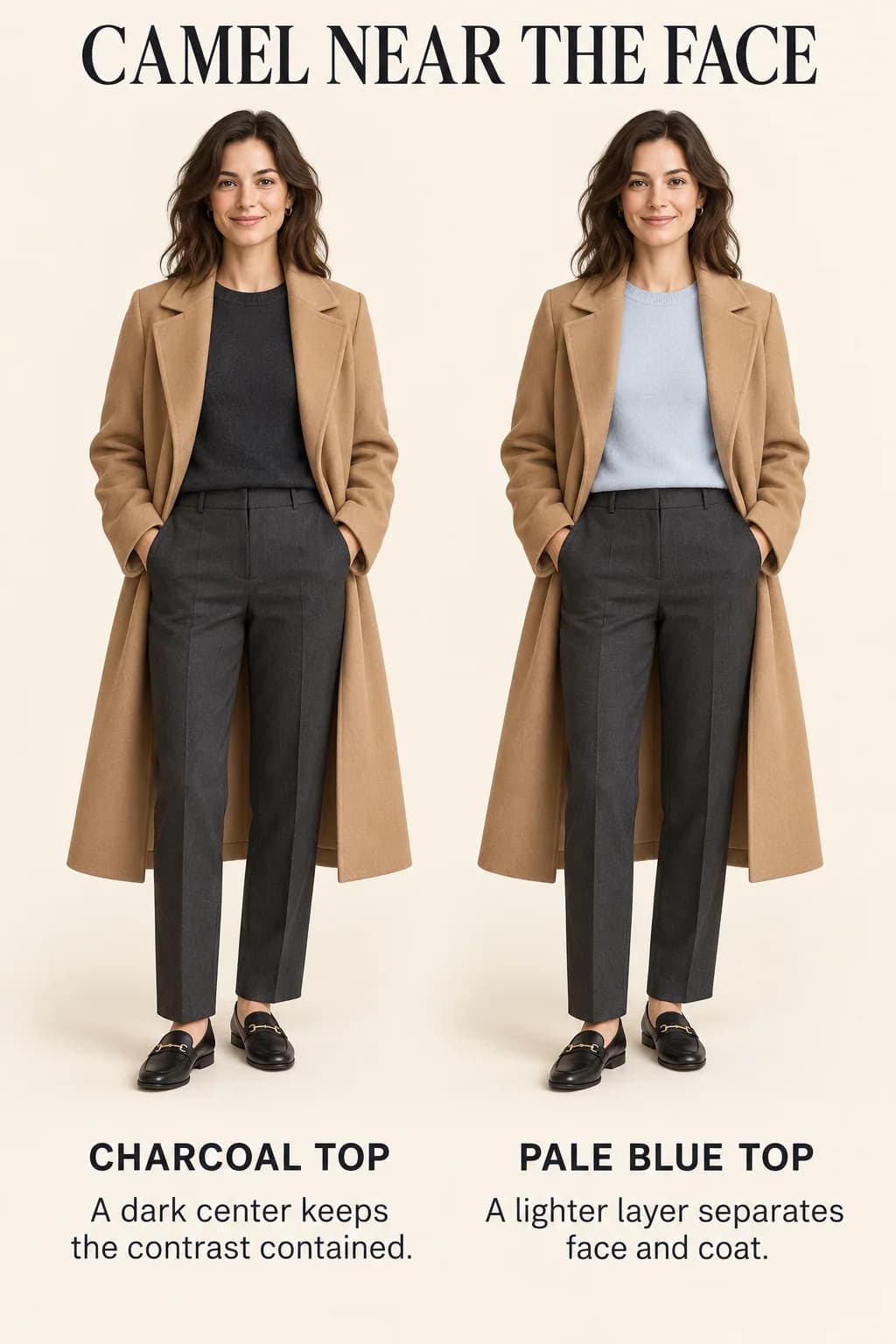
If the coat seems very yellow under indoor lighting, compare what sits immediately beside it. A white shirt gives sharper separation; cream keeps the relationship warmer and softer; pale blue introduces a cooler contrast. None is a correction that every camel coat needs. Use the one you prefer with that particular garment. When charcoal is the main part of the outfit, the gray clothing guide helps with its lighter and darker partners.
You can like camel without wearing it near your face
Move camel to trousers, a skirt or a bag if you prefer another color around your neckline. A cream blouse above a camel skirt gives a different result from a camel sweater above cream trousers, even though the palette contains the same two colors. Placement is part of the choice.
There is no need to assign yourself a seasonal color category before making that adjustment. Try the actual pieces, decide which area you want to notice first, and keep the amount of contrast that pleases you. A camel wardrobe does not need an exact matching brown for every job.