A small balcony can hold a chair and still have nowhere comfortable to sit. The missing space is often the space occupied by your knees, the door opening or the chair as you pull it out. Plan for the balcony while someone is using it, rather than only while the furniture is tucked away.
Choose the activity that earns a permanent place
Decide what you are most likely to do outside: drink coffee alone, share an occasional meal, read for an hour or tend a few plants. Give that activity the best position. Trying to fit a sofa, dining set, plant collection and storage cabinet into the same narrow footprint usually makes each one harder to use.
Check the usable area, door movement and any openings that must remain clear. Follow the building's rules before adding fixtures, coverings or heavy items. Do not assume a balcony railing can support a hanging table or planter, and do not alter drains or required access routes to make a layout fit. The ideas here use ordinary movable furnishings, not structural alterations.
Use the dimensions of the actual furniture, including the chair while occupied. A table's footprint tells you little about whether two people can get into their seats. Mark the positions temporarily and rehearse opening the door, sitting and standing. If one action blocks another, reduce the number of permanent pieces.
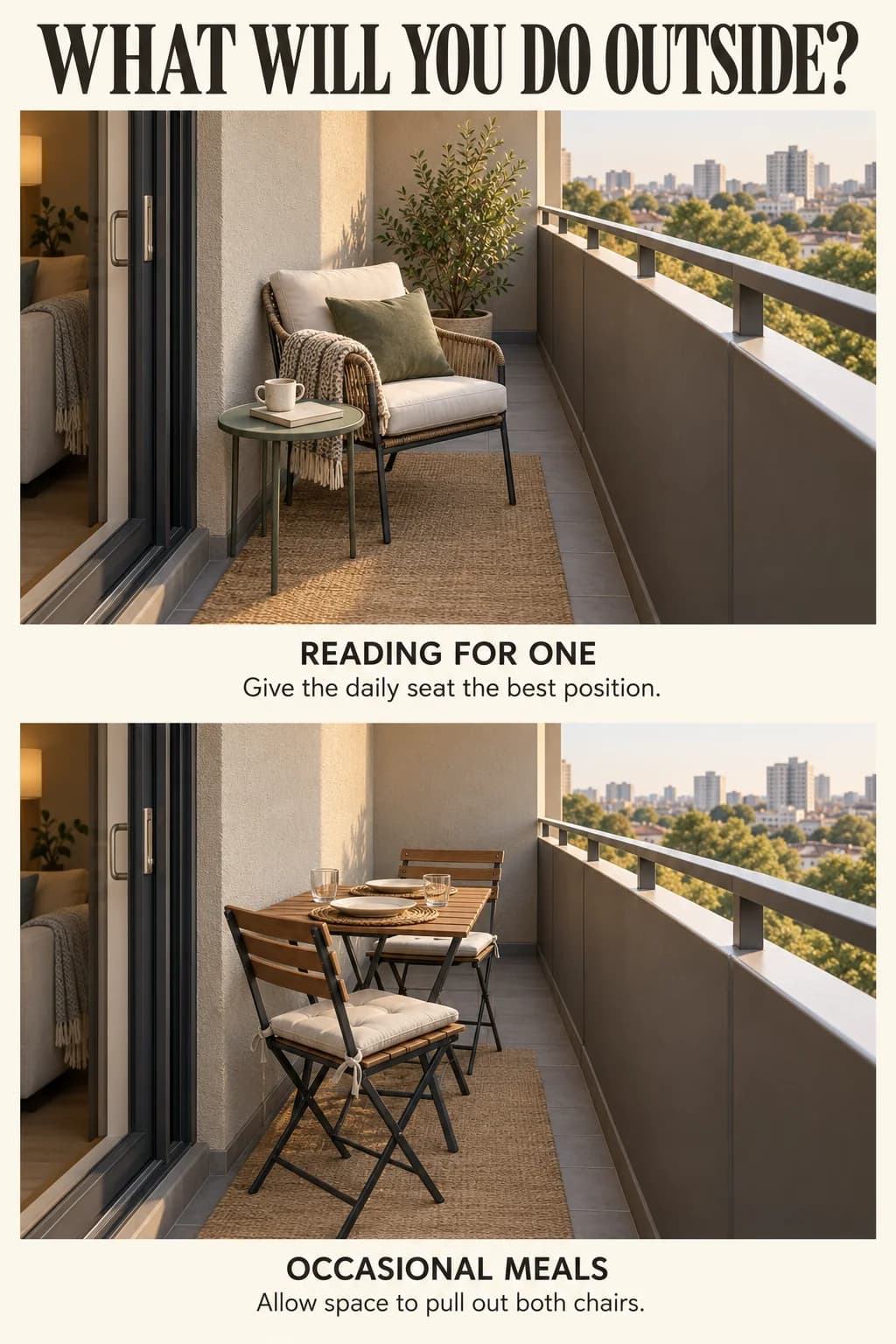
A narrow balcony for coffee and reading
Place one compact outdoor chair toward the sheltered end, angled so you can look outward without sitting directly in the doorway. Put a small stable side table within easy reach and one modest plant beside the building wall, where it does not narrow the route. A washable cushion in muted green can bring color without introducing several objects to carry inside.
The chair gets priority because reading is the main activity. A side table is enough for a cup and book; a full dining table would consume space without improving that use. Choose the chair for the way you actually sit. A tiny chair that leaves ample empty floor but feels uncomfortable after a few minutes is not a successful space-saving choice.
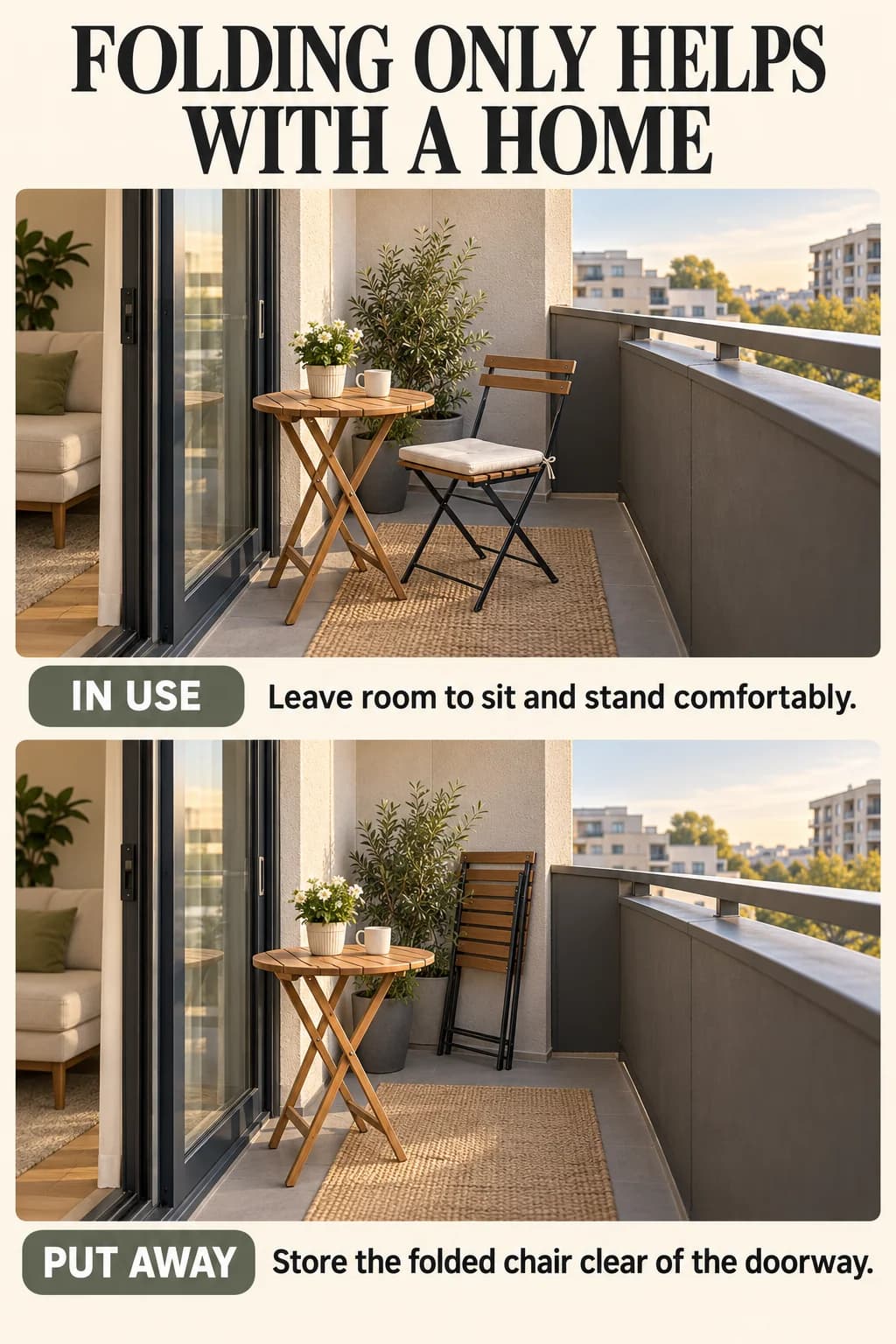
If the door opens into the planned chair position, move the chair farther along the wall or choose a smaller footprint that still suits you. Do not wedge the door partly open around it. If no comfortable permanent seat fits, use a folding chair only when the balcony is occupied and keep its storage location convenient indoors.
For an exposed balcony, bring cushions inside when their care guidance or the weather requires it. Select furniture intended for outdoor conditions and follow its maintenance instructions. An indoor armchair does not become suitable outside because it fits the corner beautifully.
A place for two to eat occasionally
For occasional meals, try a compact outdoor table with two folding chairs, positioned so both people can leave their seats without climbing around the table. Keep the table where it is useful, but store the spare chair when only one person regularly uses the balcony. The second seat becomes an occasional setup rather than a permanent obstruction.
The folding furniture shown in IKEA's compact-balcony ideas is useful inspiration for this kind of changeable arrangement. The important extra decision is where each folded piece lives. Leaning both chairs across the balcony door saves no usable space.
Use simple place settings and carry food out on a tray that can return indoors after serving. A large centerpiece has little to offer when it displaces plates. If the table cannot accommodate the meal you want, use the balcony for drinks instead of squeezing in a larger table that prevents movement.
This is similar to the trade-off in a small living-dining room: decide which activity deserves the most space and make the transition between uses manageable. On the balcony, weather and the storage of movable pieces add another layer to that decision.
Add plants where they can still be reached
A few plants at different heights can create a leafy backdrop, but you still need to water them and remove dead growth. Put the plants you handle often within comfortable reach. A freestanding outdoor stand may help organize small pots when it is stable, suitable for the setting and placed without creating an obstacle.
Avoid making the railing the default storage wall. Check permissions and the suitability of any attachment before using it; the visual appeal of a hanging planter does not establish that it is appropriate for your building. Keep furniture and climbable arrangements away from railings where they would create a risk, and follow the building's guidance for your household.
IKEA's flexible outdoor-space guide shows storage and movable seating as companions. In practice, choose only the storage you can open with the balcony furnished. A cabinet door trapped behind a chair turns a tidy photograph into a daily rearrangement.
Let textiles be optional
An outdoor rug can connect the furniture visually, but the balcony does not need one to feel finished. Check its suitability for the surface and exposure, keep drainage clear, and follow instructions for lifting and drying it. A rug that stays wet beneath the chair can create more work than a cushion brought outside for each use.
Near the doorway, check the full door movement with the real textile thickness. The outdoor-rug layering guide explains the clearance questions, but it is not a reason to add two rugs to a tiny balcony. One suitable textile, or none, may be the better arrangement.
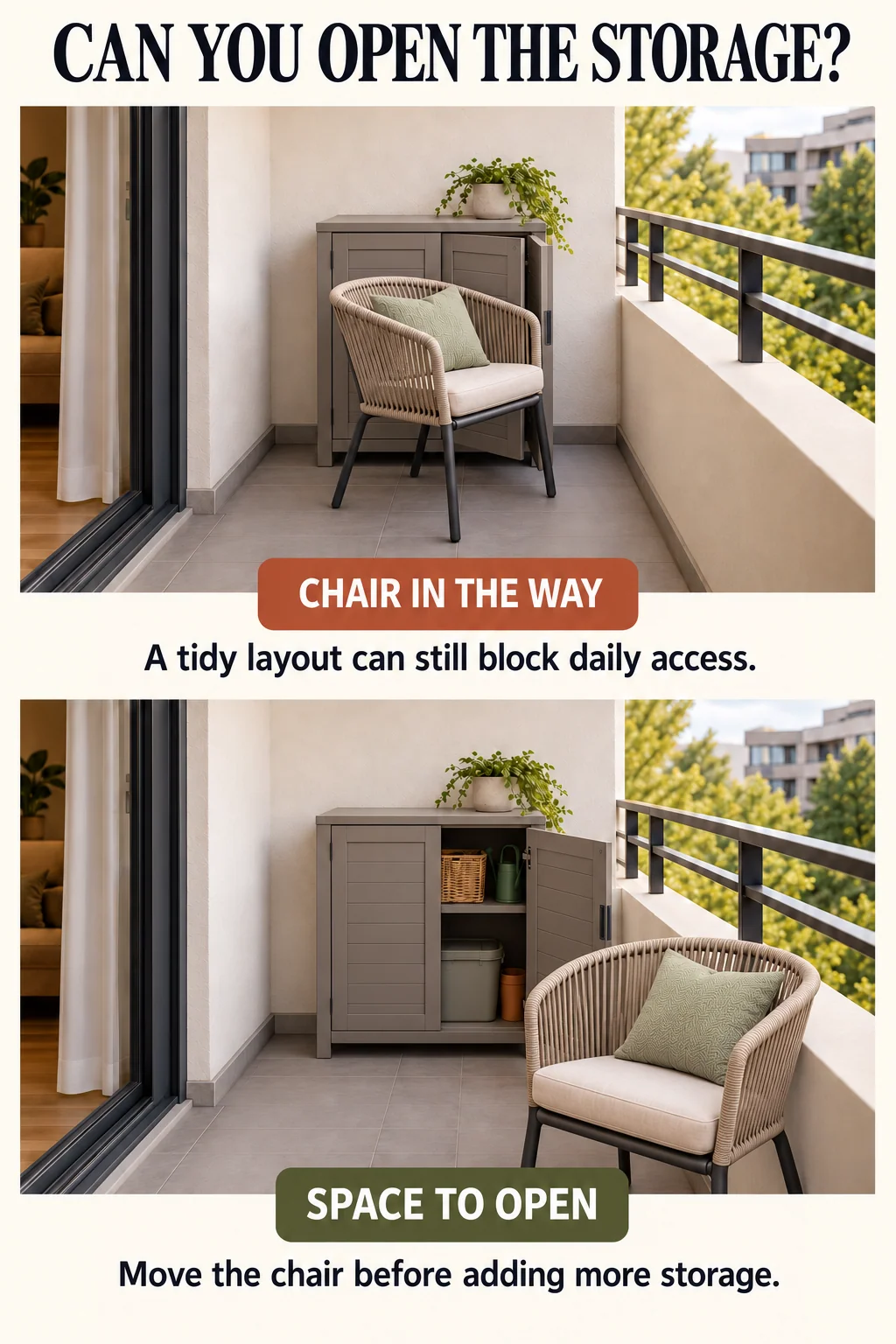
If the balcony repeatedly feels crowded, remove the item that serves the least frequent activity for a week. Store the extra chair, move the decorative lantern indoors or reduce the plant grouping. Notice whether you use the remaining seat more often. Empty space has a practical role here: it lets the door open, the chair move and the balcony become part of the day.