Both systems display several pieces. One behaves like a shallow shelf; the other treats every frame as its own address.
Choose how often the art will move
A picture ledge lets frames slide, overlap and swap without a new hole for each change. A gallery wall rewards a composition you are willing to keep longer. If seasonal prints, children’s art or an expanding collection will rotate, flexibility is a functional requirement rather than a decorative bonus.
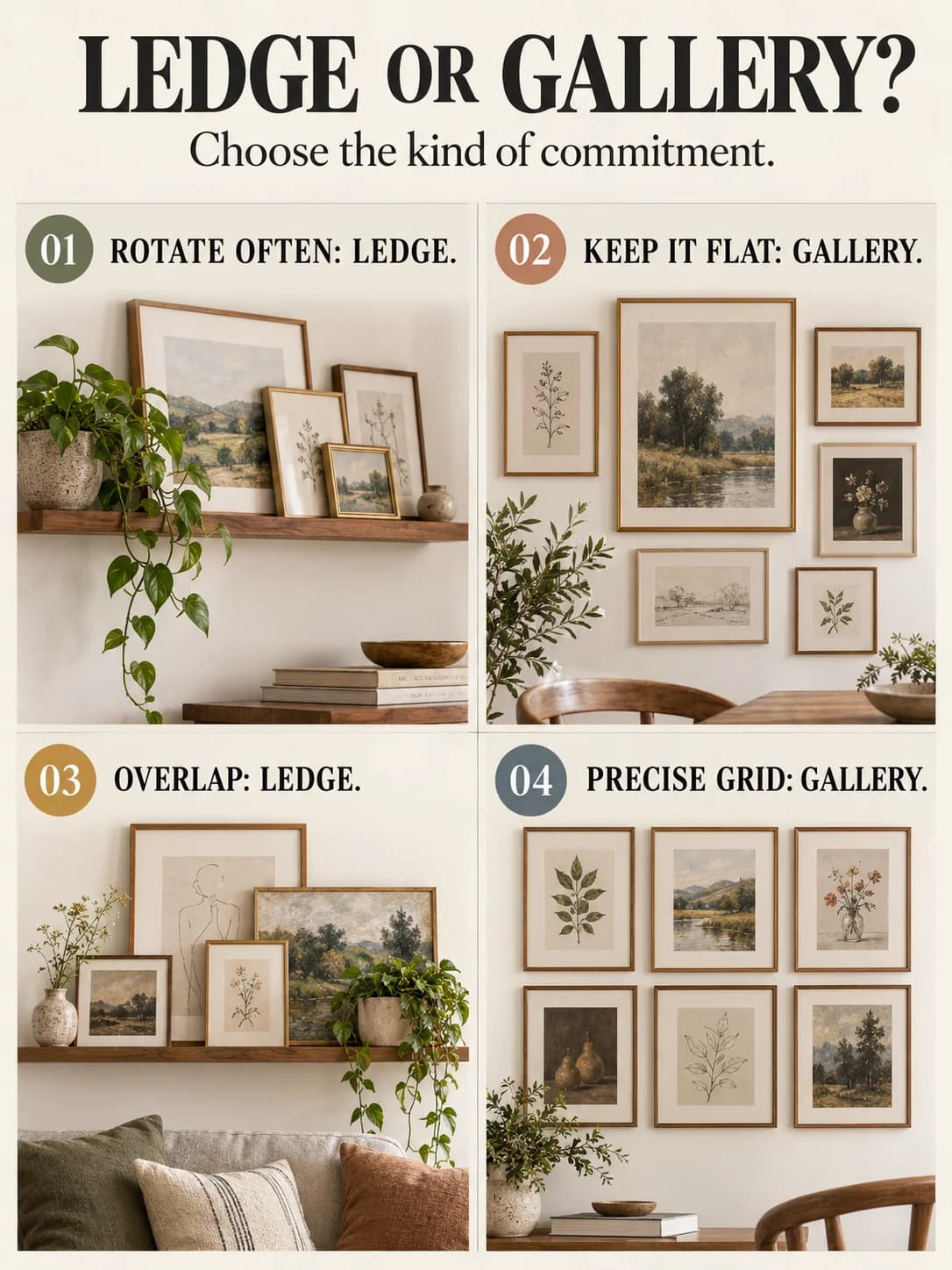
| Question | Picture ledge | Gallery wall |
|---|---|---|
| Rotate often | Excellent | More work |
| Wall holes | Fewer groups | One per piece |
| Depth | Projects outward | Mostly flat |
| Overlap | Easy | Limited |
| Cleaning | Shelf dust | Individual frames |
Account for projection
Frames on a ledge sit away from the wall and may lean. That creates shadow and depth, but also a physical edge. Above seating, beds or narrow passages, confirm head and shoulder clearance. A gallery wall stays flatter and can suit a tight route where even a shallow shelf feels intrusive.
Treat installation as two different load problems
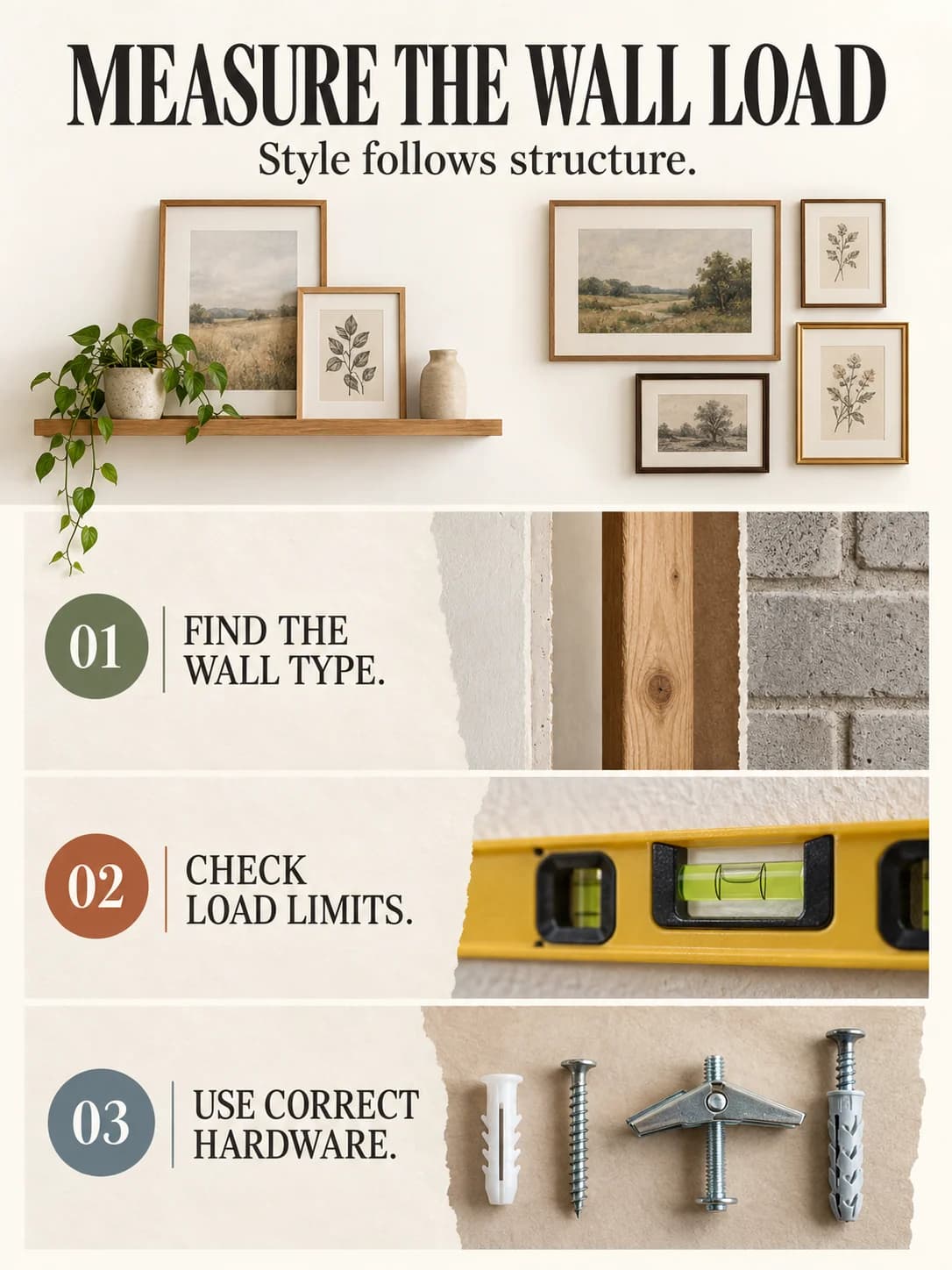
A ledge concentrates several frames on one mounted object. A gallery wall distributes individual loads among separate fasteners. Identify the wall material, use hardware rated for the actual load and follow the ledge manufacturer’s requirements. Decorative arrangements do not exempt gravity from its usual schedule.
Decide whether overlap helps the art
Ledges make overlapping frames easy and can absorb mixed sizes. The rear pieces lose visible edges, so important details should not sit near the overlap. Gallery walls give every frame its own boundary. The gallery-wall guide explains paper templates and spacing once that route wins.
Compare cleaning and daily disturbance
A ledge collects dust and can transmit a bump along several frames. A gallery wall requires dusting around more separate objects but has no horizontal shelf. In busy households, consider secure frame placement and avoid leaning fragile glass where a door, pet or child can reach it.
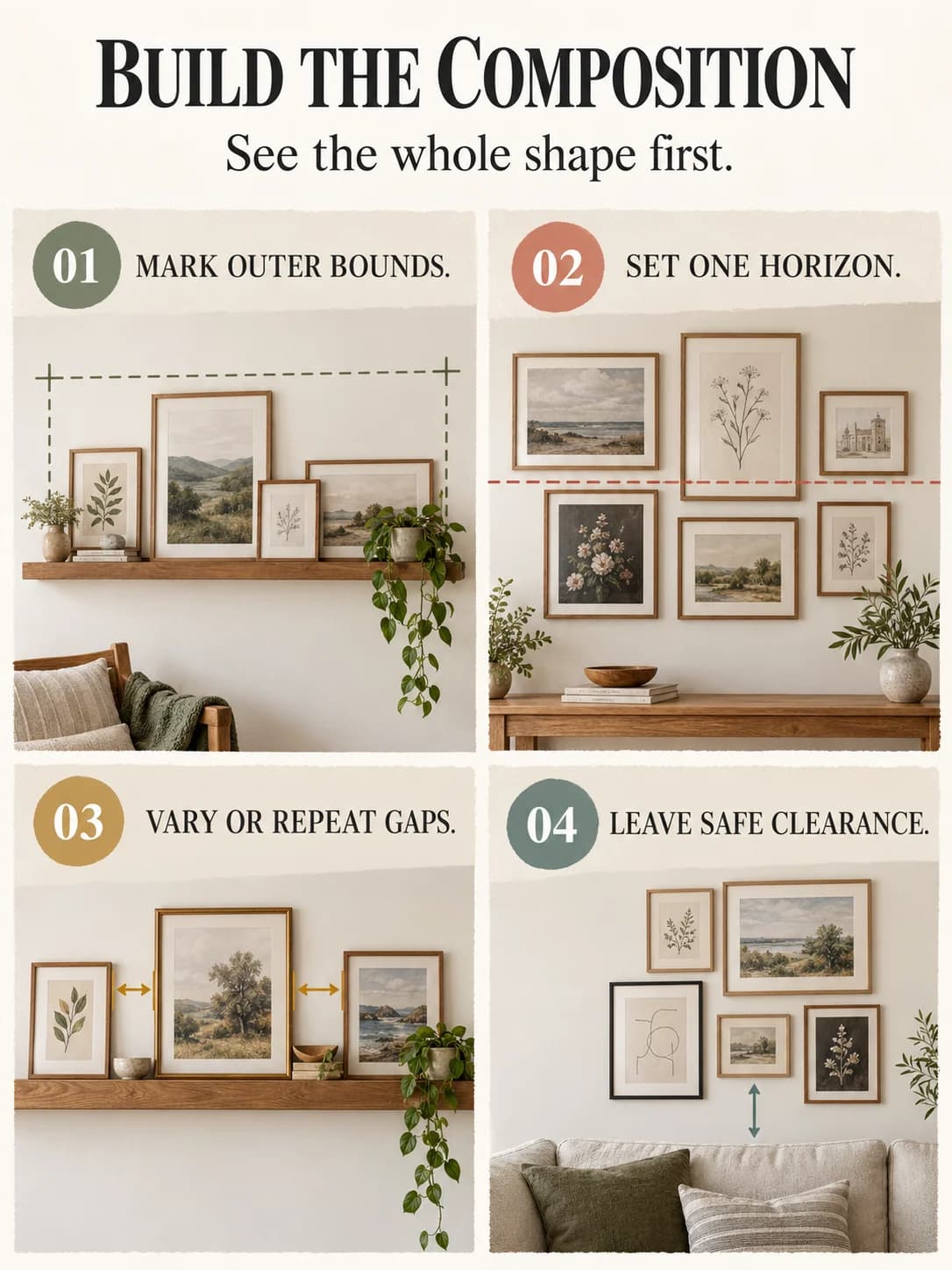
Map the total outer shape with tape before choosing either system.
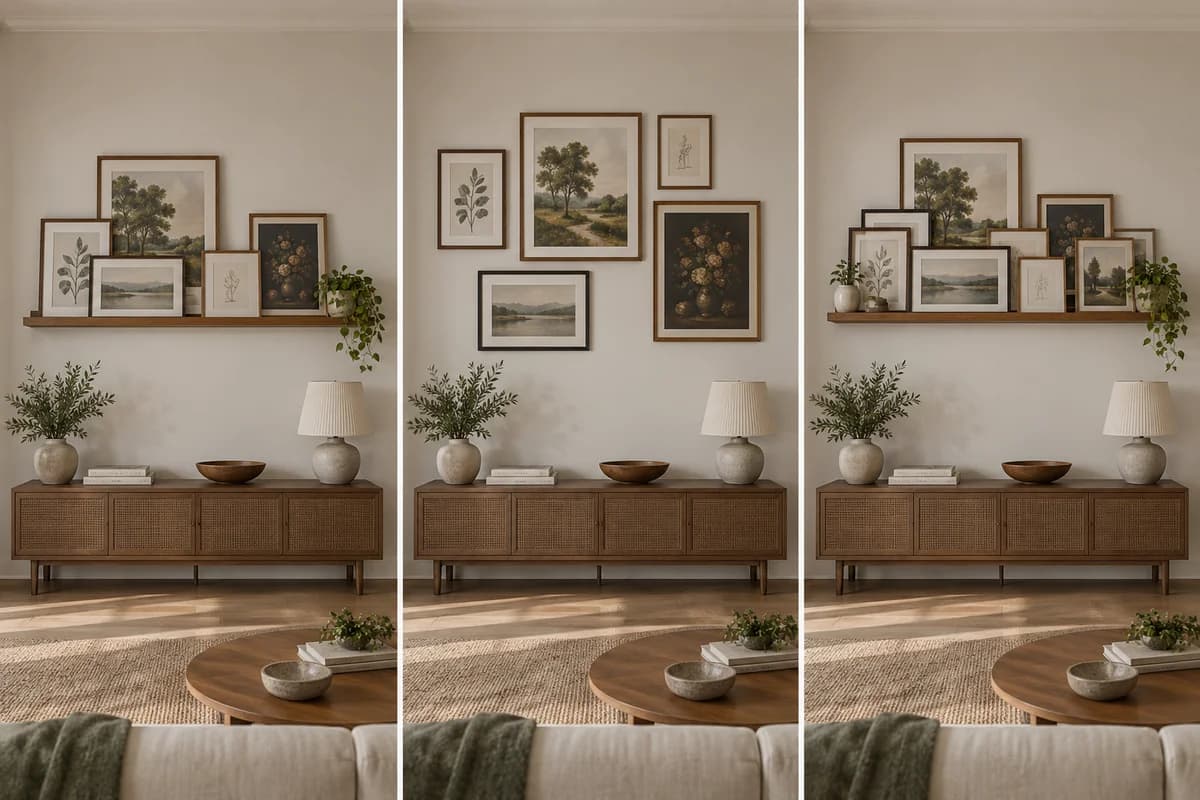
Photograph the paper version from the room entrance and the nearest seated position. A ledge can look perfectly scaled straight on but too thick from the side; a gallery wall can appear balanced up close and strangely top-heavy from across the room. Test both the composition and the viewing angles before choosing hardware. That small pause is cheaper than turning the wall into a record of revisions.
If the display sits above a sofa, the art-size guide helps set the composition width. A nearby mirror follows a different furniture relationship covered in the console-mirror guide. The winning system fits the wall and your appetite for rearranging it.
Frequently asked questions
Are picture ledges easier than gallery walls?
They reduce the number of horizontal layout decisions, but the ledge itself must be level and securely mounted.
Can you put a picture ledge over a sofa?
Yes, if it is securely installed and positioned so people cannot strike it when sitting or standing.
Do gallery walls damage walls more?
They usually require more individual fasteners, though small frames may use lighter hardware appropriate to the wall and load.