The strap makes a Mary Jane recognizable, but it does not have to stay on permanent display. A cropped trouser can frame it; a full-length hem can reveal it only as you walk. Decide which effect you want, then consider the fabric between the hem and the shoe. That small area is where many Mary Jane outfits change character.
Show the strap, or let the trousers continue over it
For a visible-shoe outfit, wear black Mary Jane flats with medium-blue straight jeans ending above the strap, a white tee and an open charcoal cardigan. A black shoulder bag relates to the footwear. This suits a bookstore visit or casual lunch because the familiar denim and tee keep the decorative shoe from feeling excessively dressed up.
Keep the tee smooth beneath the cardigan rather than adding a bulky knot at the waist. The clear jean hem lets the strap register as a small detail. For a cooler day, add thin charcoal socks and a coat that fits over the knit. If you prefer more leg coverage, use full-length jeans that clear the ground instead of exposing skin; the shoe can remain a quieter part of the outfit.
A slim, low-soled shoe has less visible weight than a broad strap, substantial sole or block heel. That does not mean wide trousers demand chunky footwear. It means a delicate shoe will often disappear farther beneath the fabric. Choose that effect intentionally, or shorten the hem enough to reveal the part you want to see.
For a more tailored application, combine black low-heeled Mary Janes with charcoal wide-leg trousers, an ivory blouse and a dark-green jacket. Use a plain black bag for an informal office or afternoon appointment. Let the trouser hem skim the shoe without pooling. The more substantial shoe gives the wide fabric a visible base, while ivory keeps the upper half lighter.
Here the strap may be hidden while you stand. The shoe is doing a different job from the cropped-jean version: its shape and finish support the trousers, rather than becoming the main detail. Indoors, remove the jacket and keep the ivory blouse as a complete top. For a softer version, use a fine gray knit, letting its hem sit comfortably at or just over the waistband.
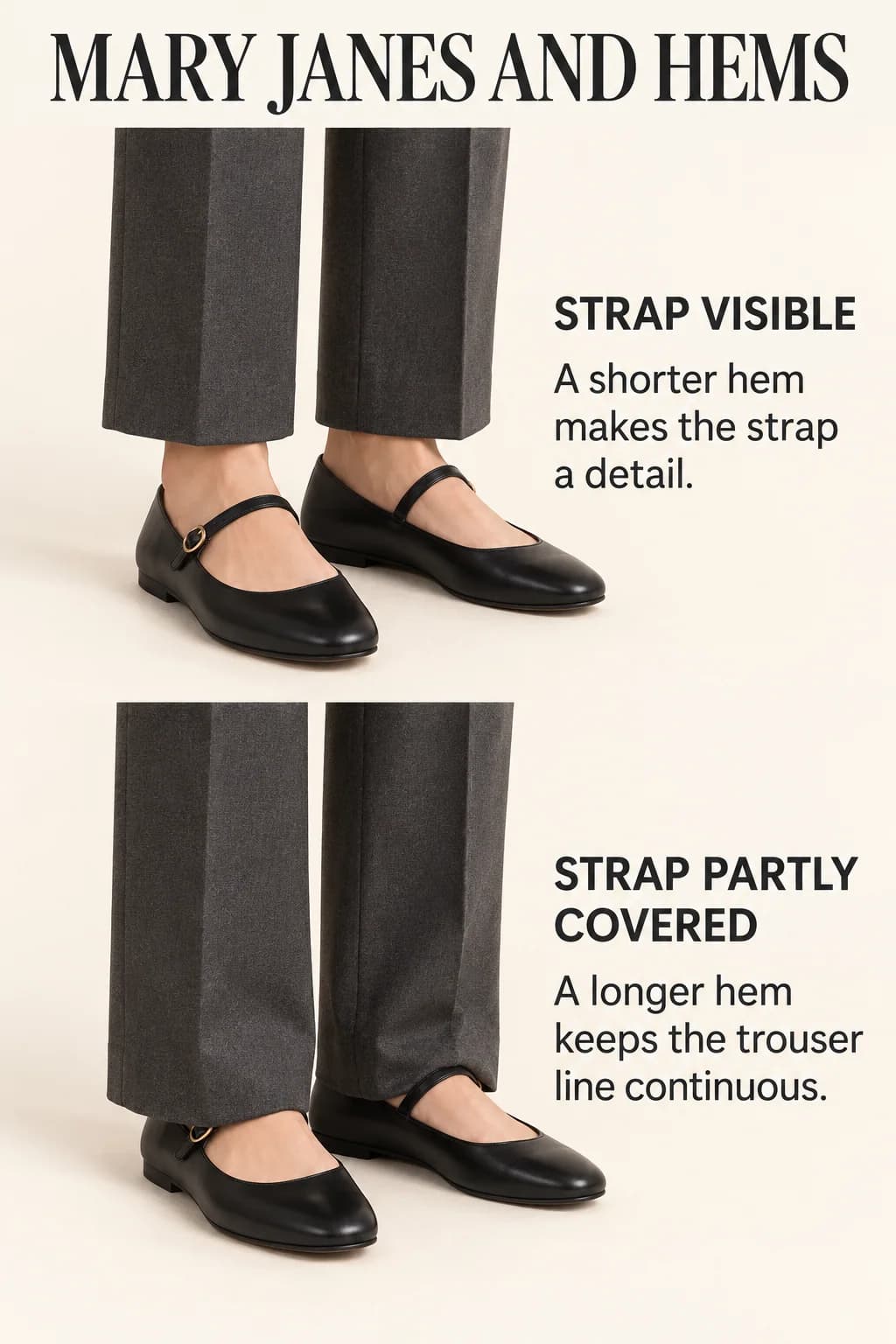
If a trouser hem catches on the buckle, adjust the hem or choose a less protruding fastening. Do not shorten every trouser in the wardrobe for one shoe. The cropped-trouser footwear guide gives more ways to judge that gap; loafers versus ballet flats is useful when you want a different upper shape altogether.
Make the hosiery visible for a reason
Hold a black Mary Jane and gray cropped trouser fixed, then compare fine charcoal socks with fine ivory ones. Charcoal keeps the ankle area quiet. Ivory creates a light band that draws attention to the strap. Use the contrasting version when you want that interruption, rather than because every Mary Jane supposedly needs a white sock.
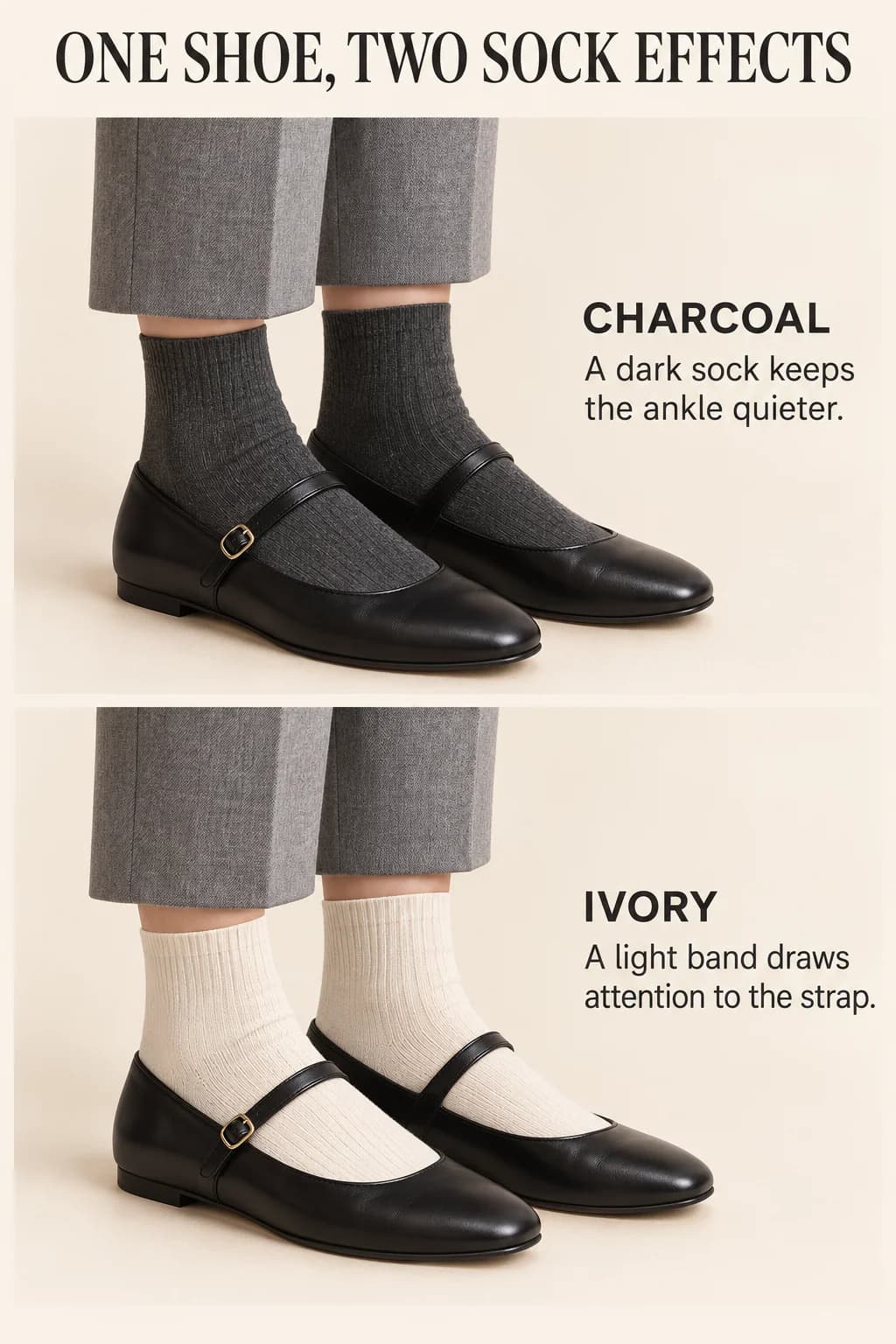
Notice the sock cuff as well as its color. A deep ribbed cuff can add a visible ridge below the trouser, even when the rest of the sock is fine. If that feels crowded, try a smoother cuff or a hem that leaves it more room. Moving the hem and changing the sock at the same time makes it harder to identify which adjustment helped.
Tights create a longer color connection. For dinner with friends, wear burgundy Mary Janes with a navy midi dress carrying a small cream print, a navy cardigan and a compact burgundy bag. Leave the cardigan open so the print remains visible. The shoes introduce a warm color beneath the darker dress, and the bag repeats it at a distance.
For cooler weather or greater coverage, use opaque navy tights. The dark leg keeps the print and burgundy accessories more noticeable. If the tights and dress look awkwardly close without matching, compare dark burgundy tights that relate to the shoes instead. Our tights-color guide explains the distinction between continuing a dress color and continuing the footwear color.
For warm weather, omit the tights and use a lighter cardigan. Choose the dress length for comfortable walking and sitting; a midi hem does not need to end at an exact point for Mary Janes to work. Plain footwear and hosiery give the small print space, but you can keep a decorative buckle if you enjoy it. There is no obligation to add a frilled sock, pleated skirt or matching collar to make the shoe recognizable.
Keep fit decisions separate from styling decisions
Try the shoes with the exact socks or tights you expect to wear. A color change affects the outfit; a thickness change affects the room inside the shoe. Even a sock that looks fine can change how a close strap feels across the foot.
Fasten the strap, walk and sit. It should secure the shoe without painful pressure. If loosening it makes the heel slip, the shape may not suit your foot. A round toe, square toe or strap is not an all-day-comfort guarantee, and future stretching is not a dependable answer to discomfort now.
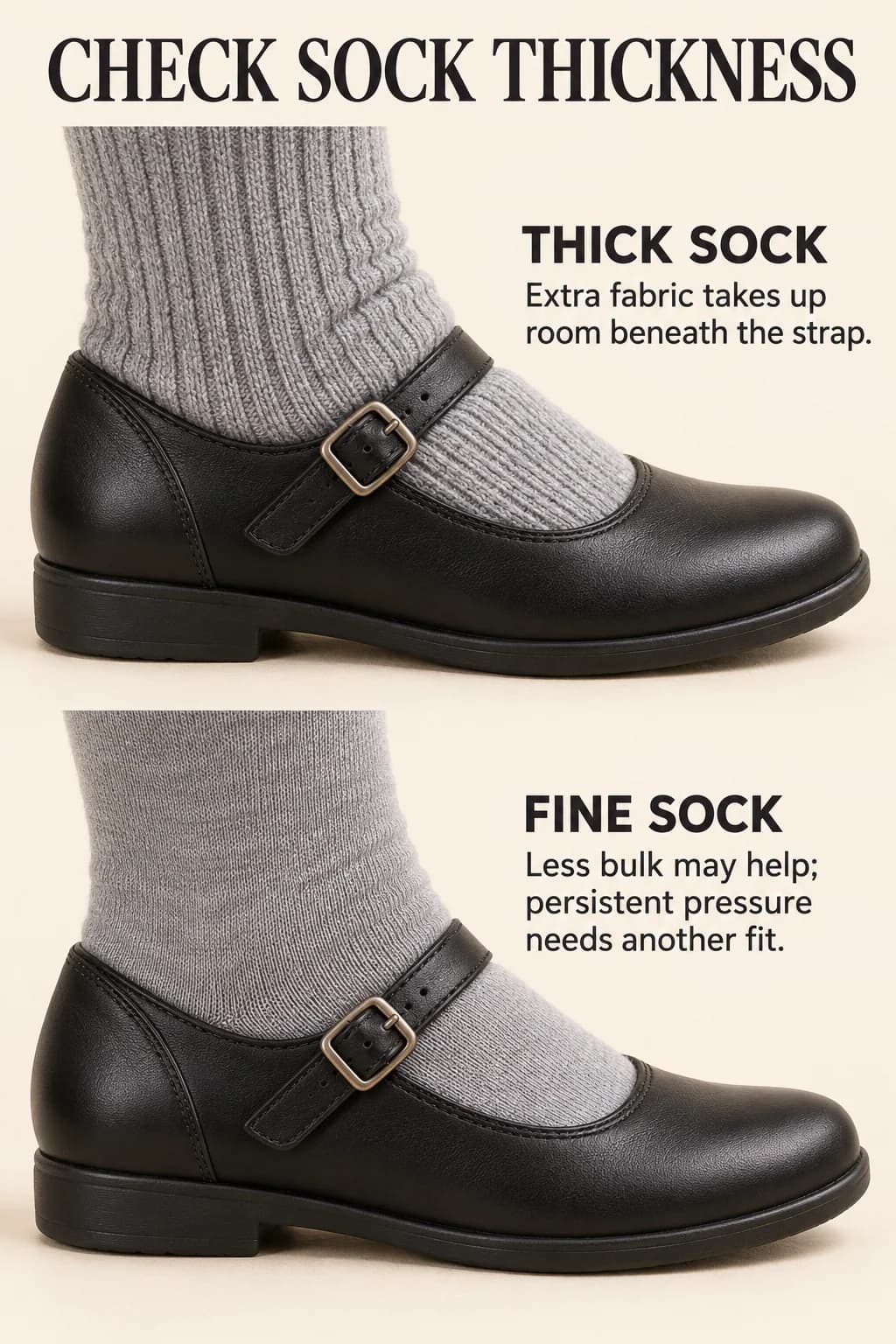
Use the symptom to choose the next adjustment:
- If the strap only presses with a thick sock, compare a thinner suitable pair before changing the whole outfit. Persistent pressure still calls for another fit.
- If a sock slides beneath the heel, check its size and how it sits inside the shoe. Tightening the strap may leave the sock problem unchanged.
- If the heel slips while the strap already feels tight, try a different shoe shape rather than fastening it harder.
- If the hem drags beneath the sole, change its length or the footwear. Hiding the strap should never mean stepping on the trousers.
For a day with extensive walking or standing, use a pair whose fit you already know. You can preserve the outfit's colors with another comfortable shoe if these Mary Janes are not suitable. The strap is a styling detail, not a commitment to spend the day thinking about your feet.