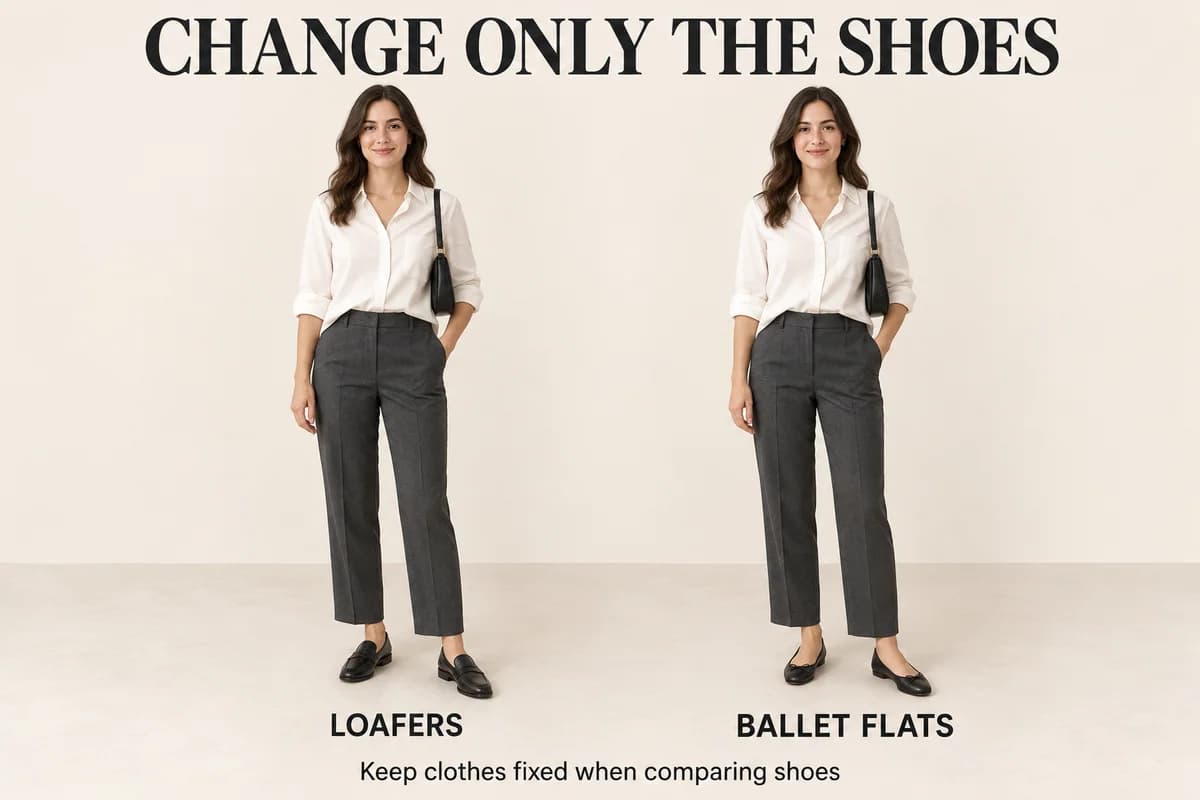
Keep the clothes on and change only the shoes. That is the most useful way to choose between loafers and ballet flats: the difference you notice belongs to the shoes you own, rather than to a rule about which category is dressier.
Compare the upper before the label
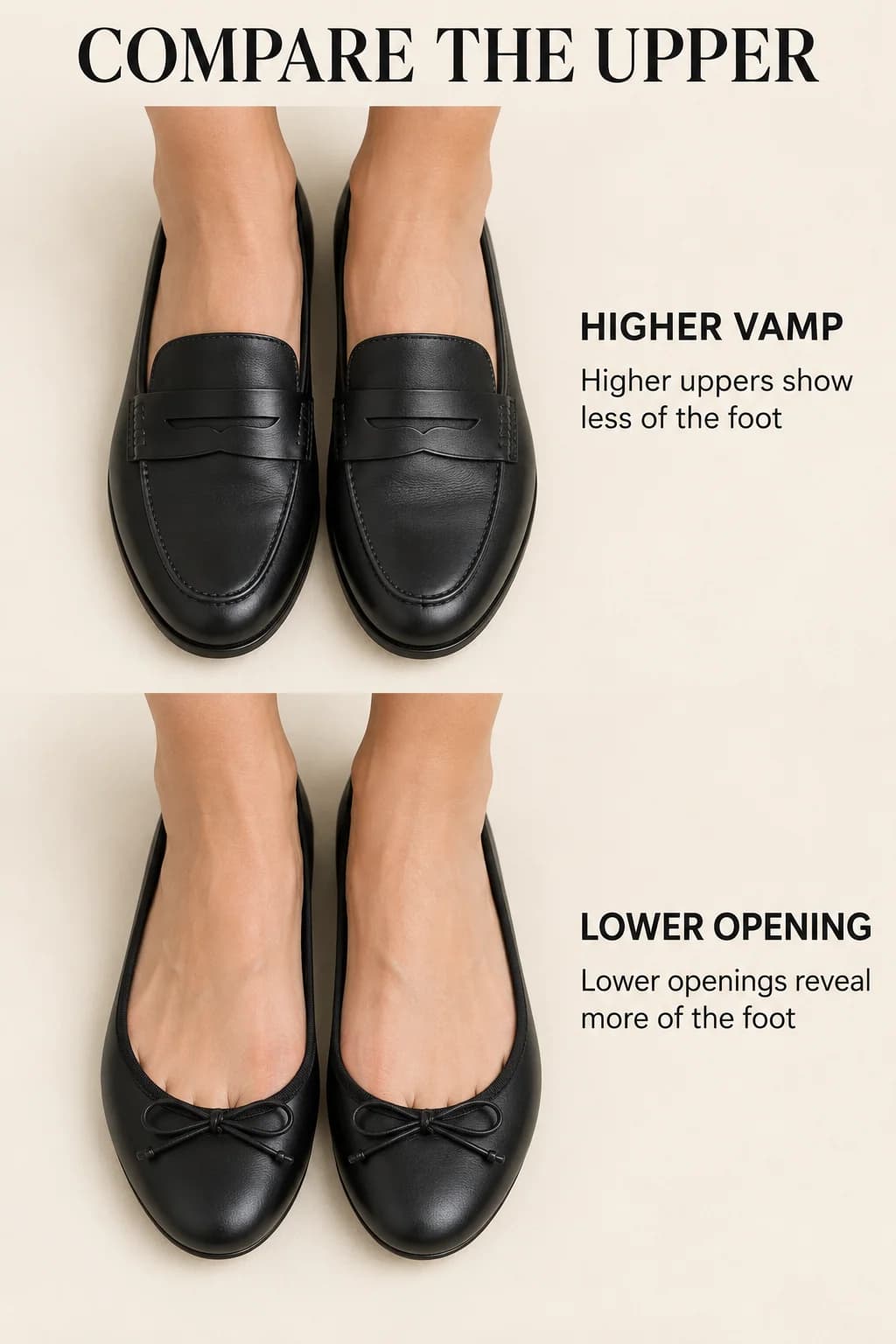
The vamp is the part of the upper covering the top of the foot. Many loafers have a relatively high vamp, while a low-cut ballet flat leaves more of that area visible. Under a cropped trouser, this can change how much space you see between the trouser hem and the shoe opening.
There are exceptions. A high-cut ballet flat can cover much of the foot, and a slim loafer can have a light outline. Toe shape and finish matter as well: a glossy pointed flat can look sharper than a soft, rounded suede loafer. Treat the names as a starting point for looking, not a verdict on the outfit.
Cropped gray trousers: a controlled comparison
Start with charcoal ankle-length straight trousers, an ivory cotton shirt and a small black shoulder bag. Leave the shirt in the same shallow front tuck for both versions. Keep the trouser hem, bag and any jewelry unchanged, and begin without visible socks if that is comfortable for you.
With black slim-soled loafers, more of the top of the foot is covered. The higher upper gives the cropped trouser a substantial ending without the much heavier outline of a lug sole. For a casual office, this version continues the shirt's tailored character and leaves the clothes feeling fairly restrained.
Change to black low-cut ballet flats of a similar finish. More of the foot is now visible between the opening and the hem, and the lower outline makes the same trousers feel lighter. This could suit lunch after work or an office where you prefer a less covered shoe. Neither occasion belongs exclusively to one category; the distinction is the effect you want in those unchanged clothes.
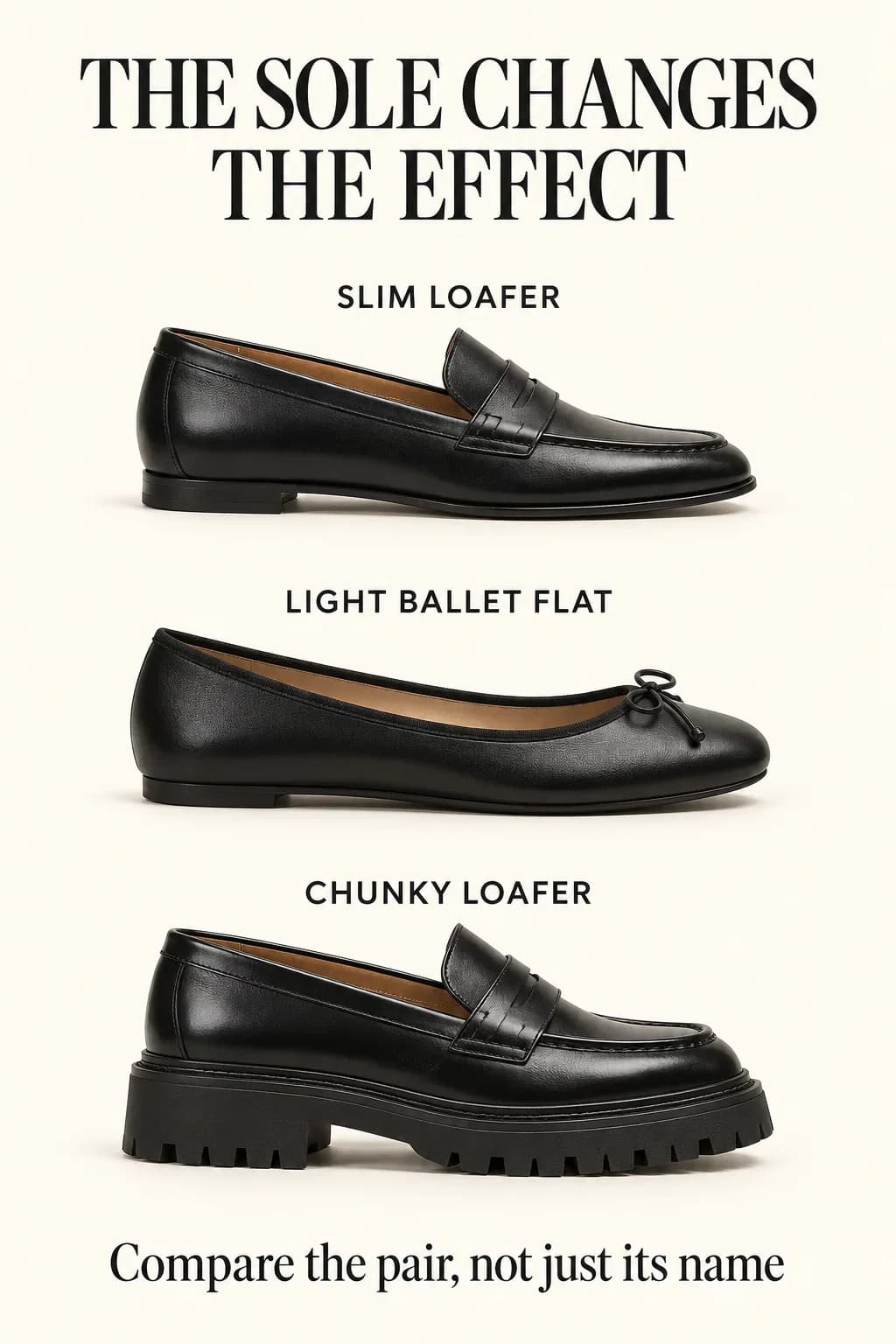
If the loafer seems heavy, compare its sole before deciding that all loafers are wrong. A slim pair may give you the coverage you like without a chunky edge. If the ballet flat feels too slight beneath the trousers, try a slightly higher vamp or a squarer toe. The straight-trouser shoe guide helps when the hem shape itself is the remaining variable.
For cooler weather, repeat the comparison with the socks you intend to wear. A black sock close to the shoe color can reduce the contrast at the ankle; an ivory sock makes that area more noticeable. Hold the sock choice steady while judging the shoes. Otherwise you are changing two visible things at once.
A fluid navy skirt gives the shoes a different job
Use a fluid navy satin midi skirt, a fine cream crewneck and the same small black bag. Let the knit end smoothly over the waistband. With this outfit, the skirt's movement and sheen are already prominent, so compare whether you want the footwear to echo that lightness or interrupt it.
Black ballet flats with a low opening and a thin sole continue the light effect beneath the moving hem. This is a useful version for a dry-weather dinner or a day when you want few sharp changes between pieces. The cream knit's matte surface keeps the satin from being the only texture in the outfit.
Swap in black loafers while leaving everything else fixed. A modestly substantial sole and more covered upper add a firmer endpoint beneath the skirt. That contrast can make the satin feel less delicate for daytime. If the loafers are very chunky, the contrast becomes stronger; decide whether you enjoy that instead of treating it as a mistake.
With a longer skirt, much of the vamp may disappear, making the toe and sole the clearest differences. Step forward and sit down before judging the comparison. For colder weather, try dark tights with either shoe, then choose a coat that works with the skirt's movement. Tights alter the amount of visible skin, so they may change which shoe feels more distinct.
A slim sole is its own choice
Look at a slim loafer beside a thin-soled ballet flat and a chunky loafer. The first two may be closer in visual weight than the two loafers are to each other. Upper coverage and sole thickness are separate decisions. You can want a covered foot without wanting a thick sole, or enjoy a heavier shoe under a fluid skirt.
Fit can settle a tie that styling cannot
Try each pair for the walking and standing your day requires. If your heel slips repeatedly or you grip with your toes to keep the shoe on, that pair is not becoming suitable merely because it looks right. A flat heel does not promise comfort, and a loafer's greater coverage does not prove that it will fit better.
Changing shoes can also change hem clearance. A full-length trouser that clears the floor in a thicker-soled loafer may drag with a low ballet flat. Use a different trouser length or footwear that gives the needed clearance; lifting the waistband all day is not a reliable fix.
For rain, inspect the actual materials and tread rather than assuming the more covered shoe is weatherproof. For socks, consider both the visible effect and the space inside the shoe. The loafer-sock guide covers that choice in more detail. When both outfits work visually, choose the pair that fits securely and suits the conditions you will actually meet.