The paint sample that looks perfect beside a window may feel quite different on the wall behind the sofa. Before buying enough paint for the room, test a small shortlist where the color will actually live, and under the lighting you normally use there.
Narrow with chips; decide with a larger sample
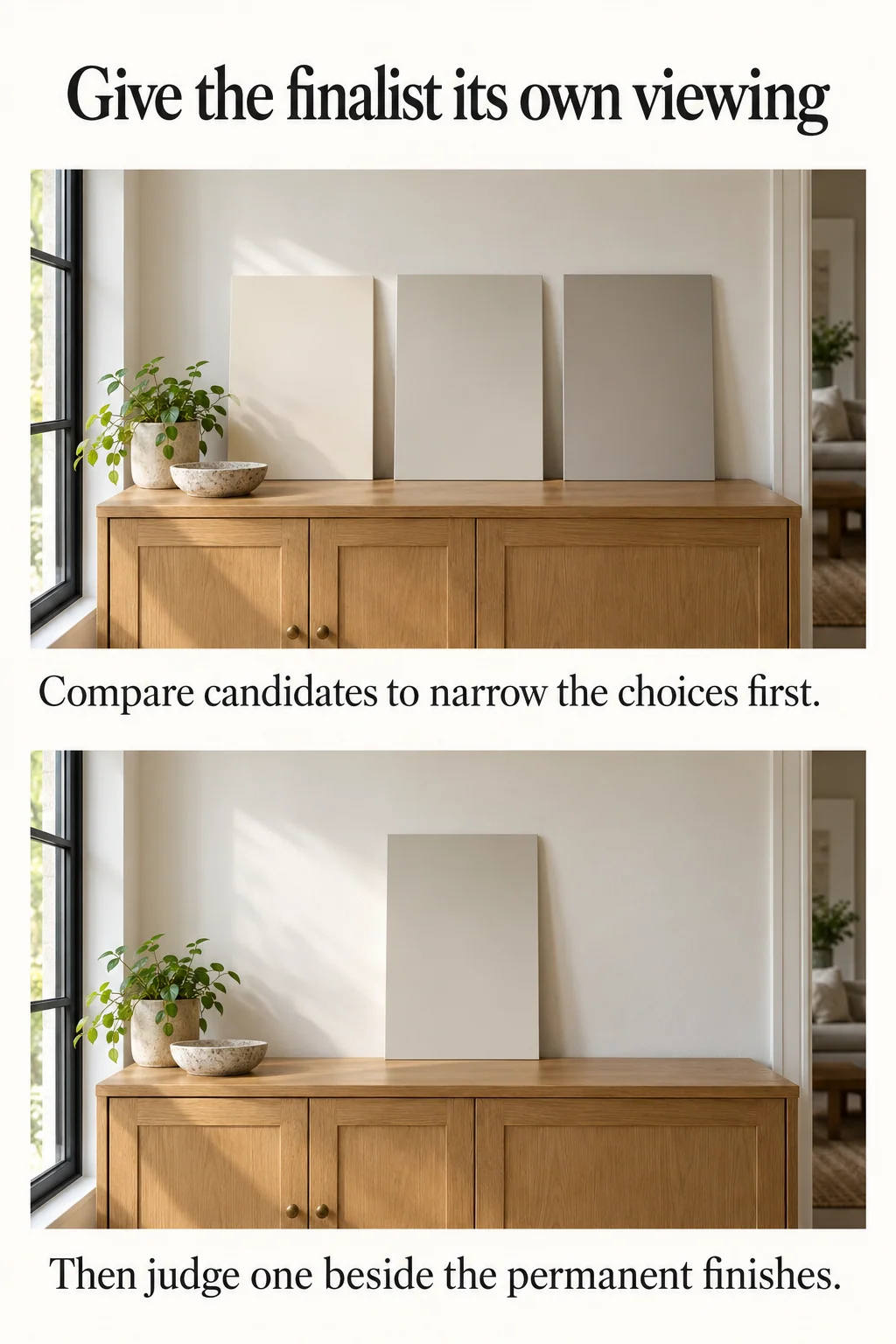
Start with a few color chips to eliminate obvious mismatches against the finishes you are keeping. Look beside flooring, stone, cabinetry and large upholstery, rather than only against an empty white wall. Then move to larger samples of the remaining candidates. A tiny chip is useful for narrowing a range, but it asks you to imagine a large area of color from very little evidence.
You can use a suitable painted sample board, a manufacturer-supplied movable sample or a wall patch where allowed. Follow the sample product's instructions for surface preparation, coats and drying. Benjamin Moore's sampling guidance recommends sufficient coats and moving samples around the room to compare lighting conditions.
Do not judge paint while it is still wet. Label each sample on the back or outside the painted area, including the color and product, so you can identify it after rearranging the boards. Keep the shortlist manageable. Three carefully observed candidates can teach you more than a wall crowded with twelve competing patches.
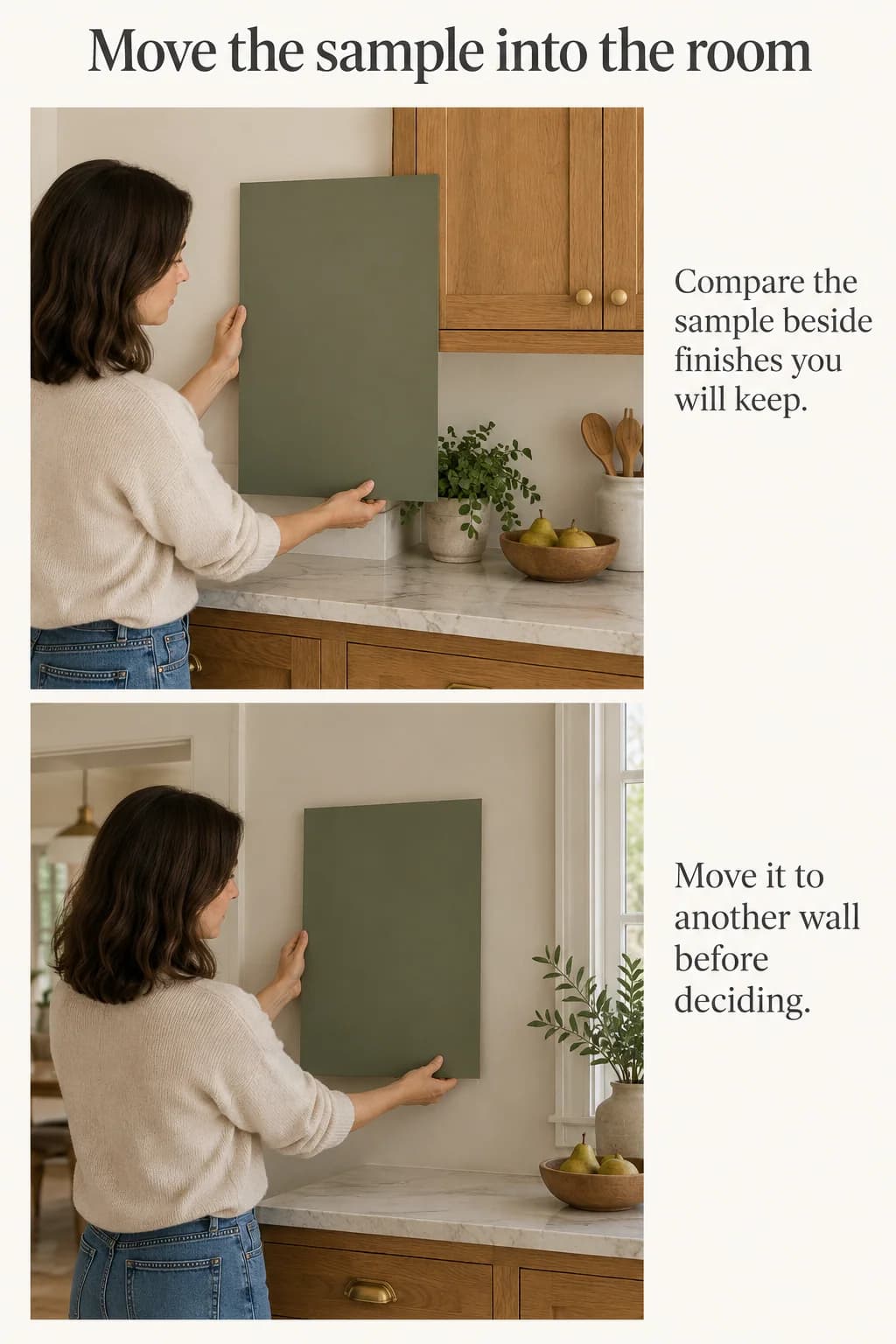
Put the sample in the plane you will paint
Hold a wall-color sample vertically at the wall. Looking down at a card on a table changes its relationship to the light and surrounding surfaces. Move it between the main wall, a shaded corner and the wall opposite a window. You are checking how that one color behaves, not trying to find a single photograph that proves it is perfect.
Leave the permanent materials visible beside it. A warm wood cabinet and a cool stone counter are part of the room's color context, not distractions to remove. If your existing wall color is very strong, isolate the sample with a neutral border or use a larger board so the surrounding paint does not dominate the comparison. Then check the finalist in the actual setting again.
A kitchen with honey-oak cabinets
Suppose you are keeping honey-oak cabinets, a pale counter and a neutral floor. Compare a warm off-white, a quieter cream and a muted green on movable boards. Place each beside the cabinet edge, then beside the counter. A color that relates well to the wood may still make the counter look unexpectedly pink, gray or yellow to you.
View the candidates in daytime and with the kitchen lights you use for cooking and evening meals. If one looks pleasing beside the cabinets but too yellow under the usual lights, record that specific result. Compare the other candidates under the same conditions before changing bulbs or assuming every warm color is unsuitable.
Once you favor one, remove the competing boards and live with that sample for another normal cycle of use. Side-by-side comparisons are useful, but you will eventually see one wall color across the room. The guide to paint colors with honey-oak cabinets can help narrow the starting palette; sampling decides how your actual materials respond together.
A bedroom used mostly after sunset
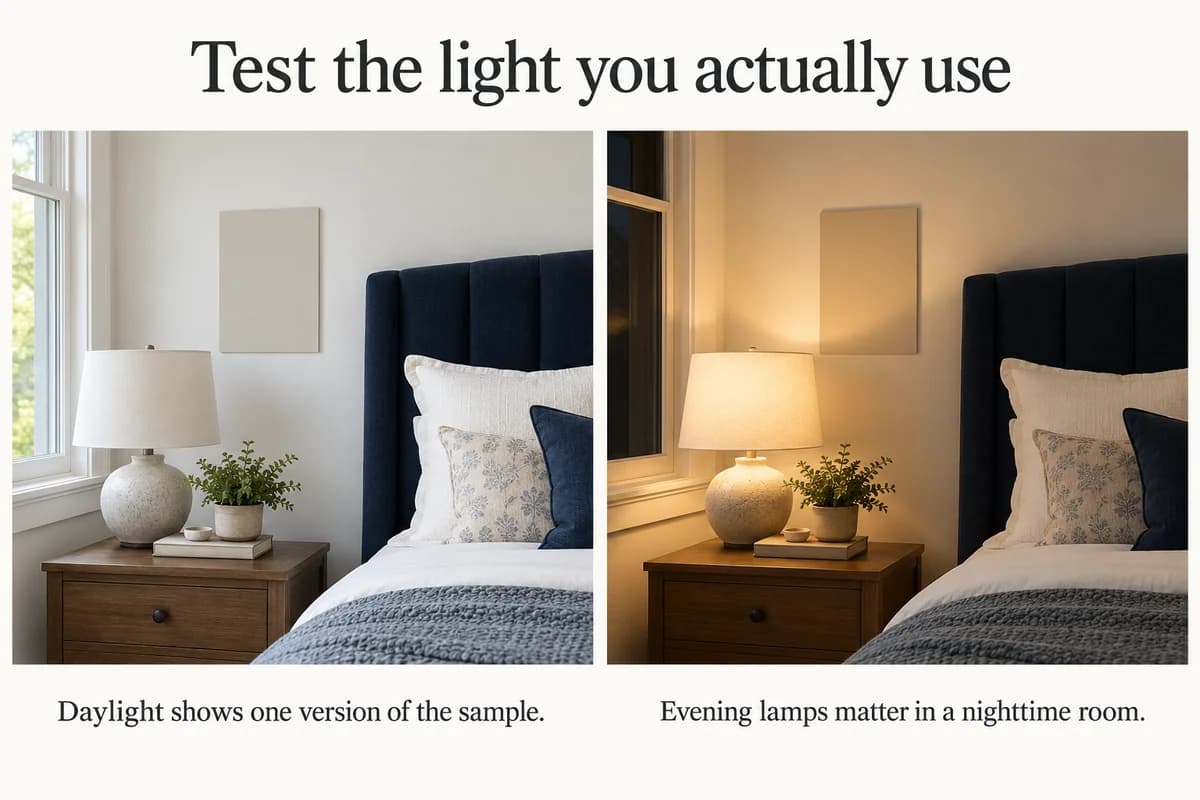
Now consider a bedroom whose daytime light is pleasant but which you mainly use under bedside lamps. Test a soft blue-gray, a muted warm neutral and a deeper alternative beside the bedding and headboard. Check the room at the time you read, dress or settle down, using the lamps and shades you expect to keep.
Do not select the daylight favorite by default. If a pale color seems washed out at night, a slightly deeper candidate may give the room the definition you wanted. If a deeper sample feels heavy in a shadowed corner, compare it on the main wall as well before deciding whether the effect suits the whole room.
Keep lamp conditions consistent while comparing colors. Changing the bulb and the sample together makes it harder to understand which change helped. If you do plan to alter lighting, settle that plan and test again. Our warm-versus-cool bedroom lighting guide addresses that related choice; paint alone cannot reproduce a different lighting setup.
When none of the samples seems right
First remove competing patches or boards from view and assess one candidate against the fixed materials. A row of similar neutrals can exaggerate small differences. Then ask whether the problem is the hue, its lightness or the surrounding finish. Wanting less yellow is different from wanting a darker wall.
If a color works only during an hour when you rarely use the room, it may be the wrong choice even if that hour produces a beautiful photograph. Choose for the conditions that matter most, accepting that the room will change throughout the day. No paint stays visually identical in every light.
Avoid treating compass direction as a complete answer. Window size, obstructions, neighboring surfaces and artificial lighting all affect the scene. A general description of north-facing light can help you anticipate a question; it cannot replace testing the particular room.
Confirm the product, not just the color name
Sampling paint may use a different finish or formulation from the final paint. Benjamin Moore explicitly describes its liquid samples as color-testing products rather than the final coating. Once the color is chosen, confirm the intended product and sheen, and test the final combination where appearance is especially important. A matte sample does not demonstrate exactly how a more reflective finish will look across an uneven wall.
Renters can use permitted movable samples without creating a grid of painted patches. Busy households can make a short note in morning light and another during normal evening use, then revisit any uncertain spot. Buy the full quantity after the finalist works beside the things you are keeping, under the lights you will actually turn on.