A denim shirt can be a soft button-down, a substantial outer layer or half of a denim outfit. Those jobs ask different things of the garment. The shirt that falls neatly into trousers may not have room for a sweatshirt underneath; the boxy one that layers beautifully may make an uncomfortable ridge when tucked.
Start with the shirt you own. Button it, sit down and reach forward. If the placket opens between buttons or the back restricts your arms, changing the belt or shoes will not solve the fit. Then gather a little of the hem at your waist. Does it fold softly, or stand in a thick roll? That tells you more about its styling options than its shade of blue.
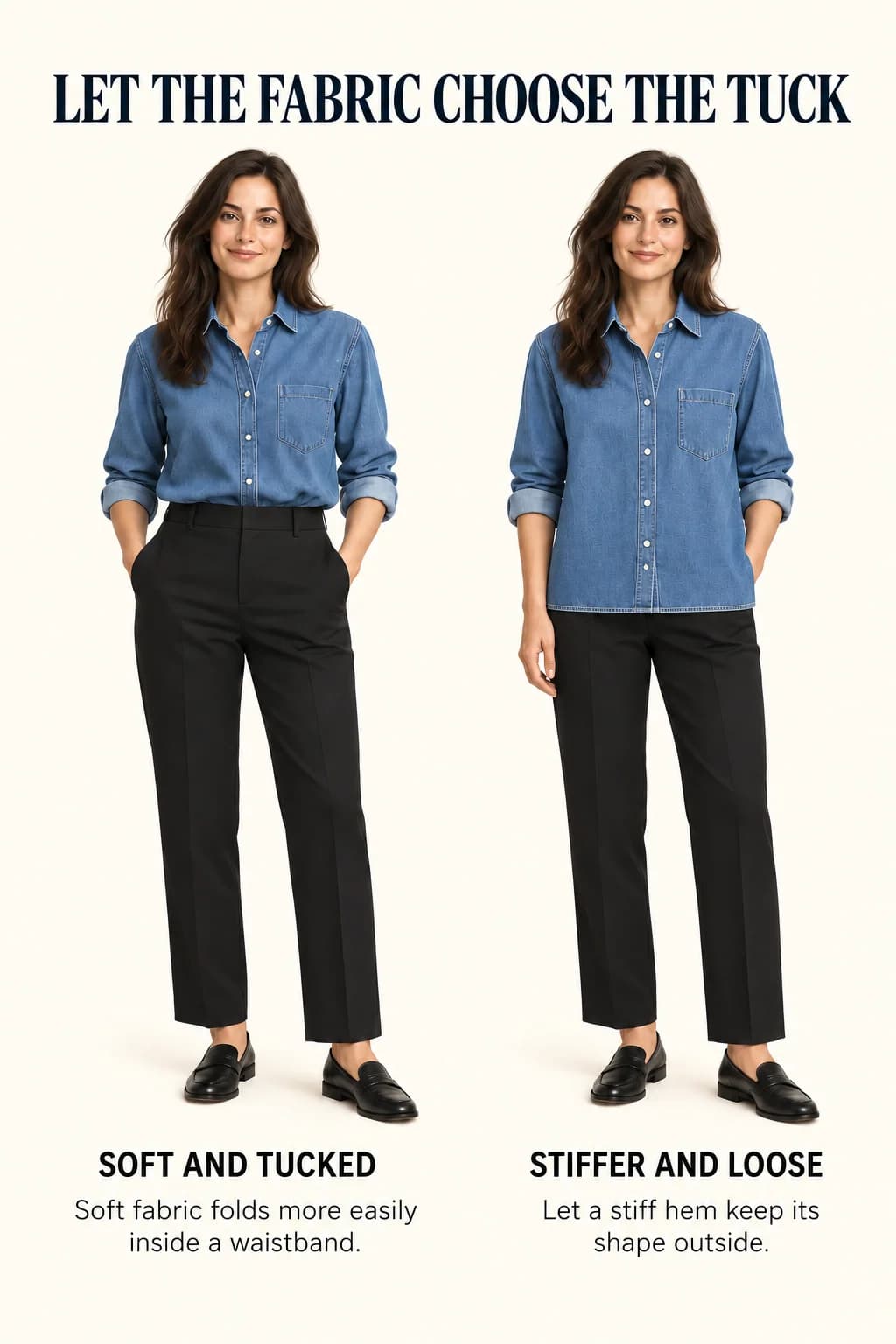
A buttoned shirt with black trousers: let the fabric decide the tuck
For a relaxed office that permits denim, or a lunch where you want something sharper than a tee, try a soft medium-blue denim shirt, black straight trousers, black loafers and a burgundy shoulder bag. Keep the shirt's collar open by one button and the cuffs buttoned at the wrist. A small silver earring finishes the outfit without competing with chest pockets or contrast stitching.
The trousers and loafers supply the clean lines; the faded blue keeps the combination from feeling like matching businesswear. Choose trousers with enough room at the waistband for the shirt, rather than fastening a tight belt over a bulky tuck. Tuck the shirt evenly around your body, fasten the waistband, then lift your arms and allow a little fabric to settle above it. You need that ease when you sit.
If a hard ridge appears below the waistband, first spread the folded fabric around the sides and back. If it still feels thick, the shirt may simply be too substantial for this treatment. Wear a relatively short, straight-hemmed version untucked instead, with the same trousers and shoes. A long curved tail creates a different, more relaxed outline; you do not have to conceal it, but check that it is a look you actually want.
For more coverage, leave another button fastened or add a smooth navy camisole beneath the opening. In cool weather, a fine base layer is easier to accommodate than a thick knit. If you add a blazer, try it over the shirt before leaving: doubled cuffs, shoulder seams and chest pockets can become the tight spots. Our white button-down styling guide explores the related question of how much shirt to show at the waist.
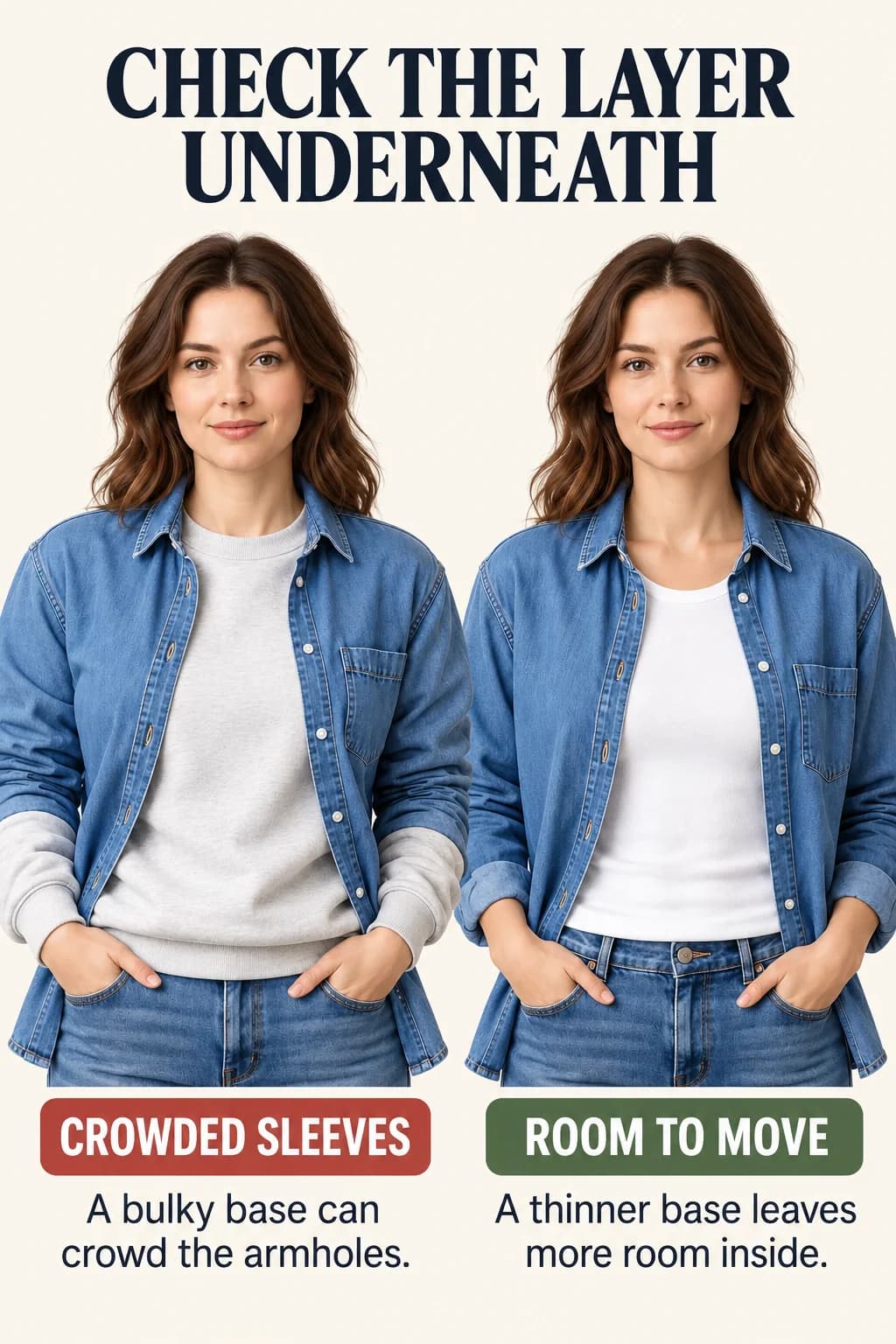
An open overshirt for a day on foot
A boxier medium-blue shirt earns its place over a white crew-neck tee, olive straight trousers and cream low-profile sneakers. Add a small tan crossbody bag for a gallery visit or errands. Leave the denim shirt open, with the tee visible from collar to hem opening, rather than fastening a couple of middle buttons over an already full base.
The olive and white make the blue feel like an outer layer rather than an unfinished shirt outfit. Straight trousers also leave a clear distinction between the shirt hem and the lower half. The tee can be tucked if you enjoy a visible waistband, or left untucked when its hem sits comfortably inside the overshirt's outline. Neither version requires a bare midriff.
Check the armholes with the actual base underneath. If the denim bunches above the elbows or pulls across your upper back, replace a bulky tee or sweatshirt with a smoother layer. If the shirt is still restrictive, choose a roomier overshirt; leaving it open cannot create extra room in the sleeves. Keep a sweatshirt for a shirt cut generously enough to accommodate it.
On a warmer day, exchange the tee for a sleeveless high-neck top and the sneakers for flat sandals that suit the walking you expect. For cooler conditions, use a thin long-sleeve tee and keep the denim cuffs down. Rolling a stiff cuff repeatedly can create a heavy band at the forearm, so one loose fold is an option only when it stays comfortable. A denim overshirt is an extra layer, not a promise of weather protection.
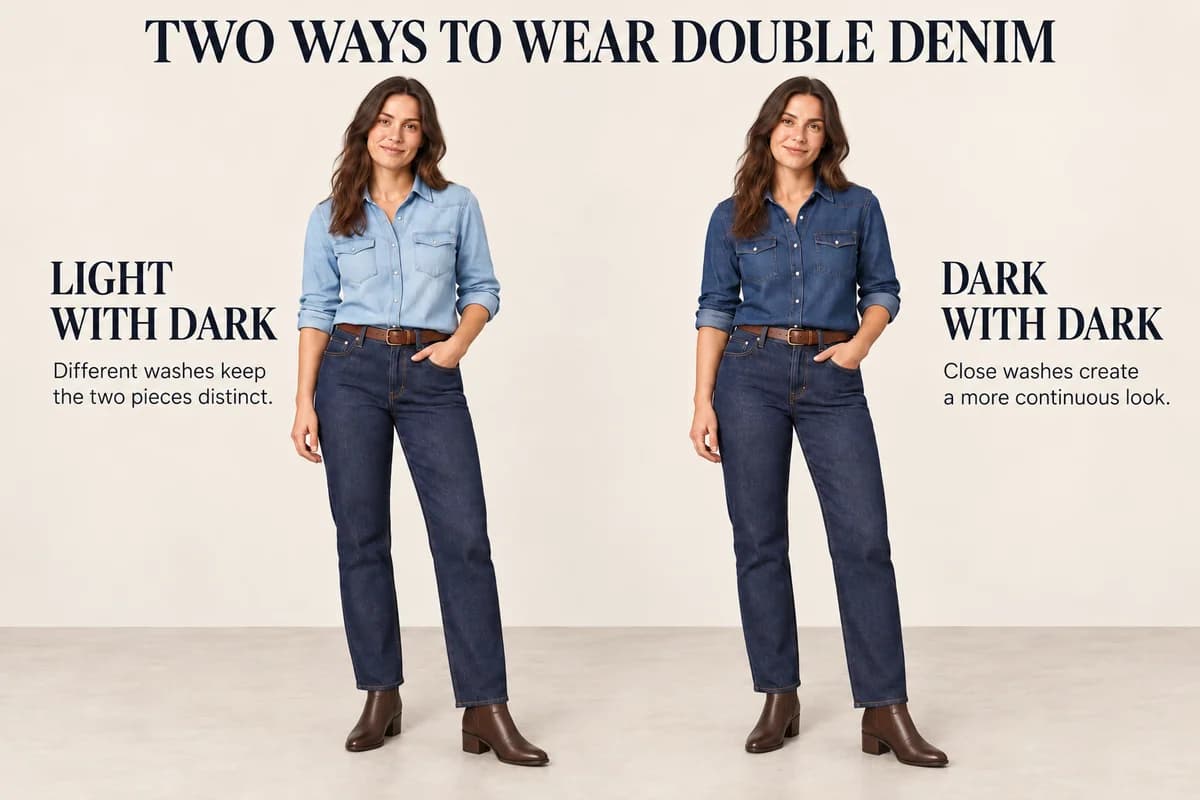
Double denim: choose the contrast you want, not a matching rule
For a weekend dinner, combine a light-blue, softly worn denim shirt with dark indigo straight jeans, chocolate ankle boots and a chocolate belt. Use a modest almond or square toe rather than assuming the outfit needs cowboy boots. A small cream bag adds another light area without introducing a second strong color.
The difference between the shirt and jeans makes the two pieces easy to read. The belt connects to the boots, while the dark lower half gives the pale shirt a clear setting. A soft shirt can be fully tucked; a thicker one can stay loose, provided its hem and the jean rise leave you a comfortable silhouette. The contrast still does the work when the waist is not on display.
For a quieter alternative, wear a dark indigo shirt with similarly dark jeans and black loafers. The result is a more continuous block of color. It does not require a perfect factory match: slight differences in fading or stitching are normal. Compare the pieces together in daylight and decide whether the difference feels pleasing, rather than treating every near-match as a mistake. Our double-denim guide goes further into wash combinations.
If your jeans are wide rather than straight, use a shirt that sits smoothly at the waist or a shorter untucked cut so you can see how the two volumes meet. That is one way to keep the outfit legible, not a requirement to wear a fitted top. For an entirely relaxed shape, keep both pieces loose and make the shoes clearly visible beneath a hem that clears the ground.
When the shirt already has a lot to say
Pearl-style snaps, pointed yokes, large pockets and strong fading can make a Western shirt the most detailed piece of an outfit. Start with plain trousers or uncomplicated jeans and see whether you need another motif. A decorative buckle and cowboy boots deliberately emphasize that theme; plain loafers and a simple belt take it in another direction. Neither is inherently more correct.
If the outfit feels busy, remove one competing detail before replacing the whole combination. Try the plain belt, or close the bag with fringe inside a simpler tote. If it feels too heavy under a coat, reduce the layers around the shoulders rather than adding accessories to distract from the bulk. A denim shirt works best when its actual weight, fit and details have been given a job they can comfortably do.