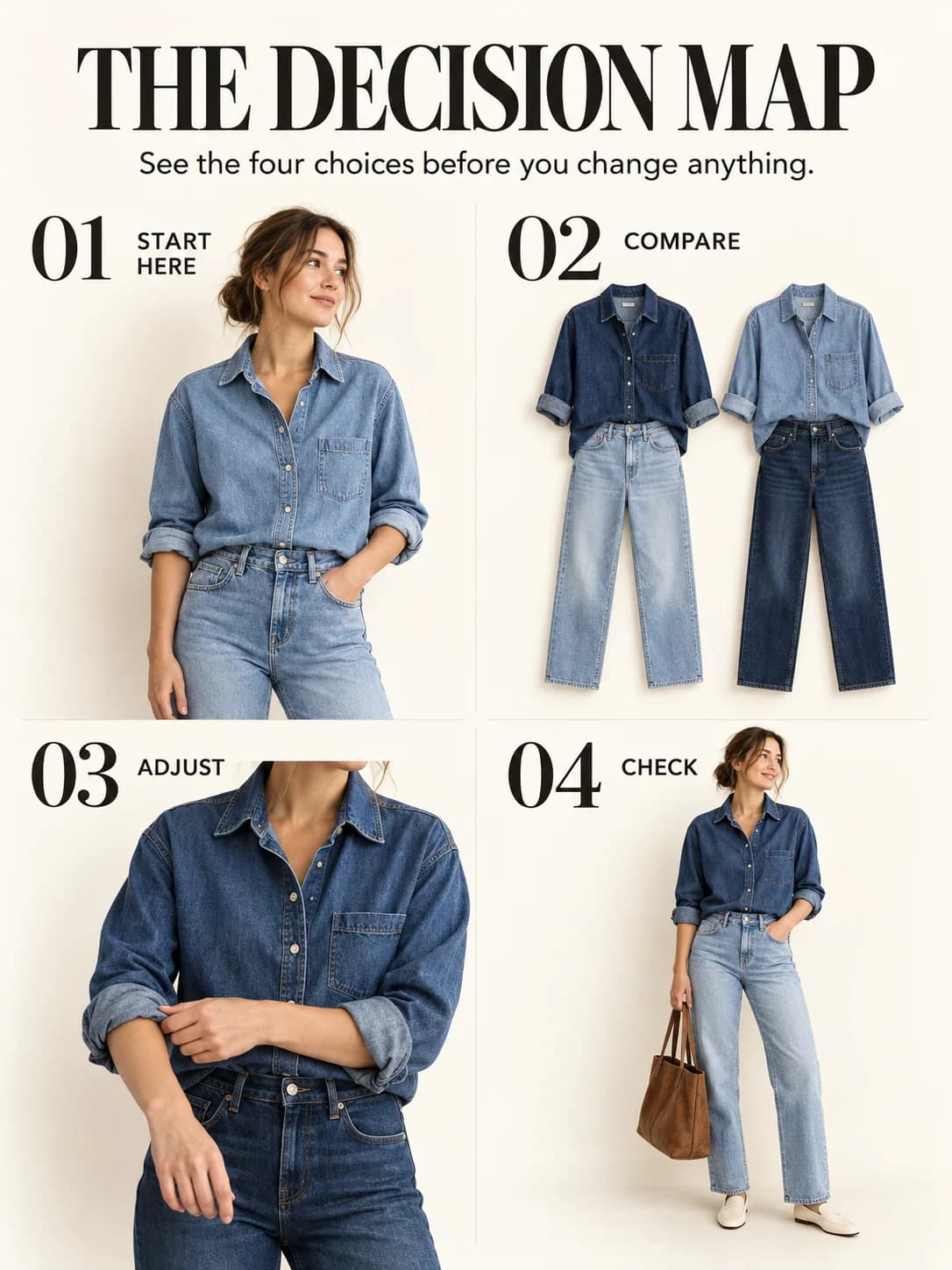
Double denim becomes difficult only when two washes look almost related but not quite. That accidental middle ground is what makes a shirt and jeans appear as if they met in the laundry room. Choose one of three directions before getting dressed: a close match, an obvious contrast, or one dominant denim piece.
Direction one: build a near-matching column
Choose a shirt or jacket and jeans that sit in the same blue family. They do not need to be cut from the same bolt, but their undertones should agree. Two cool indigo pieces usually look calmer than one green-blue wash beside one violet-blue wash.
Break the column with a visible layer at the neckline, a belt or a shoe. Cream softens dark indigo; black sharpens it; cognac adds warmth. The logic resembles a monochrome outfit: texture and proportion prevent one color from becoming flat.
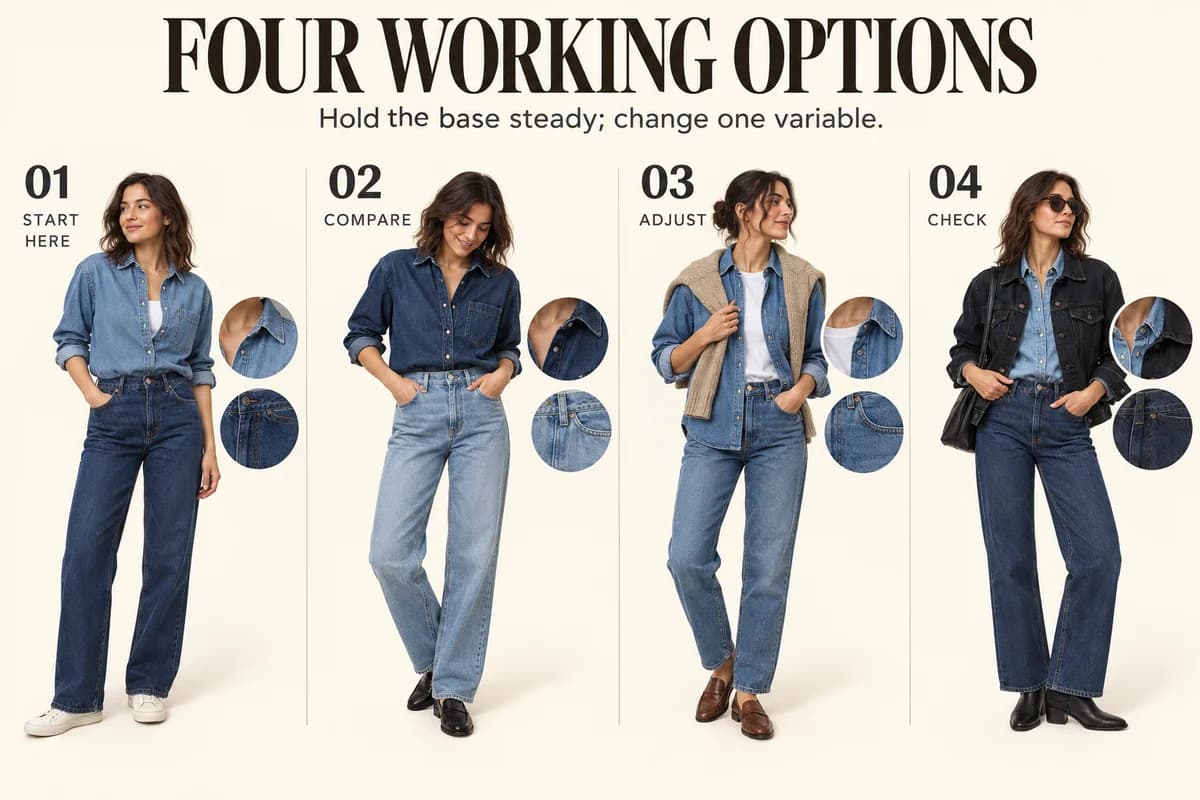
Direction two: make the contrast unmistakable
Pale chambray with deep-rinse jeans works because nobody expects the pieces to match. Keep the lighter wash on the area you want to draw forward. A pale jacket over dark straight jeans brings attention to the shoulders; dark denim over white or ecru jeans reverses the weight.
Avoid adding a third blue that sits between them. The outfit already has a conversation. It does not need a moderator.
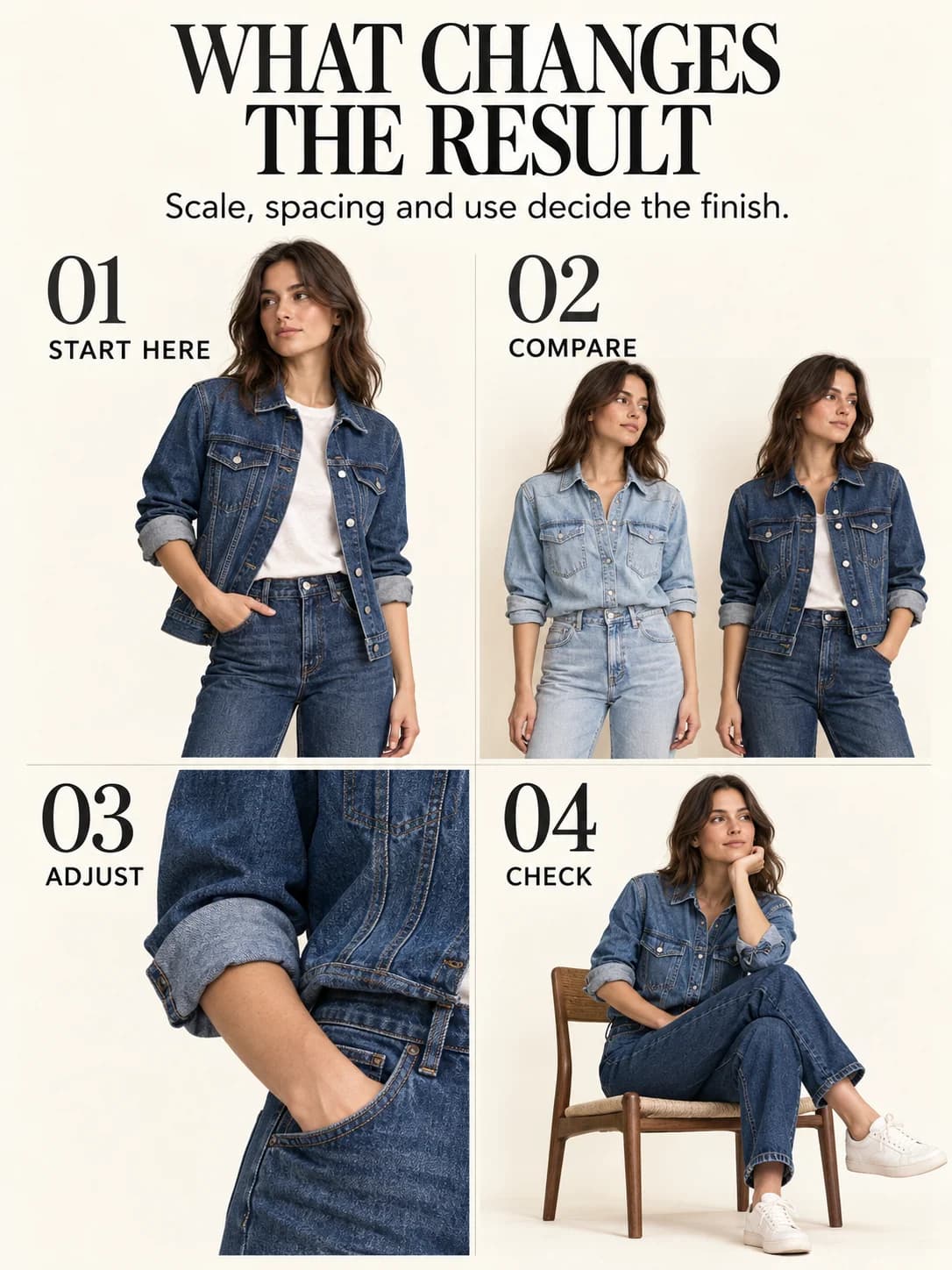
Direction three: appoint a lead piece
A shaped denim jacket, patchwork shirt or long denim skirt can carry the visual interest. Pair it with plain jeans in a quiet, even wash. This is particularly useful with curved or barrel silhouettes: the shape is already noticeable, so the upper denim should be simple. Our guide to styling barrel jeans explains how to keep the waist and ankle from disappearing.
Control the amount of denim on show
Buttoning a denim shirt to the collar creates a solid block. Wearing it open over a white tank introduces a vertical break. Rolling sleeves exposes skin and lightens the top half. A belt divides a matched set, while no belt extends the line.
These are small changes, but they decide whether the outfit feels like a suit, a layered look or two separate denim pieces.
Shoes should resolve the hem
Straight jeans can sit cleanly over ankle boots, stop above loafers or fall to a low heel. If boots are involved, settle the hem and shaft relationship first using the checks in our straight-leg jeans and ankle boots guide. Then choose the shoe color as the outfit’s punctuation: black for graphic contrast, brown for warmth, or a denim-adjacent navy for continuity.
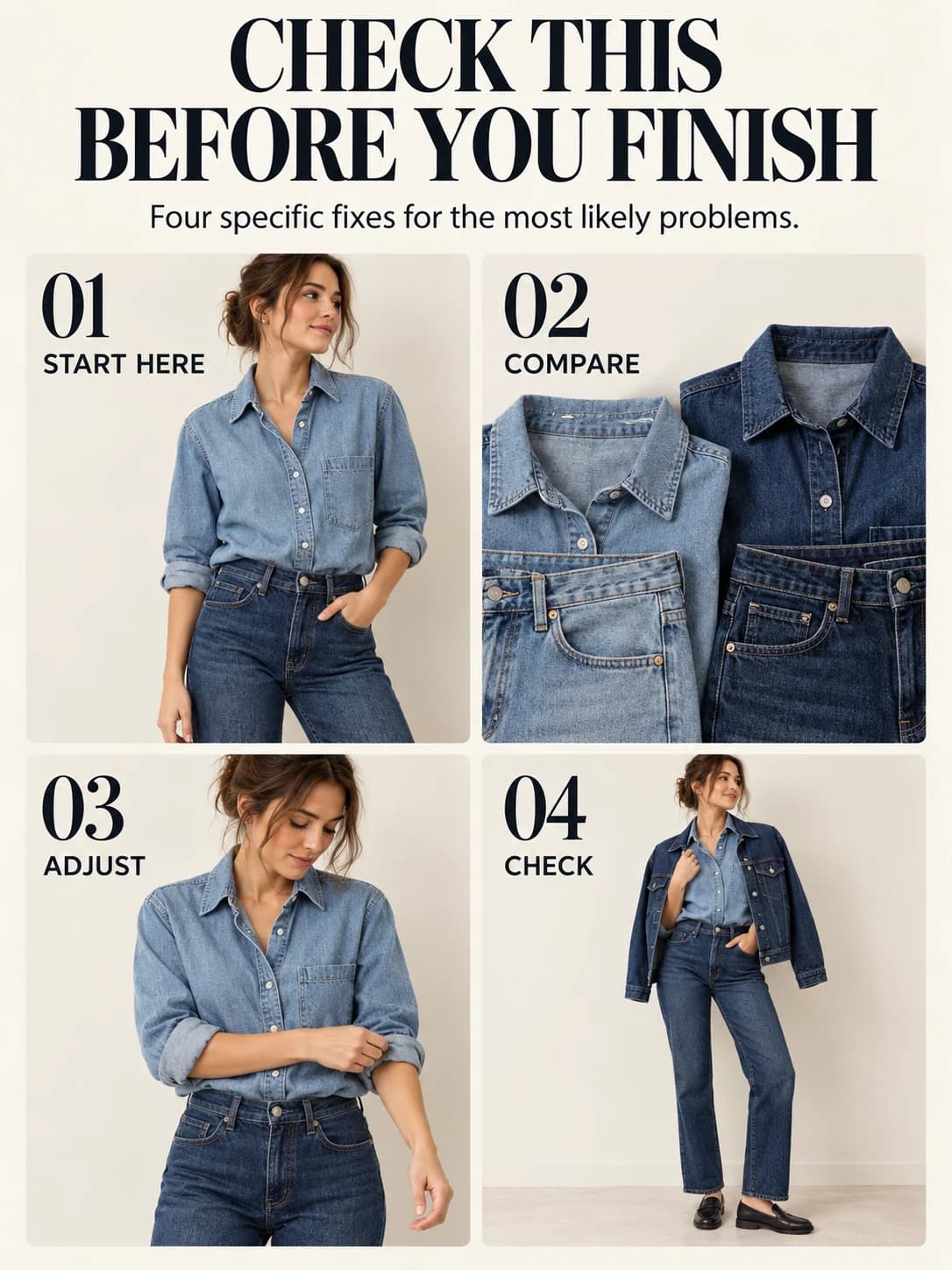
A useful dressing-room sequence
Put on the two denim pieces with bare feet and no accessories. Decide whether the wash relationship is close enough or far enough. Add one non-denim color twice, perhaps a cream tank and cream shoes. Only then add jewelry or a bag. If the outfit was not coherent before the accessories, more accessories will merely document the confusion.
Frequently asked questions
Do denim washes have to match?
No. They should either match closely enough to read as a set or contrast clearly enough to look deliberate.
Can black denim go with blue denim?
Yes. Black and blue create an obvious contrast and are often easier to combine than two almost-matching blue washes.