The white tee is right, the blue skirt is right, and the outfit still feels awkward. Often the problem is where the two meet: a roll of jersey inside a firm waistband, or a long top caught on the skirt's pockets. Start there before replacing the shoes.
Read the denim before choosing the top
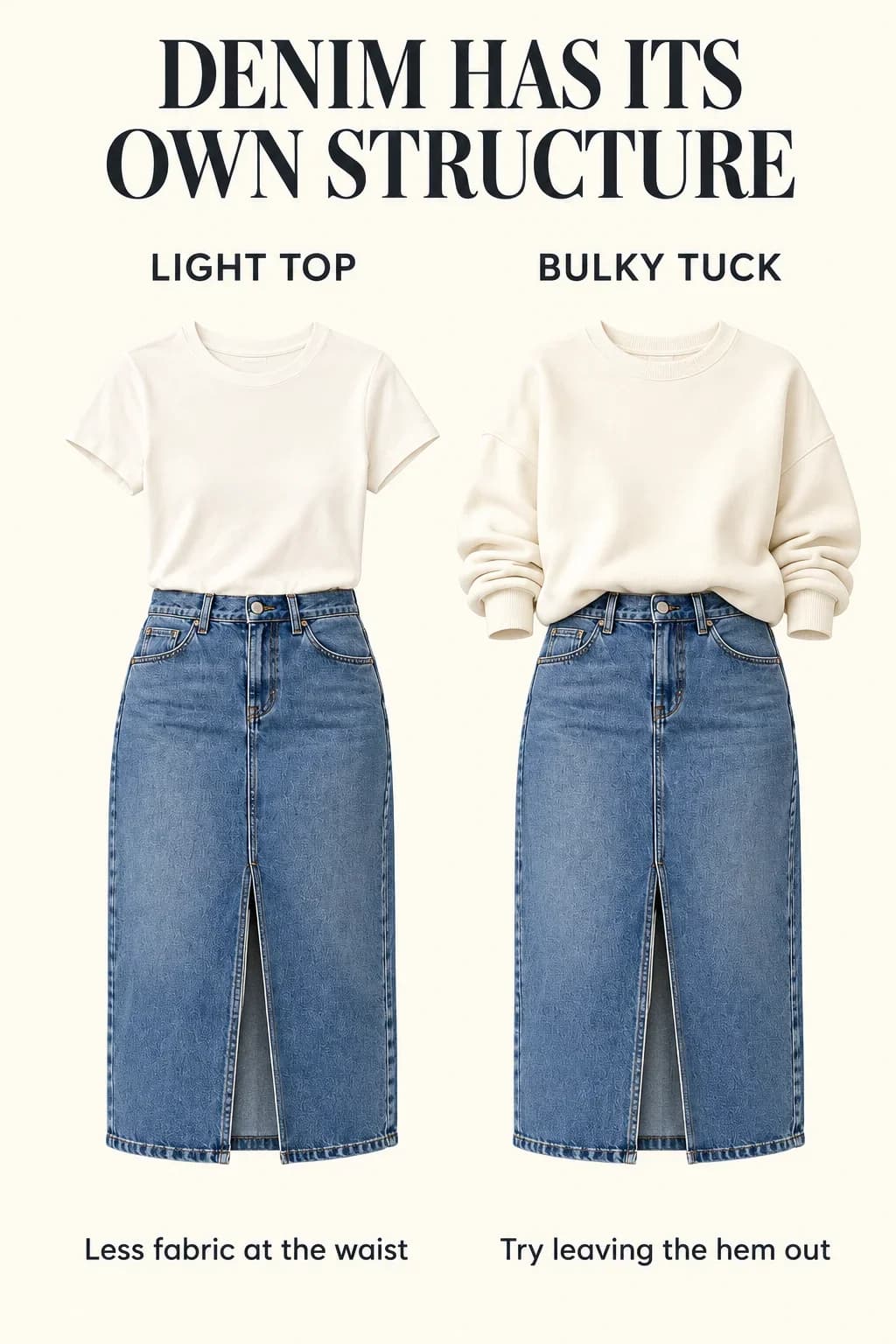
A rigid straight midi already holds a strong shape. Adding a thick tucked sweatshirt can make the waistband crowded without making the rest of the outfit more interesting. Use a lighter tee, let a short knit meet the waistband, or leave the sweatshirt untucked. An exposed waistband is an option, not a requirement.
A softer A-line skirt behaves differently. Its fabric falls away from the waist, so a fluid shirt can move with it. That does not mean every loose top needs a belt. Look at the side view: if the shirt catches on a pocket and balloons above it, try a shorter hem or unbutton the lowest button where coverage allows. If it falls freely, there may be nothing to fix.
Check the skirt on its own, too. A waistband that digs in when you sit will not become comfortable under a bigger sweater. The outfits below assume that the skirt fits and lets you take an ordinary step.
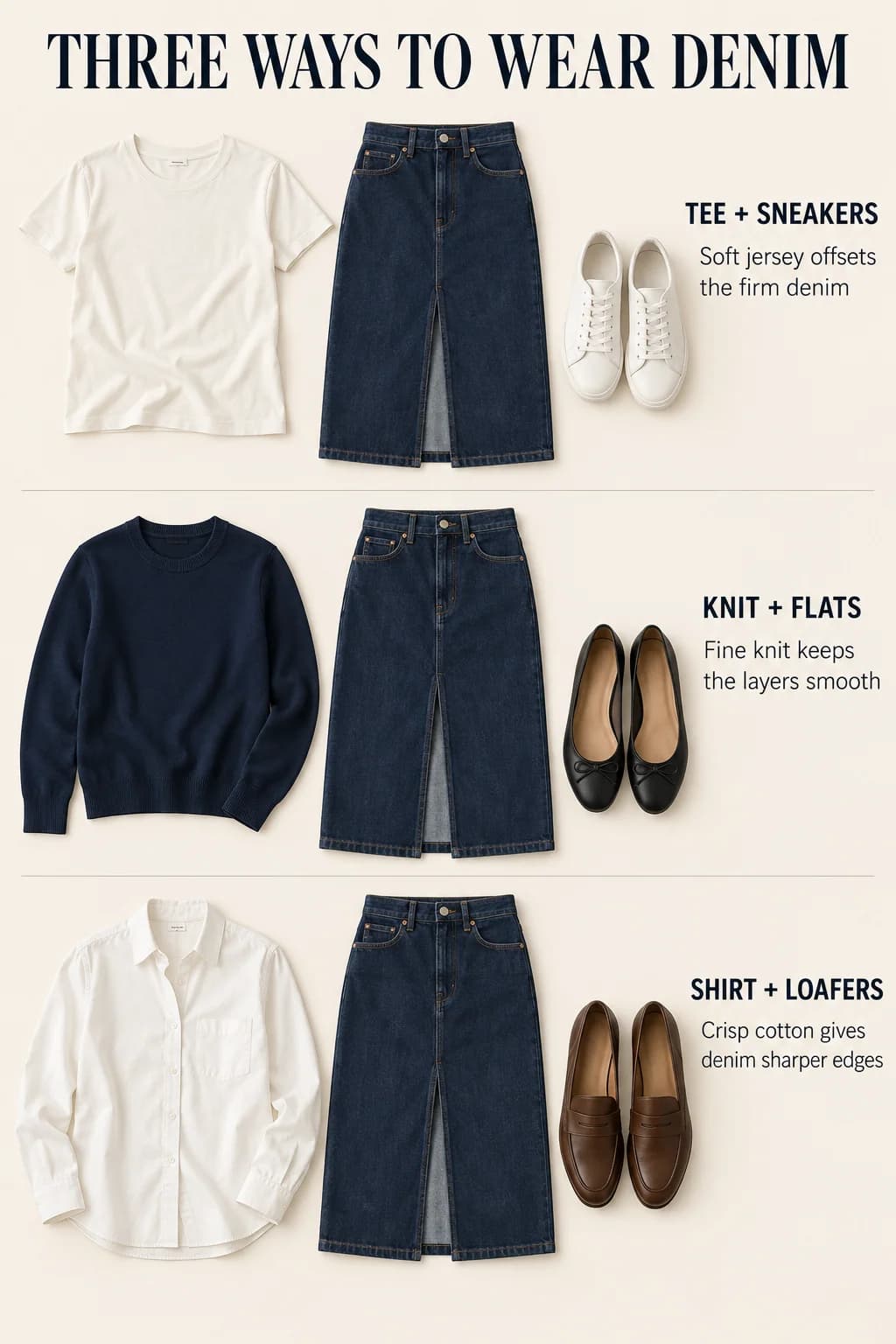
Three outfits, with a reason for each shoe
A soft ivory tee, mid-blue denim and low sneakers
For a weekend of errands, pair a firm mid-blue straight midi with an ivory cotton tee and white low-profile sneakers. Choose a tee that bends easily rather than standing away from the torso. A shallow front tuck can show the fastening without packing the entire shirt into the skirt; a tee ending near the waistband can stay out.
The soft jersey breaks up the denim's stiff surface. White sneakers repeat the light top and keep the outfit casual, while a relatively low upper leaves the hem-to-shoe space easy to read. They do not have to be tiny or pristine. If your preferred walking sneakers are substantial, wear them and judge the whole outline instead of assuming the skirt needs a delicate shoe.
A tan canvas tote gives this combination another matte texture. For a cool morning, add an open oatmeal cardigan that falls past the waistband rather than tucking it in. With fluid A-line denim, leave the tee loose if its hem hangs cleanly; the skirt already supplies movement, so there is less need to expose every seam at the waist.
A dark fine knit, indigo denim and black flats
Try a navy fine-gauge crewneck with a dark indigo midi and black leather ballet flats for a casual office or an afternoon exhibition. Keep the knit smooth enough to sit under a coat, with its hem resting over the waistband rather than wedged into it. Dark denim with little distressing lets the knit's finer texture remain visible.
The black flats provide a quiet finish without repeating the denim exactly. Navy and black can sit together comfortably when you can distinguish their surfaces; the navy-and-black guide has more ways to make that difference clear. A black shoulder bag is useful here if you want the shoe color to appear again, but matching accessories are not compulsory.
If the flats disappear under a very long skirt, try a slightly shorter midi or a shoe with a more visible toe instead of automatically adding height. On a colder day, use black tights and black ankle boots with a shaft that sits neatly beneath the hem. Check the slit while seated: tights change the coverage, but they do not change how far the skirt opens.
A crisp ivory shirt, worn blue denim and brown loafers
For lunch or a relaxed workday, wear an ivory poplin shirt with a gently faded blue midi and brown loafers. A small front tuck gives the crisp shirt a stopping point, while the untucked back keeps the outfit from feeling too formal. If the denim is very firm, keep the tucked section narrow so the shirt does not build a ridge at the zip.
Brown leather adds warmth beside the blue, and the loafer's covered upper gives the shirt a more substantial partner than a barely visible sandal. The washed skirt keeps those sharper pieces from looking like office separates accidentally paired together. Add a simple brown or burgundy bag if you want another warm note.
With a fluid denim skirt, a full untucked shirt can work well when its hem falls without catching. If the shirt overwhelms the skirt, try rolling the sleeves and opening the collar before changing its length. The white button-down guide explains those adjustments. For a warm evening, exchange the loafers for flat leather sandals; keep enough hem clearance that neither the front nor back of the skirt drags.
Give the slit a normal day's work
Stand, walk at your usual pace, sit down and take a step onto a low stair. A front slit can look modest while standing and open much farther when seated. Decide whether that exposure suits the places you will wear the skirt, including a desk chair or a low restaurant seat.
If you shorten every step to keep the skirt closed, change the skirt or choose a cut with more room. Pulling it higher may move the slit as well as the hem. A long top can change what is visible at the waist; it cannot create space around the knees. Avoid treating a restricted stride as a styling problem to hide.
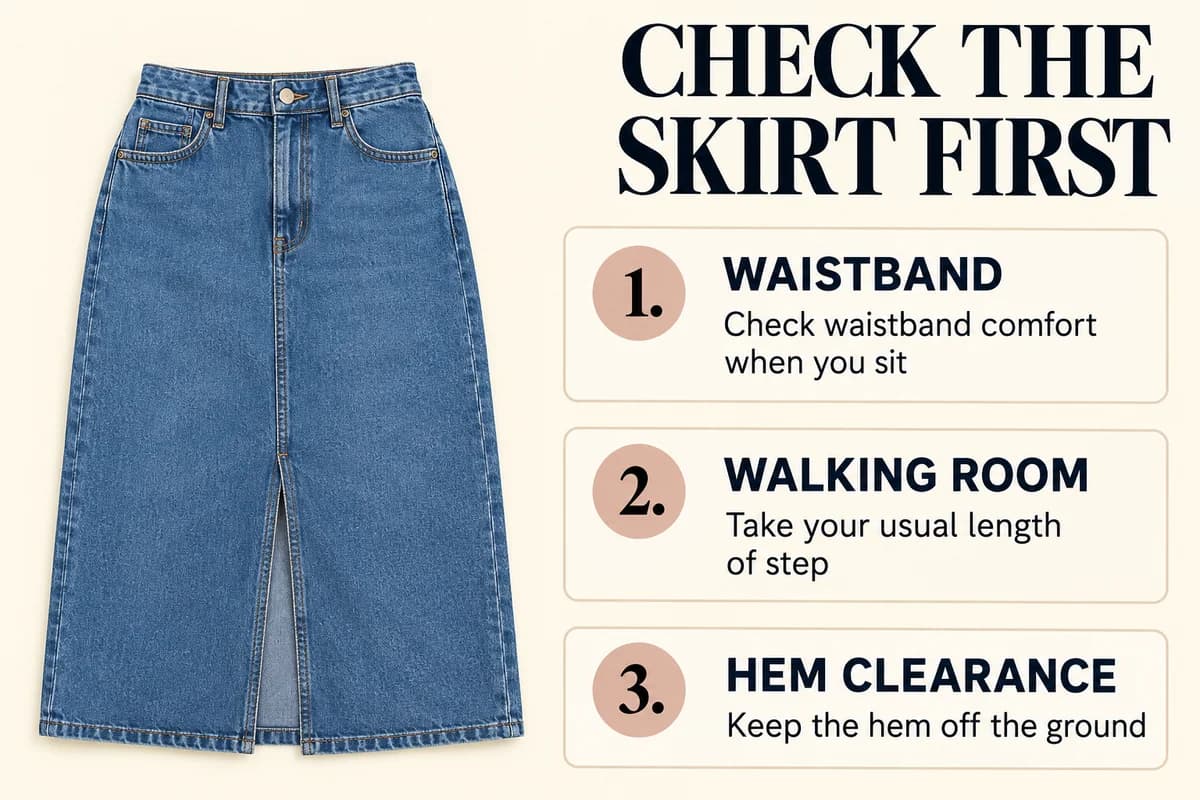
Once movement feels easy, compare shoes with the actual hem. A heavy denim edge and a fine sandal can make a pleasing contrast, but a hem brushing the ground needs a practical adjustment. The midi-skirt shoe guide is useful when the top already works and the remaining question is the space below the skirt.