A denim jacket can turn a soft dress into an everyday outfit without changing the dress at all. It can also make an already bulky waistband feel busier. The useful starting point is the bottom edge of the jacket: what does it cover, what does it meet, and what remains visible beneath it?
Read the jacket from the bottom up
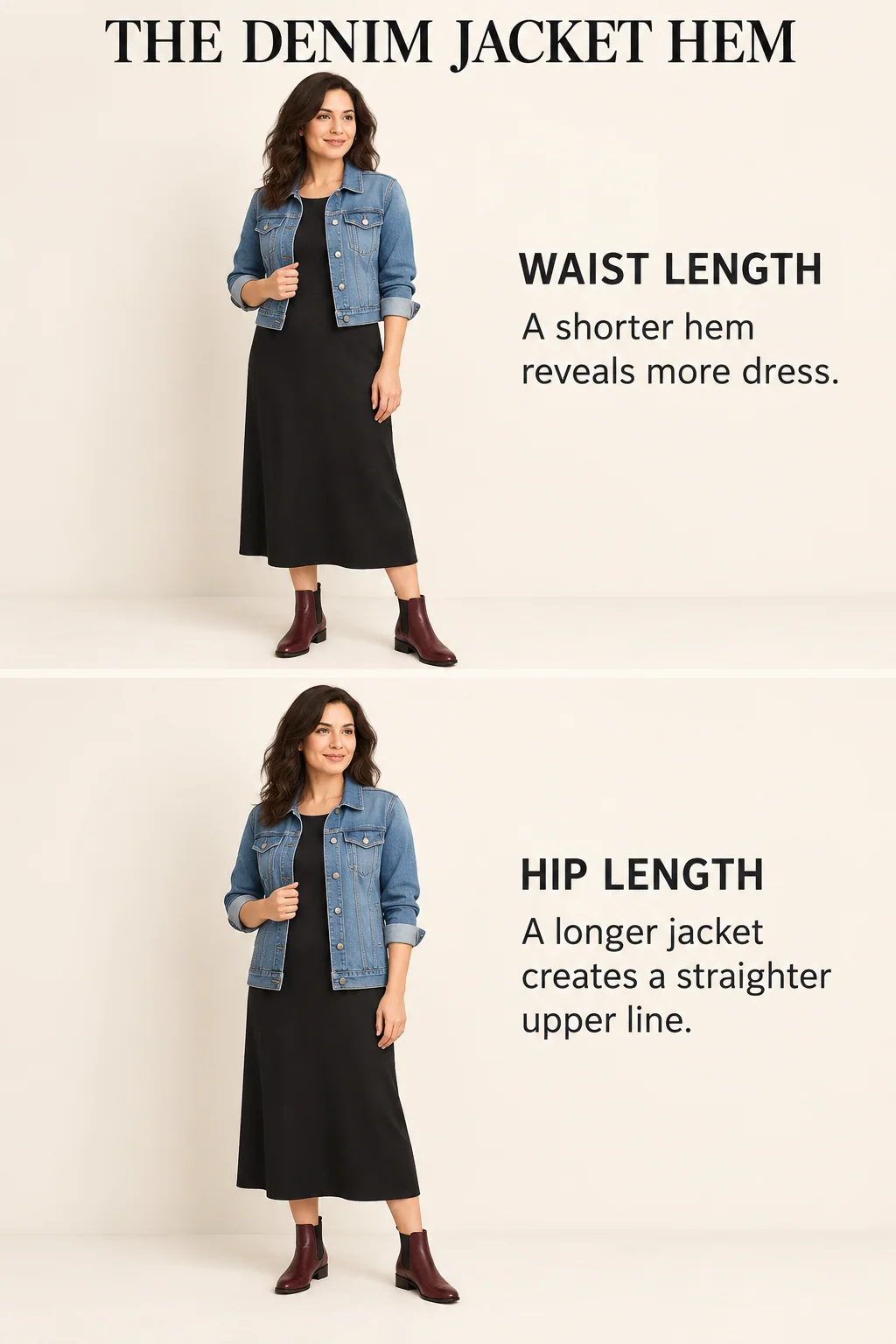
A waist-length jacket leaves more of a skirt or trouser visible. That can help when the lower piece has pleats, a wide leg or a full skirt you want to show. A hip-length jacket creates a longer, straighter upper shape. Over a simple dress, that longer line can look relaxed rather than unfinished. Neither length requires a particular body shape.
Length and roominess are separate choices. A short jacket can have generous sleeves; a long one can be narrow through the shoulders. Put your intended layer underneath, close the front and reach forward. If the back pulls, wearing the jacket open may change its appearance but does not necessarily give your arms the room they need. Try a thinner underlayer or a different jacket cut.
The wash changes the emphasis too. A pale, heavily faded jacket brings more visible pattern than an even dark wash. With a printed dress, compare whether you like that additional activity around the collar and pockets. A quieter dark jacket lets a small print remain easier to read; a faded jacket can make the whole combination feel more casual.
Olive trousers give blue denim a different setting
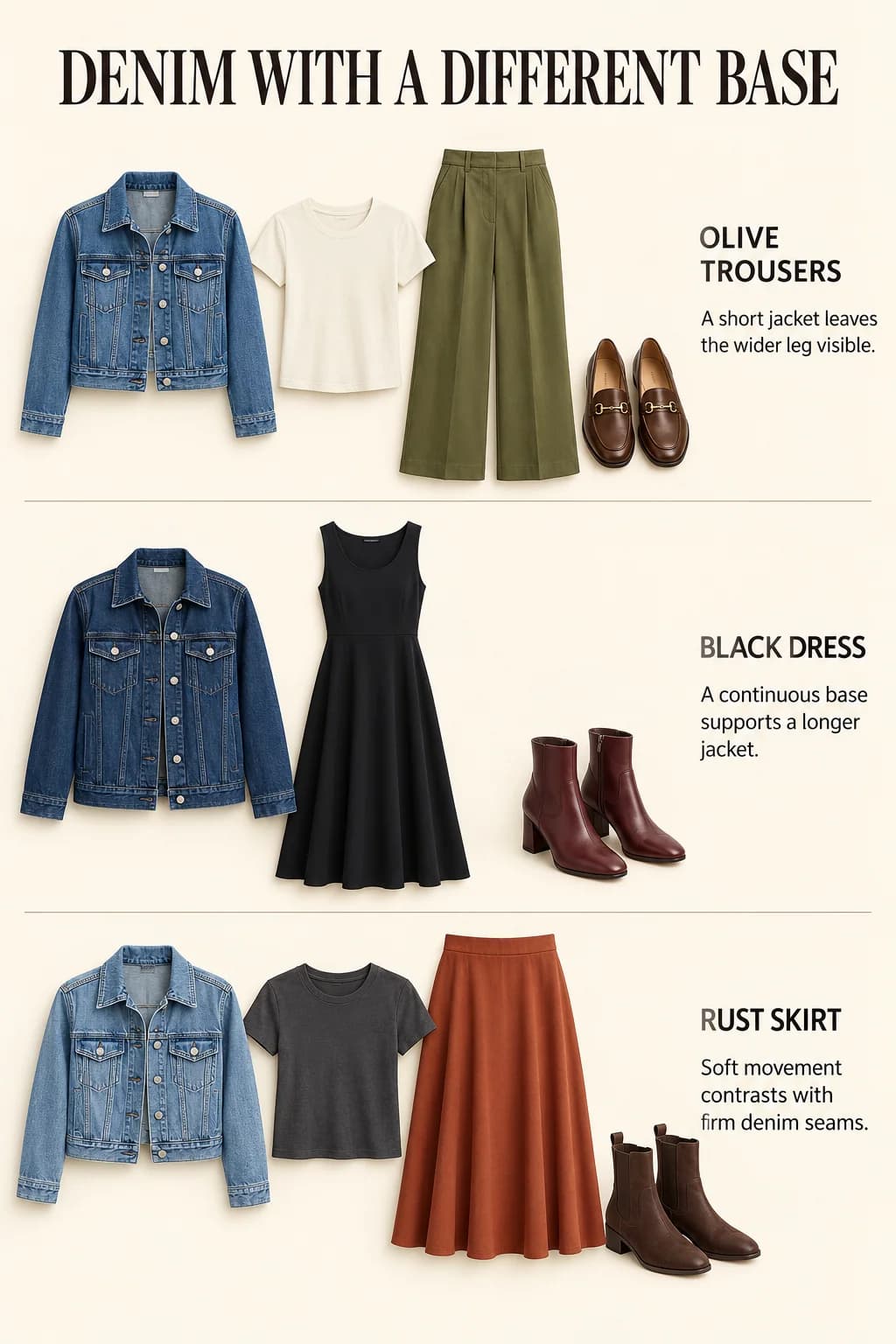
For a market morning followed by lunch, try a medium-blue waist-length denim jacket, an ivory T-shirt, olive wide-leg cotton trousers and dark-brown loafers. Keep the T-shirt short enough to meet the waistband, or tuck it loosely if the fabric is thin. A brown shoulder bag can carry the same warm note as the shoes.
The blue and olive occupy different parts of the outfit, while the ivory breaks up their darker surfaces. The short jacket leaves the trousers' wider shape visible. This is particularly useful with a high, pleated waist: you can see the part of the trousers that gives them their character instead of covering it with several overlapping hems.
For a longer walking day, replace the loafers with cream sneakers and check the trouser length in those shoes. If your only jacket ends at the hip, keep it open and use a smooth ivory top underneath. You will see less waistband, but the pale vertical opening still separates the jacket from the trousers. There is no need to buy a cropped jacket to make this outfit possible.
If you would rather wear jeans, the separate double-denim guide addresses wash relationships. Here, the olive trousers are useful precisely because they leave denim in one clear role.
A black dress can carry a longer jacket
Wear a dark-blue hip-length jacket over a black straight-cut midi dress with burgundy ankle boots for an informal evening. Choose a dress that falls comfortably beneath the jacket rather than catching on its lower seam. A small black bag keeps the burgundy confined to the footwear.
The dress provides a continuous base, so a longer jacket does not create the same waistband collision it might over pleated trousers. Leaving the front open reveals a narrow column of black; fastening it produces a more solid denim upper half. Check both if you expect to wear the jacket closed outside. The open version should not be the only one that works.
A soft jersey dress may show the edge of a bulky jacket pocket from the side. Empty the pocket before deciding the dress is the problem. If the jacket hem still pushes the dress outward, compare a jacket that ends higher or falls more loosely. A belt under the jacket can add another ridge, so it is not the first fix to try.
For warmer weather, substitute burgundy flats and let the same dress move freely around the ankles. For more neck coverage, choose a dress with a higher neckline instead of adding a thick scarf between two close collars.
Use a skirt's movement, without hiding its top
A washed-blue jacket, a charcoal scoop-neck tee, a rust A-line midi skirt and chocolate flat ankle boots make a useful autumn lunch outfit. The skirt supplies both color and movement; the jacket supplies firmer seams and a clear shoulder. A short or softly tucked tee keeps the rust area visible when the jacket opens.
Look at where the jacket ends on the skirt. If it lands directly on a dense gathered waistband, the two structures can push against each other. Try wearing the jacket open first. If the collision remains, a shorter jacket or a skirt with a smoother upper panel will address it more directly than tightening a belt.
A fuller skirt does not require a tightly fitted top. A straight charcoal tee can stay loose when it falls smoothly, especially under an open jacket. For a lighter version, use a cream skirt and brown sandals, keeping the jacket and tee unchanged. You are changing the season and contrast, rather than rebuilding the whole outfit.
When the layers feel stiff before you leave
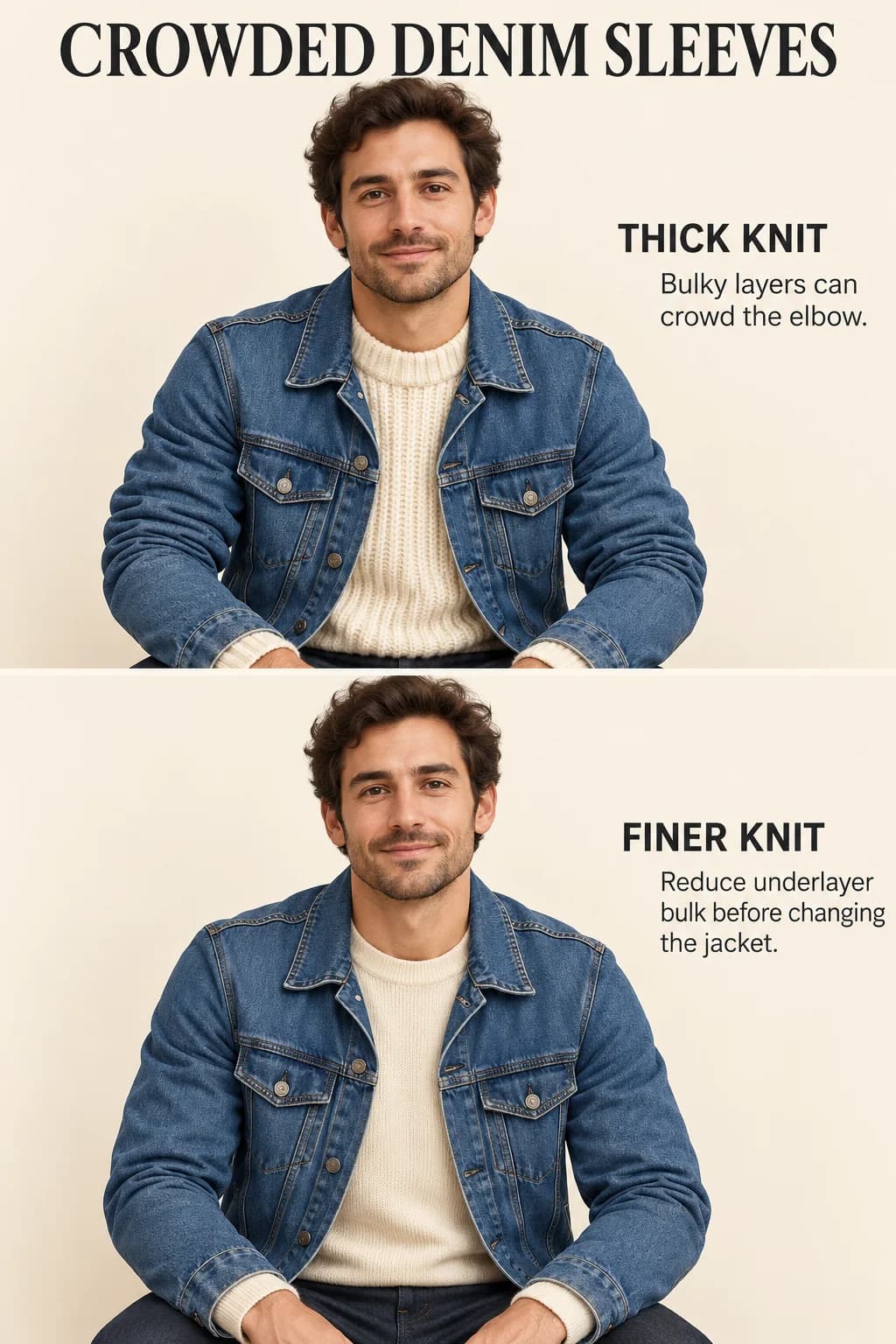
Denim over a substantial sweater can leave the elbows crowded even when the jacket buttons easily. Bend both arms and notice whether the sweater gathers into a hard fold. A finer knit may solve that; rolling the jacket sleeves higher often just relocates the bulk. With a shirt underneath, smooth its sleeves before blaming the fit.
A stiff hem that catches on trouser pockets needs space to pass over them. Empty the pockets, check that the underlayer is lying flat, then compare the jacket open and closed. If it still catches with ordinary movement, choose another length or cut. Repeatedly pulling the jacket down is evidence that the combination needs changing.
For a colder day, a roomy outer coat can go over a denim jacket, but try all the sleeves together. A casually styled trench may provide the look you want with fewer layers. Ordinary denim is not a substitute for suitable rainwear, and a jacket's lining matters more to warmth than its blue color. Check the actual garment and forecast before giving it the job of keeping you dry.