Style the coffee table from the empty space inward. Decide where a mug, book, game or pair of feet needs to go, then use the remaining surface for objects. Starting with decor and hoping life fits around it is how coasters end up on the sofa arm.
The table shape suggests the composition
A round table often suits one central cluster with three distinct heights. A long rectangle can hold one larger off-center group and a smaller companion. A square table can be divided loosely into quadrants, leaving at least one open. Nesting tables should not each receive a miniature display.
If the table itself feels cramped or distant, solve scale first with our coffee-table sizing guide. Styling cannot repair the wrong reach distance.
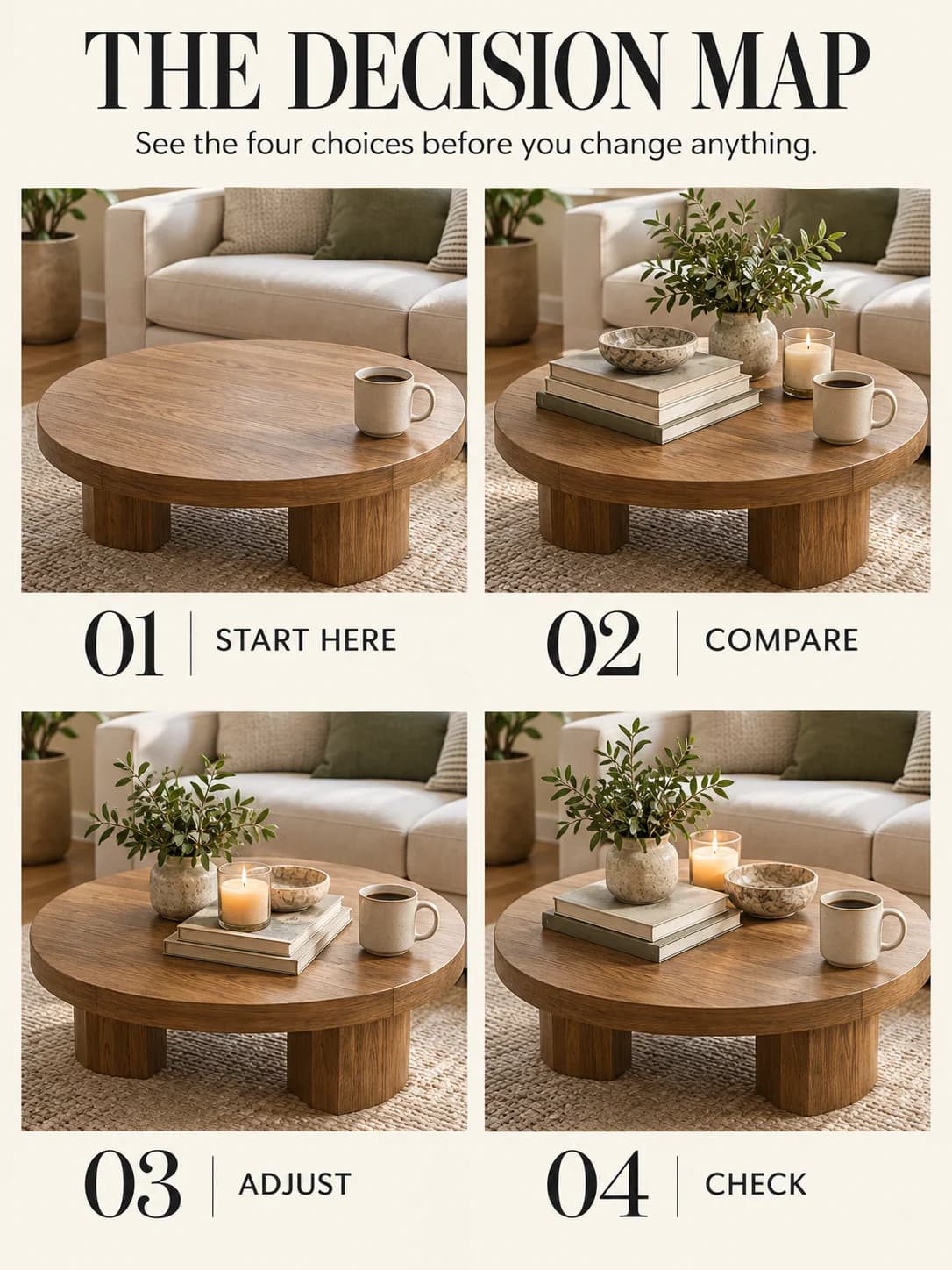
Choose one anchor with visual weight
A broad book stack, low bowl or tray gives smaller objects a base. Vary height and diameter rather than lining up several equally small candles. One substantial piece often calms a surface more effectively than a collection of polite little objects.
Leave sight lines open across the seating area. Tall flowers may be lovely until every conversation takes place around their stems.
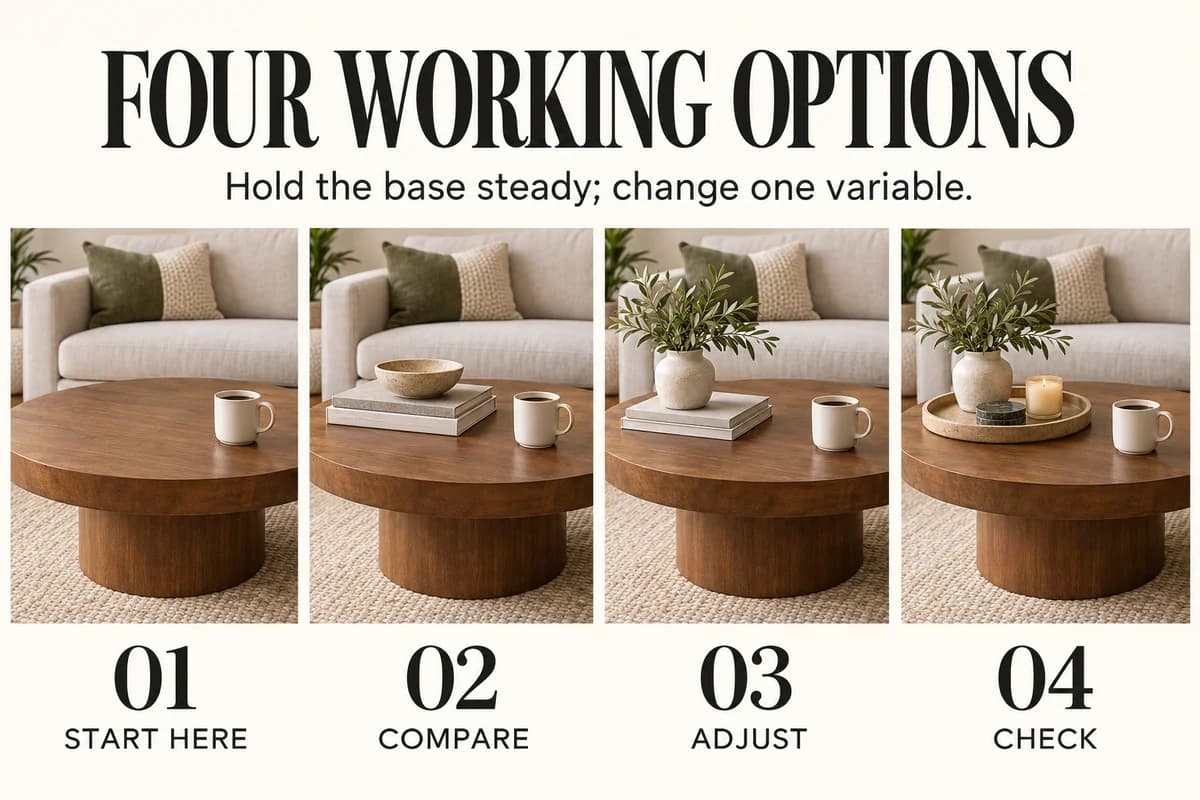
A tray is a handle, not a requirement
Use a tray when it gathers objects you regularly move: remotes, coasters, a candle and matches. Choose a shape that relates to the table without occupying most of it. On a small round table, a large square tray can create four awkward corners and very little usable surface.
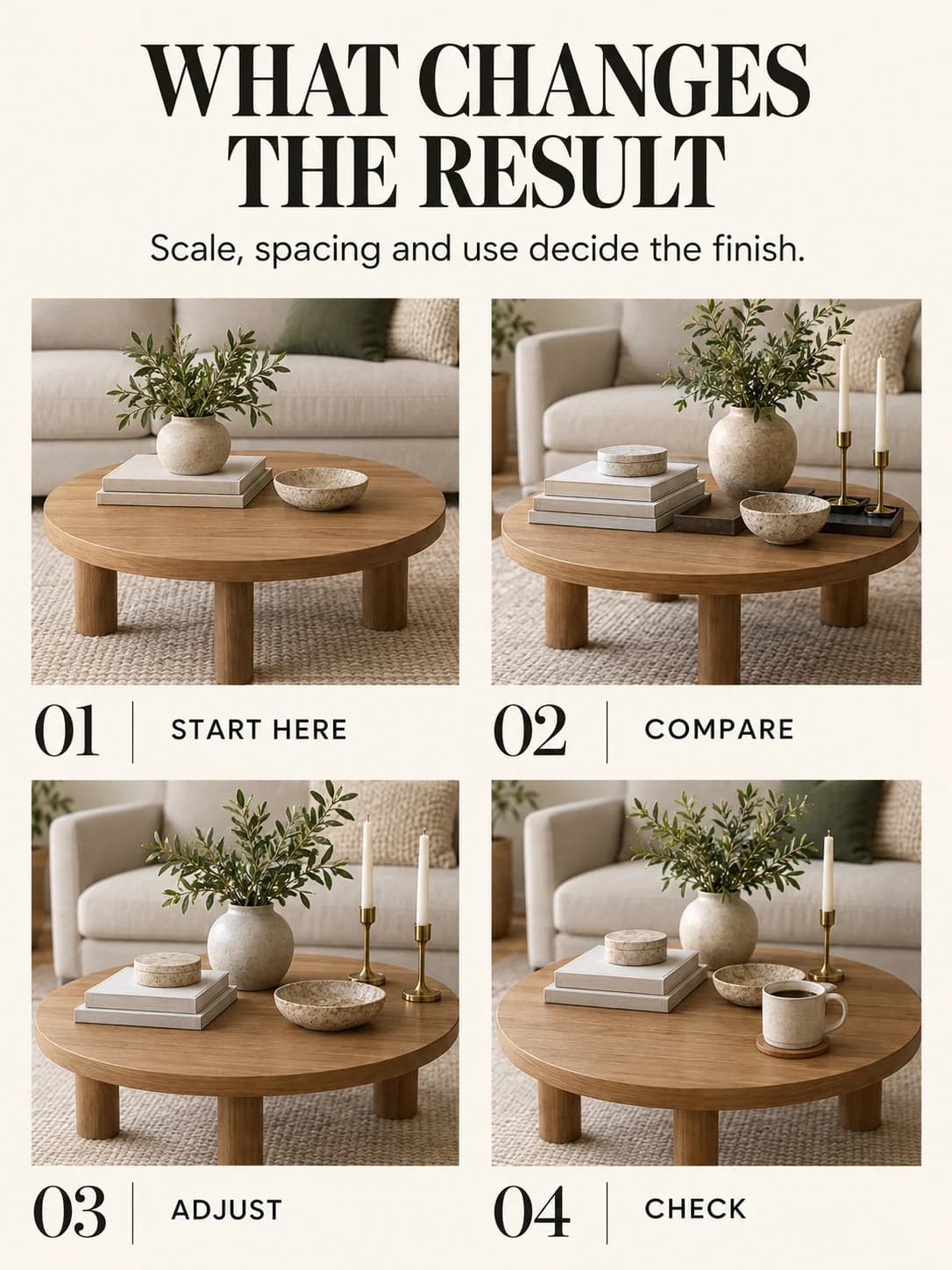
Add evidence of a person, not a showroom
A found object, inherited dish, current novel or small piece of craft gives the arrangement specificity. Recent interiors are moving toward collected layers rather than identical book stacks. The same principle guides bookshelf styling that keeps the books visible.
Organic material helps too: a branch, low plant or small bunch of flowers introduces an irregular outline. Keep soil, water and heat away from vulnerable books and finishes.
Hide the objects that never become decorative
Remote controls, charging cables and loose keys need a box, drawer or nearby landing zone. A decorative box works only if everyone will open it. Otherwise, place a shallow container where hands naturally drop things and accept that useful can be visible.
Edit for the way the room is used
Homes with children, pets or frequent game nights need fewer breakable objects and faster clearing. A room can feel layered without being packed, as our cozy living room guide explains.
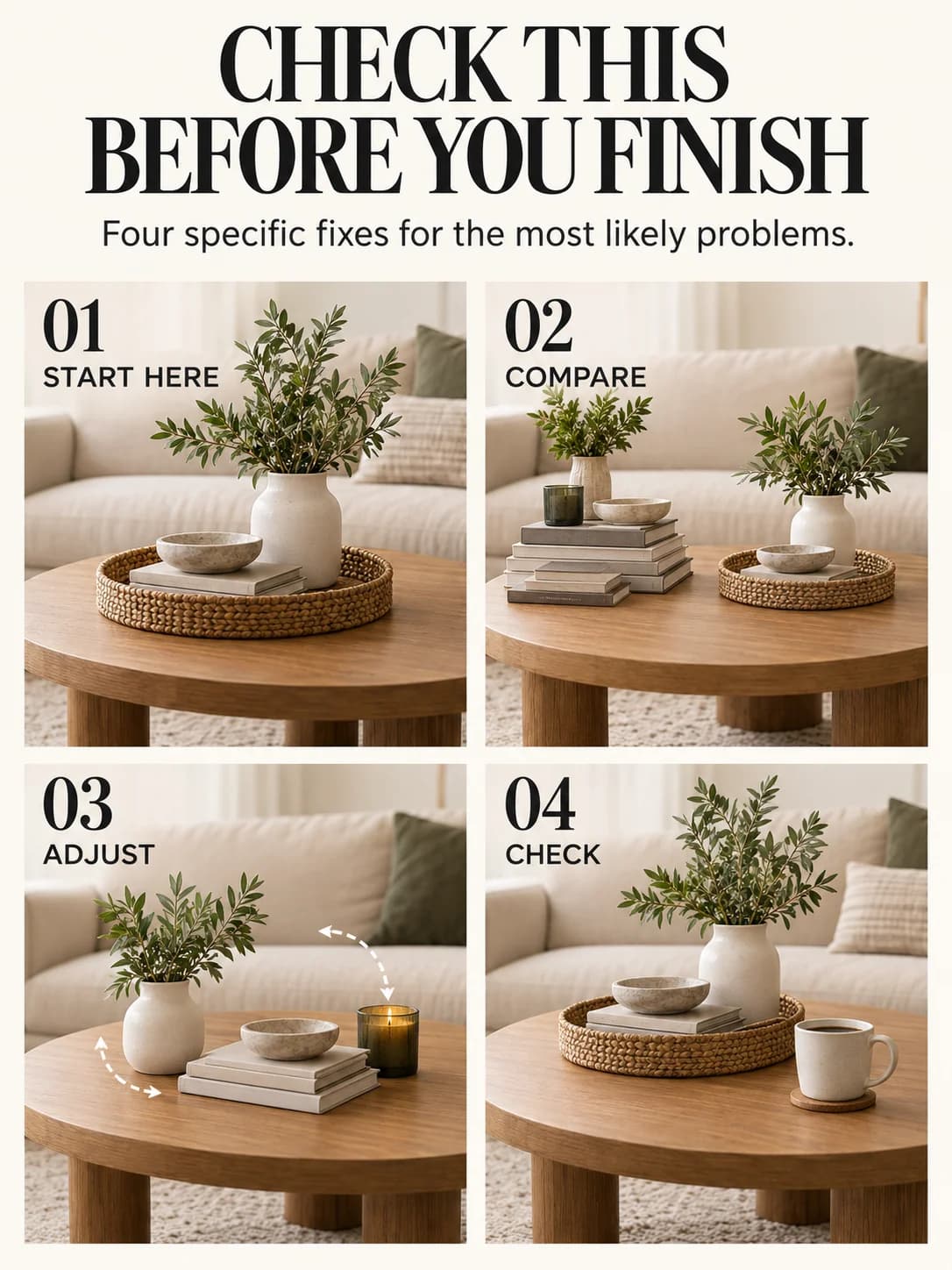
Take away one object and wait a day. If you miss the object, return it. If you only miss the idea of a completed vignette, enjoy the new place to set down your coffee.
Frequently asked questions
How many objects should be on a coffee table?
There is no required count. One or two groupings with varied scale and enough open surface for daily use are more important.
Should every coffee table have a tray?
No. Use one when it helps gather and move small items; skip it when it consumes too much surface or adds another unnecessary layer.