A barn jacket brings plenty of shape before you add anything underneath: a broad collar, patch pockets and a fairly straight body. You can let those details lead without dressing as though you are headed for a country weekend. The useful question is what remains visible around that boxy outline.
First, close the jacket over the actual outfit
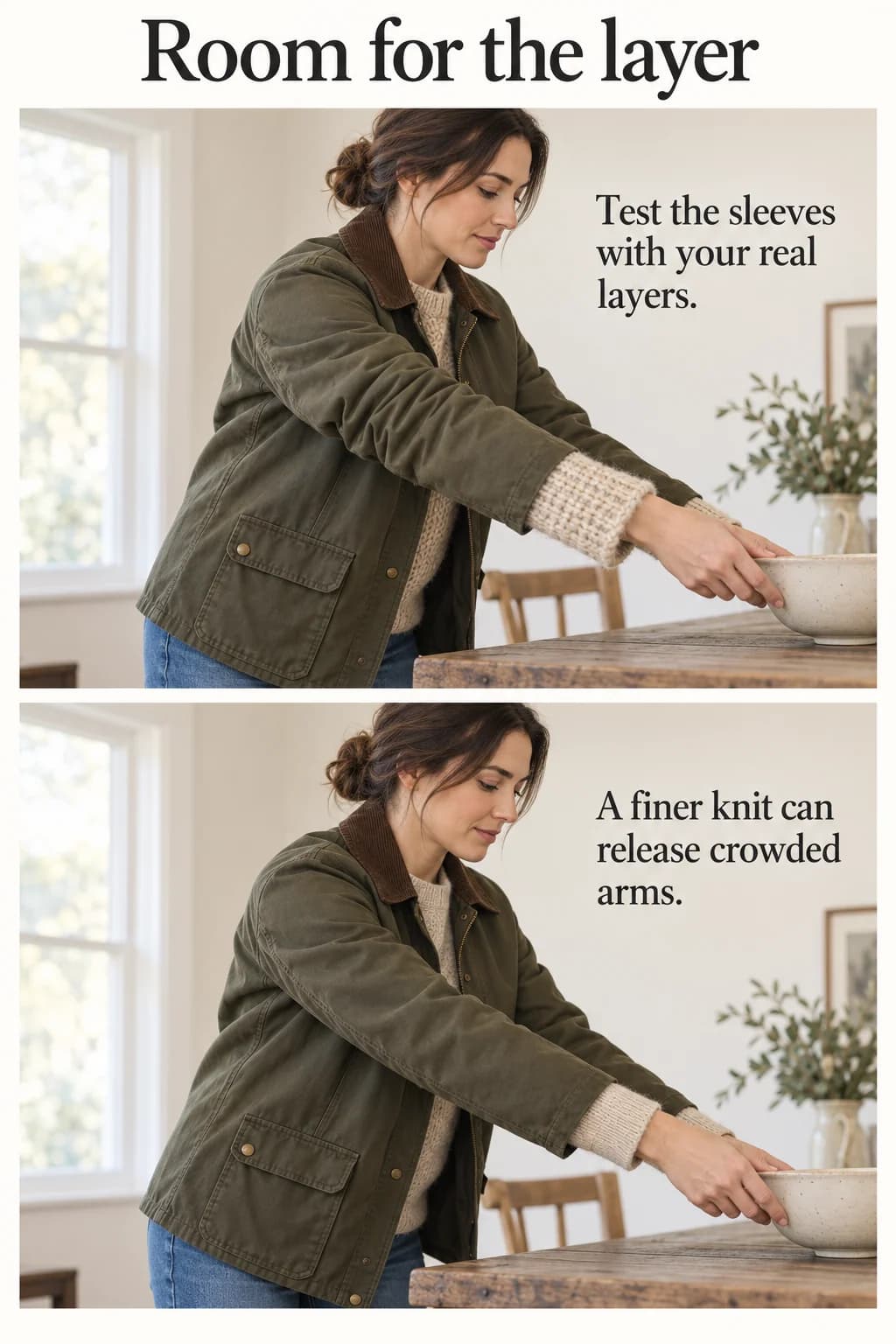
Try it over the sweater or shirt you intend to wear, rather than judging its size over a thin fitting-room top. Close the front, sit down and reach forward. Watch the upper arms and back. A jacket can look roomy at the waist while still restricting the shoulders; extra fabric at the hem does not solve that.
If the sweater sleeves gather into uncomfortable folds, compare a finer knit. If a thin layer still pulls across the back, another cut may suit you better. A boxy design describes the silhouette, while a larger size changes several dimensions at once. Sizing up is useful only when you also like the resulting shoulder position, sleeve length and overall volume.
Leave the jacket open when the weather permits and you want to reveal the inner outfit. Fasten it when you need warmth, then judge the resulting shape on its own terms. An outfit that only looks right while the coat is held open by hand is not a reliable cold-day combination.
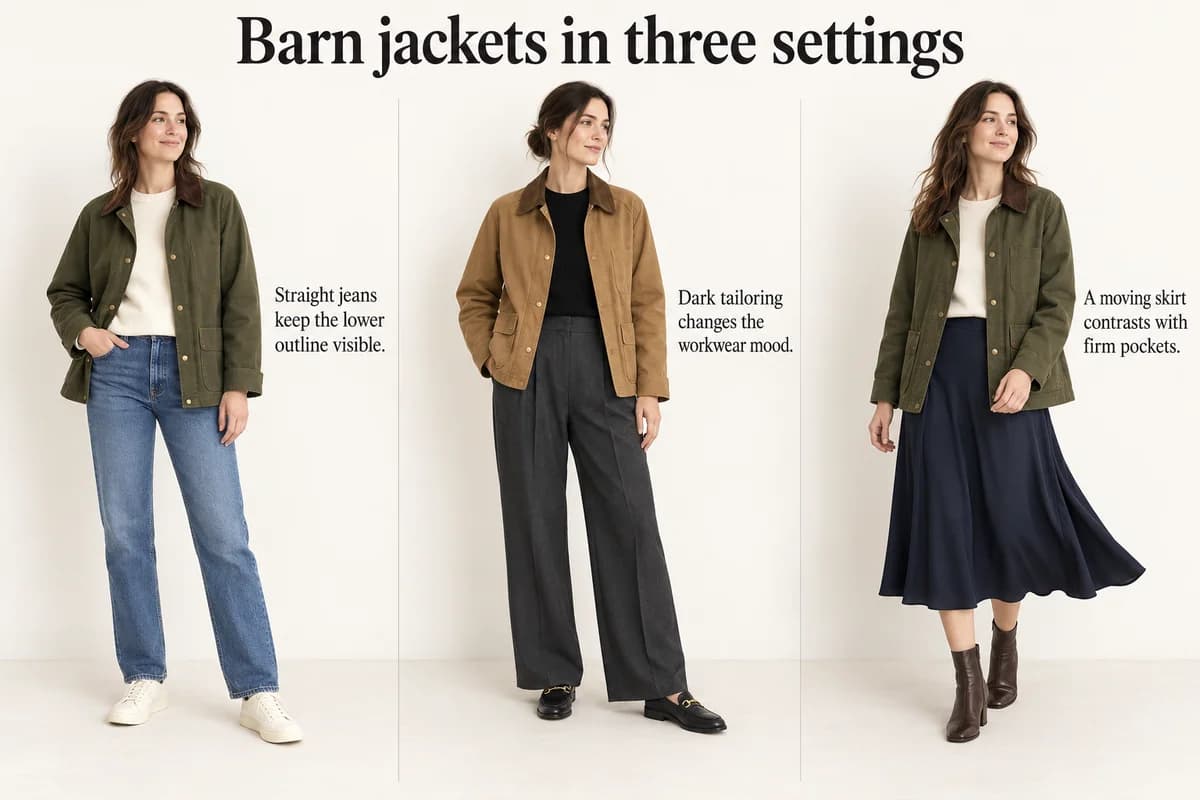
Three routes away from an all-country outfit
A walking morning: olive, blue and cream
Wear an olive barn jacket over a cream crew-neck top, medium-blue straight jeans and cream sneakers. Keep the top smooth enough that the jacket sleeves can move over it. A dark-brown crossbody bag can relate to a brown collar without making every accessory match.
Here, the cream at the neckline and feet separates the practical jacket from the denim. The straight leg stays visible below the jacket, so the outfit has an outline even with the front closed. Choose jeans whose hem clears the ground in these particular sneakers; the same pair may behave differently over a thicker sole.
For a colder morning, replace the top with a fine cream sweater and add socks you find comfortable for walking. Do not automatically add a bulky scarf, hat and thick cable knit: first work out which warmth you actually need. If you prefer a longer top for coverage, let it sit smoothly under the jacket rather than bunching it into the jeans.
Lunch in town: tan jacket, charcoal trousers
A tan barn jacket, black fine-knit top, charcoal wide-leg trousers and black loafers make a more tailored combination. The jacket is the warm-colored interruption in an otherwise dark outfit. Keep the top near the waistband, either through its own length or a light tuck, if you want the trouser pleats visible when the jacket is open.
The point is not that wide trousers require a fitted top. A loose black top can work too; compare how its hem falls across the pleats. If it creates a second bulky shelf beneath the jacket, choose a smoother top or leave a longer one completely loose over trousers with a flatter front. The simpler trouser surface gives that longer line somewhere to settle.
For an informal office, check whether this level of casual outerwear fits the setting, and make sure the black-and-charcoal base looks complete after the jacket comes off. A pale-blue shirt can replace the knit if you prefer a collar, but settle the two collars separately rather than letting the jacket crush the shirt points. A casually styled trench is an alternative when you want a longer, more fluid outer line.
An early dinner: navy skirt beneath a workwear shape
Try a short olive barn jacket with a navy midi skirt, an ivory top and dark-brown ankle boots. A fluid skirt makes a clear contrast with the jacket's firmer pockets and seams. Choose a boot shaft that fits beneath the skirt without repeatedly catching it as you walk. A small brown bag repeats the footwear and leaves the olive-and-navy relationship uncomplicated.
With the jacket open, the ivory top creates a light area between two darker colors. With it closed, look for enough skirt below the hem to make the skirt's movement visible. This is a visual preference, not a prescribed proportion: a long jacket over a long skirt can also work, but it produces a quieter, straighter shape.
If your skirt clings around the jacket's lower edge, try a smoother inner top and remove any bulky tuck first. For mild weather, substitute brown flats and use a skirt length that works without the boots. Readers choosing a different outer layer can compare coats with midi dresses, where the same visible-hem question appears in a different outfit.
Keep the collar and pockets from doing extra work
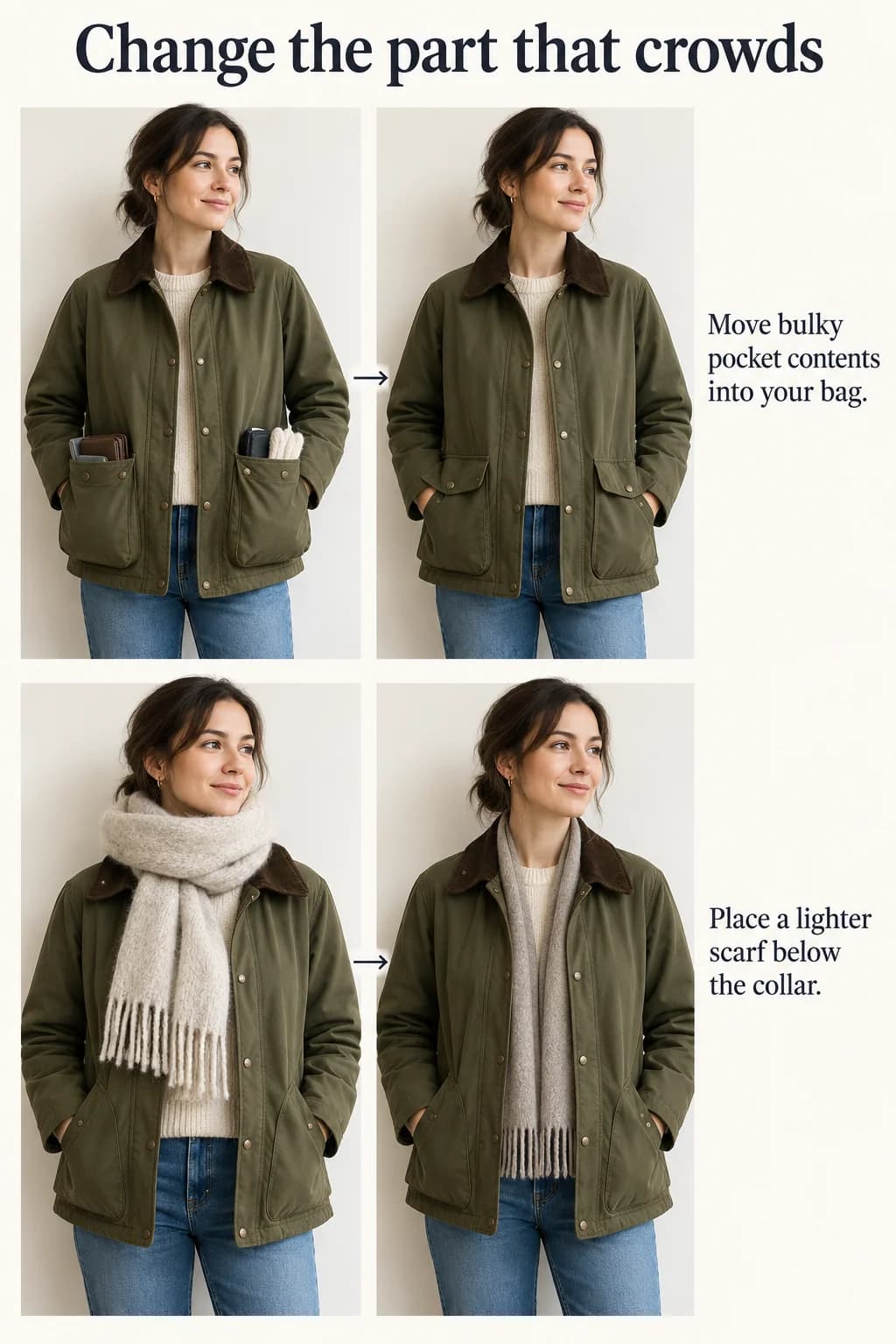
Before adding a scarf, empty bulky pocket contents and look at the jacket from the side. A phone, keys and wallet can push the pocket panels outward. Moving some of that load to a bag may change the silhouette more than changing the trousers.
A scarf tucked tightly around a substantial cord collar can crowd the neck. Try the scarf below the open collar, or use a less bulky scarf outdoors. Indoors, remove it and let the top's neckline stand alone. You do not need a necklace to fill every visible space.
There is also no universal rule that the jacket must stop above the hip. If a shorter jacket rides up whenever you sit, a longer one may be more comfortable. If a long jacket hides the entire shape you wanted from a skirt, compare a shorter jacket before tightening everything underneath it. Change the garment causing the problem.
Match care and weather expectations to the fabric
“Barn jacket” is a style description, not a guarantee of warmth or waterproofing. A light cotton version and a lined waxed jacket can look related while serving different weather. Check the actual fabric, lining and care label, and keep a suitable rain layer available when the forecast demands one.
Care varies too. Waxed cotton and an uncoated cotton jacket may need different cleaning methods. Follow the instructions attached to yours rather than copying a washing routine from a jacket with a similar shape.