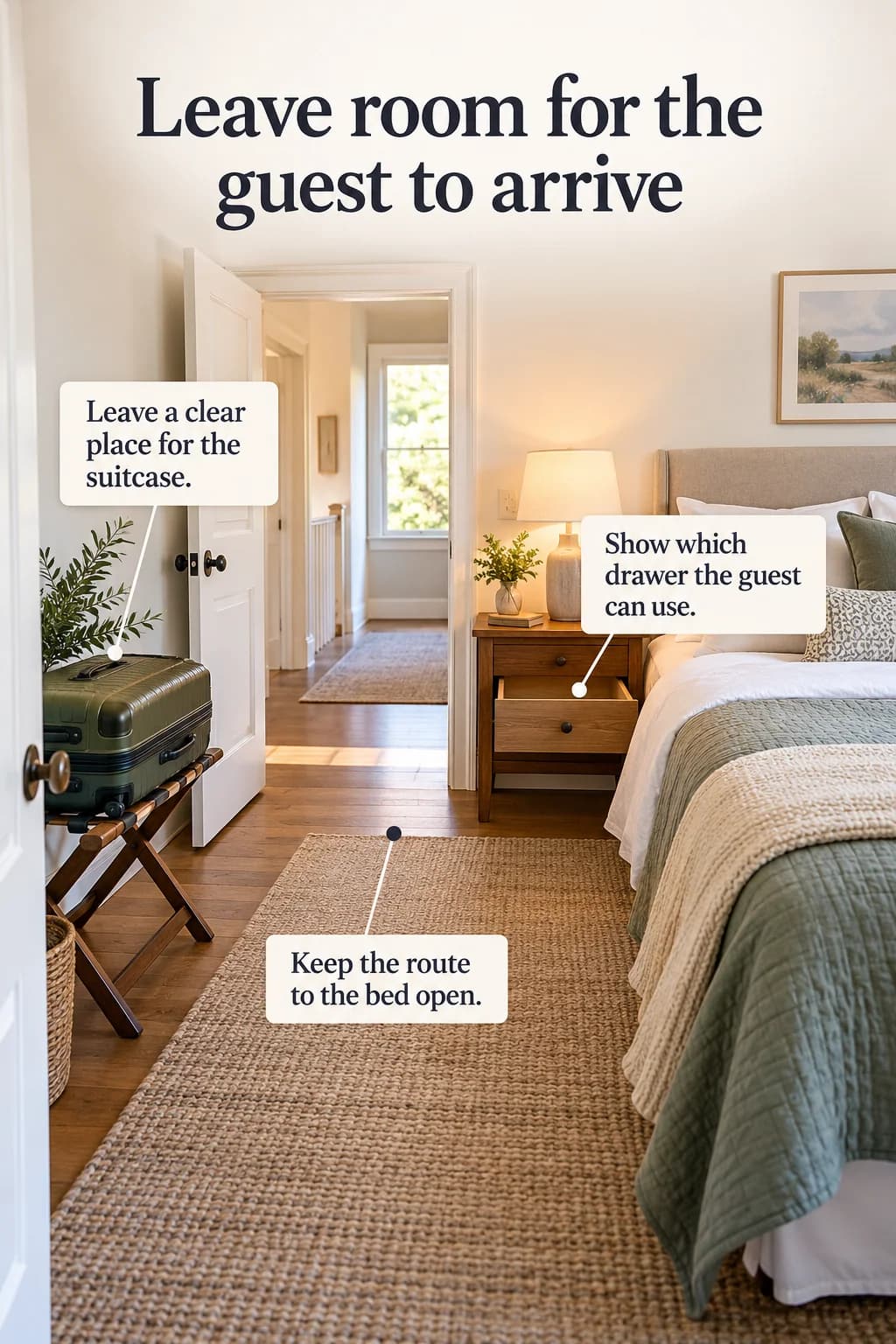
Stand at the guest-room door with an imaginary overnight bag. Where would you put it? Could you reach a light from the bed? Would you know which drawer you were allowed to use? These small actions are a better starting point than buying another decorative cushion.
Prepare these essentials before the extras
- Make the sleeping surface with clean, appropriate bedding and leave an additional layer available if useful.
- Clear a route from the door to the bed and the room's main storage, without bags or cables crossing it.
- Provide a reachable light and explain any unfamiliar switch or control.
- Check privacy at the window and door, including how the room looks with lights on after dark.
- Clear a practical place for a suitcase, a few clothes and personal items.
- Show guests where towels, the bathroom and basic household information can be found.
This list is a functional starting point, not a requirement to recreate a hotel. Ask guests beforehand about anything that would make the stay easier: preferred bedding, room temperature, space for equipment or another specific need. Do not assume a spare room is accessible simply because it looks uncluttered. Describe any limitations honestly so arrangements can be made before arrival.
Make one bedside area genuinely usable
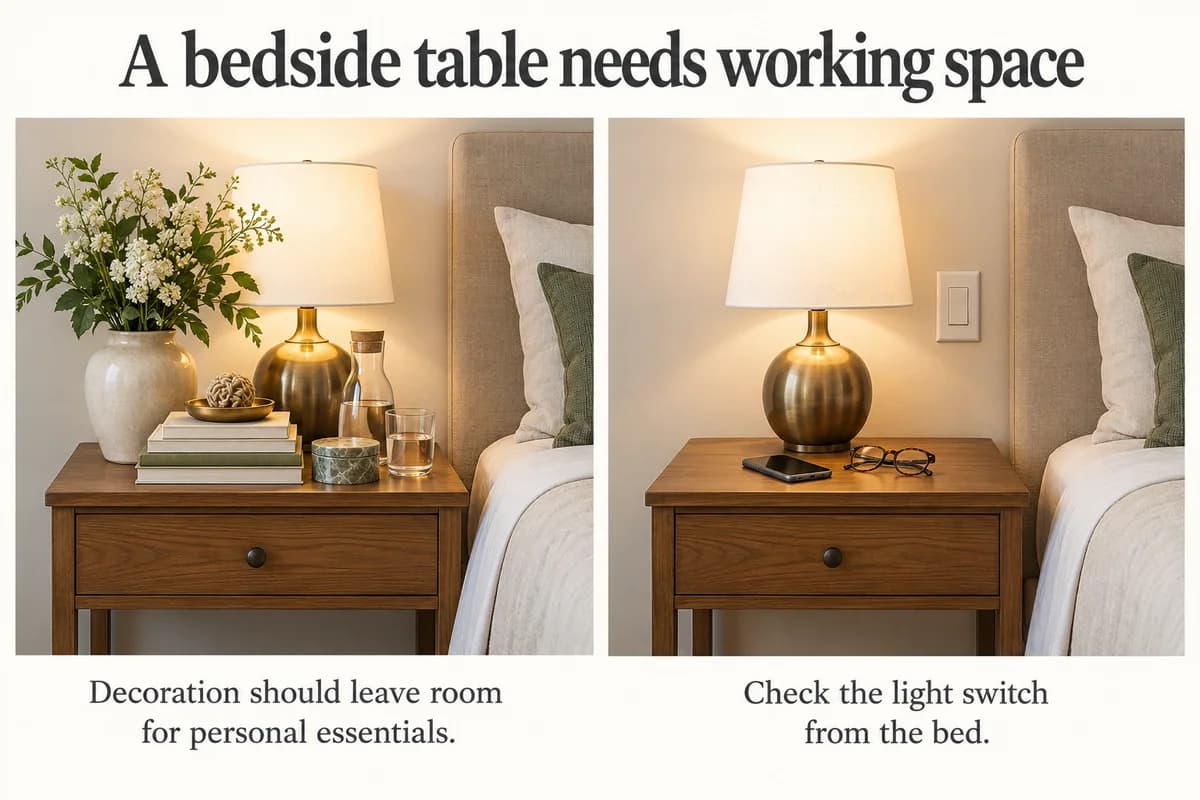
Leave enough clear surface for a phone, glasses and a small personal item. A lamp, a large vase, books, a tray and a water carafe can fill a nightstand before the guest puts anything down. Choose the items that serve an actual need and move the rest elsewhere.
Sit on the bed and test the light switch yourself. A lamp looks welcoming from the doorway but is less useful if its switch is hidden behind furniture. Check access to charging as well. If the only outlet is across the room, provide a clear charging spot there rather than running a loose cable through the walking route. Do not overload an outlet or improvise an electrical arrangement to achieve symmetry.
For a small bedside table, put the Wi-Fi details and household notes on one concise card instead of several pieces of paper. Explain where the extra blanket lives, how to adjust the available temperature controls and anything relevant about morning routines. The guide to a nightstand that works for daily use offers more ways to protect this working space.
A dedicated bedroom for a weekend visit
Imagine a room with a double bed, one dresser and a chair. Clear part of a drawer and a few suitable hangers, telling the guest which spaces are theirs. Place a stable luggage stand where an open case will not block the door or dresser. If there is no stand, a clean, designated floor area may be better than balancing a heavy case on a chair not intended to support it.
Keep the chair available if it is the only comfortable place to sit while dressing. Move decorative pillows somewhere the guest can easily use again, rather than leaving them to decide whether the floor is acceptable. Put an optional blanket where it can be reached without unpacking a closet.
Close the curtains and switch on the room lights after dark to check privacy. In the morning, notice whether light enters where a guest's face will be. The comparison of bedroom curtains and shades helps with longer-term changes, but for this visit explain how the existing covering works and offer an eye mask if the guest wants one.
A home office that must become a guest room
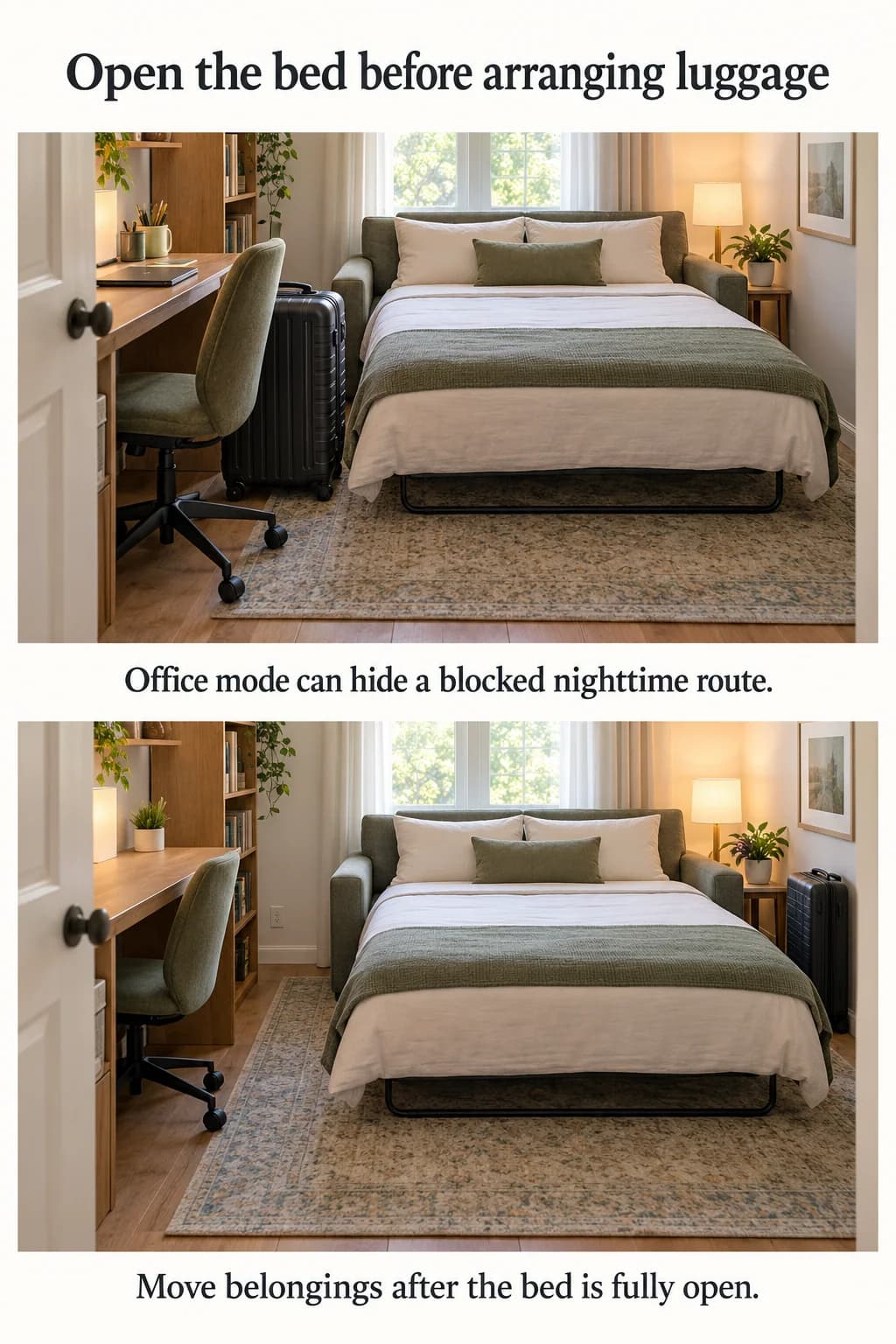
A shared room needs a transition plan, not just fresh sheets on a sofa bed. Open the bed fully before deciding where luggage will go. Check that the door, drawers and any necessary route remain usable with the bed extended. A layout that works in office mode may fail in sleeping mode.
Move work papers and private materials into secure storage. Clear a portion of the desk for the guest's belongings if there is no dresser, and explain that it is available. Shift the desk chair if it obstructs the path to the bed, but keep a safe place to sit if the guest needs one. Avoid making the suitcase live on the mattress, where it must be moved every night.
Set up a reachable light for the bed's actual position rather than assuming the desk lamp is close enough. If the room must return to work use each morning, agree on that arrangement in advance. For a longer visit, repeatedly folding the bed around someone's belongings may be impractical; another sleeping arrangement could be kinder than a beautifully styled but constantly interrupted room.
Remove the need to ask for every small thing
Leave clean towels in a stated place and point out where used ones should go. A few basic toiletries can be helpful, but there is no need for a basket full of products the guest may not use. Avoid adding strong fragrance by default. A clean room and the option to air it appropriately are more adaptable than assuming everyone enjoys the same scent.
Show the route to the bathroom, especially if guests arrive after dark. Explain a stiff latch or an unusual light switch rather than letting them discover it at night. Keep household instructions brief: access information, necessary controls and morning expectations are usually more useful than a long welcome booklet.
Before arrival, try the room as a guest
Lie on the bed long enough to notice the pillow, light and temperature. Walk from the doorway to the suitcase location, open the drawer and reach the spare blanket. If an object has to be moved every time you perform one of those actions, give it a different place now.
For a one-night stay, a small clear area may be enough. For a week, guests are more likely to need hanging space, a usable drawer and a place for laundry. Keep spare bedding together in a linen closet organized by frequency of use, so a requested change does not require searching through unrelated stacks.
Ask once after the first night whether anything would make the room easier to use. A guest may need a different pillow or a place to set down a device you did not anticipate. Making that adjustment is more useful than adding decorative extras while the practical inconvenience remains.