Keep the white jeans out of storage. On a mild afternoon, they may need nothing more than a navy top and loafers. A cold or wet day asks different questions, and the answers have more to do with fabric and footwear than the date on the calendar.
Choose the day's version before the color story
Start with the conditions you will actually walk through. If the day is mild and dry, the pair you wore in summer may be entirely comfortable. For a colder day, judge the denim's weight and the layers you can wear beneath or over it without restricting movement. White describes the color; it does not tell you how warm the jeans will be.
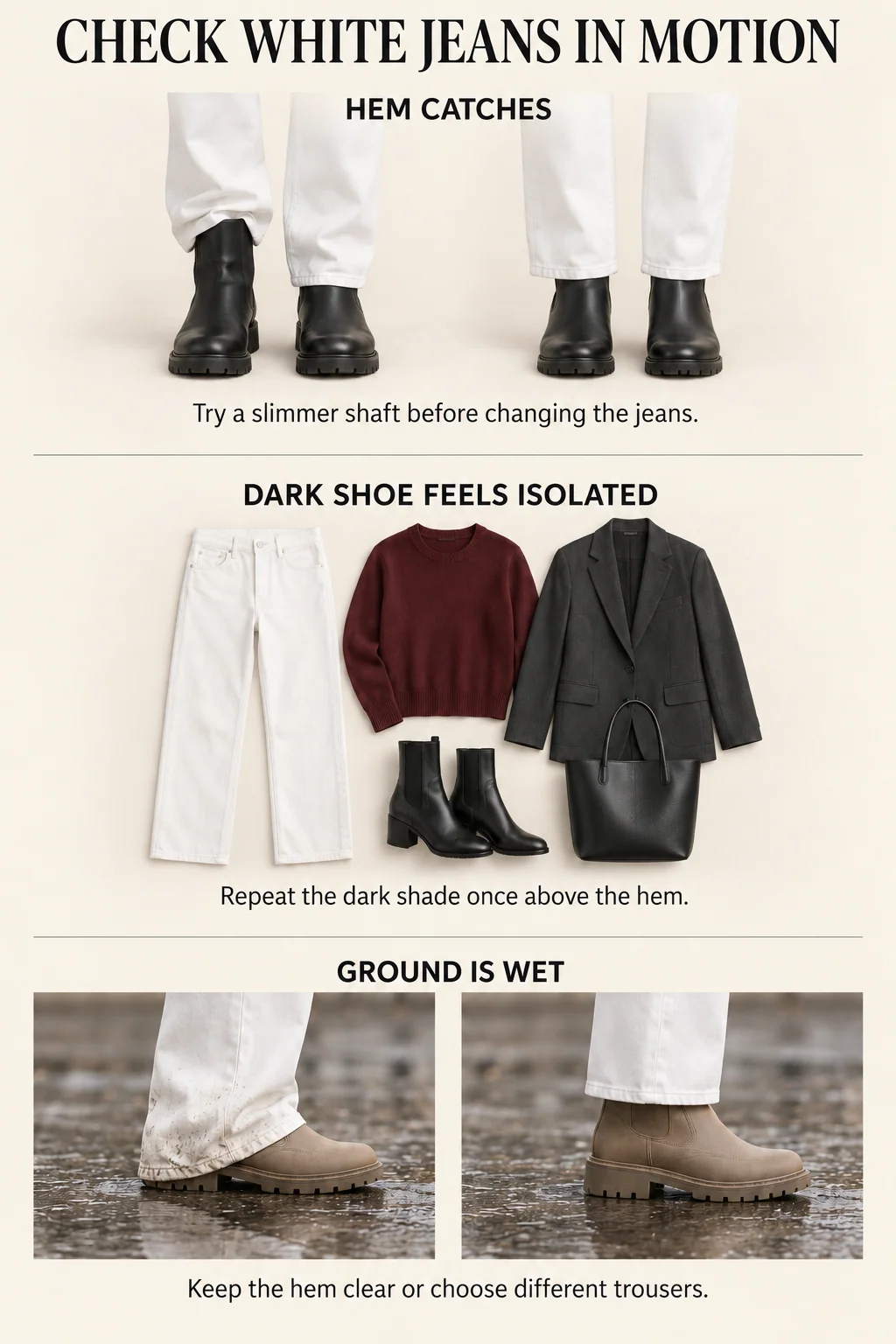
Put on the shoes you intend to use outside. A boot may push the hem upward even when the jeans fit neatly with flats. Walk, sit and stand again. If the opening catches on the shaft, compare a slimmer boot or a different jean opening. For that specific relationship, see ankle boots with straight-leg jeans.
Rain, slush and muddy paths are a separate decision. Choose footwear intended for those conditions and check that the denim stays clear of the ground. If your white pair drags with those shoes, another pair of trousers is a reasonable answer. A cuff that repeatedly unrolls is not a dependable fix.
Also look at the jeans in daylight with the underwear you plan to wear, including while seated. Pocket bags and seams can show differently when the fabric stretches. Changing the underwear or top length may help you get the coverage you want, but neither turns transparent fabric opaque.
Mild afternoon: navy, white and tan
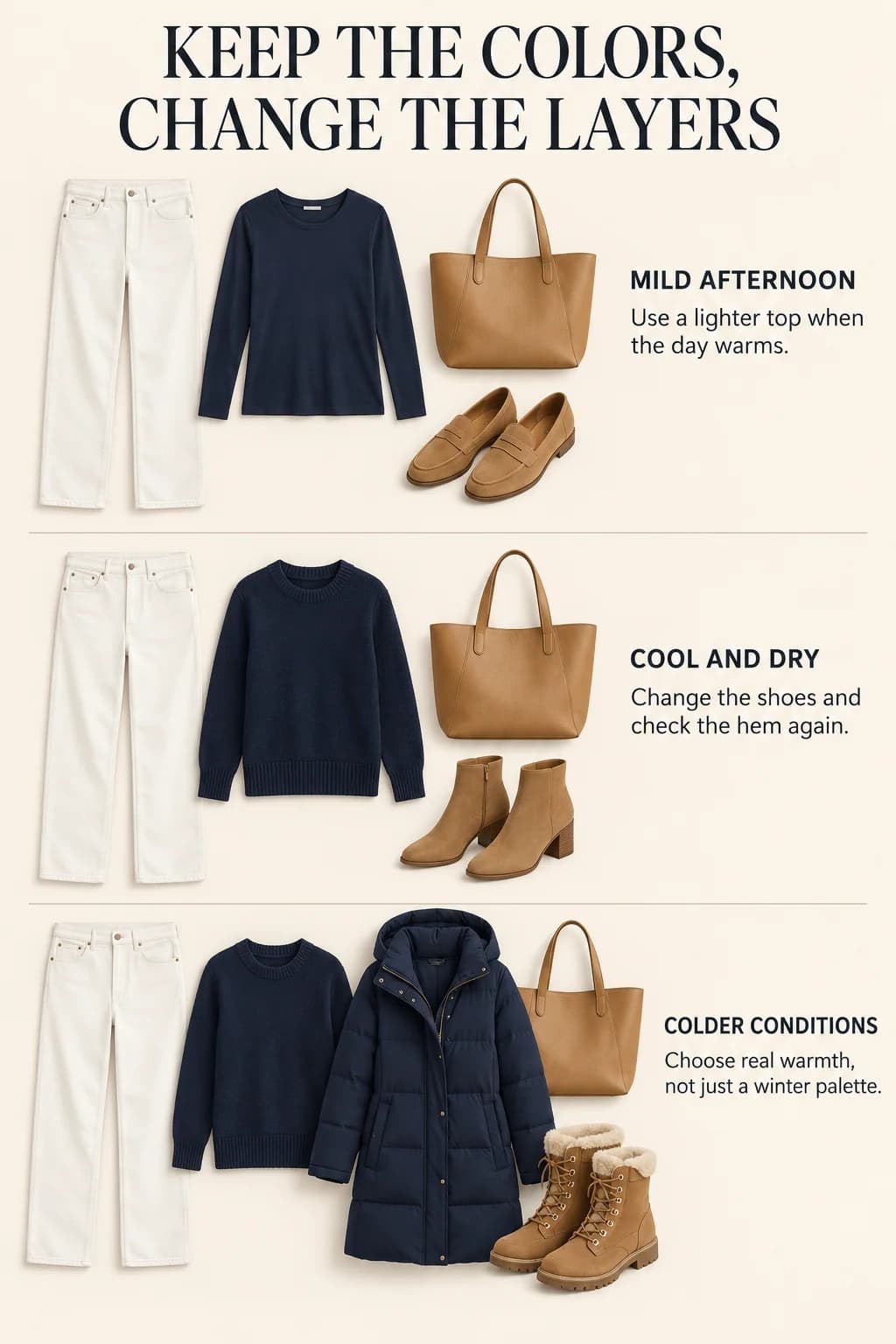
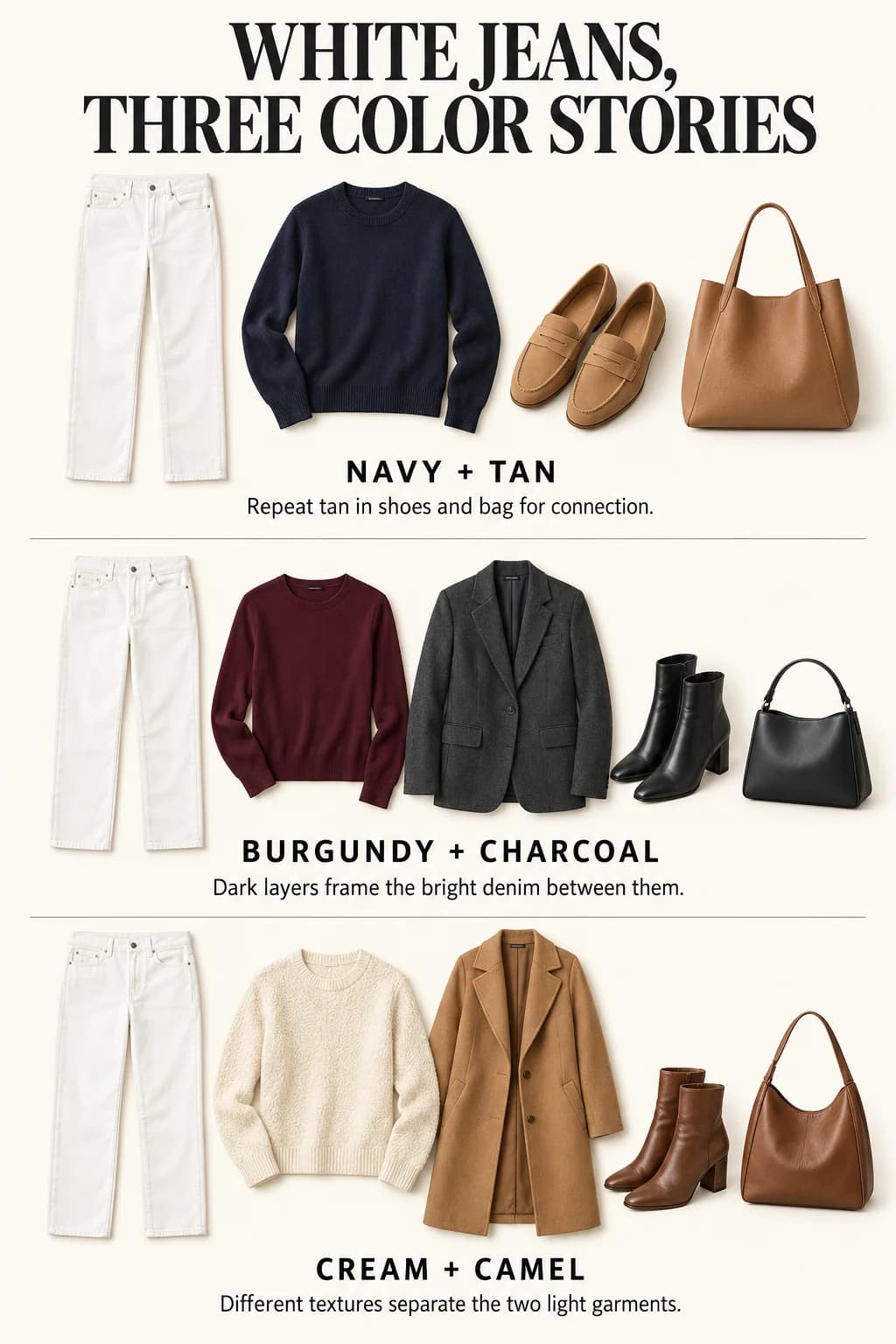
For lunch, errands or a casual visit, wear straight white jeans with a navy crew-neck knit, tan loafers and a tan shoulder bag. Choose a sweater that ends near the waistband or upper hip without hiding the whole front of the jeans. Navy makes a clear contrast with the white, while tan repeated at the shoes and bag connects the warmer accent across the outfit. If the forecast feels too warm for a sweater, use a navy long-sleeve tee instead. The color relationship survives the substitution.
A blue-and-white striped shirt can go beneath a roomy navy knit on a cooler morning, provided the sleeves move comfortably. Show either a little collar or a little hem first, then decide whether you want both. When the temperature falls further, tan ankle boots can replace the loafers, but repeat the walking check: the trouser hem now meets a shaft instead of an open shoe. You have changed one practical part of the outfit rather than deciding that white jeans have expired for the season.
Cool evening: burgundy inside a charcoal frame
Start with white jeans, a fine burgundy top, a charcoal blazer and black ankle boots for a casual dinner. A black bag connects to the shoes. This is an option when you want a defined outer layer without wearing a suit; check the restaurant's actual dress expectations rather than assuming denim fits every venue.
The white section between the dark jacket and boots makes the contrast easy to see. Burgundy appears inside the jacket opening instead of competing with another bright color. If charcoal is not in your wardrobe, our guide to colors that work with burgundy explains other supporting shades.
Do the black boots look isolated? First view them with the jacket and bag in place. Those darker pieces may already provide all the connection you need. A black belt is optional. Adding more small dark accents can make a straightforward outfit busier without solving a real problem.
For a more relaxed dinner, exchange the blazer for an open charcoal cardigan. Add a suitable coat if the journey requires one; a fine top and blazer are not automatically a cold-weather system. Keep the jeans uncuffed initially so you can see whether their natural hem clears the boots before introducing another horizontal line.
Cold, dry day: cream texture and a camel coat
Combine the white jeans with a cream textured sweater, camel coat and medium-brown boots. A brown bag can repeat the warm tone in a smaller area. This version suits a dry walk between indoor stops when the coat and footwear provide the warmth you need. On a genuinely cold day, assess the whole outfit, including any comfortable base layers, rather than trusting the winter colors to do the work.
Let the cream sweater's texture separate it from the smoother denim. The whites do not need to match. Bright white beside cream can look deliberately different, especially with camel around both. If the cream seems dingy to you, compare the complete outfit in daylight; you may prefer two closer shades of white. That is a useful preference to notice, not a rule you have broken.
A chunky sweater can stay loose beneath the coat, while a fine knit may take a light front tuck. For a milder version, replace the coat with a camel overshirt and the heavy sweater with a cream tee. Keep the warm color direction, but let the garment weights change. The monochrome outfit guide offers more ways to separate similar colors through texture and shape.
Match the adjustment to what the shoe is doing
A catching hem and an exposed ankle are different problems. If the hem bunches, try a slimmer boot shaft or another jean opening before shortening anything. A higher boot is not automatically better if its top keeps trapping the denim. If the hem falls cleanly while you stand but catches after you sit, judge the moving version: that is the one you will be wearing.
If a cropped pair leaves skin exposed in cold weather, try socks high enough to remain covered when seated, or boots that meet the hem without pushing it upward. There is no universal ankle gap to achieve. If the available combination leaves you cold or needs rearranging with every step, wear another pair that day.
Dark footwear can work with a light outfit without a matching dark top. Look at how much shoe is visible beneath the opening, then decide whether you want one dark repeat in the bag or jacket. A wide hem revealing only the toe creates a different effect from a cropped slim hem showing the whole boot. Compare the actual silhouette rather than ruling out the shoe's color in isolation.
Frequently asked questions
Do white jeans have to match a cream sweater?
No. Judge them together in the complete outfit. A difference in shade can look deliberate when texture and warmer accessories connect them; choose closer whites if you prefer less contrast.
Can cropped white jeans work when it is cold?
They can if the whole outfit gives suitable warmth. Try socks or boots that cover the exposed area while seated, and check that the hem does not catch. Use another pair when the weather or footwear makes these impractical.