Before choosing a dinner outfit, ask two ordinary questions: where will you be eating, and do shoes come off? The answers can change the hem, footwear and layers more than whether the invitation uses the word “casual.” A friend's kitchen table and an informal restaurant can call for different versions of the same clothes.
Read the invitation, then ask about the missing detail
Follow an explicit dress code first. A cocktail invitation does not become casual because dinner happens in a home, and a restaurant may have its own requirements. For an ordinary casual gathering, a short question such as “Are jeans fine, and is yours a shoes-off home?” gives you more useful information than guessing from a photograph of the venue.
Then consider what you will do. Will you sit at a dining table, balance a plate on your lap or help carry food? A trailing cuff and a tightly fitted waistband create different problems in those settings. You can choose a dress, trousers or jeans; none guarantees comfort until you try the actual movements.
Take off your outdoor coat when checking the outfit. If the interesting detail disappears with that layer, decide whether you like the quieter indoor version. You do not need to compensate with elaborate jewelry, but you should not have to keep wearing a warm coat through dinner to feel finished.
Familiar friends: a cardigan with dark jeans
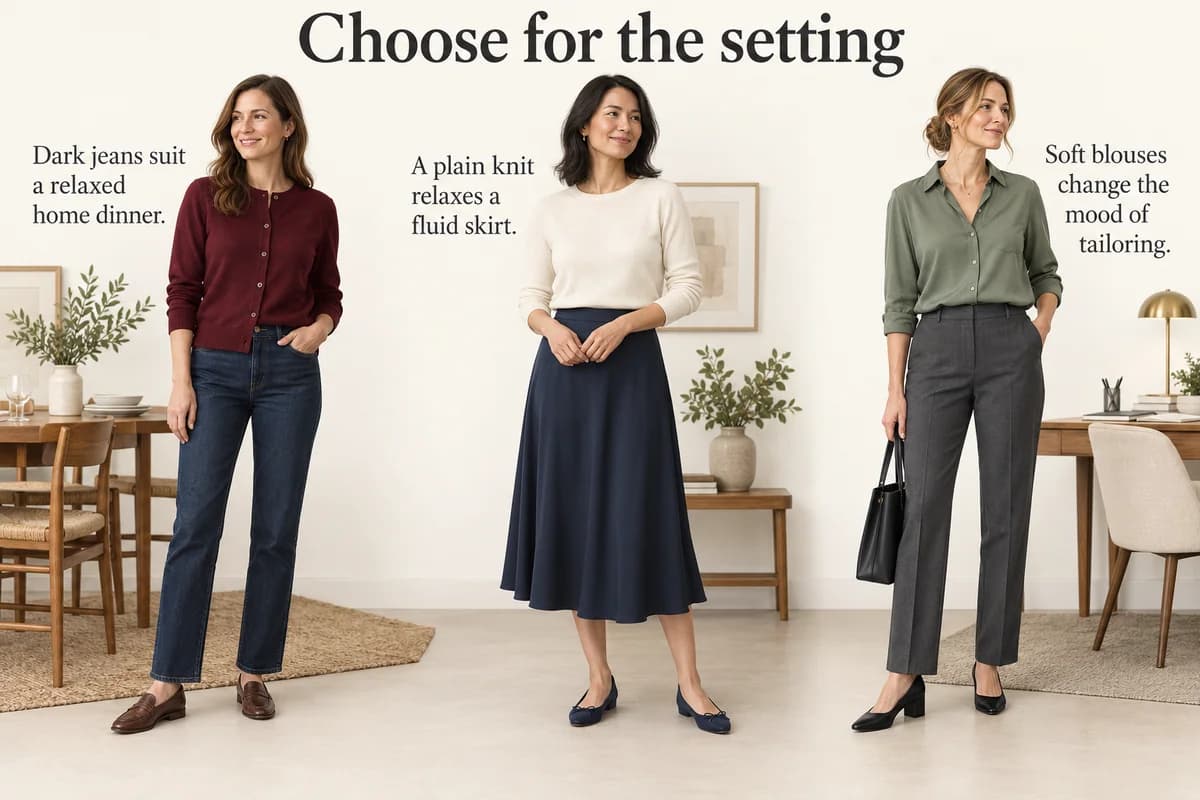
For a relaxed dinner at a friend's home, try a soft burgundy cardigan, dark straight jeans and brown loafers for the journey. Wear the cardigan buttoned as a top if its knit and closure provide the coverage you want. Small gold earrings can be enough detail above the table; a brown bag relates to the shoes without becoming part of the seated outfit.
The dark denim keeps the combination casual, while the cardigan's color gives it a little more presence than a plain tee. Sit and reach forward before leaving. If the button gaps open, use a comfortable base layer or a roomier cardigan. The cardigan-as-a-top guide explains that closure check in more detail.
For a shoes-off home, choose jeans whose hems also clear the floor in socks. Brown or burgundy socks can continue the color story, but comfort and traction on the actual floor matter more than an exact match. If you need supportive indoor footwear, ask the host about bringing a clean pair. For a warm room, a lighter buttoned knit or a simple blouse keeps the same jeans-and-burgundy idea without requiring you to overheat.
New hosts: a fluid skirt and a plain knit
When you want a slightly dressier option without guessing at formalwear, wear a navy midi skirt, a cream fine-knit top and navy flats. Choose a skirt that leaves enough room to sit and stand easily. A small burgundy bag adds color on arrival, while modest earrings keep some detail visible after the bag is put away.
The plain knit makes the skirt feel relaxed. A short hem resting near the waistband leaves the skirt's movement visible; a thin tucked hem is another option if it does not show through the fabric. For more coverage, a longer smooth knit can fall over the waistband. You are not obliged to define the waist to make a skirt outfit work.
If shoes come off, the midi length generally asks less of your footwear height than a floor-length skirt, but check your own hem while walking. In a cooler home, add a navy cardigan that can be removed without exposing an unfinished base layer. If you will help serve, choose sleeves that end securely above the hand rather than cuffs you must keep pushing up.
An informal restaurant: trousers with a soft blouse
Try charcoal straight trousers, a muted green blouse and black flats or low block heels for a restaurant dinner. The trousers establish a clean line; the softer blouse changes the mood from a standard work shirt. A compact black bag and small silver earrings keep the finishing colors restrained.
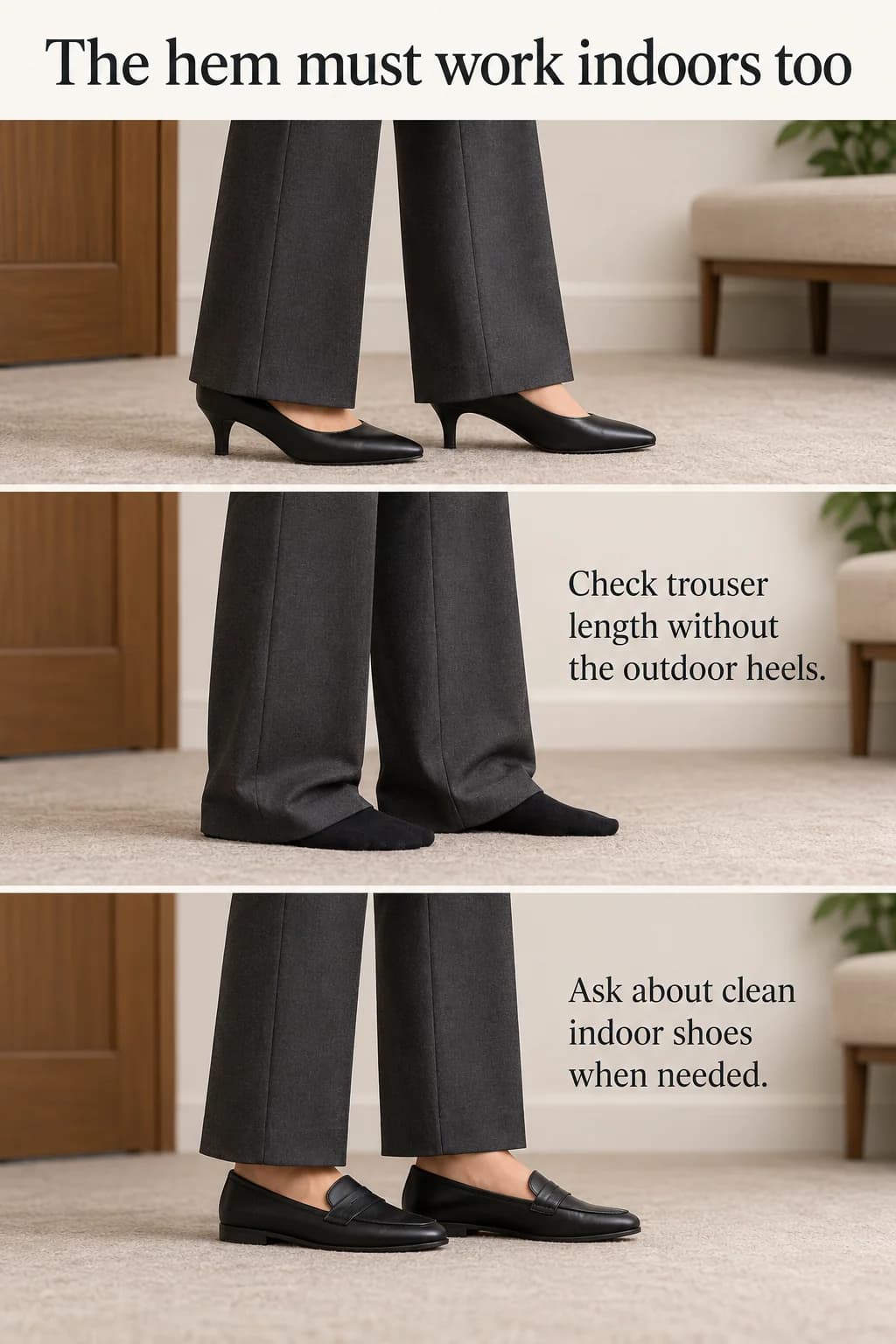
Choose the shoe height first, then check the trouser hem. If the trousers only clear the floor in heels you do not enjoy wearing, use another pair or plan a proper alteration rather than spending dinner anticipating the walk home. A black jacket is useful for the journey, but the green-and-charcoal base should work when it is hung on a chair.
For a very relaxed venue, replace the blouse with a fine green crew-neck sweater. For a warmer evening, use a lighter blouse in the same color. If you prefer jewelry at the neckline, leave enough space for the piece to sit without disappearing into buttons or folds; necklace choices by neckline can help you make that smaller decision.
The seated version deserves its own check
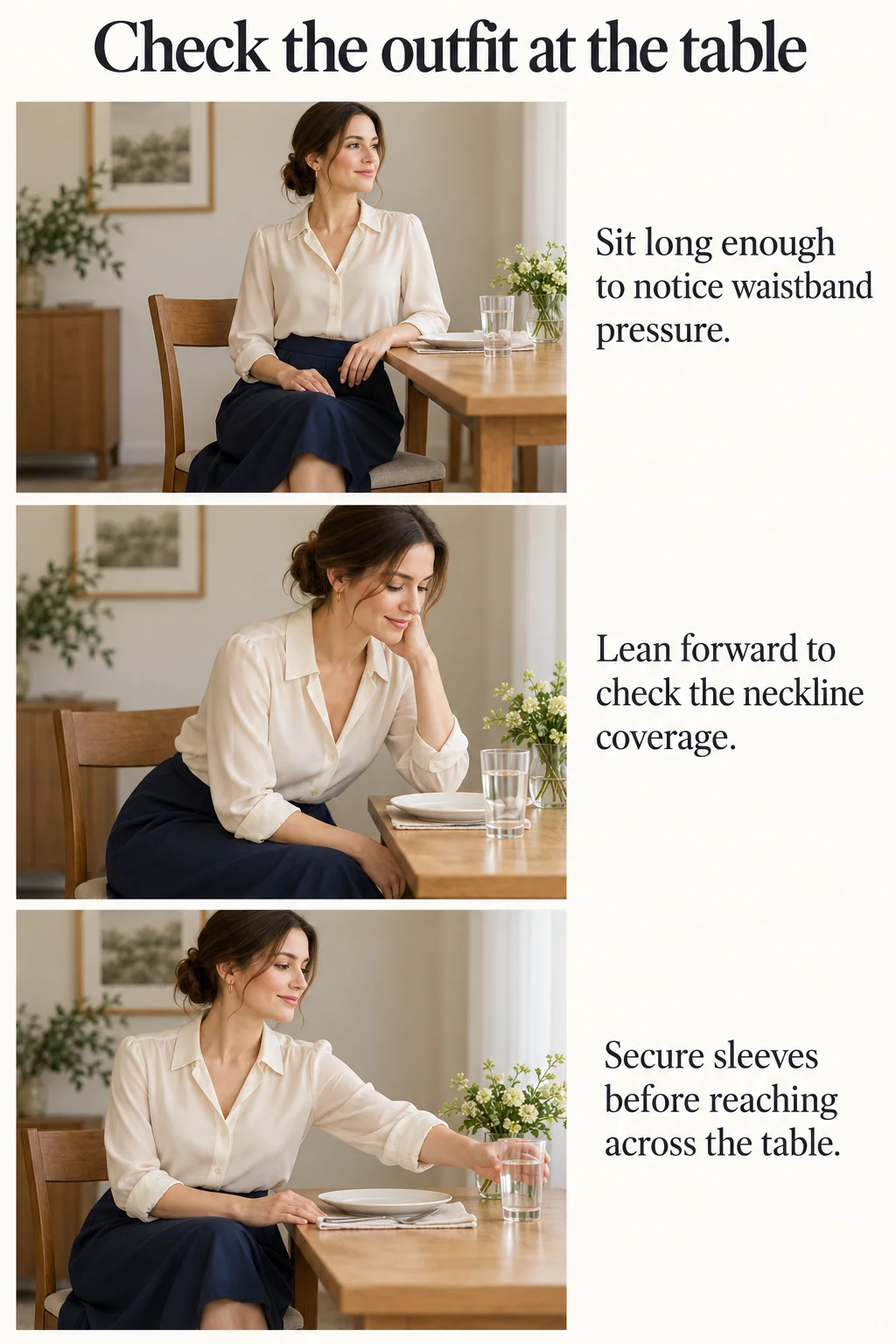
Sit for a few minutes rather than simply bending your knees in front of a mirror. Does the waistband press when you lean toward the table? Does a wrap or button front open farther than intended? Can you reach a glass without a sleeve sweeping across the plate? Adjust the garment responsible rather than trying to remain perfectly upright throughout the meal.
Shoes-off plans reveal another dependency: an outfit built around heel height may become impractical indoors. Compare the hem with your intended socks or indoor shoes before departure. A shorter trouser or midi skirt is often easier than repeatedly lifting a long hem, but the appropriate choice is the one that works for your mobility and the host's space.
If bracelets strike the table or a pendant keeps falling into your plate when you lean forward, remove or shorten that particular accessory. You can keep the color and shape of the outfit without carrying every finishing detail through dinner.
Hosting changes the sleeves, not your whole style
If you are cooking and hosting, begin with the same outfit you would enjoy as a guest and make the working parts practical. A close cuff or shorter sleeve is easier to keep away from food than a wide hanging sleeve. Choose footwear in which you can stand comfortably, and use an apron for preparation rather than relying on a dark color to conceal spills.
Keep a removable layer nearby for after the kitchen work is finished. Your guests may be comfortable in a sweater while you are warm from moving around.