With cigarette pants, you can see almost the whole shoe. That makes footwear an effective way to change the outfit, but it also exposes a trouser hem caught on a boot or a sneaker tongue. Choose the shoe with the trousers on, and judge the small area where the two meet.
Read the hem, the ankle and the top of the shoe together
Cigarette pants have a slim leg and a narrow opening near the ankle, although exact cuts vary. Some finish above the ankle; others meet the top of the shoe. You do not need to reveal a prescribed strip of skin. You need a hem that settles where you want it and a shoe you can comfortably wear.
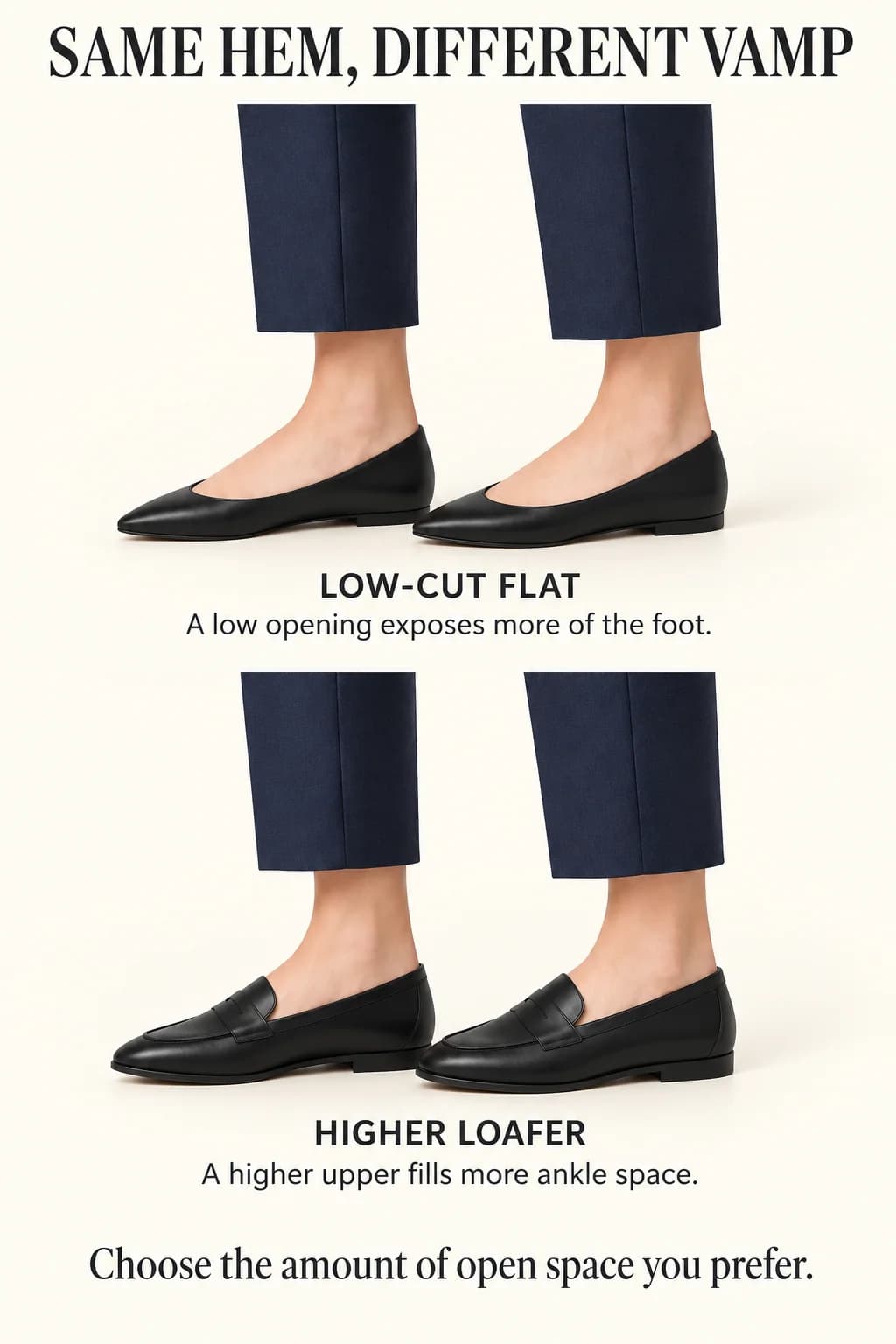
The vamp is the part of the shoe covering the top of the foot. A low-cut flat leaves more of the foot visible; a loafer comes higher. With the same trouser hem, these create different amounts of open space. A pointed toe can add a longer visible shape beyond the hem, but it is an aesthetic option, not a reason to squeeze your toes.
Start with your own preference. If an ankle-length trouser and a high loafer feel too closed together, compare a lower-cut flat. If a very cropped hem leaves you feeling exposed, a higher vamp or a visible sock can fill some of the space. Neither adjustment requires a heel. The loafers versus ballet flats guide compares those two shoe shapes more closely.
Pick the shoe for the day, then refine the junction
Flats and Mary Janes leave the narrow trouser shape easy to read. A simple flat keeps the ankle area open; a Mary Jane strap adds a horizontal detail across the foot. If you already have a strong contrast between pale skin and dark trousers, decide whether you enjoy another visible line from the strap. Choosing a color near the trousers can make that detail quieter.
Loafers give the hem a firmer stopping point. Start with a pair whose upper stays below the opening rather than pushing the trouser fabric outward. A substantial sole can be a deliberate contrast with slim trousers. It is not automatically wrong, but check whether the trouser hem still falls freely instead of sitting on the shoe.
Sneakers make the tailored shape more casual. A low-profile pair is an easy starting point because it leaves room around the opening. A larger sneaker can also work if the hem ends above its collar and does not catch its tongue. Use the sneaker that supports the walking you actually plan to do; visual neatness is not a substitute for comfortable fit.
Pumps, slingbacks and sandals show their shape clearly below a narrow leg. For dinner, a low heel or an interesting flat can supply enough detail without a very high heel. Check the slingback strap while walking, and make sure the trouser hem does not snag any ankle fastening. A shoe repeatedly slipping off is not improved by an otherwise polished trouser line.
Three finished combinations
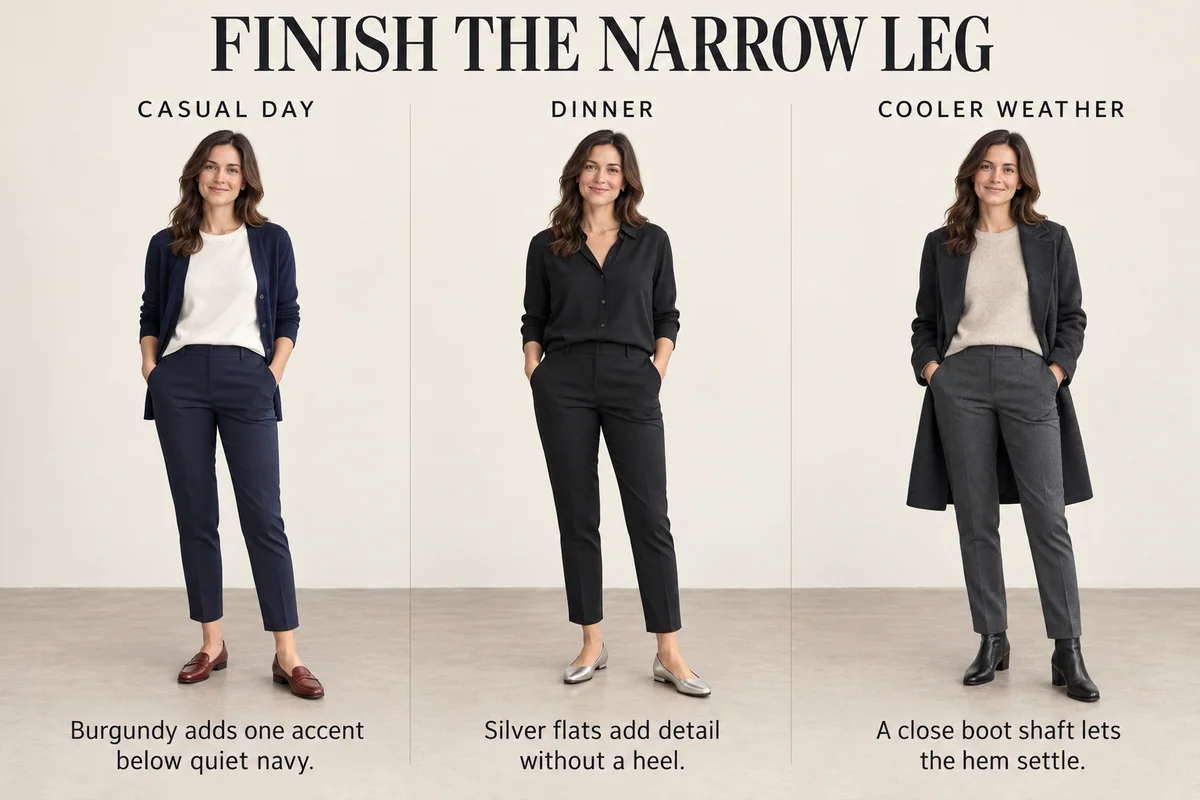
Navy trousers and burgundy loafers for a casual day
Wear navy cigarette pants with an ivory tee, a navy cardigan worn open and burgundy loafers. The repeated navy gives the outfit a quiet frame, while the loafers add one richer color near the ankle. Let a cropped hem clear the loafer upper so both the narrow leg and the shoe remain visible. A simple navy or brown bag keeps the burgundy from becoming one of several competing accents.
For cooler air, add thin navy socks: they reduce the contrast between trouser and shoe without hiding the loafers. If loafers slip on your feet, substitute a cream lace-up sneaker that fits securely. The outfit becomes more casual, and the cardigan still provides enough structure for lunch or errands. Choose the trouser length with those sneakers on; their collar may sit higher than the loafer's.
Black trousers and silver flats for dinner
Combine black cigarette pants, a soft black blouse and silver low-cut flats for an evening when you want a noticeable shoe without a heel. The dark upper half directs attention to the metallic finish, and the open top of the flat leaves the trouser hem distinct. Small silver earrings repeat the color; a black bag avoids turning every accessory into a separate highlight.
If metallic footwear is not your preference, use black flats with a textured finish and keep the blouse slightly more fluid than the trousers. For more foot coverage, substitute a silver loafer. The change makes the ankle area feel more enclosed, so compare it with the actual crop rather than trying to preserve exactly the same amount of visible skin.
Charcoal trousers and black boots for a colder outing
Choose charcoal cigarette pants, an oatmeal fine-knit sweater, a dark coat and black ankle boots with a close-fitting shaft. The light knit breaks up the dark layers above; the boots connect the lower leg without requiring a bare ankle. This works when the trouser opening can fall over the shaft and return to place after sitting.
If your boots are too wide for that opening, do not keep pulling the hem down over them. Try a lower boot with socks covering any gap, or choose roomier trousers for those particular boots. For wet conditions, prioritize suitable soles and weather protection; the sleekest pair in the wardrobe may be the wrong one for the route. The cropped-trouser shoe guide helps when you decide to use a wider cropped leg instead.
A boot needs clearance, not a perfect photograph
Stand, walk and sit with the boots on, then stand again. If the hem slides over the shaft and settles, the two shapes can work together. If it remains perched on the boot, the opening is catching. Stretch in the trouser fabric does not guarantee that it will release itself after every step.
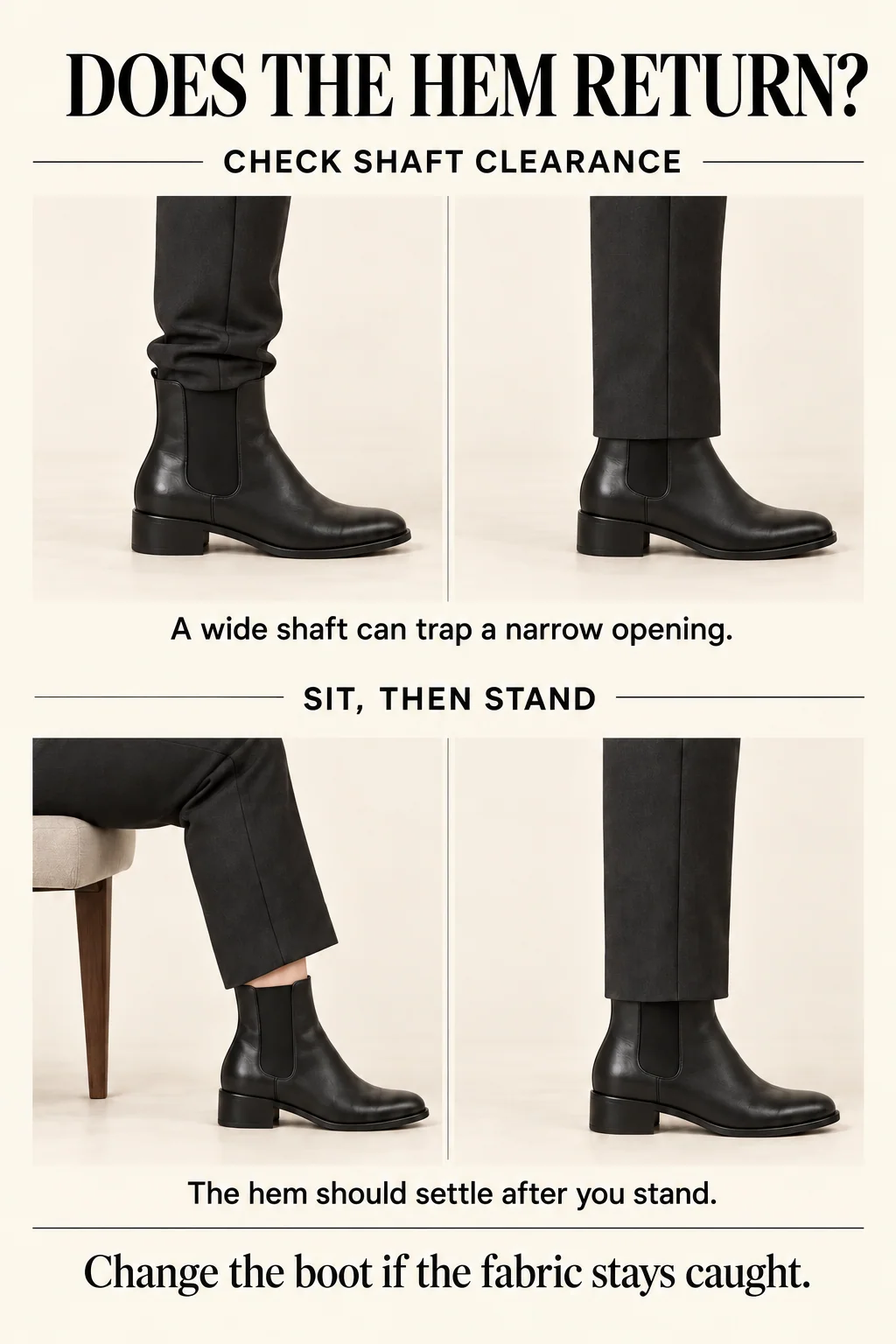
Avoid creating a thick cuff just to escape the boot: several folded layers can make a narrow opening tighter. A tailor may be able to change the length, but first pin or fold a single trial hem and compare it with the shoes you wear most. Do not permanently shorten trousers around one inconvenient boot without checking the rest of your wardrobe.
For a fuller-fitting shoe or a pair worn with your usual inserts, give the shoe the room it needs. Keep the trouser hem above bulky hardware, use a calmer sock color if you want continuity, or choose a slightly roomier leg opening. The objective is a stable relationship between the pieces, not making your feet look artificially small.