Two inserts with the same dimensions can fill a cover differently. The amount and type of filling, the cover's construction and the maker's sizing convention all matter. Adding two inches is therefore a possibility to investigate, not a rule to apply to every cushion.
Measure the empty cover before choosing fullness
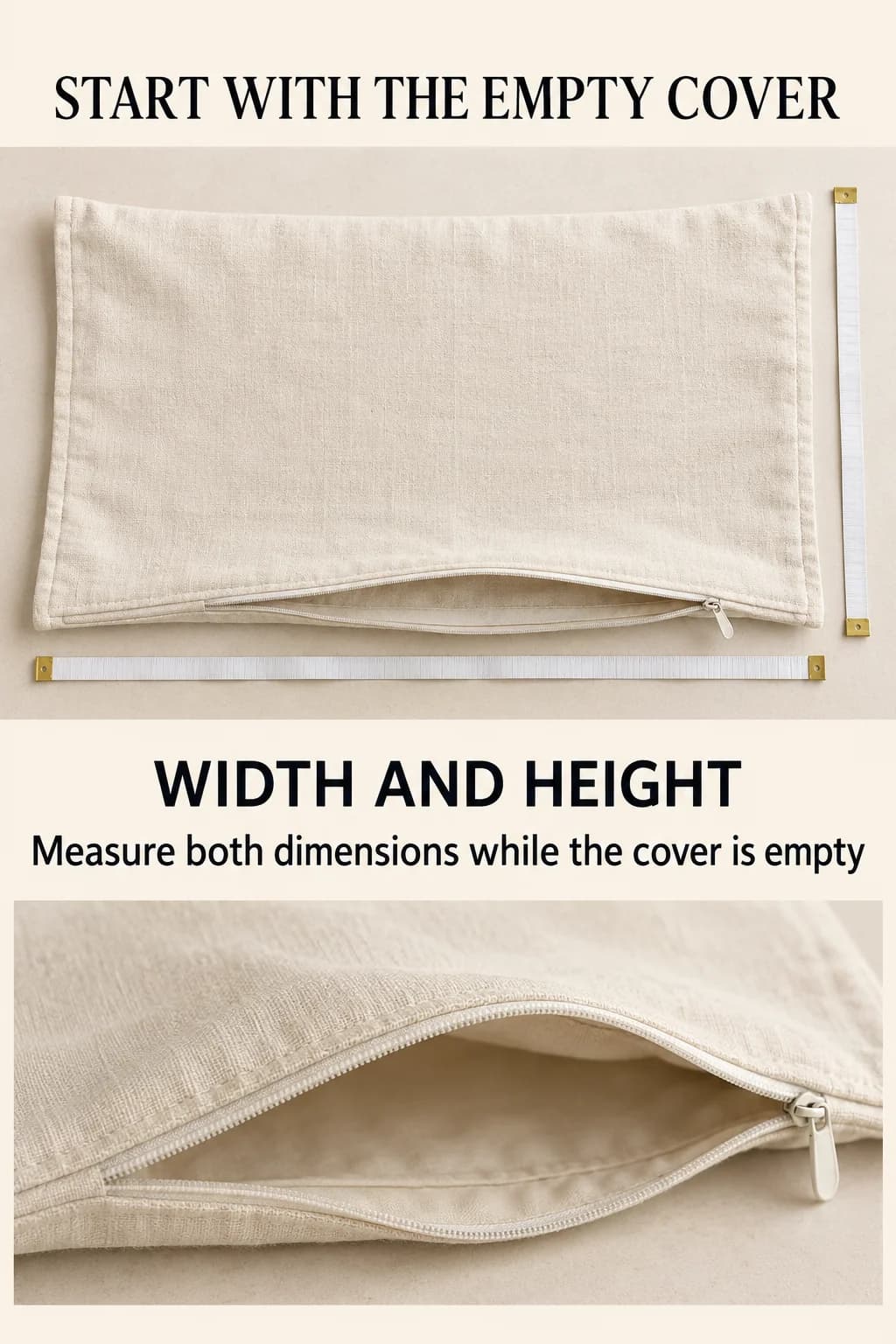
Remove the insert and lay the cover flat without stretching it. Measure between the seams across both dimensions. Do not measure over the curved surface of a stuffed pillow: that follows its bulge rather than the flat shape the sizing describes. A lumbar cover needs separate width and height measurements, even when one dimension looks familiar.
Compare those measurements with the cover's label and its maker's insert recommendation. A washed cover may no longer match its original nominal size. Follow its care instructions, and do not assume that a larger insert can correct shrinkage. Check the opening too: a narrow zipper or delicate fabric can make an otherwise plausible size difficult to install.
A square cover: size and fill lead to different candidates
Suppose an unbranded cover measures 20 by 20 inches flat, has a sturdy closure, and has no surviving insert recommendation. Its current 20-inch polyester insert gives a soft, relaxed look. The owner wants fuller corners but still wants to lean against the pillow comfortably. First redistribute the existing filling according to its care instructions; an empty corner caused by displaced fill does not necessarily require a replacement.
If the cover still looks underfilled, a maker's guidance for the proposed insert is more useful than a general decorating rule. HomeTex recommends about one inch of oversizing for its plump polyester forms and two inches for its feather/down forms. Applied to this 20-inch cover, those starting candidates are 21-inch polyester or 22-inch feather/down. That is guidance for the maker's own ranges, not proof that every insert with those dimensions will behave alike.
For this hypothetical owner, begin with the 21-inch polyester candidate if retaining a similar fill type and getting modestly more fullness are the priorities. Changing from the existing polyester to feather/down would change both size and fill, making the result less predictable from dimensions alone. Confirm the actual form's sizing and suitability for the cover before buying, and check the return conditions if the fit cannot be tried first.
Once inserted, distribute the fill into the corners and close the cover without force. If the seams lie comfortably and the pillow feels right when leaned against, the larger candidate has served its purpose. If it becomes too firm or the closure strains, return to a compatible smaller or less densely filled option. Keeping the original relaxed 20-inch insert is also a complete decision when comfort matters more than a plump outline.
A lumbar cover exposes the limits of the two-inch rule
For a second example, take a Lulu and Georgia cover labeled 12 by 24 inches. Confirm its empty measurements and the current recommendation for that exact cover. The brand's insert chart pairs the 12-by-24 cover size with a 15-by-26 insert. That adds 3 inches in one dimension and 2 in the other; blindly adding 2 to both would produce a different candidate, 14 by 26.
The chart settles a size pairing, not every property of the filling. Suppose the owner currently uses a 12-by-24 polyester insert and wants a fuller lumbar on a bedroom chair. A 15-by-26 form is the size to discuss with the cover maker, but the chart alone does not establish its fill type or weight. Ask for the compatible insert specification rather than substituting a densely packed polyester form just because its label matches those dimensions.
For this owner, choose the maker-confirmed pairing if fuller shape is the goal and it remains comfortable after fitting. Keep the same-size insert if its softer feel is preferred and it fills the cover adequately. If a feather/down replacement is proposed, recognize that the comparison now changes fill as well as size; do not promise a particular firmness from the larger numbers.
This example is a sizing walkthrough, not a firsthand product test. It also does not transfer that brand's chart to an unrelated 12-by-24 cover. A different opening, seam construction or actual measurement can require a different form. Record both dimensions when comparing options so that a long, narrow pillow does not become an accidental square-pillow calculation.
Compare the outline without confusing it with a test
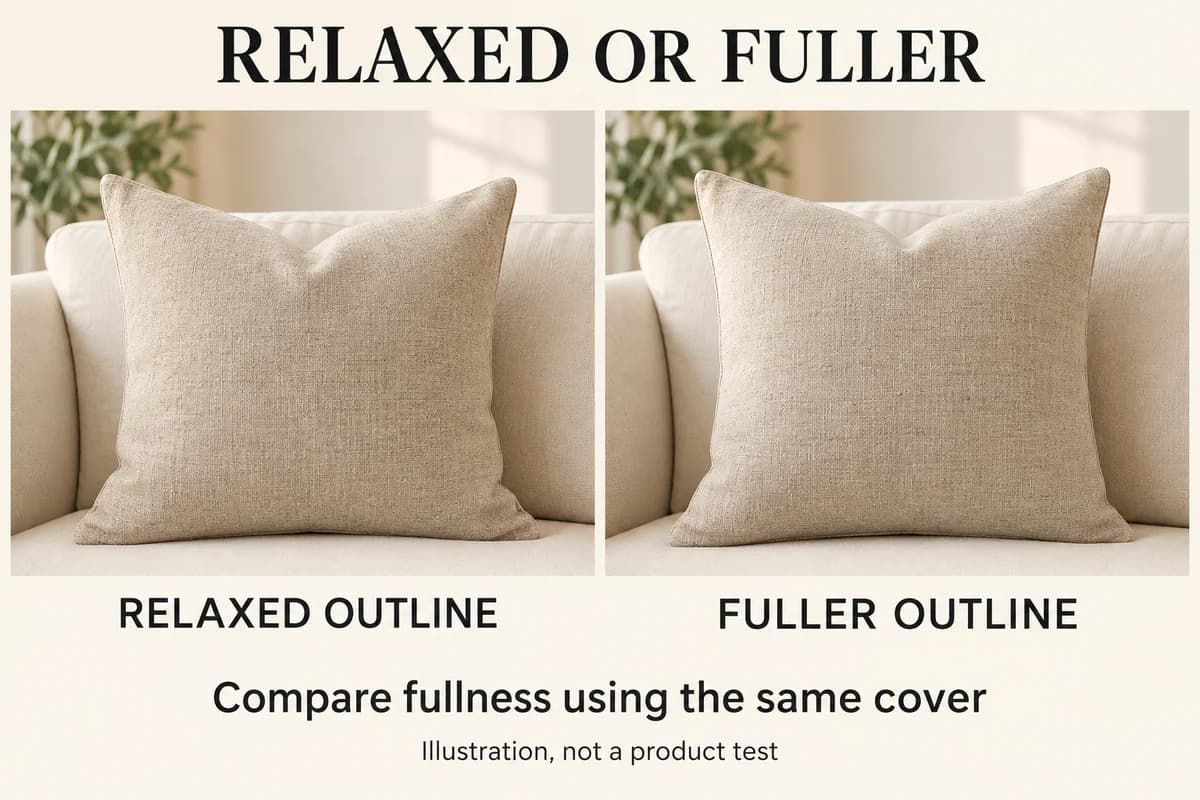
Use the same cover and position when looking at relaxed and fuller versions. Otherwise a change in fabric, angle or pillow size can appear to be an insert effect. Illustrations can show what a looser outline or filled corner looks like, but they cannot establish how a real product feels or which insert made it that way.
Fill quantity matters within a material category as well. Two polyester forms of the same nominal size need not have the same density. Likewise, one feather/down form is not a promise about another maker's mix or fill weight. Read the actual specification alongside the cover recommendation.
When the zipper resists, stop pulling
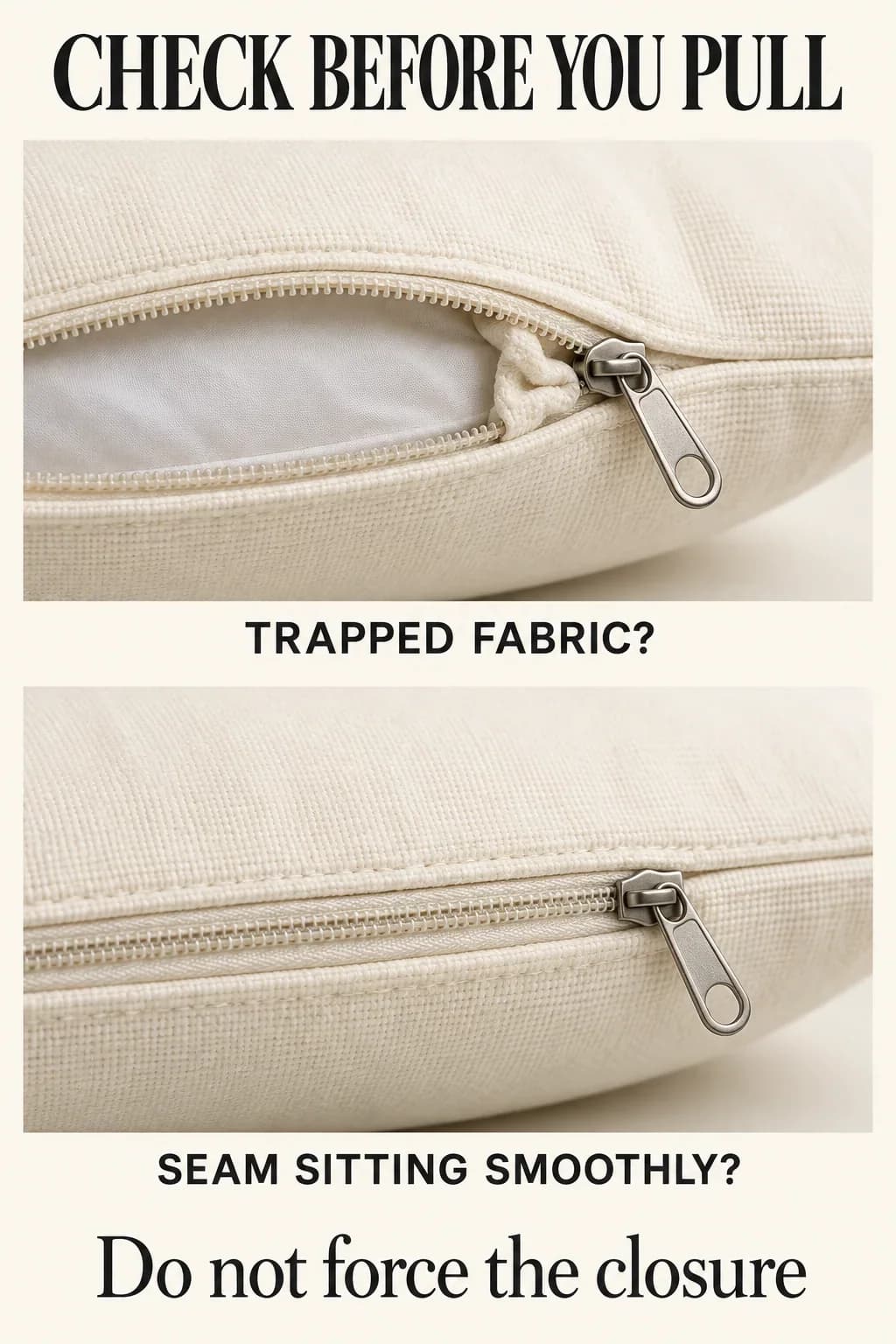
Check for cover fabric or the insert shell caught near the zipper teeth. Ease trapped material away and redistribute the filling before trying the closure normally. If the seam continues to bow, the corners pull hard or the zipper needs force, change the insert rather than using the fastening to compress it into place.
Finally, put the pillow where it will be used and sit down. A fuller cushion occupies more of a shallow sofa even when it looks attractive in isolation. The throw pillow arrangement guide can help reduce the number of pillows rather than squeezing every one into a larger form. For a room that already feels crowded, the cozy living room guide offers other ways to add softness without taking more seating space.