Percale and sateen describe how cloth is woven, not two different kinds of cotton. Both can be cotton sheets. The useful question is how you want the bed to feel against your skin, followed by whether the particular set fits your mattress and your laundry routine.
| Question | Percale | Sateen |
|---|---|---|
| Surface preference | Usually crisp and matte | Usually smoother with more luster |
| Appearance after laundry | A rumpled finish may remain visible | Often a smoother-looking drape; not crease-proof |
| What the name cannot settle | Fiber quality, fit or personal warmth | Fiber quality, fit or personal warmth |
| Before choosing | Feel a sample and read care directions | Feel a sample and read care directions |
Feel the surface before counting the threads
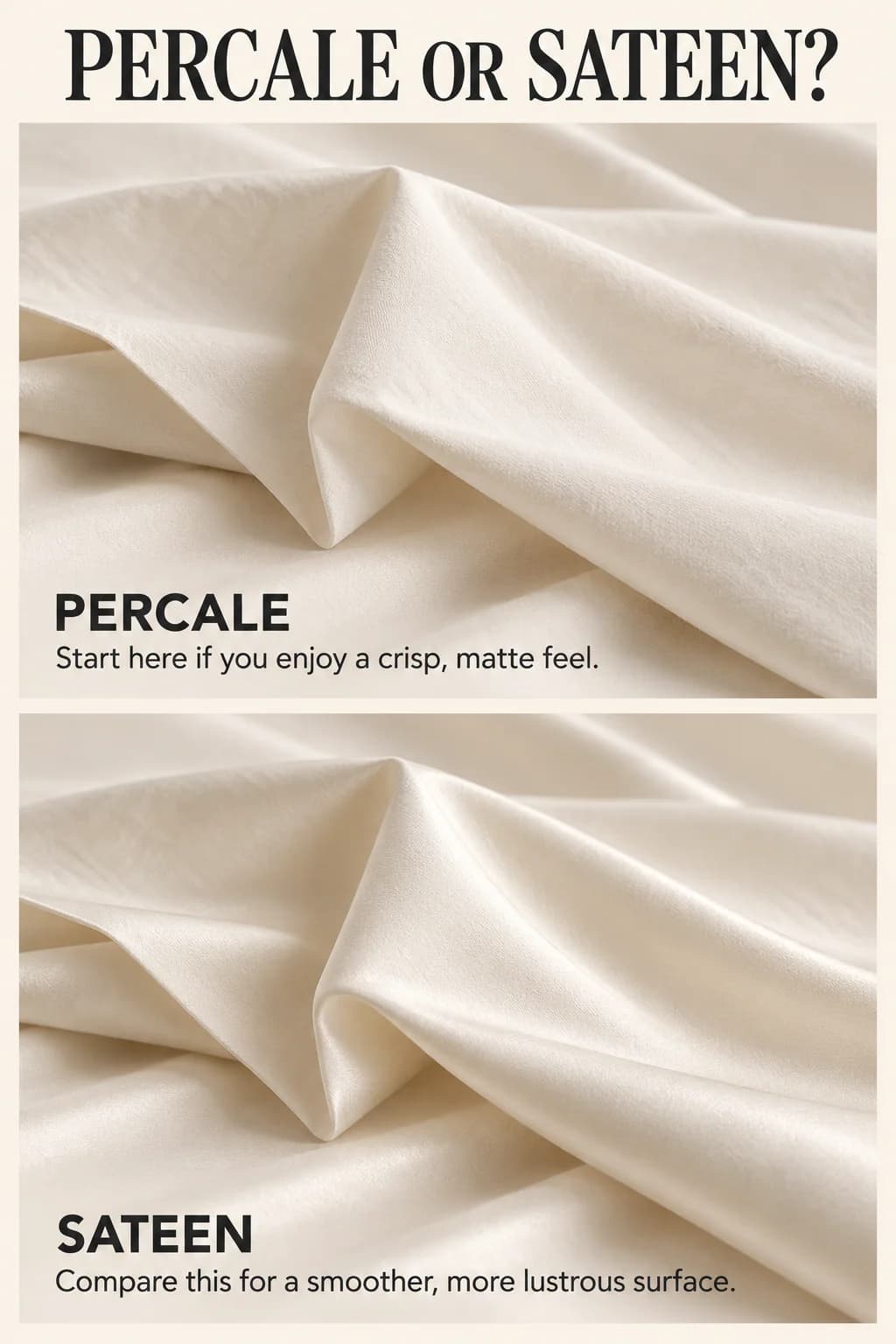
Percale uses a plain, alternating weave. Sateen has longer yarn floats across its surface. Those structures help explain the familiar contrast: percale often feels crisp and looks matte; sateen tends to feel smoother and show more luster. Brooklinen's sheet explanation describes that distinction in its cotton ranges.
Treat those descriptions as tendencies. Fiber, yarn, fabric weight and finishing also affect the result. Two percale sets can feel different, and a photograph of a shiny bed cannot tell you whether you will like sleeping in it. Nor does a higher thread count automatically make a set better for your preferences.
If possible, compare samples or pillowcases rather than committing from an adjective. Hold each fabric loosely, slide your hand across it, then crumple and release a corner. Notice whether you prefer a dry, crisp sensation or a more fluid surface. Compare similar fibers if you want to isolate the weave; changing from cotton to a different fiber at the same time makes the comparison less informative.
A crisp-feel sleeper choosing everyday bedding
Imagine someone who likes a matte bed, dislikes a slippery sensation and is content with a casually rumpled finish. Cotton percale is a reasonable starting point. Choose a fitted sheet sized for the actual mattress depth, including any topper, and pillowcases that fit the pillows already used. Pale blue or white will show the weave's understated surface without requiring a completely white bedroom.
The compromise is appearance after washing. If visible creases are acceptable, the set may fit the routine well. If a sharply pressed bed is important but ironing is unlikely, that same preference can become irritating. Look at a washed sample where available, check the maker's care advice and return terms, and separate your preference for crisp feel from your preference for a smooth-looking bed.
If you tend to feel warm, percale may be worth comparing, but do not expect the name to solve the whole bed's temperature. The mattress protector, top layers, room and your own preferences still matter. Start by considering the entire bedding arrangement before attributing every warm night to one sheet.
A guest bed where a softer-looking finish matters
For a guest room used regularly, suppose the priority is a smooth hand and a little sheen without adding decorative bedding. A cotton sateen set in warm ivory can give the bed that finish. Pair it with a simple top covering so the sheet's luster does not have to compete with several shiny surfaces.
Choose it only if the actual care instructions fit the available washer, dryer and turnaround time. Sateen is not a promise that creases disappear without attention. Remove and handle the sheets as directed by the label, and judge the result you can realistically maintain. A special laundry routine that happens only before the first guest is not much of a routine.
If someone using the room dislikes a smooth or close-draping sheet, a percale set may suit them better even if you prefer the look of sateen. When preferences are unknown, clean, correctly fitted bedding and an adaptable top layer matter more than declaring either weave universally luxurious. The duvet-versus-comforter guide addresses that separate top-layer choice.
Consider the rest of the bed before blaming the weave
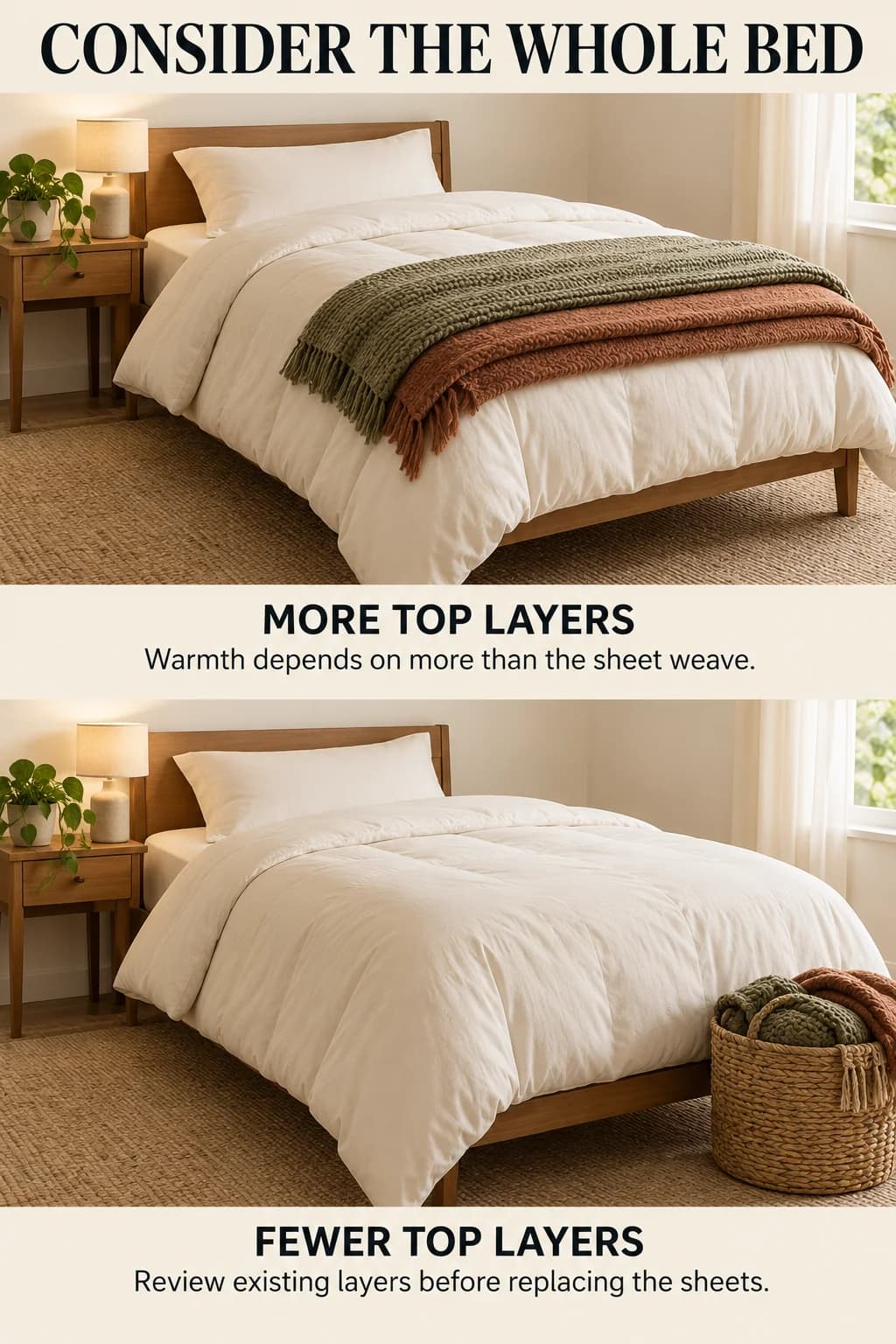
If the bed feels too warm, look at its whole arrangement. A substantial duvet plus several blankets gives you a different setup from the same sheets with fewer top layers. Where appropriate for your conditions, compare the existing layers before replacing the sheets. Keep the sheet set unchanged while assessing that difference, so you are not changing every variable at once.
That comparison does not guarantee a particular temperature result. It helps separate a preference for the surface against your skin from the warmth of everything above it. If you already use minimal top bedding, the room, mattress protector and the particular fabric still deserve consideration. The weave name alone cannot answer for the whole bed.
The fitted corner has its own specification
Before buying either weave, measure the mattress with the topper in place. Compare that total depth with the fitted sheet's stated range and read how the maker describes the fit. A deep-pocket sheet is not automatically better: excessive loose fabric may be unwelcome on a shallow mattress, while insufficient depth can pull corners upward.
Also check the flat sheet and pillowcase dimensions if you use them. Mattress size names do not guarantee every set contains the same pieces or generous enough coverage for your arrangement. A set without a flat sheet may be exactly what you want, but it should be a deliberate choice.
If an existing fitted sheet keeps coming off, observe which corner releases and whether the fabric is stretched taut across the mattress. Check the size, pocket depth and elastic condition. Changing from sateen to percale without correcting a fit mismatch leaves the underlying problem untouched.

Care habits can settle a close decision
Read the exact washing and drying instructions before purchase. Do not assume all cotton sheets tolerate the same temperature, bleach or dryer setting. A manufacturer's finish or added fiber can change its care requirements. Follow those directions rather than applying a generic “hotel laundry” routine to a home set.
If sheets emerge heavily wrinkled, first check whether your wash and drying process follows the label and whether the machine is overloaded. A crisp weave may still retain a rumpled look that is part of its appeal. If you dislike that look every time you make the bed, choose for the finish you actually enjoy rather than trying to train yourself to prefer it.
Keep spare sets together by bed size in an organized linen closet. That reduces the chance of mistaking a fit problem for a fabric problem when the wrong fitted sheet lands on the bed. You can also own percale for one bed and sateen for another. Matching every sheet in the house is less useful than knowing which set fits, feels right and can be ready when needed.
Frequently asked questions
Do percale and sateen have to be cotton?
The weave name and the fiber content are separate information. Read the fiber label for the particular set rather than assuming the weave name supplies it.
Can I use a percale fitted sheet with sateen pillowcases?
Yes, if you like the different surfaces and each piece fits. A matching weave across every piece is an aesthetic preference, not a requirement for making the bed.