Choose a duvet system if you like washing a removable cover and changing the look of the bed without replacing its filled layer. Choose a finished comforter if you prefer making the bed with one main piece and can manage that piece's cleaning requirements. Neither name, by itself, tells you how warm the bedding will feel.
Check what is actually in the package
In common retail usage, a duvet system has two parts: a filled insert and a removable cover. A duvet cover is the empty fabric shell, not a warm filled blanket. A comforter is usually a filled covering with an exterior intended to be seen and used as the finished top layer.
The words are not perfectly consistent between brands. Some items called comforters are designed to work inside covers, and some sets include additional pieces. Read the contents, dimensions, attachment details and care label instead of assuming that the product name tells the whole story. The Company Store's comparison makes intended use and features central to the distinction.
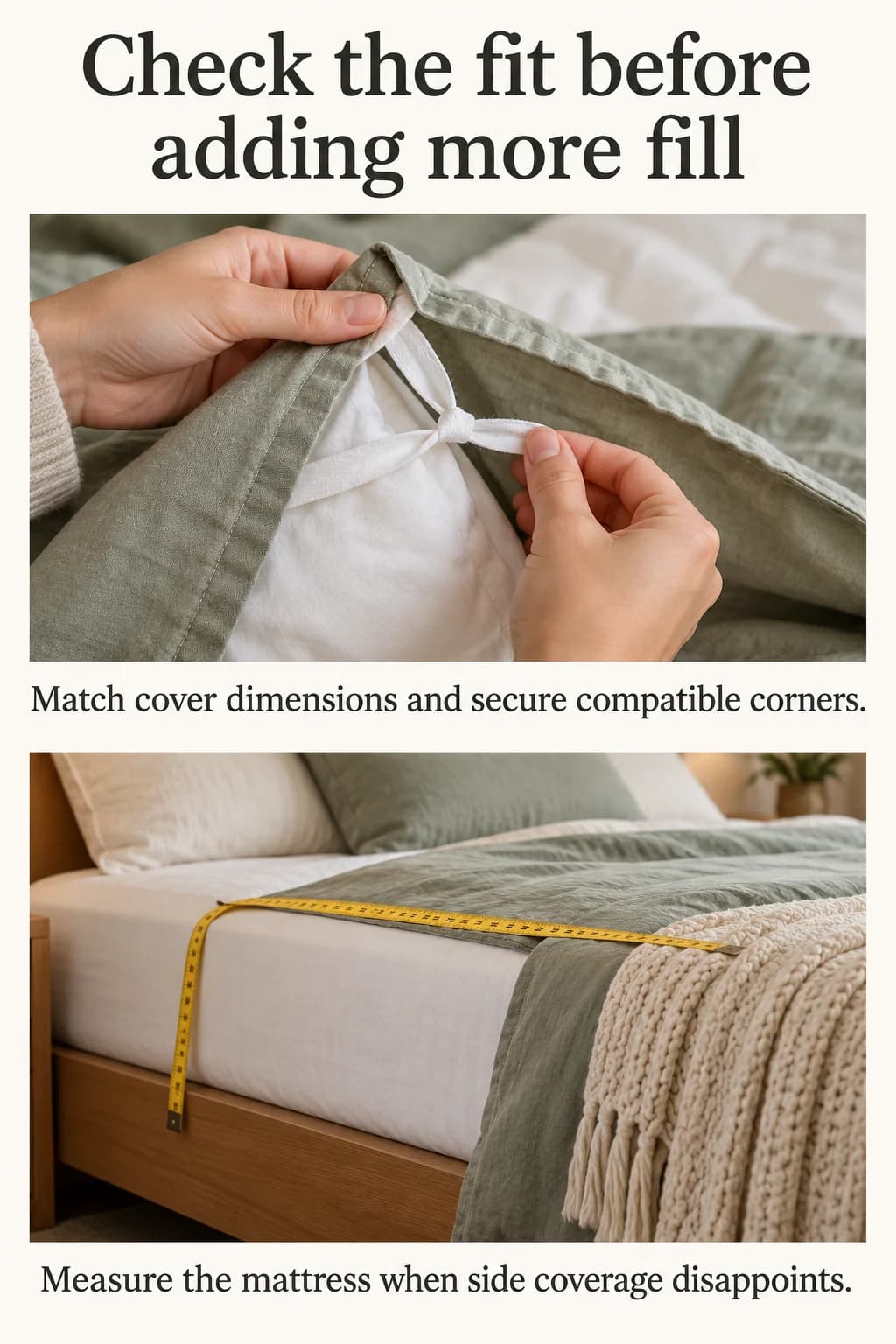
An insert with corner loops can attach to corresponding ties inside a cover. That can help keep the shell and insert together, but the presence of loops does not prove every cover will fit. The actual length and width of both pieces matter, along with the position of the attachments.

| Decision | Duvet system | Finished comforter |
|---|---|---|
| Routine fabric change | Remove and replace the cover | Change or clean the filled piece |
| Putting the bed together | Fit insert inside compatible cover | Straighten one main filled layer |
| Warmth | Depends on the actual insert and cover | Depends on the actual fill and shell |
| Before choosing | Check dimensions and attachment points | Check whole-piece cleaning requirements |
The laundry question is bigger than “easy to wash”
With a duvet system, you remove and clean the cover according to its label. The insert still needs care; a cover does not make it permanently clean or exempt it from its own instructions. With a comforter, cleaning normally involves the whole filled piece unless you choose to use a separate cover over it.
Check your washer and dryer instructions as well as the bedding label. A piece that can be machine washed may still be too bulky for your machine to handle properly. Do not force it into a drum simply because the door closes. If larger equipment or professional cleaning is required, include that practical trip in your decision.
There is no single washing interval that fits every household, fabric and use. Follow care guidance and adjust for actual soiling. A top sheet may be part of either arrangement if you like one, but choosing a duvet does not require a top-sheet rule. Think about which layers you are willing to strip, wash, dry and put back.
A small machine, but room to change a cover
Suppose you have a modest home washer and like refreshing the bed's visible fabric regularly. A removable cover may make routine laundry more manageable than washing an entire filled layer every time. Choose a cover whose care requirements suit the equipment, and establish how you will clean the insert when it needs attention.
This arrangement works best if you are comfortable putting the cover back on. Before committing, consider the actual size of the bed and whether you can reach its corners. A spare cover can keep the bed usable while one dries, but it creates another storage need. Fold it with the corresponding bedding in an organized linen closet so the convenience survives laundry day.
A simple bed to remake, with suitable cleaning access
Now consider someone who dislikes wrestling a large insert into a cover and has access to equipment suitable for the chosen comforter. A finished comforter may be the simpler daily choice: straighten one filled layer and the bed looks complete. Check that the fabric and fill tolerate the care routine you intend to use.
If you like changing the bed's appearance often, this system has a trade-off. Replacing or storing several bulky comforters takes more space than keeping spare covers. A small throw or a different pillowcase can change the look without requiring another full bedding layer. The easier system is the one you can maintain, not the one that wins a theoretical laundry contest.

Warmth comes from the particular layers
Compare fill, construction, weight, cover fabric and the conditions in your bedroom. A light insert inside a cover can feel different from a heavily filled comforter, but the reverse combination is also possible. A “duvet” label is not a warmth rating, and a lofty photograph is not enough to predict comfort.
If two people prefer different warmth, separate top layers can be more useful than arguing over which category is best. One person can add a light blanket while the other keeps fewer layers, provided the arrangement is comfortable for both. A lighter main layer plus an optional blanket also gives a guest more control than one very heavy covering.
Seasonal changes do not always require a new system. You might change an insert while keeping a cover, or store a winter comforter and use a lighter layer. Check storage space before accumulating both. No fabric guarantees the same temperature comfort for everyone. Compare the layers you actually use in your own room before buying another filled piece.
Diagnose shifting separately from insufficient coverage
If a cover has empty-looking edges, compare its measurements with the insert and check that the correct corners are attached. Straighten the layers before concluding that more fill is needed. If the insert bunches inside the shell, a size mismatch or unsecured attachment may be involved. Internal fill clumps within stitched chambers are a different problem and need the insert maker's care advice.
If the whole covering is too short at the sides, measure the mattress, including its depth, and decide how much drop you want. Category names such as queen or king are a starting point, not a promise of identical dimensions across products. Consider whether the covering should reach a bed frame or stop above it. Check this with the bedding centered on the mattress, since pulling extra fabric to one side can disguise insufficient width.
Finally, rehearse the task that matters most to you. If changing a large cover strains your hands or shoulders, a lighter cover, help with the task or a one-piece arrangement may suit you better. If cleaning the whole comforter is the recurring obstacle, a compatible cover-and-insert system may remove that friction.