A belt changes where a dress gathers, how its bodice hangs and how its skirt begins. It can make a loose dress feel more defined, but it can also turn a comfortable garment into one that needs adjusting every time you stand up. The useful question is what the belt is doing to this dress, not whether a particular body shape is supposed to wear one.
Find a place the dress can accommodate
Put on the dress without a belt first. Notice the waist seam, darts, pockets and any built-in gathers. An existing waist seam is a sensible starting point, particularly when it already shapes the garment. On a straight dress without a seam, try the belt where it rests comfortably, then move it slightly higher or lower to compare the amount of fabric above and below it.
Avoid straddling a thick seam with a narrow belt: it can tip, ride off the ridge or make the seam more conspicuous. A wider belt may cover that seam comfortably, but only if it lies flat and does not dig in when you sit. Decorative loops are clues to the intended placement. If you want a different height and the loops remain conspicuous, consider a suitable alteration or wear the dress without the belt. Do not cut loops off without checking how they are sewn in.
Width and flexibility are separate decisions. A broad, soft belt can move with a dress; a narrow, rigid one can still create an uncomfortable edge. Start with a modest, flexible belt on fine fabric and assess it on the garment. The examples below use widths as starting points, not measurements everyone must follow. For the different job of supporting a waistband, see choosing belt width for jeans and trousers.
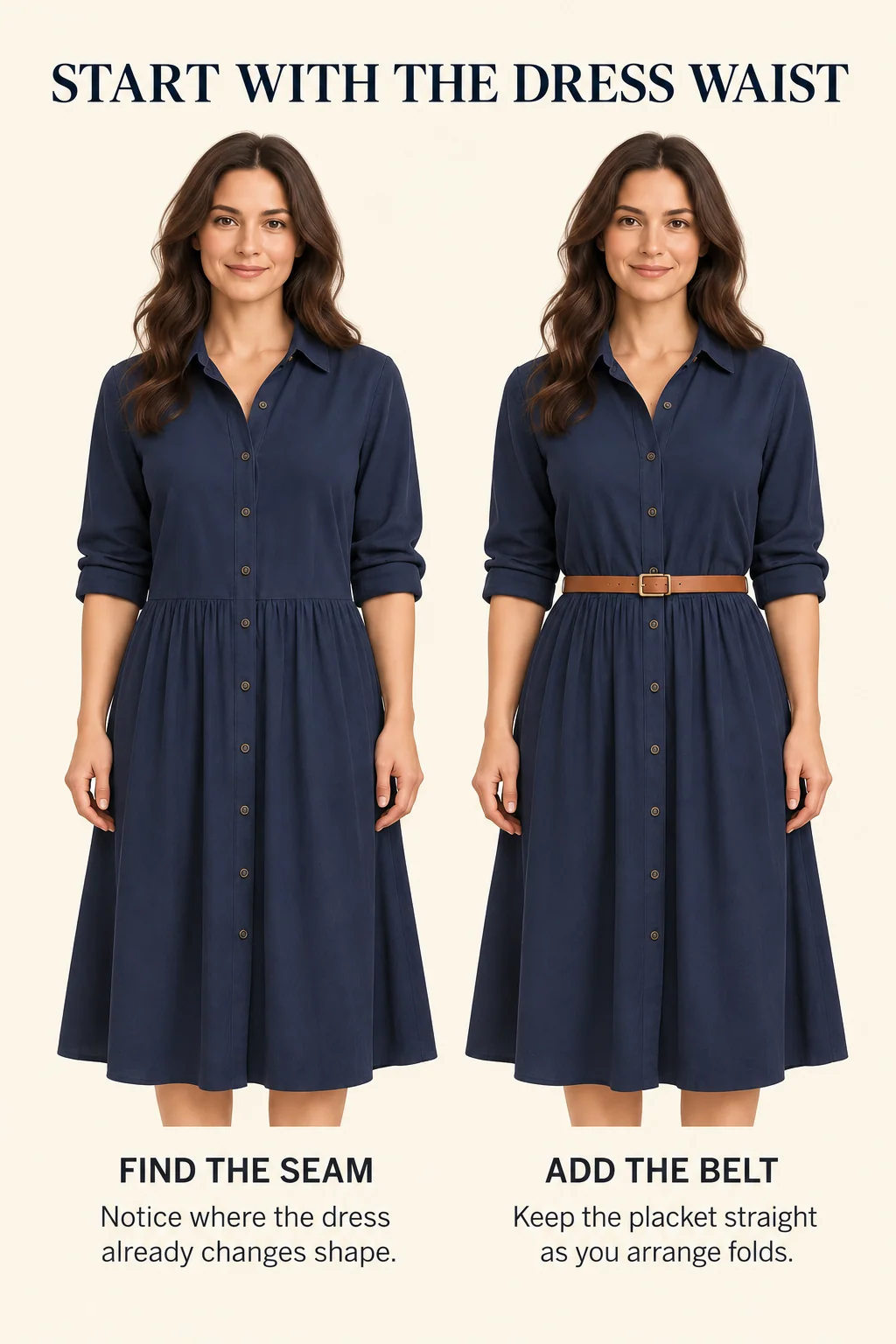
Worked application: a fluid shirt dress for lunch
Take a navy, calf-length shirt dress with a softly draping skirt, tan flat sandals and a tan shoulder bag. Replace its removable fabric tie with a flexible tan leather belt around an inch wide. Keep the original tie with the dress. The tan repeats at the feet and waist, while the narrow band gives the navy fabric a point of definition without covering much of the bodice.
Fasten the belt at the existing waist position, leaving it loose enough to sit comfortably. Smooth the button placket so it stays straight. Then distribute the skirt's folds around your sides and back instead of pulling every gather toward the buckle. Lift a little bodice fabric above the belt if you want a softer blouse effect; keep enough length for the dress to move when you reach.
The result suits lunch or a daytime visit where you want a complete outfit without stiff tailoring. If the belt is more noticeable than you want, use navy instead of tan. If the fabric is very fine and the leather creates a sharp ridge, return to the fabric tie rather than tightening the leather belt to make it stay put. The dress's own tie may suit its weight better.
For cool weather, swap the sandals for brown ankle boots and add an open cream cardigan. Keep the belt around the dress alone so the cardigan can fall freely. If you prefer the cardigan closed, test the buckle underneath it: a flat, small buckle may work, while a raised one can make a visible bump. The solution can be the original soft tie, not another layer pulled over the problem.
Worked application: a straight knit dress with a quieter belt
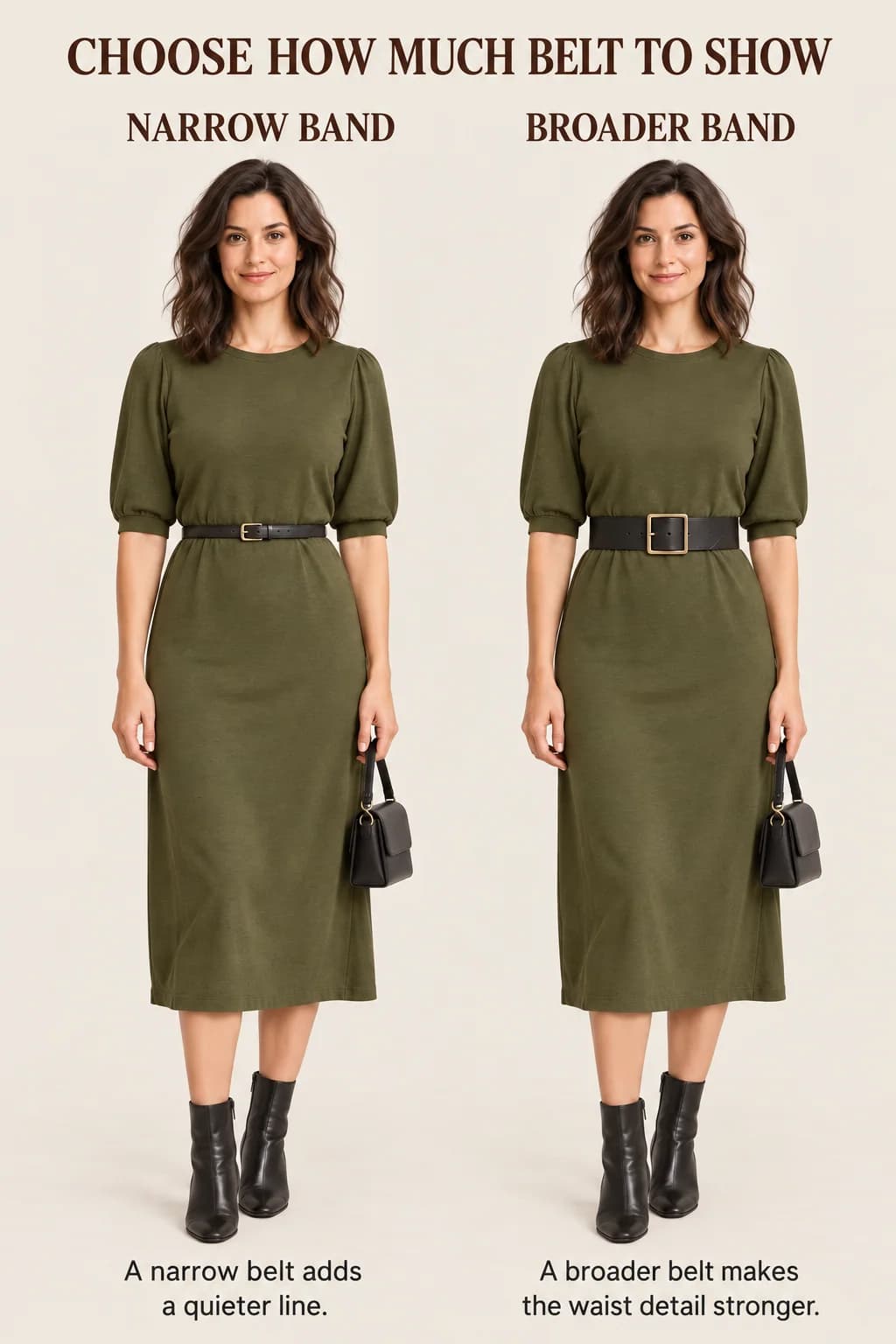
Use an olive straight knit midi dress, black ankle boots and a small black bag for a relaxed dinner. Start with a flexible black belt around an inch and a half wide and a low-profile buckle. Place it where it can rest without compressing the knit, then allow the fabric to hang below instead of pulling the whole dress upward through the belt.
Black makes a distinct band across the olive and connects it to the boots. If you want the dress to remain the main uninterrupted shape, choose an olive or dark tonal belt instead. The decision is about emphasis. There is no need to make the belt the narrowest possible line or to force it higher than feels comfortable.
On a heavier, firmer knit, you may prefer a broader belt because it creates a more visible band. Try it rather than assuming wider means more supportive. A stiff wide belt that folds when seated is a poor match even if it looks smooth standing. On a fine stretchy knit that keeps creeping upward, loosen the belt and remove excess blousing; if it still needs constant rearranging, wear the dress unbelted.
Add a charcoal coat worn open so the black belt remains visible between its fronts. If the weather requires the coat closed, fasten it over the outfit and sit down before leaving. The coat needs room for the buckle and the extra folds at the waist. A flatter belt, a softer tie or no belt may be more useful than trying to preserve a detail nobody can see beneath a closed coat. Our coat and midi-dress guide covers the separate hem-length decision.
Keep the position while allowing movement
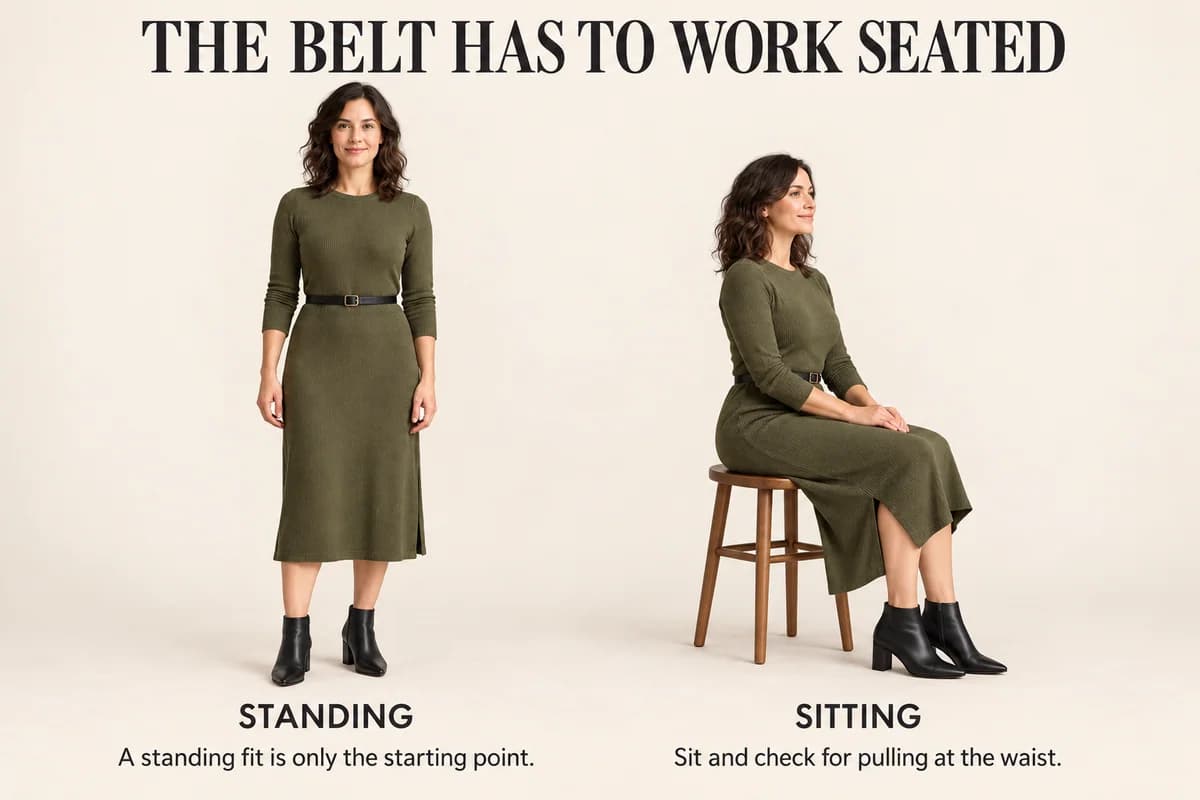
After fastening either outfit, sit normally, breathe comfortably and reach forward. The belt should stay secure without making you hold your body differently. Watch what happens when you stand again: a small amount of fabric settling is ordinary, but a placket pulling open or a large lump of fabric above the buckle needs attention.
Fix the symptom you can actually see
- A ridge at the back: loosen the belt and spread the trapped folds around the dress. If there is simply too much thick fabric, reduce the blousing or choose a softer tie. Tightening makes the pile more compressed, not smaller.
- The belt slips downward: try a position where it can rest more securely and check that it fastens properly. Do not keep tightening until movement is uncomfortable. A slippery, straight dress may need discreet loops added by someone who understands its construction, or may work better unbelted.
- The buttons gap: release the belt and see whether the dress lies flat without it. If the gap remains, the fit needs attention independently of the belt. If it disappears, reduce the pulling and redistribute the fabric.
- The skirt rises more than expected: let fabric back down from above the belt and check the hem again while seated. Belting should not accidentally remove coverage you wanted.
A belt is useful when it improves an outfit you can move in. If it continually displaces a well-fitting dress, the unbelted version is a finished styling choice, too.