The purpose of a sweater tuck is to reveal a little structure. If it creates a padded shelf around your middle, the knit has filed a formal objection.
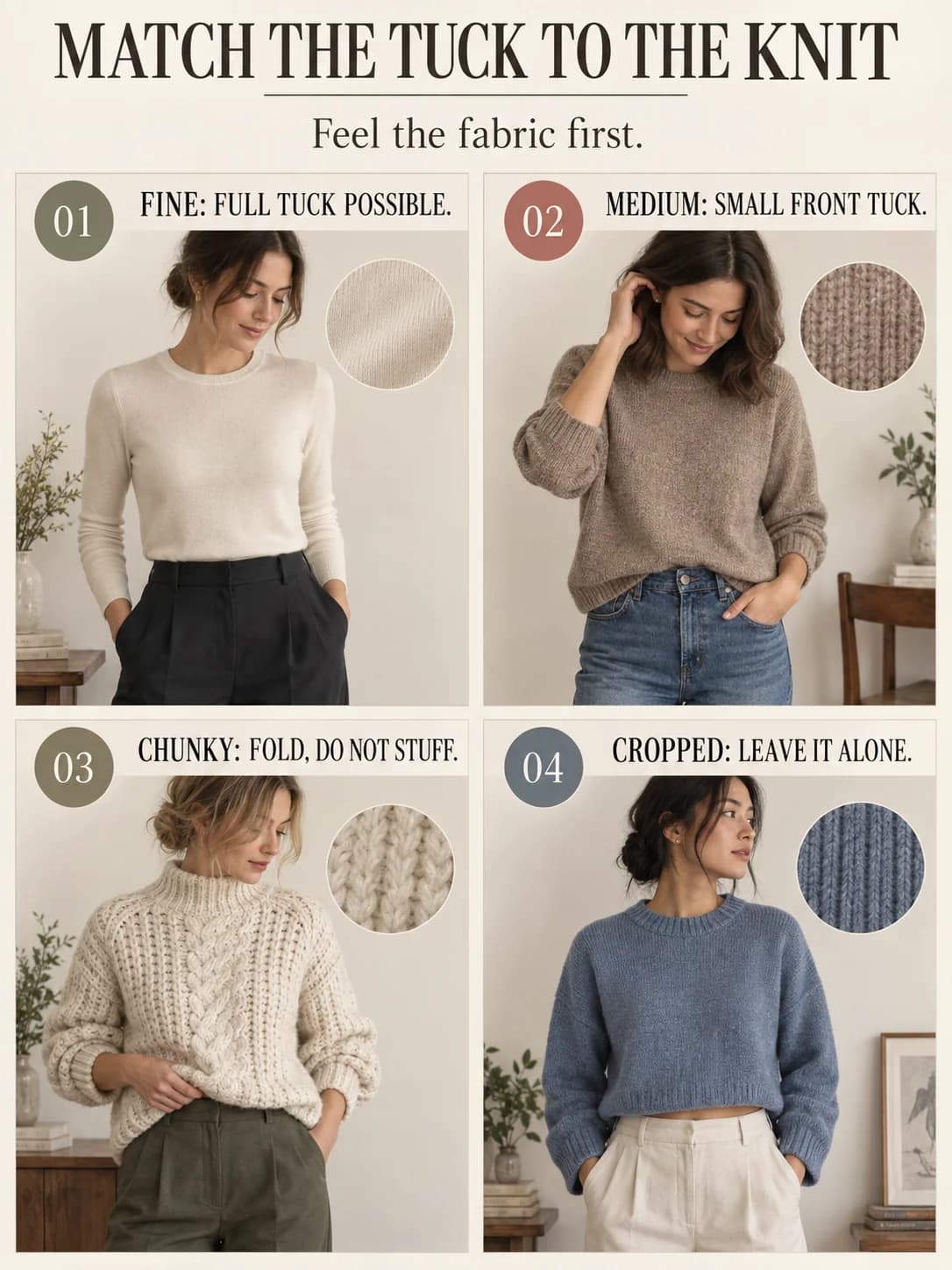
Test the fabric in your hand
Fold a section of the sweater once. A fine merino or smooth cotton knit becomes a thin layer and may tolerate a full tuck. A chunky cable, lofty wool or loose boucle doubles into a small duvet. That fabric wants a different plan.
| Knit weight | Best method | Avoid |
|---|---|---|
| Fine | Full or small front tuck | Overstretching |
| Medium | Narrow front tuck or folded-under hem | Stuffing both sides |
| Chunky | Fold under or leave untucked | Full waistband tuck |
| Cropped | No tuck needed | Forcing extra blousing |
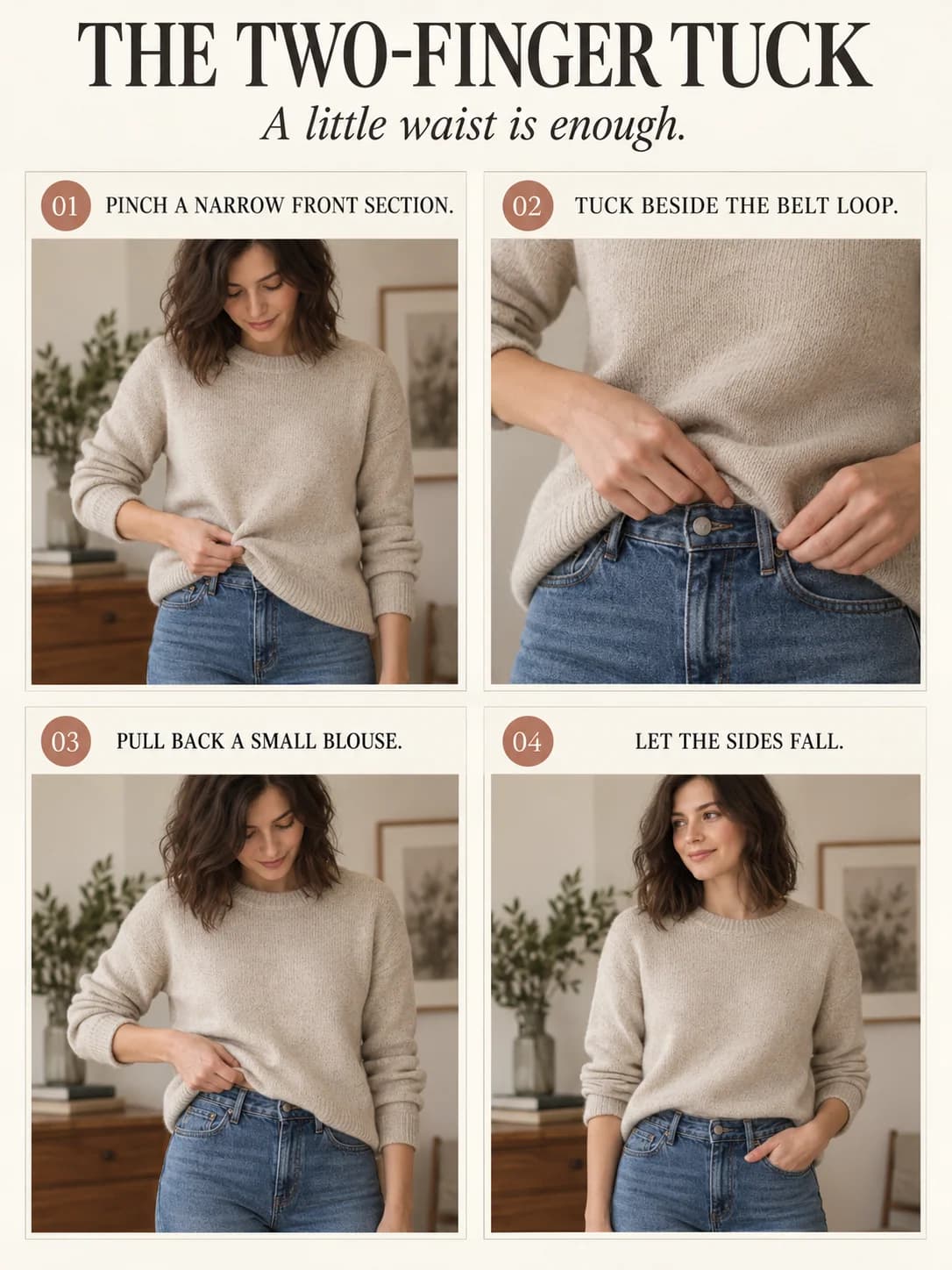
Use the two-finger front tuck
Pinch a narrow section at the center or just beside a front belt loop. Tuck only that amount, then pull a little fabric back out so it blouses softly. Let the sides and back fall free.
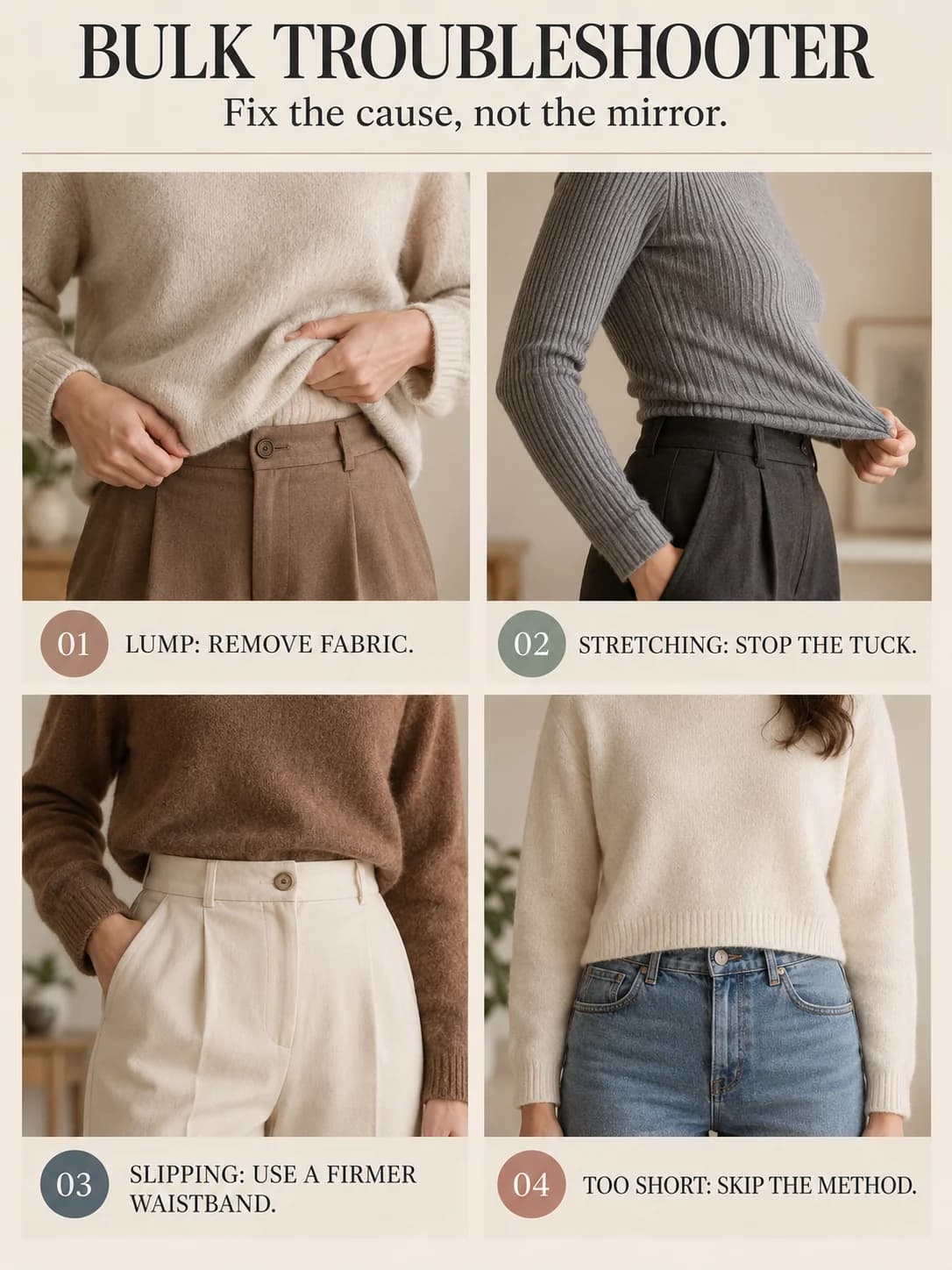
The result should show the waistband and change the front proportion without creating a visible knot. If the front still looks heavy, the answer is less fabric, not firmer pushing.
Fold the hem under when the waistband is not the answer
Turn the sweater hem inward and let it rest at the top of the trousers or skirt. This shortens the visible length without putting fabric inside the waistband. It works best when the ribbed hem has enough tension to stay folded.
With a pleated skirt, keep the fold above the point where the pleats open. Our pleated-skirt top guide explains why extra fabric at that exact spot changes the whole skirt.
A full tuck belongs to fine knits and firm waistbands
Smooth the sweater around the body before tucking it evenly. Use trousers or a skirt with enough structure to hold the fabric without pinching. Then sit down. If the knit climbs out immediately or the waistband becomes uncomfortable, the outfit has already answered the question.
Cardigans and sweater vests need their own logic
A buttoned cardigan has a placket that can ripple when tucked. The cardigan-as-a-top guide handles button spacing and hem tension. A sweater vest usually layers over a shirt, so the sweater-vest guide is more useful than forcing two layers into one waistband.
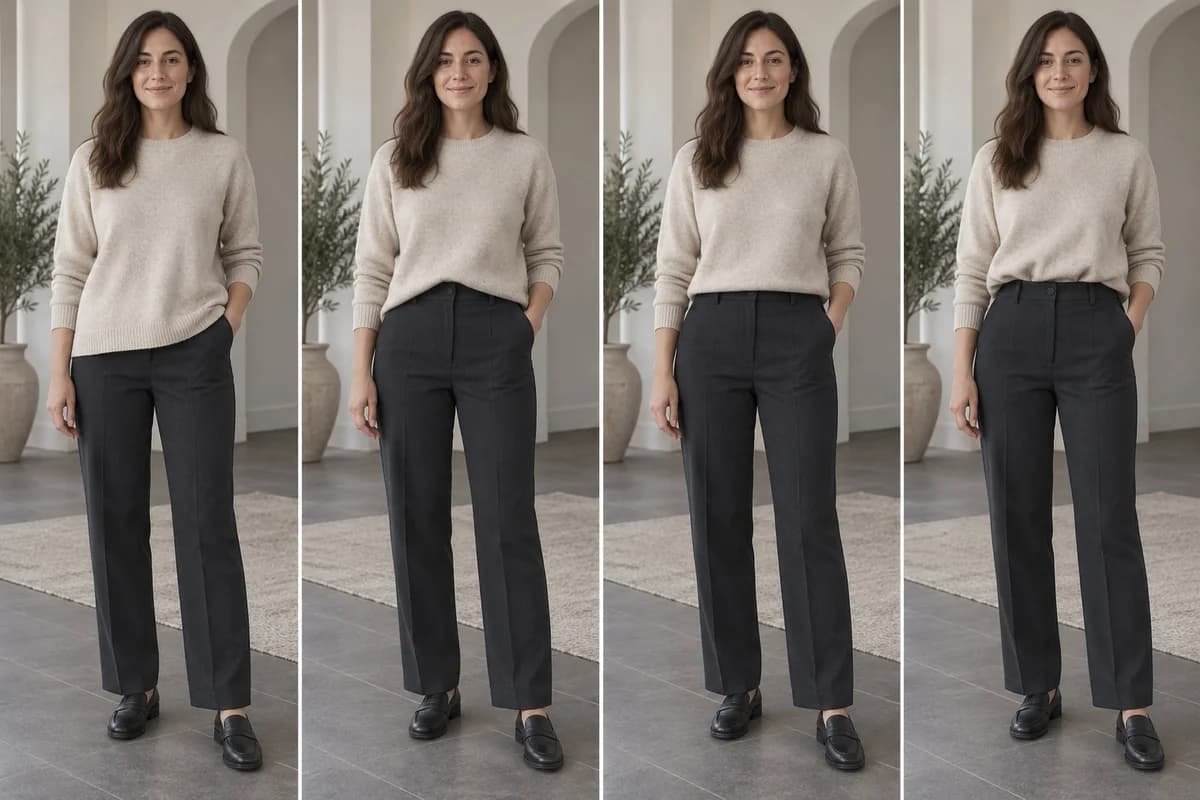
Know when the untucked version wins
If the sweater ends near the waistband, has a shaped hem or looks good against a slim column below, leave it alone. The most polished choice is sometimes declining a styling trick before it becomes a household project.
Check the back as well as the front. A neat front tuck can pull the rear hem upward or make the side seams swing forward. If that happens, release a little fabric or move the tuck off-center. The sweater should still hang like the same garment from every direction.
Frequently asked questions
Can you fully tuck a sweater?
A fine, smooth knit can usually be fully tucked into a structured waistband. Thick or loosely knitted sweaters tend to bunch and are better folded or partially tucked.
How much sweater should go into a front tuck?
Start with a narrow section near the front belt loop or center. Use only enough fabric to reveal the waistband, then let the sides fall naturally.
Does a belt help a sweater tuck?
A belt can support a small tuck when the waistband has structure. It should not be tightened enough to crush a thick roll of knit underneath.