Pleats already bring movement, lines and a little drama. The top does not need to arrive with its own accordion.
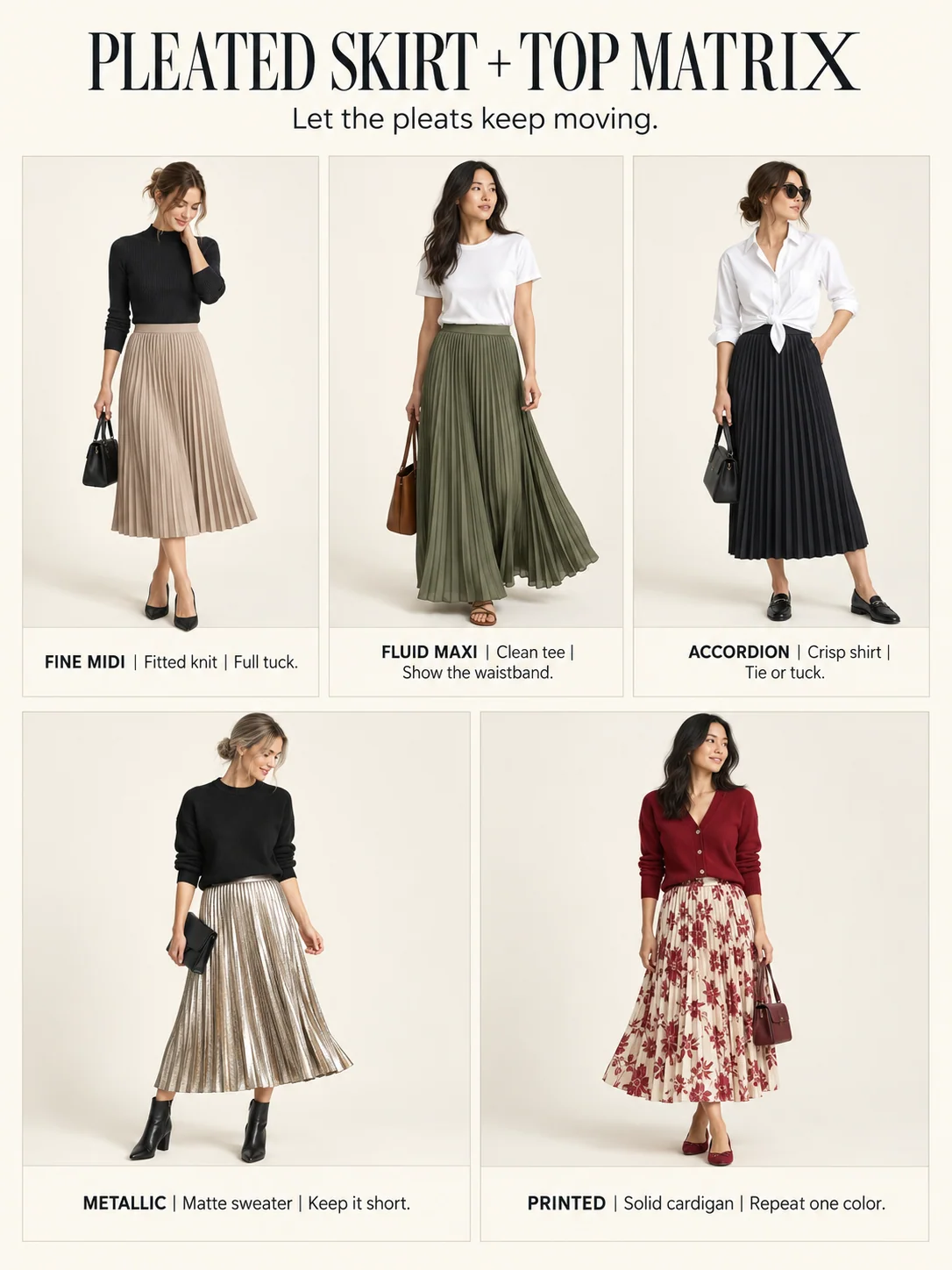
| Option | Best with | Effect |
|---|---|---|
| Fine pleated midi | Fitted knit | Full or half tuck |
| Fluid pleated maxi | Clean halter or tee | Waistband visible |
| Structured accordion pleat | Crisp shirt | Tuck or tie at waist |
| Metallic or satin pleat | Matte sweater | Short or softly tucked |
| Printed pleated skirt | Solid tee or cardigan | Repeat one print color |
Start where the pleats start
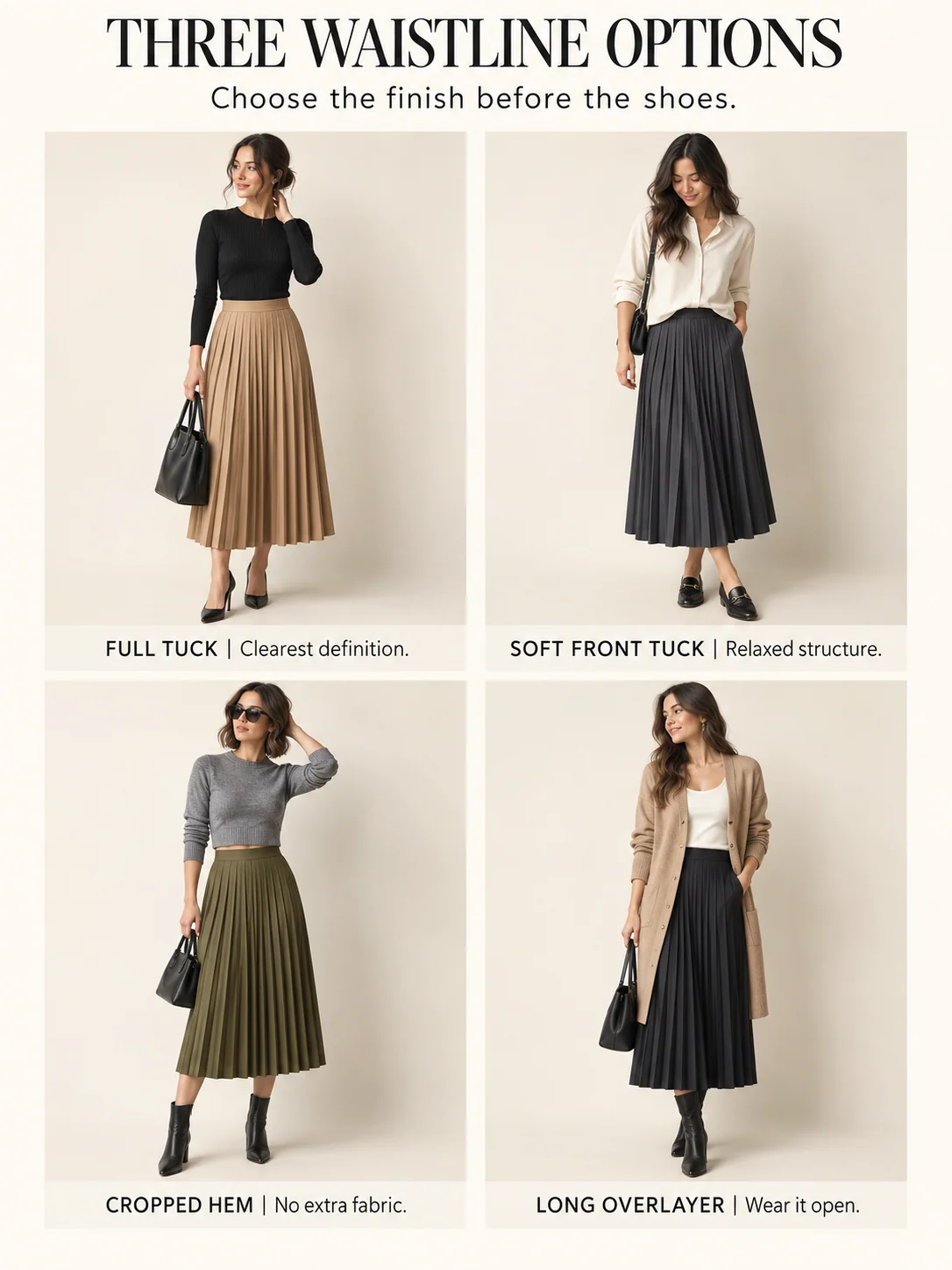
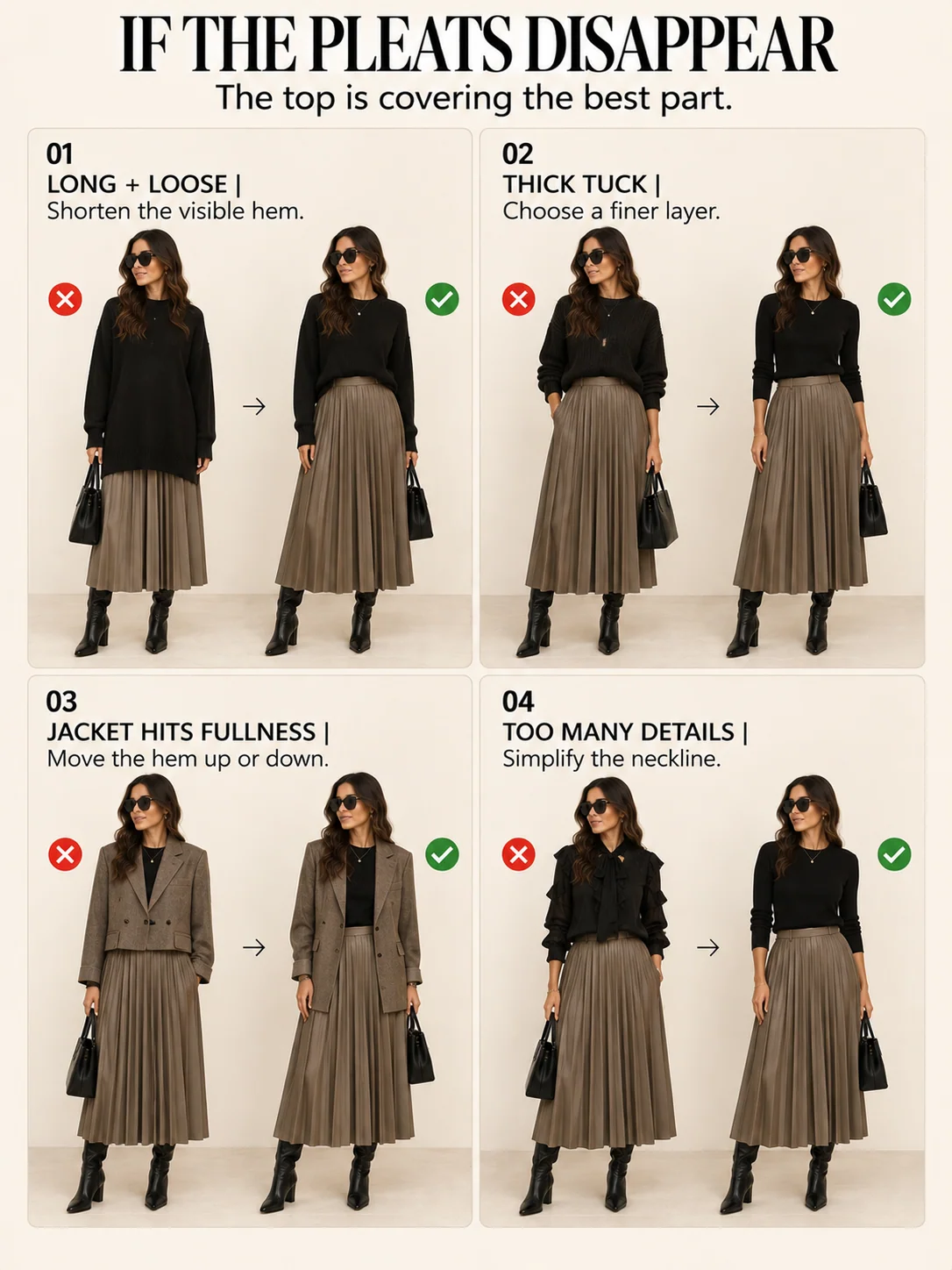
Some skirts are flat through the upper hip and release below it. Others open directly from the waistband. On the second kind, a long untucked top hides the entire construction and often presses the pleats flat.
Show the waistband with a full tuck, soft front tuck or top that ends nearby. The goal is not to “create a waist.” It is simply to let the skirt begin where the designer put the beginning.
A fine knit gives the cleanest contrast
A fitted crewneck, mock neck or soft V-neck works with almost every pleated midi. The knit stays quiet while the skirt moves. Keep the sleeve slim for a polished version, or choose a slightly relaxed shoulder for something softer.
With a satin pleat, a matte knit is particularly useful. The finish contrast does the styling for you, much like the approach in our casual satin-skirt guide.
The T-shirt version should look chosen
Use a tee with enough structure to hold its neckline. Tuck it cleanly, add a belt only if the waistband allows, and let the shoe decide whether the outfit feels sporty or polished.
A striped tee brings pattern without competing with the vertical pleats. A solid tee lets color lead. If you need shoe ideas, the midi-skirt shoe guide compares flats, sneakers, slingbacks and boots at the hem.
A shirt can be crisp or relaxed
A cotton shirt tucked fully creates a neat frame. A fluid shirt tied at the waist feels easier. An oversized shirt can work open over a fitted base, where it behaves like a jacket and leaves the skirt visible down the center.
Avoid stuffing a thick wad of shirting into a soft elastic waistband. The skirt will announce every fold. A bodysuit, finer shirt or open-layer approach is kinder to everyone involved.
Cardigans have two useful settings
Button a short cardigan and wear it as the top, or leave a longer cardigan open over a tucked layer. The middle option, long cardigan buttoned over the fullest part of the pleats, tends to hide both pieces.
If the buttons pull, the fixes in our cardigan-as-a-top guide apply here too: adjust the underlayer and choose where the cardigan closes.
A blazer needs an inner line
Wear the blazer open over a tucked tee or knit. That visible strip of the base layer connects the neckline to the waistband and stops the jacket from sitting like a lid on the skirt.
For a fuller skirt, a shorter or softly shaped blazer is easiest. A long oversized blazer works when the skirt is fluid and the inner layer is clean.
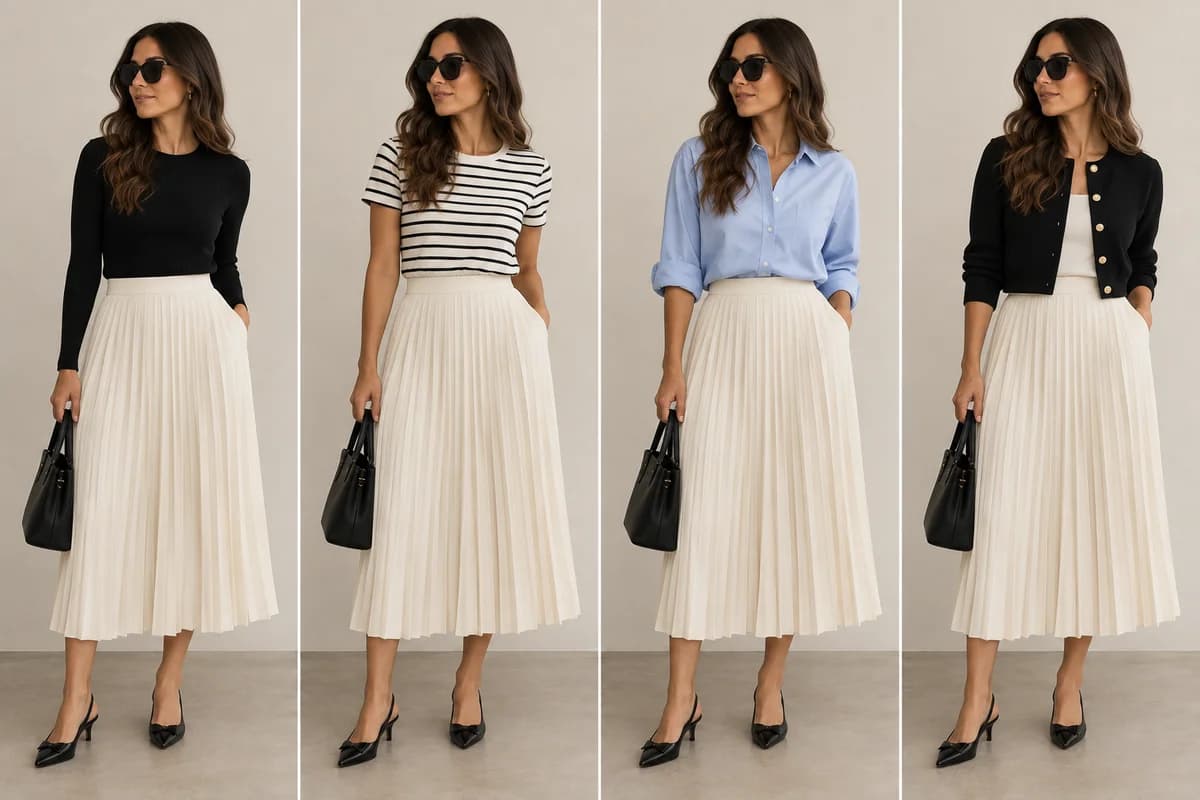
The fastest choice is usually the least theatrical: let the pleats be the interesting texture, then give them a top that leaves room to move.
Frequently asked questions
Can you wear an oversized sweater with a pleated skirt?
Yes. Choose a sweater that ends near the waistband, use a controlled front tuck, or let a shorter skirt section remain visible so the pleats do not disappear.
Should you tuck a top into a pleated skirt?
Tucking is helpful when the pleats start at the waist and the top is long. A cropped or neatly hemmed top may not need it.
What jacket works with a pleated skirt?
A cropped jacket, shaped blazer or long clean coat works. Avoid a jacket hem that crushes the fullest part of the pleats.