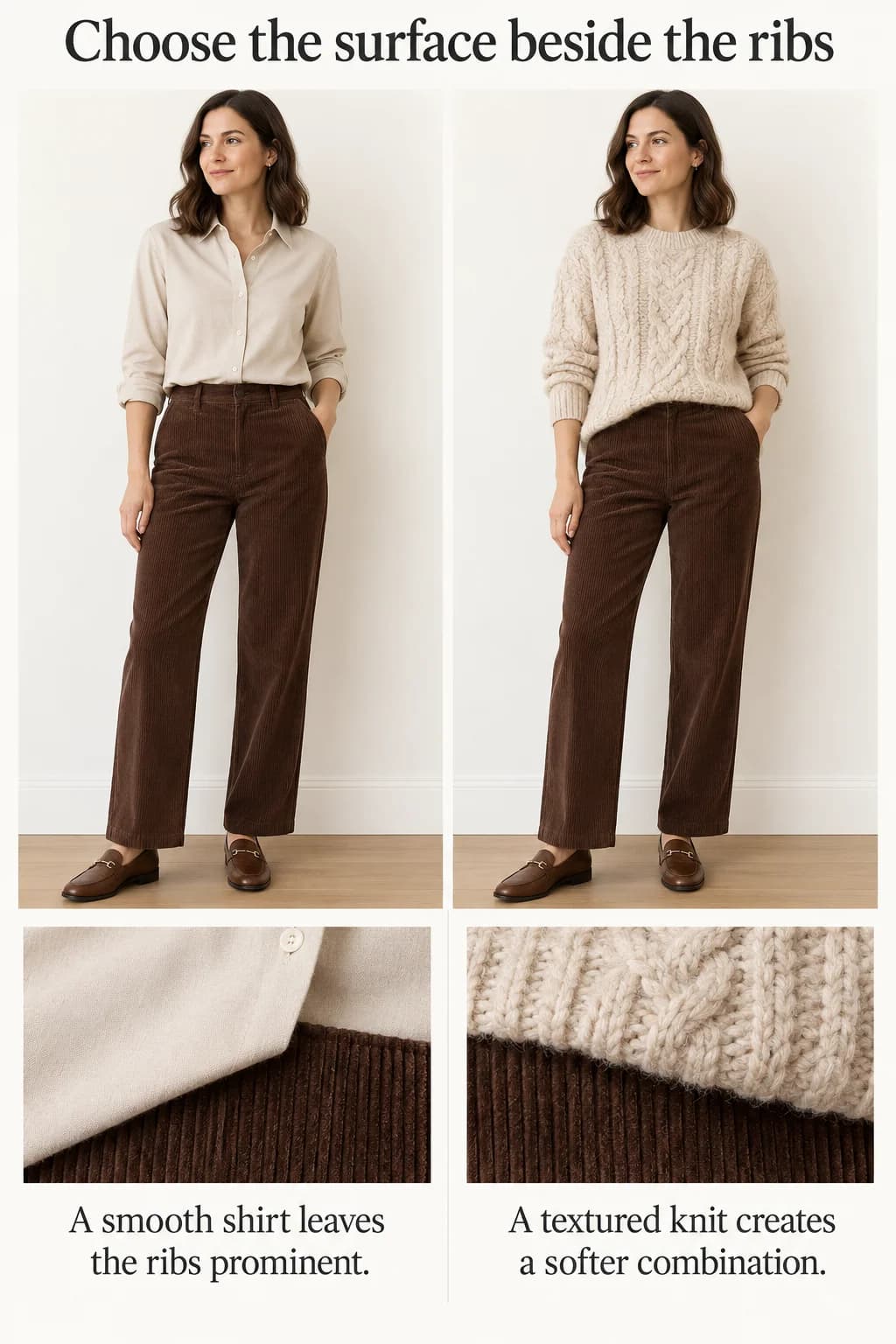
Corduroy does not need a special wardrobe around it. It does, however, make the surfaces beside it more noticeable. A smooth shirt leaves the ridges prominent; a chunky sweater creates a softer, more textured outfit. Choose the effect you want before deciding whether the trousers need dressing up.
Ribs, weight and shape are three different clues
The raised ribs in corduroy are called wales. CottonWorks describes corduroy as a woven cut-pile fabric. That explains the visible ridged surface, but it does not tell you whether an individual pair is heavy, stretchy or warm enough for your day. Feel the actual cloth and read the garment label.
Fine ribs can look relatively quiet from a distance. Broad, pronounced ribs draw more attention to the surface. Neither requires a particular body shape, and broader ribs do not automatically mean the trousers will be stiff. Bend the knee, sit and see how the fabric falls before choosing a tucked top or close-fitting jacket.
Then look at the leg. Straight cords, full-length wide cords and cropped tapered cords expose different amounts of footwear. Put the shoes on before deciding where the hem should stop. A trouser length that works with a low-profile sneaker may collect above an ankle boot.
Build the outfit from the trousers outward
Brown straight cords for a casual working day
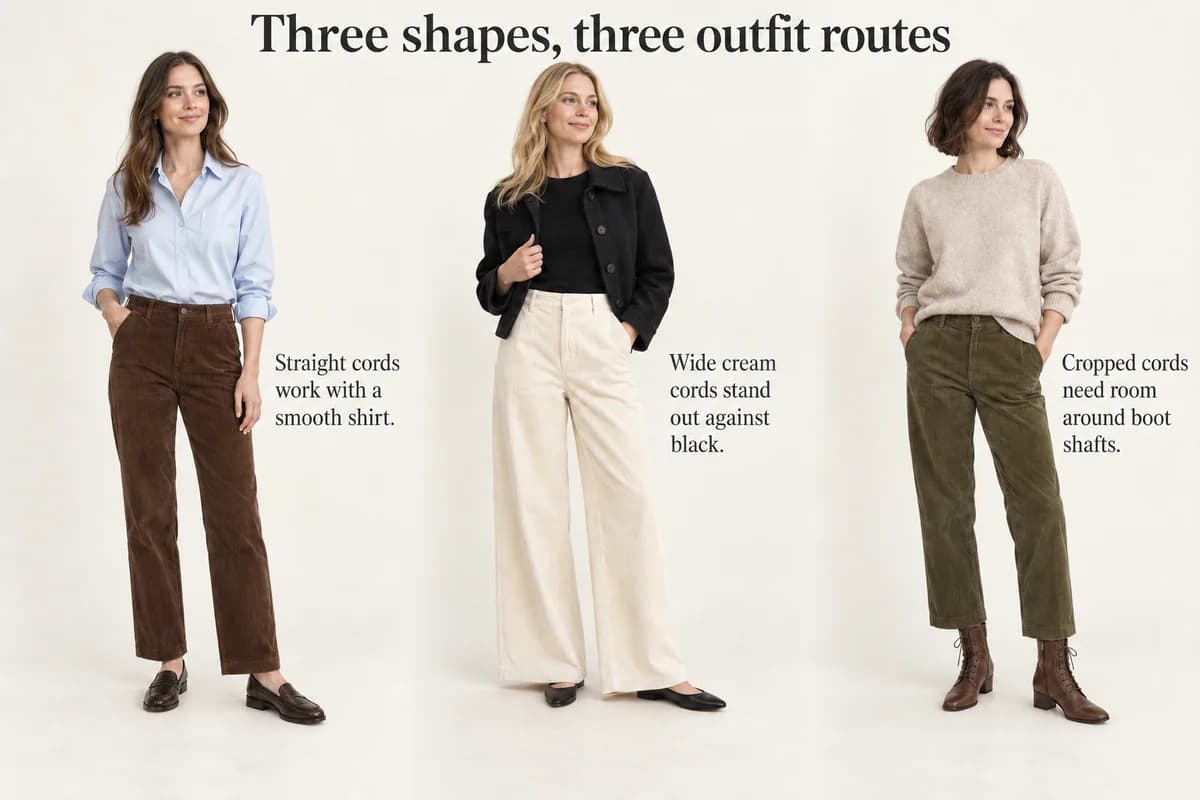
Start with chocolate straight-leg cords, a pale-blue button-down shirt and dark-brown loafers. The smooth shirt makes a clear surface contrast with the ribs, while the similar trouser and shoe colors keep the lower half connected. A navy cardigan worn open is a useful extra layer if the room is cool.
Tuck the shirt if its fabric settles comfortably at the waistband. If the shirt is long and creates a thick fold, try leaving it loose over a flatter-front pair instead. The outfit can remain polished without a visible belt. What matters is that the shirt hangs deliberately rather than being half caught under the cardigan.
This is an option for a casual workplace, not a claim that corduroy fits every office dress code. For weekend use, replace the shirt with a blue long-sleeve tee and the loafers with brown or cream sneakers. Keep the trouser hem clear of the floor in the replacement shoes; do not assume the same nominal shoe size gives the same height.
Cream wide-leg cords with a dark upper frame
Wear cream wide-leg cords with a black fine-knit top, a short black jacket and black almond-toe flats for lunch or an informal evening. The light trousers become the largest bright area. Repeating black at the top and feet gives them a defined frame without covering their texture with several competing accessories.
A short jacket makes the full leg visible sooner, but it is an option rather than a universal balancing rule. If you want a longer jacket, leave it open and compare the shape in a full-length mirror. A loose black top can work beneath it as long as the layers have enough room to fall independently.
For a mild day, use a lighter top and omit the jacket. For cold weather, black boots can replace the flats if the wide opening falls over their shafts. Check the back of the hem while walking: cream fabric dragging on the ground is a length problem, not something darker shoes will fix. Our guide to shoes with straight-leg trousers explains related hem-and-shoe checks for a narrower opening.
Olive cropped cords for a textured weekend outfit
Choose olive cropped cords, an oatmeal sweater and brown lace-up ankle boots for a dry, cool afternoon. Unlike the first outfit, this one deliberately combines textured surfaces. The restrained colors make the ribs and knit stitches easier to appreciate together, while the boots suit the more practical mood.
Let a medium-length sweater rest outside the waistband. If it is very chunky, pushing it into the cords may create a ridge around the middle. Compare a shorter sweater or simply keep the longer, loose line. A bag in brown or oatmeal repeats an existing shade; another strong color is optional, not a necessary finishing touch.
Use socks that remain comfortable and covered to the degree you prefer when seated. If the crop lands directly on a wide boot shaft and keeps snagging, try a slimmer shaft or a different trouser length. On a warmer day, change to oatmeal canvas sneakers and a lighter sweater rather than expecting a thick winter knit to become comfortable because its color is pale.
More than one texture can work
Corduroy with a cable sweater, suede bag and leather boots is not automatically too much. Decide which surface you want to notice first. If all four pieces have strong patterns, bulky shapes and different colors, quieting one of those variables may help more than removing texture itself.
A plain knit with pronounced ribs in the trousers creates a calmer combination. A textured sweater with fine, dark cords gives the sweater more attention. You can keep the same colors and switch only the top to compare those two effects. Do this before buying a smooth shirt merely because someone has declared a one-texture rule.
Diagnose the fold before changing the outfit
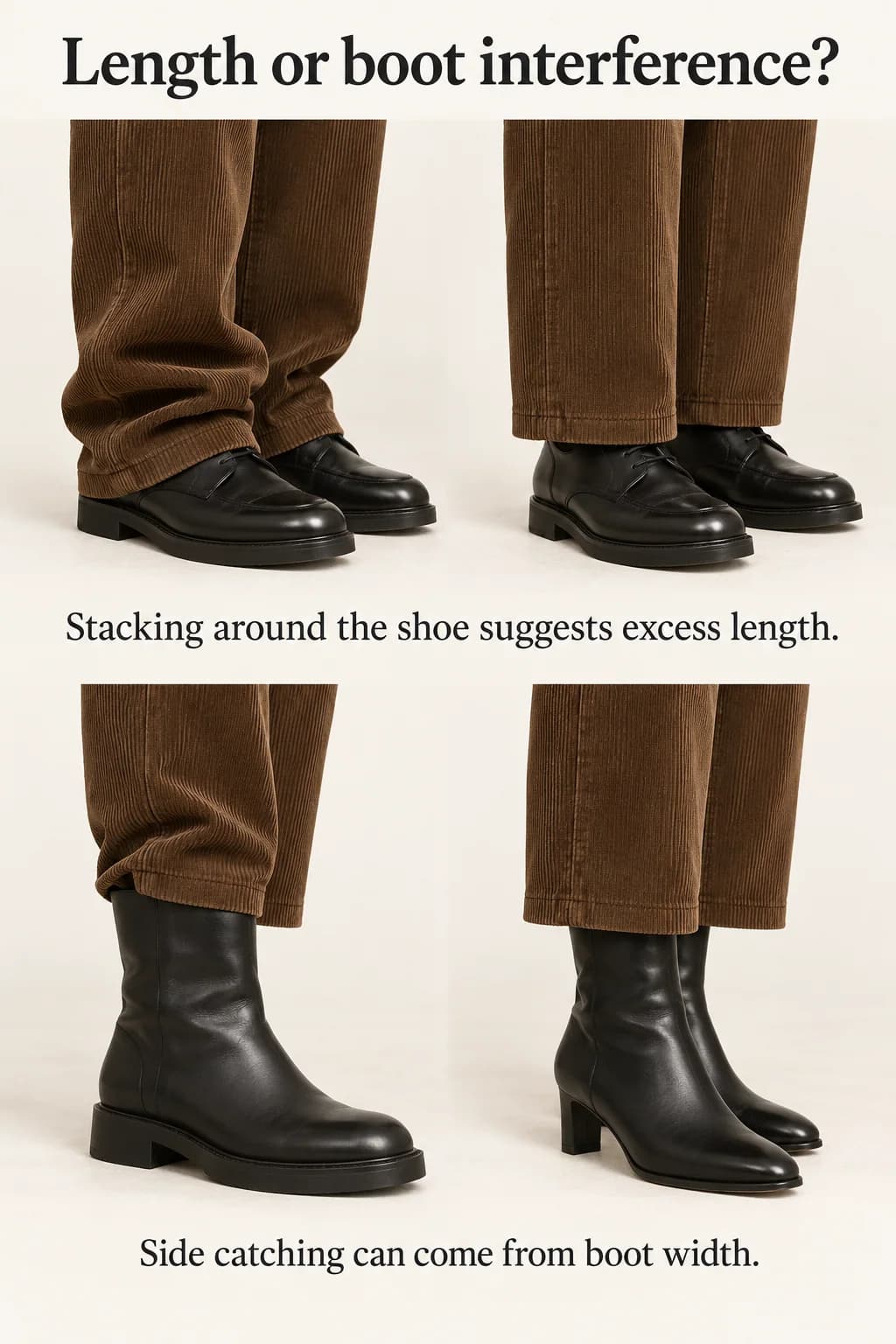
If fabric stacks above the shoe all around the ankle, check the length. If it catches only at the sides, the boot opening may be interfering with the trouser opening. A cuff can be a temporary way to compare lengths, but a thick rolled cuff creates its own bulk. Hemming to suit the shoes you regularly wear may be cleaner than rolling repeatedly.
If the waistband feels crowded only after adding a sweater, release the tuck and sit again. That tells you whether the extra fabric caused the discomfort. Our sweater-tucking guide offers alternatives, including leaving substantial knits outside. If the trousers feel tight even without a tuck, the answer is a different fit, not a cleverer arrangement of the top.
Follow the garment's care instructions to preserve the surface. The word corduroy alone does not supply a washing temperature or drying method. Before leaving, brush away visible lint if needed, check the moving hem and make sure the outfit is comfortable seated.